DbcultAccessing Vault...
7.4/10
Senior Film Conservator
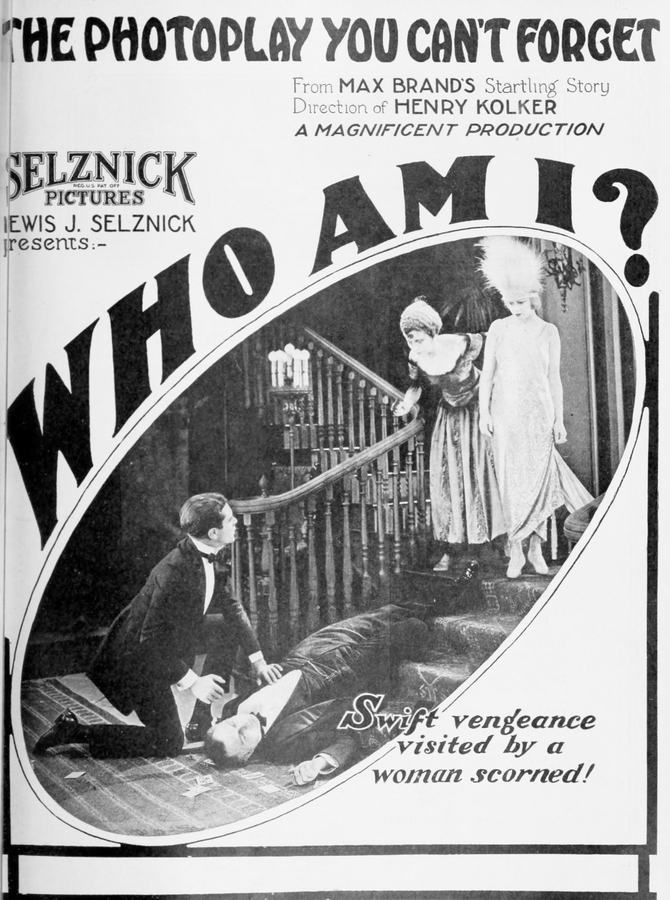
A definitive 7.4/10 rating for a film that redefined the boundaries of cult cinema. Who Am I? remains a cornerstone of transgressive art.
*Who Am I?* (1934) is a film that thrives in the interplay of shadows and revelations, a narrative where the protagonist’s journey mirrors the city’s own moral chiaroscuro. Ruth Burns, portrayed with subtle ferocity by Gertrude Astor, begins not as a heroine but as a cipher—a woman thrust into a world she neither understands nor desires. The film’s genius lies in its ability to layer Ruth’s personal awakening with the broader societal critique of 1930s New York, a city where fortune and ruin are separated by a single roll of the dice.
The inheritance of her father’s gambling palace is both a gift and a curse. Otto Hoffman’s character, though absent, looms large as the architect of a legacy steeped in vice. Directed by a collective of writers including Katherine S. Reed and Max Brand, the screenplay avoids the histrionics of typical pre-Code dramas. Instead, it opts for a clinical dissection of human ambition, particularly through the character of Jimmy Weaver (Otto Hoffman), whose mentorship is as much a transaction as it is a paternal gesture. The film’s tension builds not from overt conflict but from Ruth’s dawning awareness of the moral quagmire she’s inherited.
John Collins, played with smug malevolence by Philip Sleeman, is the antagonist who crystallizes the film’s themes. His fabricated debt to Ruth’s father is a masterstroke of narrative design, forcing Ruth into a role where she perpetuates the very corruption she seeks to escape. The suicide attempt of one of her victims—a harrowing sequence that juxtaposes Ruth’s naivety with the collateral damage of her actions—acts as the film’s emotional pivot. Here, the camera work, stark and unflinching, captures Ruth’s transformation from passivity to culpability.
What elevates *Who Am I?* beyond a mere morality tale is its nuanced portrayal of agency. Ruth’s decision to gamble her way out of debt is not a sign of recklessness but a desperate attempt to reclaim power in a system designed to exploit the vulnerable. The final game, a high-stakes confrontation between Ruth, Jimmy, and Collins, is a masterclass in visual storytelling. The set design, with its chiaroscuro lighting, mirrors the precariousness of Ruth’s choices. When Collins is unmasked as a cheater and murdered by a vengeful woman he abandoned, the irony is both cathartic and tragic—a testament to the film’s refusal to offer easy resolutions.
The supporting cast, including Claire Anderson and George Periolat, adds texture to the narrative without overshadowing Ruth’s arc. Josef Swickard’s portrayal of a conflicted associate adds a layer of moral ambiguity, while Niles Welch’s brief but impactful role as a disillusioned gambler underscores the film’s critique of the gambling industry. The score, though largely absent in the surviving print, is felt in the rhythm of the dialogue—a clipped, urgent cadence that mirrors the characters’ internal turmoil.
Comparisons to films like *One Every Minute* (1933) and *The Hoodlum* (1932) are inevitable, given the shared preoccupation with urban vice and redemption. However, *Who Am I?* distinguishes itself with its focus on female agency. Unlike the more overtly violent narratives of its contemporaries, the film’s power lies in its quiet, introspective moments. Ruth’s final decision to marry Jimmy—a union that feels less like a surrender and more like a recalibration of trust—closes the story on an ambiguous note, inviting viewers to ponder the complexity of moral compromise.
The film’s technical achievements are noteworthy for its era. The use of close-ups to capture Ruth’s internal conflict is particularly effective, with her eyes often serving as the focal point of emotional subtext. The editing, though brisk, allows the audience sufficient time to absorb the weight of each revelation. The set design of the gambling palace, with its gilded excess and hidden traps, becomes a metaphor for the corrupting influence of unchecked ambition.
For modern audiences, *Who Am I?* offers a fascinating glimpse into the social anxieties of the Great Depression. The film’s exploration of debt as both a financial and moral burden resonates with contemporary discussions about systemic inequality. Moreover, Ruth’s journey—marked by moments of vulnerability and defiance—anticipates the strong female protagonists of later decades, albeit within the constraints of 1930s Hollywood.
In conclusion, *Who Am I?* is a film that rewards patience with its layered narrative and thematic depth. It is a study in contrasts: the innocence of Ruth against the corruption of the gambling world, the calculated cruelty of Collins against the redemptive potential of Jimmy. For cinephiles, it is a relic of a bygone era that still manages to feel urgent and relevant. To experience it is to witness the evolution of cinematic storytelling and the enduring power of human resilience.
For those interested in similar films, explore *One Every Minute* for a darker take on urban decay, or *The Hoodlum* for a grittier exploration of crime and redemption.
IMDb 6.2
1928
Community
Log in to comment.