DbcultAccessing Vault...
Cult Review
Senior Film Conservator
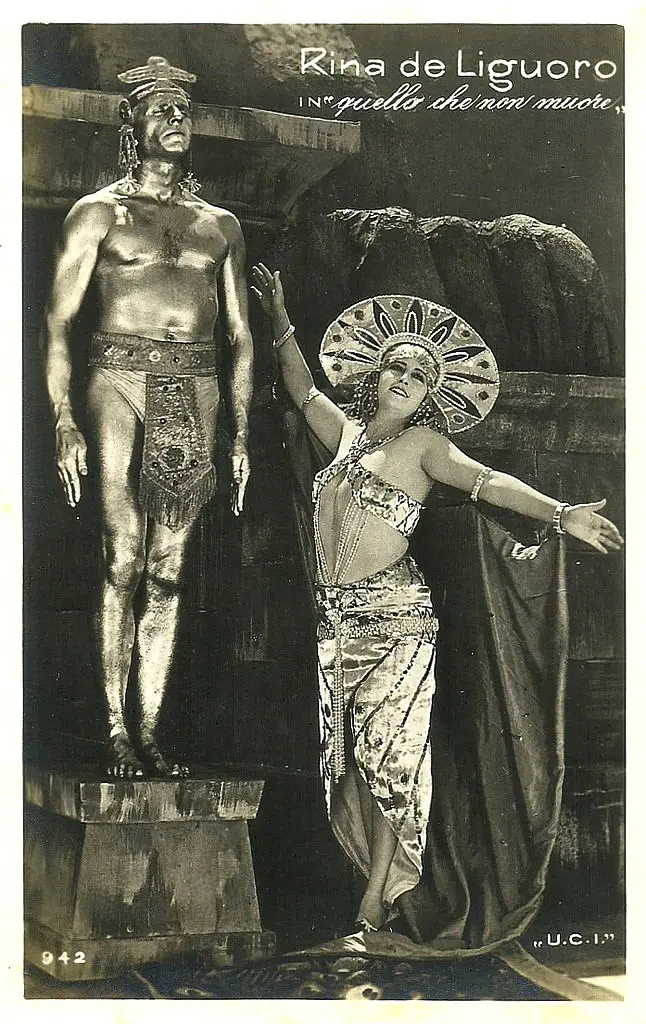
Is this nearly century-old Italian drama worth your time today? Short answer: only if you possess a deep-seated reverence for the histrionics of the silent era and the specific lineage of the De Liguoro family.
This film is for the cinematic archaeologist and the lover of grand, gestural storytelling. It is absolutely not for anyone who requires snappy pacing or the naturalistic acting common in modern streaming hits.
This film works because it captures the final, flickering gasps of Italian silent-era 'Diva-ism' mixed with a newfound interest in psychological interiors.
This film fails because its narrative structure is frequently interrupted by the same repetitive emotional beats that make the middle act feel like an endurance test.
You should watch it if you want to see Bruto Castellani attempt to channel his massive physical energy into a role that requires more nuance than his legendary turn in Quo Vadis.
Quello che non muore is more than a film; it is a family portfolio. Directed by Wladimiro De Liguoro and starring his relatives, the production carries an air of self-importance that is both its greatest strength and its most glaring weakness.
The 1920s were a strange time for Italian cinema. The industry was struggling to compete with the rising dominance of Hollywood imports like The Isle of Lost Ships or the technical precision found in Hypocrites. In response, Italian filmmakers leaned into what they knew best: melodrama.
The story here is a slow burn. It relies heavily on the audience's ability to read into the lingering shots of Rina De Liguoro’s face. Unlike the social critiques found in Open Your Eyes, this film looks inward, focusing on the decay of the spirit rather than the decay of society.
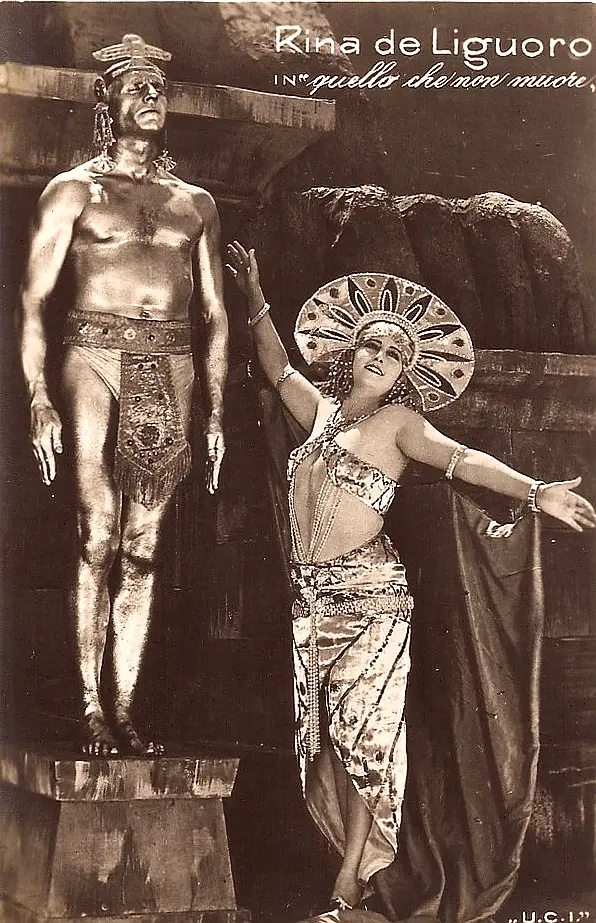
Bruto Castellani is an anomaly here. For years, he was the face of the 'Maciste' style of acting—all muscle and heroic posturing. In Quello che non muore, he tries to be small. He fails. But his failure is fascinating.
There is a scene where Castellani’s character must confront a betrayal. Instead of the subtle twitch of a lip we might see today, he uses his entire torso to convey grief. It is operatic. It is massive. It is, quite frankly, a bit much.
Contrast this with Rina De Liguoro. She was the quintessential 'Diva.' Her performance is built on the architecture of her eyes. She can hold a frame for thirty seconds without moving a muscle, yet you feel the weight of her character's history. It’s a masterclass in a style of acting that has completely vanished from the modern world.
Wladimiro De Liguoro’s direction is surprisingly static compared to the kinetic experiments happening elsewhere, such as the documentary-style energy of Kino Pravda No. 16. He prefers the proscenium arch approach.
However, the lighting is where the film finds its soul. The use of shadows in the interior scenes creates a sense of claustrophobia that mirrors the characters' mental states. It’s not as avant-garde as some German Expressionist works, but it has a distinctly Mediterranean gloom.
The pacing, however, is a hurdle. While a film like The Carter Case uses mystery to drive the plot forward, Quello che non muore uses atmosphere. Sometimes, that atmosphere is so thick it becomes stagnant. You find yourself wishing the characters would just say what they mean, even though you know they can't speak.
Short answer: For the casual viewer, no. For the cinephile, yes.
If you are looking for entertainment in the modern sense, this will feel like watching paint dry in a very beautiful, very old house. But if you want to understand the evolution of the Italian film industry before the sound era changed everything, this is a vital piece of the puzzle.
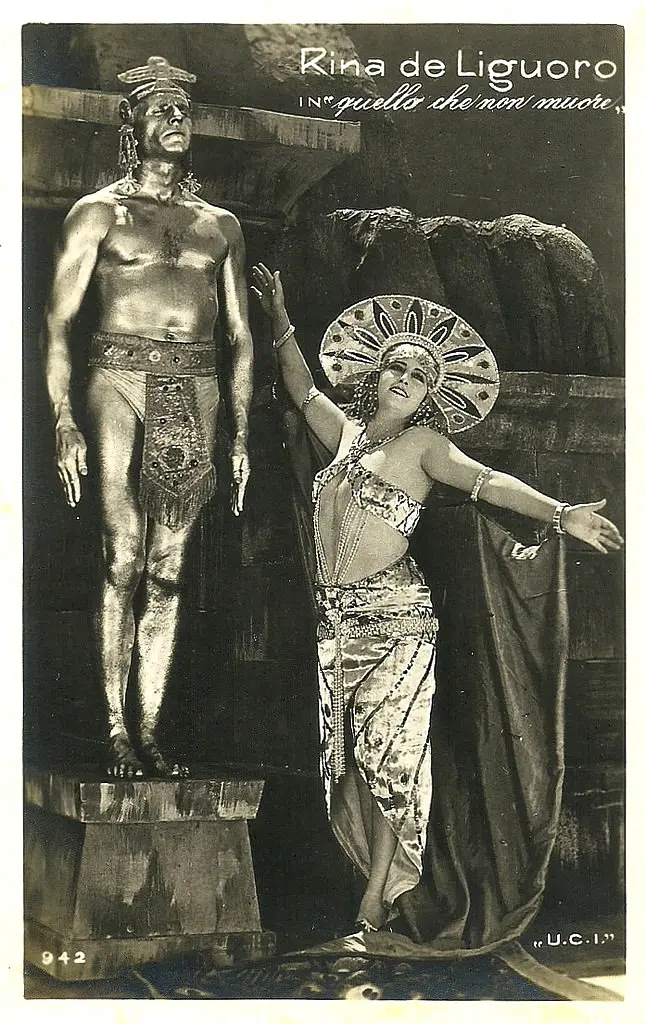
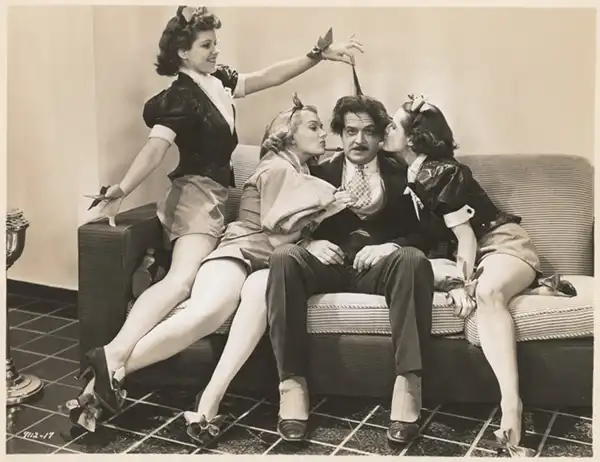
When you compare this to American films of the same year, like the domestic drama of Discontented Husbands, the cultural divide is massive. Italy was still clinging to the idea of the 'Grand Art,' while Hollywood was mastering the art of the 'Everyman.'
Quello che non muore feels like a bridge. It’s trying to move away from the ancient epics but isn't quite ready to embrace the gritty realism that would eventually define Italian cinema after the war. It’s a film in limbo.
Even compared to lighter fare like A Girl at Bay or the comedy of Home Brew, this film is remarkably heavy. It takes itself very seriously. Sometimes, too seriously. There is no room for levity when you are dealing with things that do not die.
The film stock used in 1926 was notoriously temperamental, yet the restoration efforts for this film show a surprising amount of detail. The textures of the costumes—the heavy velvets and delicate silks—tell a story of class and decline that the script sometimes misses.
I find the pacing to be the most debatable aspect. Some critics argue it creates a 'trance-like' state. I argue it’s just poor editing. Compared to the tight narrative of Danger Within, this film wanders. It gets lost in its own reflections.
"It is a film that demands you sit still. In an age of distraction, that is either a gift or a punishment."
Quello che non muore is a fascinating, if flawed, relic. It captures a specific moment in time when Italian cinema was searching for a new identity. It doesn't always find it. But the attempt is beautiful to watch.
It works. But it's flawed. If you go in expecting the energy of Wild Primrose, you will be disappointed. If you go in expecting a visual poem about the weight of the past, you might just find something that lingers in your mind long after the credits roll.
Ultimately, it’s a film about ghosts. Not the kind that rattle chains, but the kind that live in the corners of our eyes and the silences between our words. For that alone, it earns its place in the history books, even if it doesn't always earn a place on your weekend watchlist.
IMDb 6.3
1936
Community
Log in to comment.