DbcultAccessing Vault...
Cult Review
Senior Film Conservator
A canvas of chiaroscuro morality
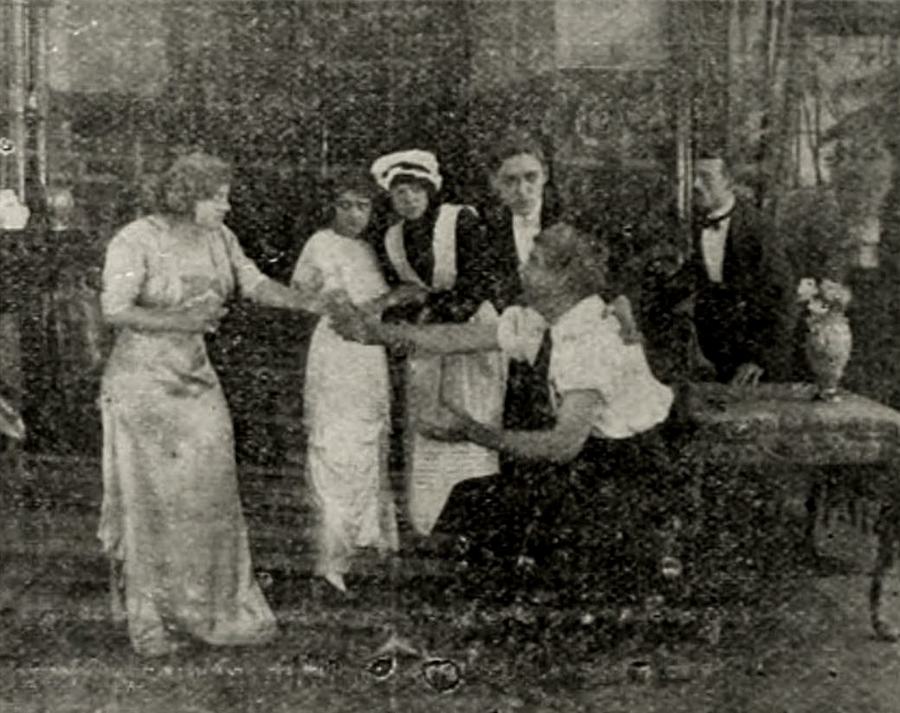
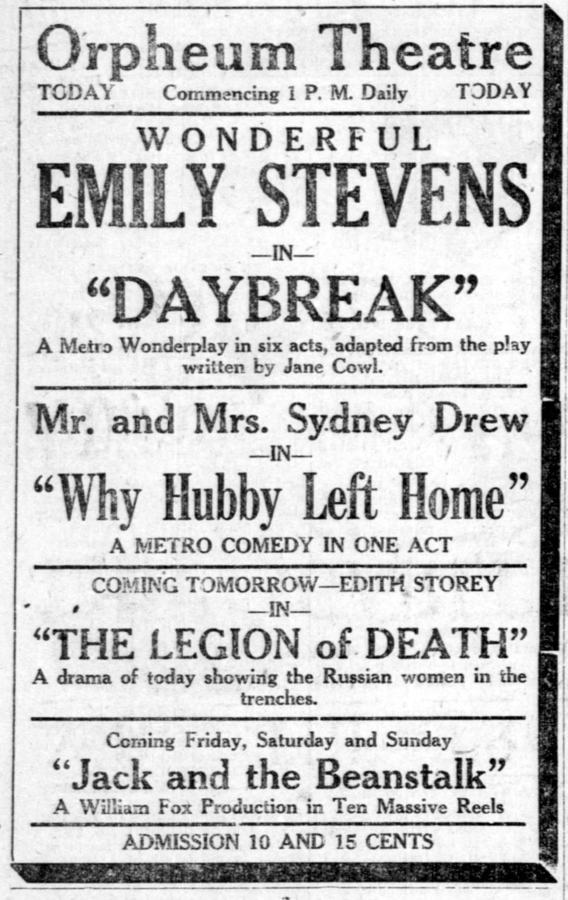
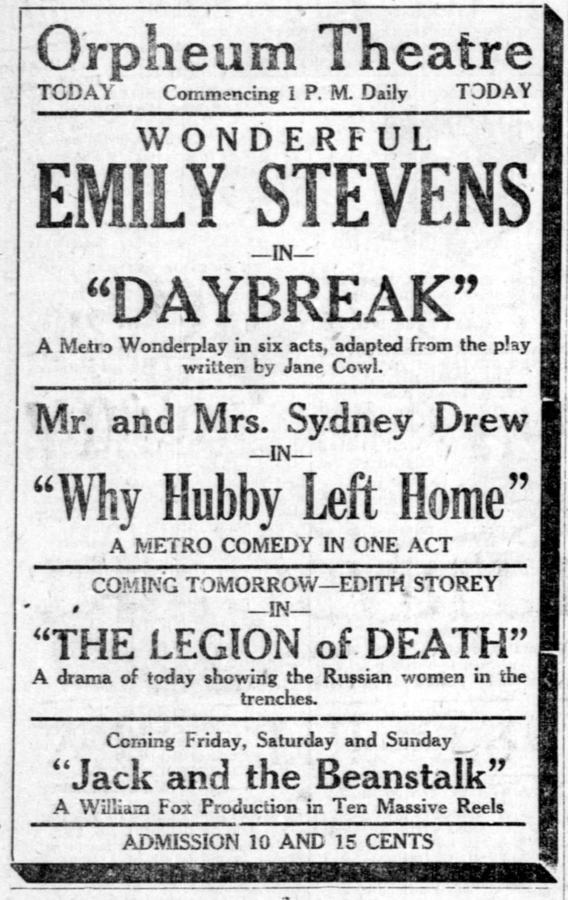
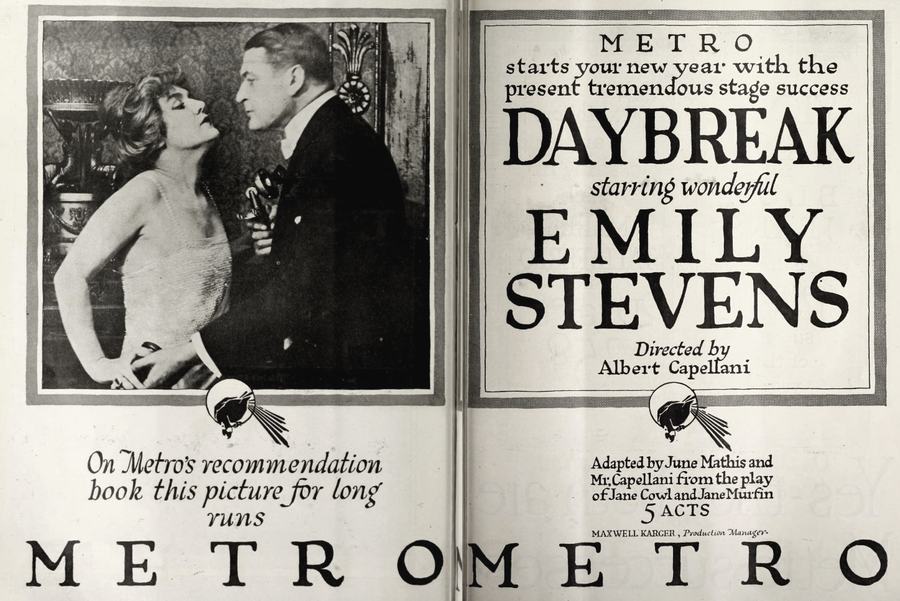
Albert Capellani’s Daybreak arrives like a brittle glass-plate negative unearthed in a dusty attic: fragile, flammable, yet etched with silhouettes that refuse to dissolve. The film’s prologue—an upper-crust bacchanal drenched in Art Deco shadows—announces its preoccupation with surfaces that crack under moral weight. Arthur Frome, sheened in tuxedo satin, toasts the roaring twenties; cinematographer Harold Rosson’s vignetted close-ups already foreshadow the skull beneath the skin.
Silent cinema seldom granted alcoholism the tactile immediacy Capellani conjures here. A match-cut from swirling absinthe to swirling traffic imbues the libation with the same kinetic menace as the motorcar that will soon become weapon.
The inciting shove—newsie, metal, scream—lasts perhaps eight frames, yet the director elongates impact through temporal triptych: a freeze of faces, a smash-cut to spinning headlines, a slow fade on a crumpled cap. Modern viewers may detect the DNA of subsequent guilt-noirs like The Craving, but none rival this silent aria of culpability.
The architecture of absence
June Mathis’s scenario weaponizes negative space. Edith’s disappearance is not dramatized; one reel ends with Arthur slumped beside a bassinet, the next begins with him alone in a cavernous drawing room. Capellani refuses expository titles, trusting the audience to feel the marrow-ache of vacancy. Interior decorators of plot would call this a hole; I call it negative capability, a lacuna in which spectators project every bedtime story a parent never read.
When Edith resurfaces—Evelyn Axzell’s eyes holding galaxies of withheld testimony—her costuming evolves from flapper fringe to nun-like gabardine. The palette shift silently argues: motherhood has exiled her to a convent of her own design.
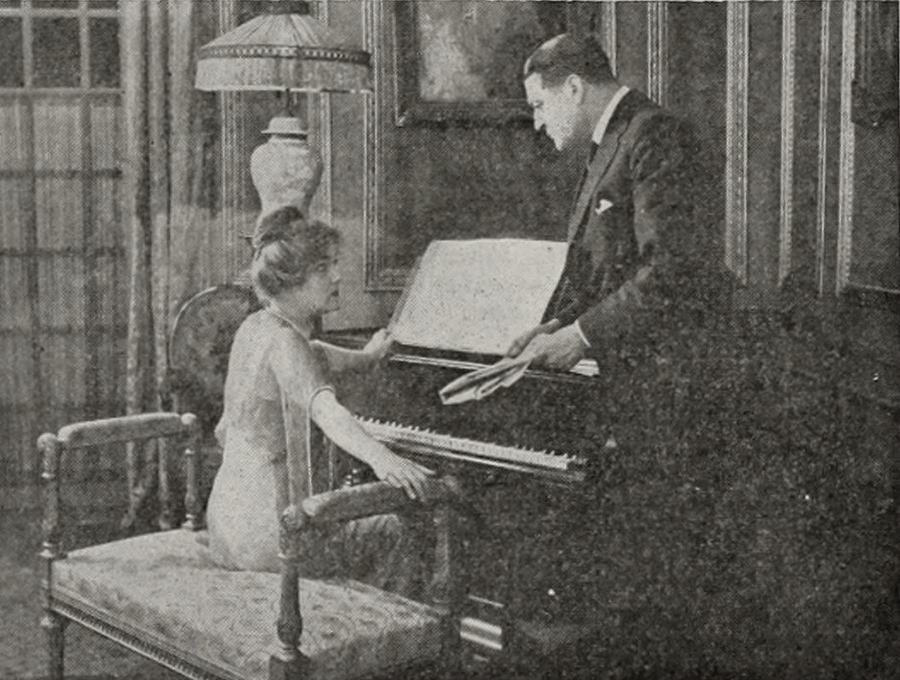
The townhouse of the sick child resembles a Pre-Raphaelite reliquary: ivy choking brickwork, lace curtains breathing in and out like lung tissue. Capellani’s camera glides across threshold shadows with the hush of someone entering a cathedral—or a crime scene.
Performances calibrated at the octave of silence
Joseph Daly’s Arthur charts a thespian decrescendo: grand gestural theatre for the inebriated swagger, then micro-gestures—twitch of a cheek muscle, tremor of a highball glass—when sobriety clamps down. His penultimate hospital scene, pupils flickering between morphine and regret, could teach Stanislavski about the expressivity of stillness.
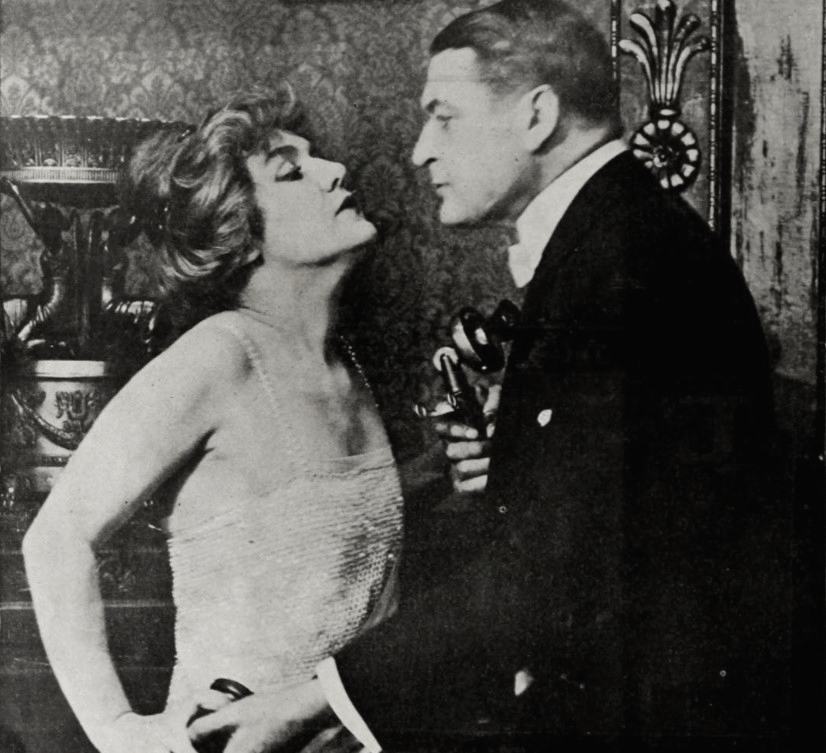
Axzell counters with a performance of obstinate opacity; hers is the face that launched a thousand intertitles, none sufficient. She weaponizes the tear that never falls, letting it tremble at the lower lashes like a diver afraid of the plunge.
Julian L’Estrange’s Dr. Brent risks saintly banality but sidesteps it via ironic undercurrents: watch the curl at the corner of his mouth when he diagnoses the child—half Hippocrates, half Icarus aware of the melting point of wax.
Montage as moral algebra
Capellani, influenced by Soviet theorists he met during his Pathé days, inserts a proto-Eisensteinian montage during the revelation sequence. Shots of:
intercut with crucifix-shaped banister shadows. The triangulation suggests a syllogism: sin + sacrifice = salvation. Yet the equation remains precarious; the film’s morality refuses algebra, landing closer to quantum indeterminacy.
Gendered spaces, suffocated voices
Jane Murfin’s literary pedigree seeps into the picture’s gender politics. Edith’s flight is less maternal instinct than radical withdrawal of labor: the unpaid affective economy of wifedom. The patriarchal city—boardrooms, barrooms, courtrooms—offers her no breathable air; hence the townhouse becomes clandestine utopia, a separatist nursery where the currency is care, not capital.
Yet even here, surveillance penetrates. The employee’s wife trailing Edith is a proto-private-eye, a reminder that patriarchy outsources its policing to the working-class women it doubly exploits. Capellani stages her pursuit through reflections—shop-window, puddle, mirror—implying identity itself is a refraction of who watches whom.
Compare the spatial dynamics with No Children Wanted, where domesticity is a prison; in Daybreak, domesticity is escape velocity, albeit temporary.
The bullet as metonym for gossip
Arthur’s gunshot wound arrives not as climax but as logical extension of rumor. The jealous husband’s pistol is merely the externalization of whisper campaigns that have trailed Edith since her return. The slug pierces flesh, but the real laceration is semiotic: language as ammunition. Notice how the bullet’s impact is preceded by a title card reading: “Words—like stray bullets—find their mark.” Capellani literalizes the metaphor with Brechtian audacity.
Restoration status & availability
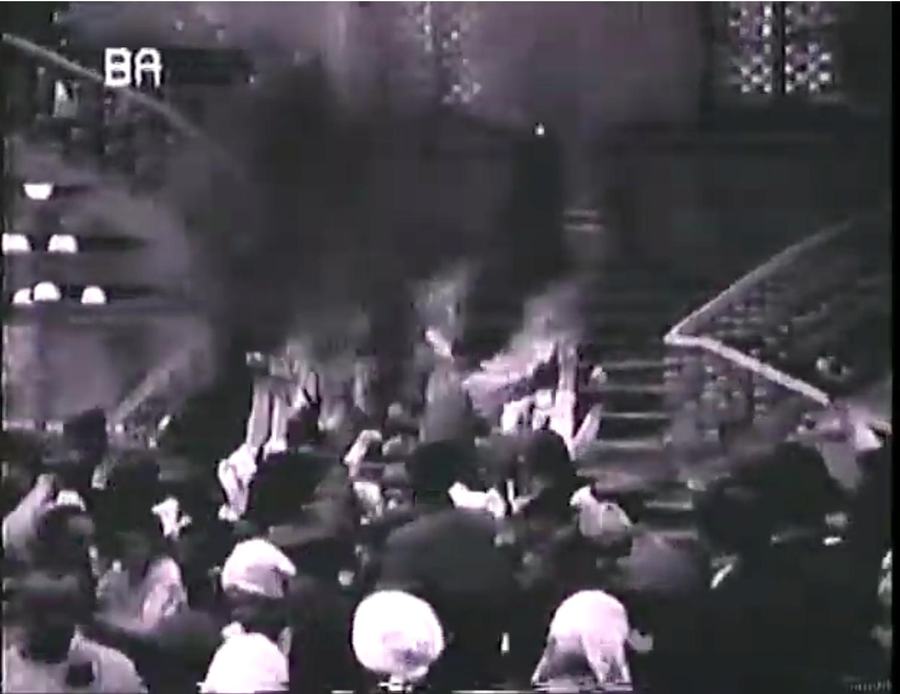
Surviving prints reside in an incomplete 35mm nitrate state at the Cinémathèque française, two reels lost to vinegar syndrome. A 4K photochemical restoration funded by EuropaCorp debuted at Bologna’s Il Cinema Ritrovato, accompanied by a newly commissioned score by pianist Gabriel Thibaudeau that interpolates Debussy-esque arpeggios with the distant honk of a klaxon—sonic memory of the fateful automobile.
Streaming rights remain tangled in the estate of producer Lewis J. Selznick; hence cinephiles must content themselves with festival sightings or gray-market rips watermarked by Russian subtitles. A Blu-ray is rumored for 2025 via Kino Lorber’s “Pioneers of Pathé” box set, but until then, Daybreak slumbers like its titular promise—always pending.
Conclusion—if conclusions were possible
Capellani’s swan song before tuberculosis truncated his career, Daybreak is not a film you finish; it is a film that finishes you. Long after the projector’s chatter ceases, its ethical aftershocks reverberate: How do we parent when our own shadows eclipse the nursery? Is redemption a destination or a horizon that retreats one step for every step we take? The final tableau—Arthur and Edith framed against a sunrise that looks suspiciously like a celluloid burn—offers no absolution, only an armistice with the oncoming day.
Seek it if you can, but beware: once seen, every subsequent sunrise carries the faint smell of newsprint and motor oil.
IMDb —
1936
Community
Log in to comment.