DbcultAccessing Vault...
Cult Review
Senior Film Conservator
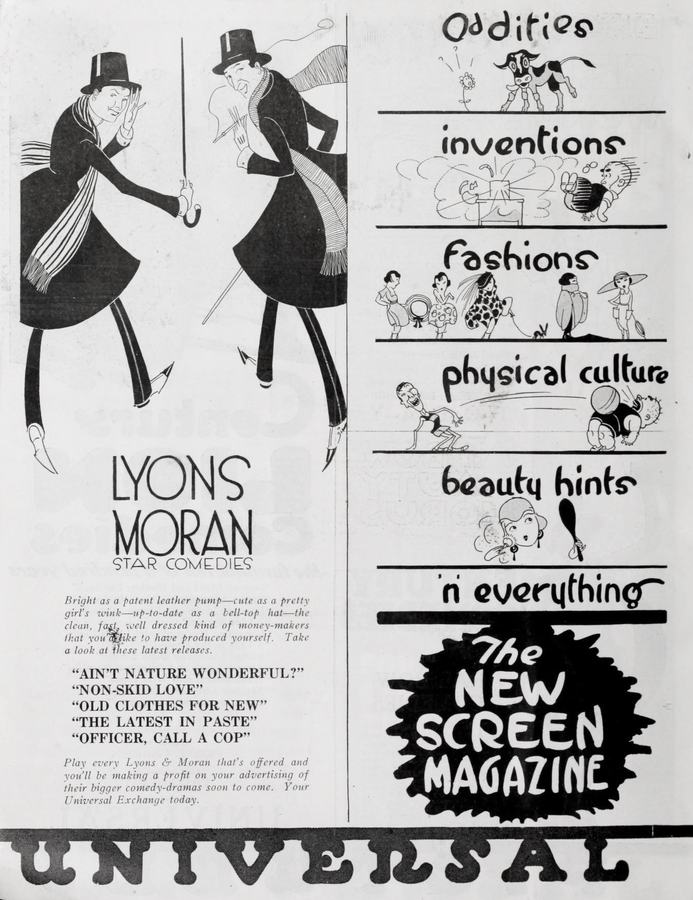
The Latest in Pants is less a film than a champagne saber hurled at Victorian propriety, a celluloid cackle that clocks you with a velvet glove before you notice the blood on the sequins.
Clocking in at a lean twenty-two minutes, this 1920 one-reeler distills the entire decade’s impending seismic shift—corsets torched, bootleg gin guzzled, and gender norms yanked inside-out like a pocket on laundry day. Director-writers Eddie Lyons and Lee Moran, silent comedy’s resident saboteurs, stage the revolt inside a boardinghouse whose wallpaper peels like nervous gossip. Every doorway becomes a proscenium; every trouser seam a fault line.
Charlotte Merriam’s socialite, Millicent van Tassel, barges into Moran’s tailor shop clutching a crumpled fashion plate torn from Paris Vogue. She wants pants—not the harem silhouettes Paul Poiret dangled before the wealthy, but proper, man-stitched, ankle-revealing pants. Moran’s tape measure trembles: the request is both commission and indictment. He obliges, unaware that Marvin’s columnist lurks behind a bolt of serge, notebook poised to scandalize the town.
While the trousers take shape, subplots bloom like ink in water. Cort’s laundress, Rosie, secretes anarchist pamphlets amid the starch, daydreaming of a proletariat clad uniformly in trousers—no petticoats, no masters. Lyons’s pugilist, “Knockout” O’Malley, needs the finished garment only long enough to hoodwink a regiment into believing he’s a civilian; he plans to desert, you see, but wants to look fashionable while doing it. The boardinghouse itself becomes a comic polyrhythm: doors slamming, girdles snapping, secrets sliding under floorboards.
Lyons and Moran borrow the kinetic grammar of Sennett baths and Lubitsch doorknobs, but splice in something rawer: the erotic frisson of fabric. When Millicent first wriggles into the unfinished slacks, the camera lingers on her calves as though they were newly discovered geography. A match-cut leaps to racehorses pounding a track—legs, liberation, speed. Later, Moran’s tailor sprints through town clutching the pants like a rescued newborn; every passerby forms a tableau of apoplectic shock—matrons clutch pearls, a policeman’s jaw drops so low his whistle falls in.
The climactic fashion show, staged in a mirrored ballroom, erupts into Busby Berkeley before Berkeley. Dancers high-kick, fling the trousers from torso to torso, until the garments multiply like spores in a petri dish. In a bravura overhead shot, the camera peers down at a kaleidoscope of limbs and gabardine, a prophecy of 1960s miniskirt rebellion.
Grace Marvin, usually typecast as the winking soubrette, weaponizes her smile here; it could slice bread. She delivers expositional title cards with side-eye so lethal you expect the intertitles to bleed. Elsie Cort’s Rosie underplays anarchic zeal, letting the glint in her eyes sell the revolution. Merriam carries the film’s emotional heft: her Millicent is both brat and Joan of Arc, convinced that sartorial insurrection equals emancipation. When she finally strides down Main Street in the finished pants, hands on hips, the film freezes on a close-up—half-pride, half-dare—a proto-feminist meme decades ahead of schedule.
Lee Moran’s tailor, all twitch and stammer, channels Buster Keaton’s stone-face by way of Chaplin’s shuffle; his fingers flutter like trapped sparrows whenever measuring inseams. Eddie Lyons, beefier and brimming with prizefighter bounce, hurls himself into physical stunts with reckless grace—watch him leap a clothesline only to entangle his neck in lingerie, a visual pun on the era’s tangled gender politics.
Surviving prints arrive without official score, so festival curators often commission live accompaniment. Under a nimble pianist, the chase scenes acquire a Rachmaninoff thunder; under a ukulele duo, the ballroom bacchanal sways like hula in Hades. Either way, the absence of synchronized dialogue liberates the trousers themselves—they swish, snap, and flutter so loudly you swear the theater speakers breathe.
Place Pants beside The Law of Compensation and you witness Hollywood’s bipolar 1920: one reel sermonizing cosmic payback, the other giggling at cosmic upheaval. Pair it with The Inevitable and you map how fate-obsessed melodrama ceded ground to anarchic slapstick. Even A Trip to Mars feels stodgy by comparison—its sci-fi corsets laced tight, its hemlines still Victorian.
The 4K restoration, completed by EYE Filmmuseum and MoMA, excavates amber tones once lost to nitrate bloom. You can now count the stitches on Moran’s waistcoat, discern the cigarette burn on Cort’s apron, catch the moment Merriam’s pupils dilate the first time she beholds the forbidden trousers. The grain, intentionally left breathing, crackles like shellac under a phonograph needle—perfect foil for the film’s jittery tempo.
Modern viewers might scoff: it’s just pants. Yet in 1920, trousers on women triggered arrests for “masquerading.” The film weaponizes that anxiety, staging a Keystone-style trial where Millicent must defend her calves before a jury of apoplectic patriarchs. Her defense? A shimmy—she kicks, twirls, high-kicks again until the courtroom erupts in dance. The verdict: acquittal by way of jazz. History would catch up nine years later when the “pantsuit” entered department stores, but cinema arrived first, giggling all the way.
If you crave more boardinghouse bedlam, sample Neighbors or Camping Out, both hinge on spatial compression—walls thin, secrets fat. Yet neither weaponizes couture as insurrection. For that, only Pants threads the needle.
One-reelers seldom earn canonical laurels; they flicker, vanish, resurrect on YouTube with Russian subtitles and piano hackery. But The Latest in Pants endures because it is not content to merely jest—it lunges at the jugular of conformity, snips, sews, and sashays away laughing. Ninety-odd years later, its swagger feels fresher than most 2020s comedies, its gender politics sharper than any prestige miniseries. Hemlines rise and fall; revolutions wear many outfits. This one chose trousers, and the world still hasn’t caught its breath.
Currently streams on Criterion Channel, Kino Cult, and occasionally hijacks Turner Classic’s Silent Sunday slots. Catch it with live score if you can; your calves will thank you.
IMDb 4.5
1933
Community
Log in to comment.