DbcultAccessing Vault...
6.3/10
Senior Film Conservator

A definitive 6.3/10 rating for a film that redefined the boundaries of cult cinema. Should a Woman Tell? remains a cornerstone of transgressive art.
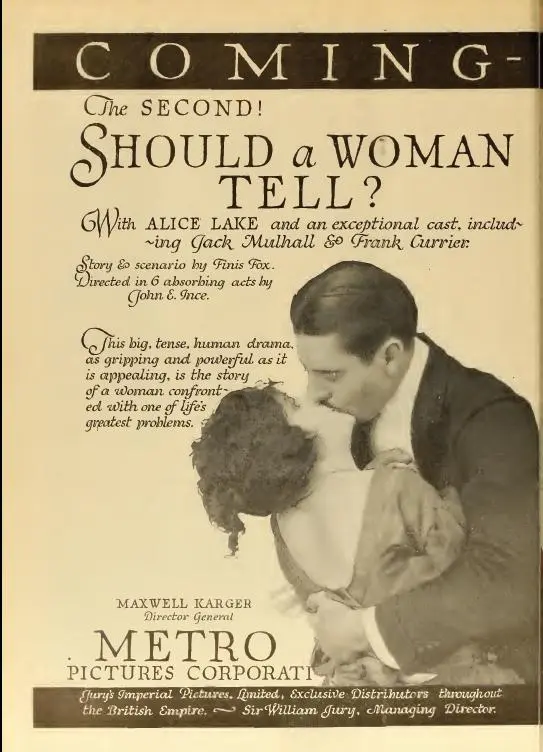
The silent cinema, often dismissed as a quaint relic, frequently tackled societal quandaries with an audacious directness that still resonates today. Should a Woman Tell? from 1919 is a prime exemplar, a film that plunges into the fraught territory of female reputation, personal trauma, and the unforgiving gaze of a patriarchal society. It’s not merely a melodrama; it’s a searing indictment of the double standards that dictated a woman’s worth, a narrative spun with an emotional intensity that transcends its century-old vintage. Finis Fox, as both writer and director, crafts a narrative that feels both intimately personal and broadly allegorical, a testament to the enduring power of storytelling even without spoken dialogue, proving that some questions reverberate across generations, regardless of technological advancements.
At its core, the film unravels the tragic trajectory of a young woman, portrayed with heartbreaking vulnerability by Alice Lake, whose life takes an irreversible turn during a visit to the bustling metropolis of Boston. Her pastoral innocence, a hallmark of her village upbringing, is brutally shattered by an encounter with a predatory figure, leaving her not only physically violated but profoundly scarred in spirit. The film masterfully conveys her subsequent retreat, a silent journey home laden with an unbearable burden of shame and self-condemnation. Lake’s performance here is a masterclass in non-verbal communication, her eyes conveying a world of unspoken anguish, her gestures illustrating a profound sense of defilement. The very air around her seems to thicken with her unspoken secret, a palpable weight that presses down on every frame, transforming her once vibrant presence into a hushed, haunted figure. The contrast between her initial hopeful venture into the urban sprawl and her broken return to the familiar comfort of home is visually and emotionally stark, highlighting the corrosive impact of her ordeal.
The societal pressures of the era, particularly concerning a woman’s 'purity,' are not merely background noise but an active antagonist in this drama. The film implicitly critiques the prevailing notion that a woman, once 'sullied,' was beyond redemption, her future irrevocably tainted, her very being somehow diminished. This moralistic framework is vividly depicted through Lake’s character’s internal torment, her inability to reconcile her past trauma with her desperate desire for a future built on love and acceptance. It’s a theme that echoes in other films of the period, such as The Solitary Sin, which similarly grappled with the severe consequences of societal judgment on individual lives, often leaving characters isolated and condemned to a life of quiet despair. The silent era, for all its perceived naivete, was surprisingly adept at dissecting these complex ethical dilemmas, presenting them to audiences who were themselves navigating rapidly changing social mores but still clinging to traditional values.
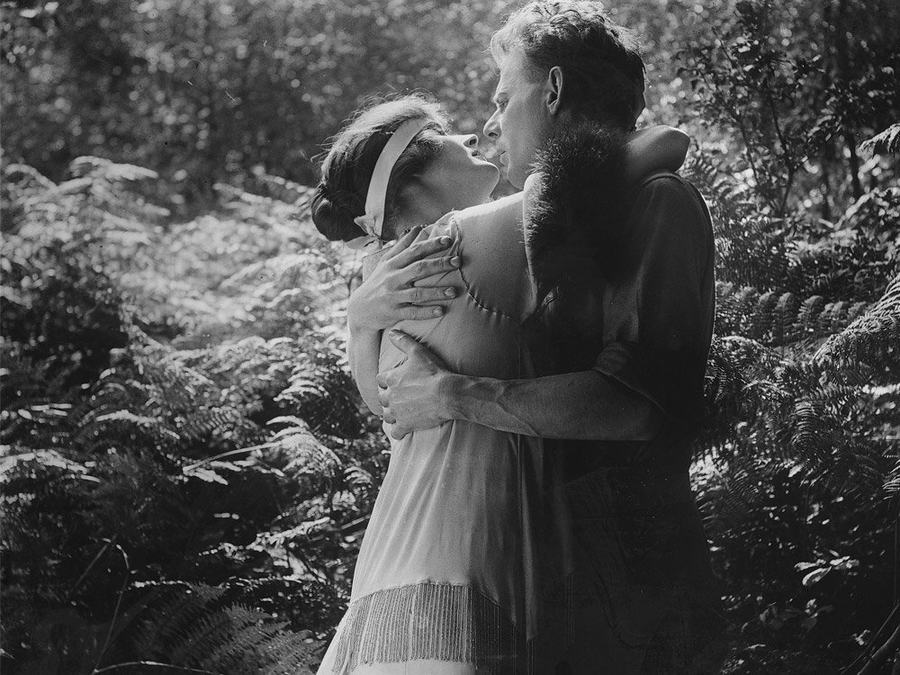
Years later, a ray of hope, luminous yet fragile, pierces the gloom with the fortuitous return of a young man, a former suitor who had long harbored genuine affection for her. Portrayed by John Gilbert, whose nascent screen presence already hinted at the charismatic stardom he would later achieve, he re-enters her life after a formative sojourn in Europe, his affections undimmed by time or distance. His renewed suit offers her a tantalizing glimpse of a future free from her past's shadow, a chance at love and domesticity, a redemption she scarcely dared to dream of. Their burgeoning romance is depicted with a tender earnestness, each stolen glance and hesitant touch building a precarious sense of burgeoning hope. She returns his love with an intensity born of desperation, clinging to the possibility of a normal life, a life where her secret might remain buried forever beneath layers of conjugal bliss, a desperate gamble against fate.
However, the specter of her past looms large, a silent, menacing presence that threatens to engulf their nascent happiness. The film meticulously charts her agonizing internal struggle as she grapples with the imperative to confess. The question posed by the film’s title — Should a Woman Tell? — becomes her personal torment, a relentless whisper in her mind. Does she risk shattering their fragile happiness by revealing a truth that might alienate him, stripping away his respect and affection? Or does she build their future on a foundation of deceit, knowing it could crumble at any moment, exposing her as a fraud? This psychological tension is masterfully sustained, each close-up of Lake’s anguished face inviting the viewer to share in her profound dilemma, to feel the weight of her moral quandary. It's a testament to Finis Fox's direction that this internal conflict feels so immediate and pressing, even without a single word spoken, a true triumph of visual storytelling over verbal exposition.
The inevitable moment of confession arrives, a scene imbued with a potent blend of hope and dread that crackles with anticipation. When she finally unburdens herself, revealing the traumatic truth of her Boston misadventure, the audience is held captive, breathlessly anticipating the beloved's reaction. His response, however, is not one of immediate solace or unconditional understanding, as a modern audience might wish. Instead, it is steeped in the rigid moral codes of the time, a reaction that seems to seal their fate with an almost Greek tragic inevitability. This pivotal moment is a gut-wrenching portrayal of how deeply ingrained societal expectations and patriarchal notions of 'honor' could fracture even the most profound personal bonds, prioritizing reputation over genuine affection. The silence following her revelation is deafening, punctuated only by the visual cues of despair and disillusionment that play across their faces, a tableau of shattered dreams and unyielding societal judgment.
Finis Fox, in his dual role as writer and director, demonstrates a keen understanding of cinematic rhythm and emotional pacing, a sophistication often overlooked in early silent features. The narrative unfolds with a measured gravity, allowing the emotional weight of each scene to fully settle, rather than rushing through pivotal moments. The transition from the idyllic village life, bathed in a gentle light symbolizing innocence, to the corrupting influence of the city, depicted with harsher angles and shadows, and then back to the stifling moral atmosphere of her home, is handled with a subtlety that belies the film’s age. He utilizes the visual language of silent film – the dramatic lighting, the expressive intertitles, the carefully orchestrated gestures – to amplify the story’s impact, creating an immersive experience. Unlike the more action-oriented thrillers of the era, such as Fighting Back, this film thrives on internal conflict and the quiet, devastating erosion of personal happiness.
The cinematography, while perhaps not groundbreaking by today's standards, is exceptionally effective in establishing mood and character. Close-ups are employed judiciously to emphasize Alice Lake's emotional turmoil, drawing the audience intimately into her private agony and making her suffering palpable. The use of natural light in some of the village scenes contrasts sharply with the more artificial, sometimes stark, lighting of the city sequences, subtly reinforcing the thematic dichotomy between innocence and experience, purity and corruption. Intertitles, rather than merely advancing the plot, often serve as poignant commentaries, sometimes even rhetorical questions directed at the audience, forcing a deeper engagement with the moral quandaries presented. This narrative technique elevates the film beyond a simple story, transforming it into a communal exploration of ethical boundaries. The film shares a thematic thread with a classic like Anna Karenina, where a woman's past actions, perceived as transgressions by society, lead to a tragic downfall, regardless of her inherent goodness or subsequent remorse. Similarly, the unseen, pervasive influence of societal expectation in The Grip of Evil finds a quiet echo here, as the protagonist is ensnared by an invisible moral architecture.
The film’s power lies not just in its dramatic unfolding but in its unflinching examination of a universal human dilemma: the struggle between truth and concealment, and the often-harsh consequences of societal judgment. It asks profound questions about forgiveness, empathy, and the true meaning of love, particularly when confronted with inconvenient truths that challenge deeply held beliefs. The specific cultural context of 1919, with its rigid social structures and the burgeoning women’s suffrage movement, imbues the film with an added layer of historical significance. It captures a moment when the roles and expectations of women were undergoing seismic shifts, yet the old guard of moral conservatism still held considerable sway, creating a palpable tension between tradition and progress. This struggle for agency against an unyielding backdrop makes the protagonist's plight all the more resonant, a microcosm of a larger societal conflict. Much like the strictures explored in Rule G, which depicted the unforgiving nature of institutional codes, this film illustrates the equally stringent, albeit unwritten, rules governing female behavior and reputation.
One cannot discuss Should a Woman Tell? without acknowledging the profound impact of its central question. It forces viewers, then and now, to confront their own biases and notions of what constitutes 'unforgivable,' challenging them to look beyond superficial judgments. The film doesn't offer easy answers, nor does it shy away from the pain inherent in its premise. Instead, it presents a stark, emotionally charged tableau of human vulnerability and the often-cruel realities of social codes that prioritize appearance over substance. The performances, particularly Lake’s, anchor this emotional journey, making her character’s suffering deeply personal and universally relatable, a testament to the evocative power of silent acting. It’s a compelling argument for the enduring power of silent film to convey complex human emotions without the crutch of dialogue, relying instead on pure visual and gestural artistry.
In an era that also produced lighter fare like Cupid Angling, this film stands out for its gravitas and its willingness to delve into the darker corners of human experience, refusing to sanitize its narrative for mass appeal. It serves as a vital historical document, offering a window into the moral anxieties of its time, while simultaneously transcending them to touch upon timeless themes of shame, redemption, and societal hypocrisy. The tragedy that unfolds is not merely a plot device but a reflection of a societal blindness, a collective failure to extend grace and understanding to those who deviate from an impossibly narrow path. This makes the film's title not just a question for the protagonist, but a profound challenge to the audience, then and now: should a woman tell, and if she does, how will we respond? The film’s lasting legacy is its ability to provoke thought and stir empathy, proving that some stories, even without sound, speak volumes across the ages, echoing long after the final frame.
The film’s conclusion, while perhaps predictable given the rigid societal constraints of its time, still manages to land with a devastating punch. It refuses to offer a saccharine resolution, instead opting for a more realistic, albeit heartbreaking, depiction of the consequences of societal judgment. This lack of a facile 'happily ever after' is what elevates Should a Woman Tell? beyond mere entertainment into the realm of poignant social commentary. It reminds us that sometimes, love alone is not enough to conquer the deeply entrenched prejudices and moralistic condemnations that govern human interaction. The film, in essence, becomes a cautionary tale, not just for the woman who carries a secret, but for the society that demands such secrecy and then cruelly punishes its revelation. It’s a powerful, often uncomfortable, viewing experience that continues to resonate with its poignant exploration of reputation, forgiveness, and the indelible marks left by trauma on the human spirit, a testament to its enduring artistic and emotional power.
IMDb 8.1
1920
Community
Log in to comment.