DbcultAccessing Vault...
6.4/10
Senior Film Conservator
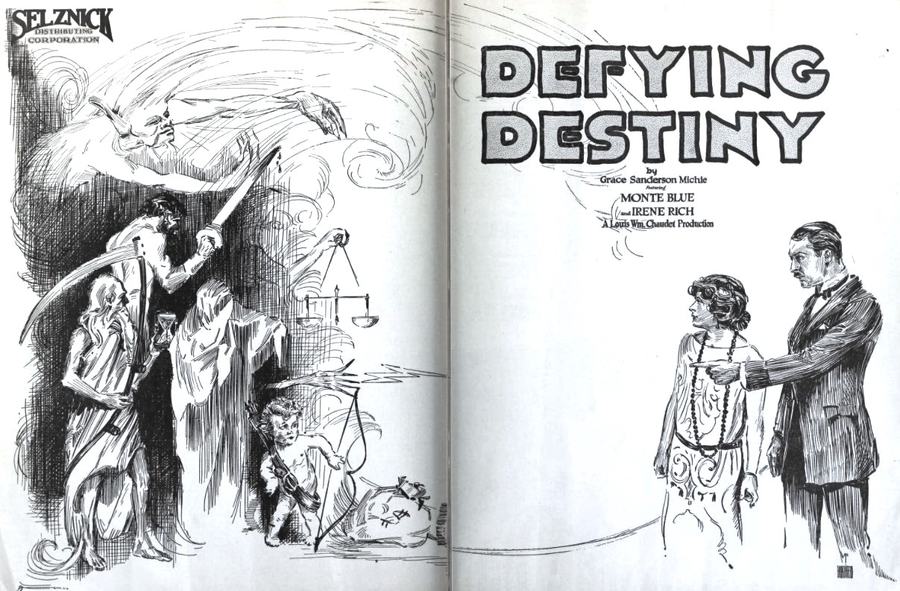
A definitive 6.4/10 rating for a film that redefined the boundaries of cult cinema. Defying Destiny remains a cornerstone of transgressive art.
The 1923 production of Defying Destiny stands as a monumental exploration of the fragility of human identity and the capricious nature of societal gratitude. From the opening frames, the film plunges us into a chaotic landscape of fire and heroism, where Jack (played with a haunting, physical intensity by Monte Blue) sacrifices his aesthetic future for the immediate preservation of life. This isn't merely a plot point; it is a philosophical provocation. How much of our 'self' is tied to the symmetry of our features? The early sequences, directed with a keen eye for atmospheric tension, establish Jack as a pariah in plain sight. Unlike the overt villainy found in The Brand of Satan, where evil is often inscribed upon the soul, Jack’s 'brand' is an unearned mark of nobility that the world treats as a curse.
The cinematography captures the soot-stained reality of Jack's post-rescue life with a starkness that predates the noir movement. As he seeks employment at the local bank, the camera lingers on the flinching reactions of his peers. It is here we meet the supporting ensemble, including Irene Rich and Russell Simpson, who provide the necessary emotional counterpoint to Jack's stoic suffering. The bank, traditionally a symbol of stability and trust, is subverted into a site of profound instability. The screenplay by Grace Sanderson Michie deftly weaves a narrative of professional competence clashing with aesthetic prejudice, a theme that remains uncomfortably relevant in our modern, image-obsessed culture.
The romance that blossoms within the sterile confines of the bank is handled with a delicate touch, avoiding the saccharine pitfalls of many contemporary melodramas. Irene Rich delivers a performance of quiet strength, portraying a woman whose affection is rooted in the recognition of Jack’s intrinsic character rather than his external shell. However, the shadow of The Scarlet Shadow looms large over the narrative as betrayal enters the fray. Jack is not merely a victim of circumstance but a target of deliberate, calculated malice. The sequence where he is framed for the bank’s financial discrepancies is a masterclass in tension, utilizing the claustrophobic architecture of the vault to mirror his psychological entrapment.
The cast, featuring stalwarts like Tully Marshall and James Gordon, populates this world with a gallery of characters who range from the genuinely empathetic to the chillingly opportunistic. Z. Wall Covington and Monte Blue share scenes that crackle with an unspoken tension, highlighting the disparity between those who build and those who exploit. When Jack is forced to flee, the film shifts from a domestic drama into a picaresque journey of survival. His flight from the town is not just a physical escape but a symbolic shedding of his former life, a theme echoed in the existential wanderings of Die Insel der Seligen.
The introduction of experimental surgery into the plot provides a fascinating glimpse into the 1920s' fascination with medical progress and its ethical boundaries. This isn't the fantastical mystery of Zudora, but a grounded, albeit dramatized, depiction of reconstructive possibilities. The scenes in the clinic are bathed in a cold, sea-blue light (reminiscent of the #0E7490 palette), emphasizing the clinical detachment required for such a metamorphosis. Jack’s transformation is not instantaneous; it is a grueling, painful process that serves as a second 'fire,' refining his resolve as much as his skin.
This narrative turn allows Monte Blue to showcase his versatility. Post-surgery, his Jack is a man possessed of a lethal calm. He returns to his home turf not as a ghost, but as an avenging phantom. The justice he seeks is not the blunt instrument of the law, which failed him in a manner similar to the protagonist in Handcuffs or Kisses, but a sophisticated dismantling of his enemies' lives. He uses his 'new' face as a mask, infiltrating the social circles of those who once spat on his shadow. The irony is delicious: the very men who judged him by his appearance are now blinded by his beauty, unable to recognize the soul they attempted to crush.
The direction exhibits a sophistication that belies its era. The use of shadows and light to emphasize Jack's disfigurement—and later his perfection—creates a visual rhythm that keeps the viewer emotionally anchored. The inclusion of actors like Frona Hale, Louis Turner, and Jackie Saunders ensures that even the minor roles feel lived-in and essential to the tapestry of the small-town setting. Special mention must be made of Russell Simpson, whose grounded presence provides a moral compass in a story often spiraling into the depths of despair.
While some might compare the tragic weight of the story to Macbeth, Defying Destiny offers a more optimistic, albeit hard-won, resolution. It posits that while destiny may deal a cruel hand, the human spirit—aided by the scalpel of science and the shield of integrity—can rewrite the final chapter. The film avoids the slapstick lightness of The Yellow Dog Catcher or the pastoral simplicity of Mary's Lamb, opting instead for a gritty, transformative realism that was ahead of its time.
In the final act, the film reaches a crescendo of emotional catharsis. The confrontation between Jack and his betrayers is not a spectacle of violence, but a revelation of character. When the truth is finally unveiled, it is the weight of their own guilt that topples the villains, a trope explored with less nuance in Vengeance. The reunion between Jack and his love interest is handled with a poignant restraint; she does not love him because he is 'healed,' but because she never saw him as 'broken' to begin with. This subtle distinction elevates the film from a mere revenge fantasy to a profound meditation on the nature of love and perception.
Technically, the film is a marvel of its period. The editing during the fire sequence is frantic and immersive, while the later scenes in the bank use a more static, formal composition to highlight the rigidity of the social order Jack is disrupting. The script by Grace Sanderson Michie provides a robust framework for these themes, ensuring that the dialogue (via intertitles) never feels superfluous. It is a narrative of reclamation, a story that suggests our scars are not the end of our story, but the beginning of a more complex narrative of self-actualization.
As we look back on Defying Destiny, we see a precursor to many of the tropes that would define the 'man with a new face' genre. It lacks the cynicism of Gambling Inside and Out, choosing instead to believe in the possibility of a moral universe. Whether compared to the epic scale of Patria nueva or the comedic observations of What Happened to Father, this film occupies a unique space in silent cinema history. It is a visceral, demanding, and ultimately rewarding experience that asks us to look past the surface and consider the enduring power of the human will.
Ultimately, the performances of Monte Blue and Irene Rich anchor the film in a recognizable humanity. The supporting cast, including Arthur Millett, Julia Griffith, Mona Sherwood, and George Reehm, create a vibrant community that serves as both the protagonist's obstacle and his eventual audience. Defying Destiny is a testament to the era's ability to tackle complex psychological themes with grace and visual ingenuity. It remains a vital piece of cinematic history, a reminder that even when destiny is written in fire and scars, we hold the pen that can draft the sequel.
IMDb 6
1933
Community
Log in to comment.