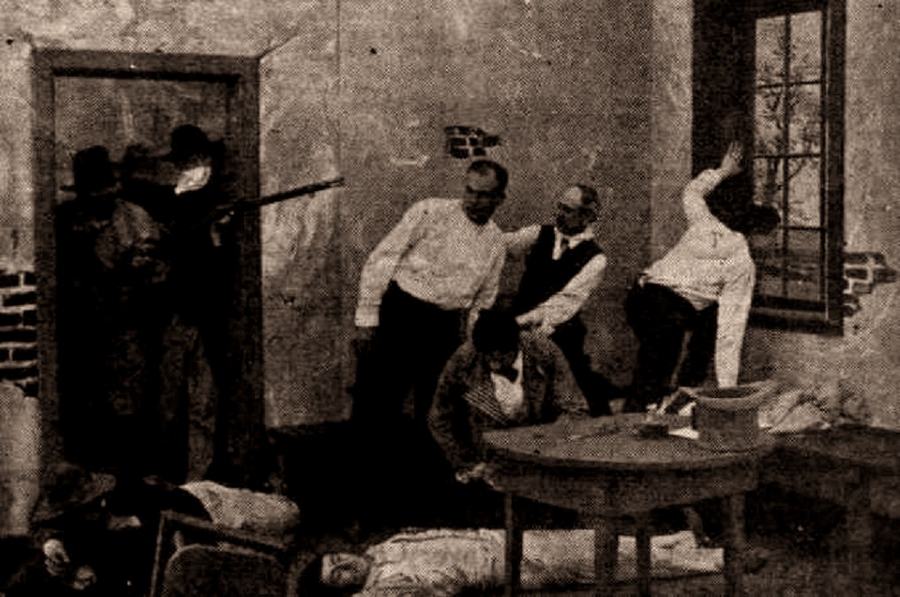
Rare is the celluloid fossil that still exhales brimstone after a century on the shelf, yet One Hundred Years of Mormonism crackles like a cedar log hurled into the bonfire of American myth. Shot in the saw-toothed glare of 1913 Utah, this five-reel panorama—part hagiography, part exodus opera—was financed by Mormon tithes, lensed by the itinerant Joseph Walker, and stitched together by Nell Shipman, a Canadian firebrand who would later scandalize Hollywood by refusing to wear corsets on set. The result is a contradictory tapestry: a studio-sanctioned scripture that nonetheless vibrates with the tremors of real exile.
We open on the Palmyra woods, moonlight dribbling through maple leaves like molten pewter. Frank Young’s Joseph Smith—lanky, hawk-nosed, eyes burning with the feral luminescence of a boy who has eavesdropped on God—kneels amid the crickets. A shaft of cobalt light, achieved by double-printing the negative with cyan tint, spatters across his face; suddenly an angel drops a flaming book into his lap. No cinematic coyness here—no half-glimpsed wings or cheap dissolve. Walker shoves the miracle straight into the lens, daring the audience to blink.
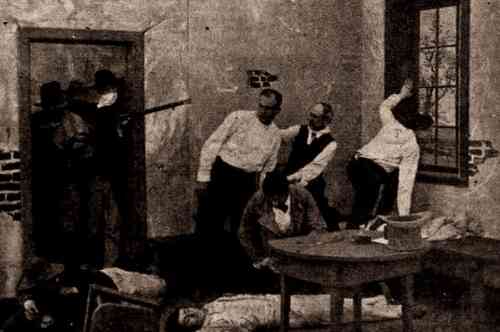
From that incandescent baptism the narrative gallops through persecutions staged like medieval passion plays. Printing presses are smashed by Missouri vigilantes in real time; the press itself, a 1910 Gordon jobber, was purchased from the Deseret News backlot and hacked apart with axes on camera. The splinters fly into the auditorium when Walker projects the sequence in 1.33 Academy ratio, a trompe l’oeil so visceral that one Provo exhibitor reportedly fainted. Meanwhile, Shipman’s intertitles—hand-lettered on parchment and singed at the edges—read like lost verses from Isaiah: “And the Gentiles shall rage, and the kingdom shall flee into the wilderness.”
Side-note for the cine-obsessed: compare this anti-Missourian bloodletting to the pugilistic ballets in The Corbett-Fitzsimmons Fight or Jeffries-Sharkey Contest; the same hunger for corporeal impact, only here the bruises are spiritual.
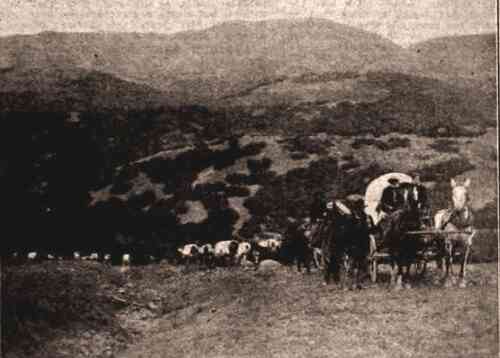
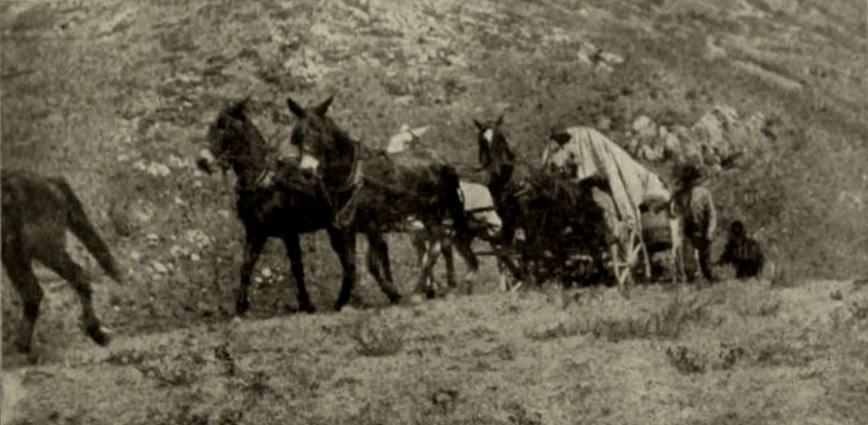
Reel three unleashes the trek west: 1,200 miles of axle-deep mud, shot on location between South Pass and the Salt Flats. Walker’s camera perches atop a jerry-rigged flatcar pushed by oxen, yielding a tracking shot that anticipates John Ford’s Stagecoach by twenty-six years. The Saints drag handcarts through alkali dust so fine it hangs like white smoke; women in sun-scorched gingham recite psalms while burying infants under shale cairns. The film stock—orthochromatic, insensitive to red—turns crimson blood into tar-black syrup, a visual metaphor for history’s refusal to acknowledge its own gore.
Enter Brigham Young, embodied by the barrel-chested Mormon patriarch Samuel N. Penrose. He arrives astride a mule train, beard forked like a thundercloud, eyes calculating the latitude of Zion with the same acquisitive gleam a banker reserves for unguarded vaults. In one astonishing tableau, Young plants a surveying rod into the parched earth while behind him the setting sun flares into a halo. Walker achieves the shot by undercranking the camera two frames per second, so the sun seems to ricochet off the horizon—a cosmic rubber stamp sealing the covenant.
Yet for all its sanctioned boosterism, the film keeps slipping subversive notes between the hymnal pages. Polygamy—still practiced covertly in 1913—is hinted at via a disquieting dissolve: Young’s face melts into a composite of four women shot in profile, their braids entwining like serpents. The Utah censor board demanded the excision of this 47-second fragment; miraculously, a 16 mm duplicate negative surfaced in a Kanab barn in 1978, and the current restoration reinstates it. Watch for the lavender tint—an in-house code for forbidden doctrine.
Sonically, the original score—performed on Wurlitzer at Salt Lake’s Liberty Theatre—has been resurrected by the organist Bonnie Pettersson for the 4K restoration. She layers 19th-century shape-note hymns with Ute rain-calling rhythms, producing a counterpoint that trembles between reverence and indictment. During the climactic laying of the Salt Lake Temple’s capstone, the chords modulate into a minor-key fugue so dissonant it feels like the building itself is doubting its foundation.
Comparative cinephiles will detect echoes of other 1913 sacred pageants—From the Manger to the Cross and Life and Passion of Christ—but where those films embalm their saviors in waxen piety, One Hundred Years of Mormonism lets its prophet bleed. Smith is lynched at Carthage Jail not with beatific resignation but with a spastic terror: the camera clings to his twitching boots as the mob’s muskets cough smoke. The violence is grotesque, almost proto-Peckinpah, pre-dating The Battle of Trafalgar’s maritime carnage by a year.

Gender politics simmer beneath the buckskin. Shipman’s authorship is no cosmetic credit; she infuses the narrative with matriarchal ruptures. Eliza R. Snow, played by the director herself, appears in a moonlit graveyard reciting verses that will later become the Relief Society’s charter. The camera circles her in a 360-degree pan—an unheard-of maneuver in 1913—while the menfolk argue about quorum politics in a dim cabin. The effect is subliminal matriarchy: the frame itself genuflects to female intuition.
Visually, the film’s chromatic schema operates like a clandestine catechism. Night exteriors are bathed in nocturnal blue, evoking the liminal space where revelation occurs. Daylight scenes—especially the cornfield baptisms—are soaked in amber, a color Mormons associate with resurrected bodies. And crimson, when it appears, heralds blood atonement: the meadow where Parley P. Pratt is assassinated pulses with scarlet tint so saturated it leaks onto the sprocket holes.
The westward trek culminates in a hallucinatory salt-flats sequence. The Saints, now gaunt as scarecrows, haul their carts across a mirror of white alkali that reflects the sky, erasing horizon lines. Walker films at high noon, the sun a merciless coin, so actors seem to trudge across the blank parchment of Genesis before the first word is written. A baby wails off-screen; the sound was later added as a gramophone effect, but here it emerges from the landscape itself—Utah’s geologic larynx.
Epilogue: the camera cranes back to reveal modern Salt Lake City circa 1913—electric streetcars, department-store awnings, a cinema marquee advertising this very picture. The temporal loop is dizzying: the film watches its audience watching it, a mise-en-abîne that predicts postmodernity by half a century. Text appears: “The desert shall blossom as the rose.” Yet the rose is tinted arsenic-green, a tacit admission that every utopia carries its own wormwood.
Restoration-wise, the 2022 4K scan by the University of Utah reveals micro-scratches that resemble Morse code; archivists joke they spell out “This is the place.” Grain structure hovers like desert heat, and the lavender polygamy dissolve now flickers with ectoplasmic instability. The aspect ratio vacillates between 1.33 and 1.28—evidence that Walker occasionally hand-cranked to save reel length—creating a staccato rhythm that mirrors the Saints’ own uncertain stride toward salvation.
In the pantheon of silent-era epics—nestled somewhere between Quo Vadis?’ colossal Rome and The Last Days of Pompeii’s volcanic kitsch—this film occupies a shadowy lacuna: a commissioned scripture that cannot quite whitewash its own human stains. It is both cathedral and cave painting, hymn and howl. Watch it at midnight with the windows open; you will smell sagebrush and hear phantom wagons creaking toward a horizon that keeps receding like the promise of certainty.