DbcultAccessing Vault...
6.7/10
Senior Film Conservator
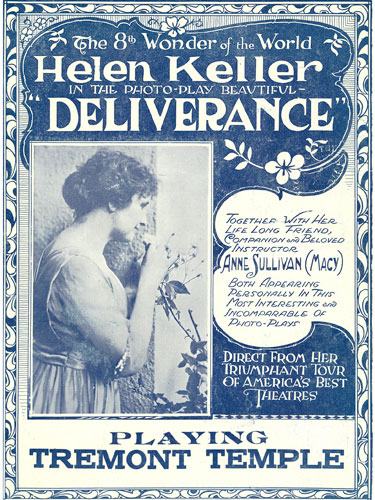
A definitive 6.7/10 rating for a film that redefined the boundaries of cult cinema. Deliverance remains a cornerstone of transgressive art.
What alchemy transforms flesh into thought? Deliverance, that unheralded 1919 silent marvel, conducts this experiment with startling visual poetry. Director George Foster Platt—working from Francis Trevelyan Miller's script—eschews sentimentality for sensory archaeology. Consider the legendary water pump sequence: Tula Belle's Helen isn't merely "learning a word" but experiencing ontological birth. Cinematographer Joseph Shelderfer drowns the frame in liquid light as Keller's trembling fingers mimic Sullivan's signs, water cascading over skin like baptismal grace. The celluloid itself seems to sweat with revelation—every droplet a shattered metaphor for consciousness pouring through cracked dam walls.
"Platt films tactile communication like interstellar signals—fingers pressing constellations into waiting palms, spelling out galaxies in epidermal braille."
Tula Belle’s performance operates at neurological altitude. Watch her hands during the dining room rebellion—flailing not randomly but with the precise, jagged rhythms of synaptic fireworks. Her body becomes cartography of frustration: shoulders hunched like fortress walls, neck tendons straining against the prison of her skull. When comprehension finally ruptures through, Belle doesn't resort to smiling epiphany but collapses into Etna Ross' Sullivan as if gravity itself shifted. This isn't acting but possession, the kind that makes later Keller portrayals feel like polite impersonations. Compare this physical intensity to Charlotte Mersereau's fragile vulnerability in The Little Mademoiselle—both masterclasses in silent expression, yet light-years apart in emotional voltage.
Ross crafts Anne Sullivan as a woman haunted by her own ocular ghosts. Notice how she handles books—fingers skimming pages like a dowser seeking truth-springs, her own scarred eyes squinting as if translating between visible and invisible realms. Her stillness amid Helen's tempests radiates terrifying conviction. When she spells "water" into Helen's palm, Ross's face holds the terrifying serenity of a saint touching divinity. This dynamic recalls the mentor-protégé tension in The Master of the House, yet Ross transcends pedagogical tropes to show education as violent, glorious surgery on the soul.
A silent film about deafness? Platt weaponizes this irony. Without dialogue crutches, the visuals scream subtext. Consider the breakfast scene: Helen's fingers spider-walking across the table become sonic detectives mapping vibrations of dropped cutlery. Cinematographer Shelderfer paints with shadow—deepening the blacks around Keller to visualize sensory deprivation, then bleaching frames with overexposure during breakthroughs. The absence of sound forces audiences into Helen’s perspective, making us hunger for meaning in gestures like captives deciphering tap codes. This formal daring outshines even Silence of the Dead's atmospheric dread by transforming limitation into revelation.
"Intertitles aren't translations but contrapuntal poetry—flashing words like 'LOVE' or 'THINK' mid-struggle, becoming cognitive lifelines thrown across the abyss."
Platt films Alabama's wilderness as neural landscape—kudzu-choked forests mirroring synaptic tangles, thunderstorms echoing emotional turbulence. When young Helen crawls through thickets, the camera hugs the earth, exaggerating roots into menacing claws. Later, Sullivan harnesses this chaos pedagogically: teaching "tree" by crushing pine needles into Helen's palm, letting bark texture scar her fingertips. Nature shifts from prison to lexicon, anticipating ecological symbolism in The Great Adventure by decades. The infamous well scene achieves mythic power—water isn't just H₂O but the primordial soup of consciousness, splashing illumination onto dusty ground.
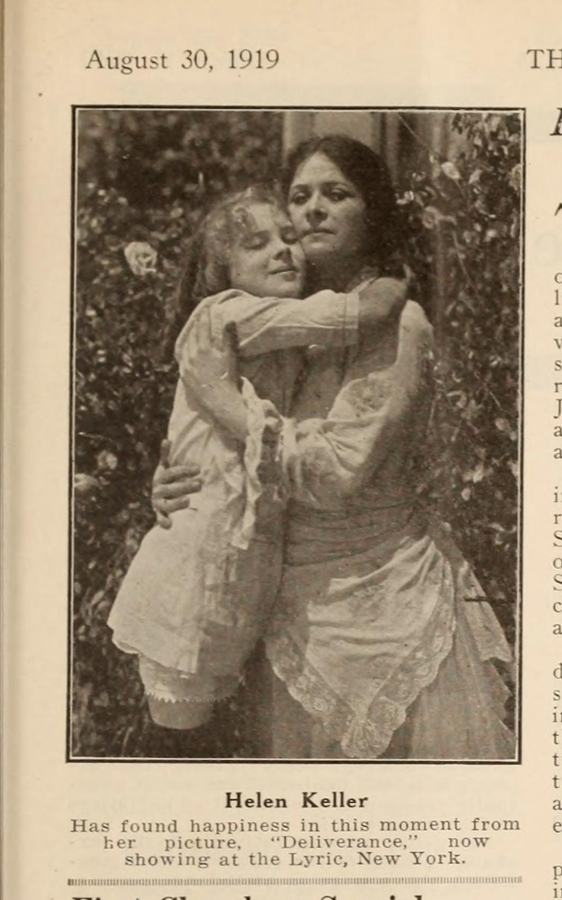
Herbert Heyes’ Captain Keller embodies paternal paradox—his rigid posture softening incrementally like glaciers calving empathy. Watch his hands: initially clenched like slave shackles when denying Helen education, later trembling as they trace her signed words. Betty Schade’s Kate Keller communicates volumes through apron-wringing—domestic choreography as emotional seismograph. Even minor players like James Dunn’s skeptical doctor radiate silent-era eloquence, his stethoscope dangling like a pendulum between superstition and science.
The film’s radical thesis: language isn't descriptive but generative. Before Sullivan, Helen’s world lacks object permanence—people blur into warmth or restraint, apples exist only as tart explosions on the tongue. Each signed word rebuilds reality brick by brick. Platt visualizes this through layered exposures: when Helen learns "mother," we see Schade’s face superimposed over Keller’s fingertips—tactile input birthing psychic holograms. This anticipates modern neuroscience by nearly a century. Contrast with Doktor úr's verbal sparring; here, silence isn't absence but sacred space where new cognition sparks.
Platt’s obsession with hands deserves thesis treatment. Sullivan’s fingers move with calligraphic precision—each sign a brushstroke painting concepts onto skin. Helen’s pre-linguistic hands are feral things: clawing, smashing, demanding through violence. Their gradual synchronization becomes the film’s true love story. Close-ups transform palms into landscapes—lifelines as rivers, knuckles as mountain ranges. In the braille reading scene, fingertips reading raised dots resemble constellations navigating dark matter—a tactile astronomy lesson.
Despite its 1919 vintage, Deliverance feels startlingly modern—its impressionistic flourishes predict Dreyer’s close-ups in The Master of the House, while Belle’s physicality foreshadows Falconetti’s Joan. Yet its legacy remains tragically obscured. Why? Perhaps Keller’s later radicalism made studios nervous; perhaps Platt’s refusal to sentimentalize disability challenged audiences. Unlike For France's patriotic bombast, this film locates heroism in cognitive revolution—a private D-Day fought across neural beaches. Its rediscovery should trigger seismic shifts in silent film scholarship.
The film’s titular promise contains delicious ambiguity. Is Helen delivered from darkness—or is Sullivan delivered from bitterness? Society from ignorance? Platt seeds clues: Sullivan’s flashbacks to her own sight-loss trauma (stylized as white-hot negative exposures) reveal education as mutual salvation. Even Captain Keller undergoes deliverance from Victorian paternalism—his final embrace of Helen is less affection than capitulation to her personhood. This layered emancipation prophecy still resonates, whispering to disability rights movements decades unborn.
To watch Deliverance today is to witness cinema’s mnemonic power—a century-old film that still vibrates with urgency. Belle and Ross achieve something beyond performance: they embed Helen and Anne into celluloid DNA like prehistoric insects in amber. Modern accessibility advocates should canonize Platt’s vision—not as historical curiosity but as blueprint. When Helen fingers dolls with terrifying focus, she’s not preparing for domesticity but conducting reconnaissance on reality’s operating system. The final frames—teacher and pupil walking toward blurred sunlight—aren’t happy endings but thresholds to harder battles. This isn’t inspiration porn; it’s intellectual guerilla warfare documented with terrifying grace.
"What Platt understands: darkness isn't the enemy but the canvas. Every finger-spelled word is a match struck against infinite night."
In the final calculus, Deliverance belongs alongside The Heart of Midlothian as cinematic archaeology reclaiming lost female narratives. Yet it transcends period constraints through sheer formal audacity. When Helen learns "think," the screen floods with abstract light-patterns—cinema’s first attempt to visualize qualia. No CGI avatar in Le peripezie dell'emulo di Fortunello matches this raw dive into subjective experience. To experience Deliverance is not to watch history but to touch the live wire of human becoming—a shock that still jolts, 105 years later.
IMDb —
1919
Community
Log in to comment.