DbcultAccessing Vault...
6.5/10
Senior Film Conservator
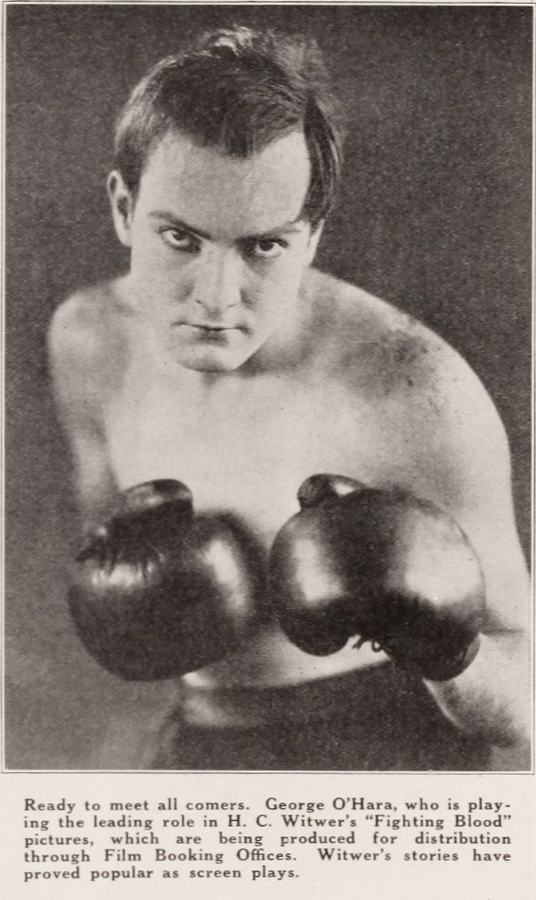
A definitive 6.5/10 rating for a film that redefined the boundaries of cult cinema. Fighting Blood remains a cornerstone of transgressive art.
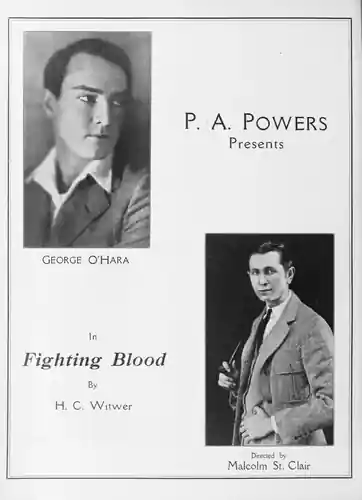
The year 1923 stands as a pivotal moment in the evolution of visual storytelling, a time when the grammar of cinema was being written in real-time by pioneers who understood the raw power of the moving image. Fighting Blood, a production that often escapes the contemporary spotlight, remains a fascinating artifact of this era. It is not merely a film about boxing; it is a kinetic exploration of the American psyche, filtered through the lens of Malcolm St. Clair’s sophisticated direction and the nascent creative instincts of Darryl F. Zanuck. To watch this film today is to witness the birth of the modern sports drama, stripped of its later clichés and presented with a stark, unvarnished honesty that feels surprisingly modern.
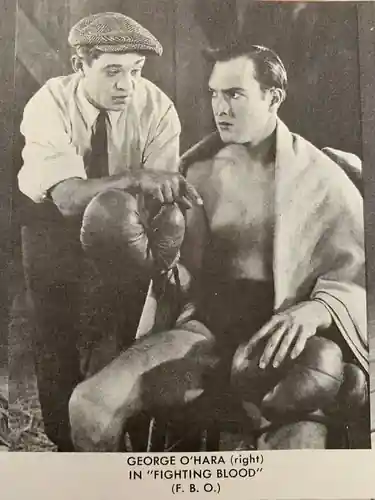
The narrative foundation of Fighting Blood rests upon the prolific output of H.C. Witwer, a writer whose finger was firmly on the pulse of the working-class audience. His stories of Gale Galen, the 'soda-clerk-cum-pugilist,' offered a relatable fantasy of upward mobility achieved through sheer physical endurance. Unlike the refined social maneuvering seen in The Millionaire, Galen’s ascent is paved with bruised knuckles and the smell of resin. George O'Hara, portraying Galen, brings a lean, hungry energy to the role that avoids the theatrical overacting common in the early twenties. His performance is one of restraint, allowing the physicality of the ring to communicate his character's internal transformation.
"The ring is a crucible where the impurities of the mundane are burned away, leaving only the hardened steel of the survivor."
St. Clair’s direction elevates the source material beyond its pulp origins. There is a specific rhythm to the editing that mimics the cadence of a prizefight—alternating between the frantic motion of the gymnasium and the quiet, contemplative moments of Galen’s domestic life. This duality is essential; it grounds the spectacle in human emotion. While films like The Chorus Lady explored the performative nature of the stage, Fighting Blood treats the ring as a different kind of theater—one where the stakes are literal and the blood is real.
One cannot discuss this film without acknowledging the contribution of Darryl F. Zanuck. Long before he became the titan of 20th Century Fox, Zanuck was honing his craft as a writer who understood the architecture of a compelling scene. In Fighting Blood, we see the early blueprints of his narrative philosophy: clear stakes, rapid pacing, and a focus on the underdog. The screenplay avoids the excessive sentimentality of Madame Butterfly, opting instead for a gritty realism that mirrors the soot-stained streets of the urban setting.
The cinematography captures the chiaroscuro of the gymnasium—the way light filters through dusty windows to illuminate the sweat on a fighter's brow. This visual style creates a sense of verisimilitude that was rare for its time. When compared to the more stylized, almost operatic visuals of Der Stern von Damaskus, Fighting Blood feels rooted in the earth, a product of the very pavement its characters walk upon. The camera doesn't just observe the fights; it participates in them, moving with a fluidity that anticipates the handheld techniques of later decades.
The supporting cast is a veritable 'who’s who' of silent era character actors. Gertrude Olmstead provides a grounded romantic interest, her presence offering a necessary counterpoint to the violence of Galen’s professional life. Her performance lacks the flighty artifice seen in Polly with a Past; instead, she portrays a woman of quiet strength and pragmatism. Then there is the curious inclusion of Clark Gable in an uncredited, early role. To see the future 'King of Hollywood' as a mere face in the crowd or a minor player is a jarring reminder of the industry's peripatetic nature. It adds a layer of historical fascination to the viewing experience, a glimpse into the primordial soup of stardom.
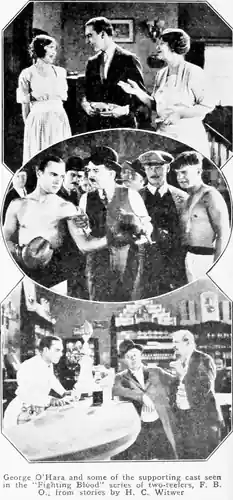
The inclusion of actual pugilists like Ad Wolgast and Joe Rivers lends the film an air of authenticity that no amount of acting could replicate. These men bring a jagged, unrefined quality to the screen, their bodies bearing the scars of their trade. This commitment to realism distinguishes Fighting Blood from the more polished, perhaps less honest, depictions of struggle found in A Lady of Quality. Here, the struggle is not a plot point; it is the atmosphere itself.
Beyond the physical conflict, Fighting Blood serves as a fascinating sociological document. The 1920s were a decade of profound transition, and the boxing ring functioned as a synecdoche for the broader American experience. It was a space where meritocracy—at least in theory—reigned supreme. If you could fight, you could survive. This theme resonates throughout the film, echoing the desperate ambitions seen in Bits of Life or the rugged individualism of The Last Outlaw.
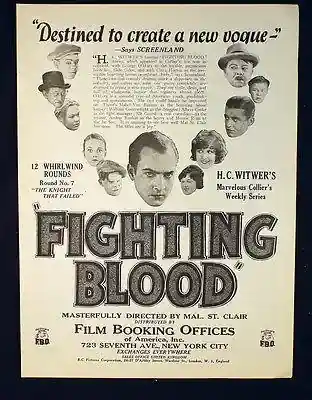
The film also subtly critiques the exploitative nature of the sport. The promoters and hangers-on are depicted with a cynical edge, their greed contrasting sharply with Galen’s earnest desire for a better life. This tension provides the narrative with its moral core. It’s not just about winning a belt; it’s about maintaining one’s humanity in a system designed to commodify flesh and bone. This depth of characterization is what separates St. Clair’s work from the more simplistic adventure serials like The Further Adventures of Stingaree.
Technically, the film is a marvel of its time. The use of intertitles is sparse but effective, allowing the visual storytelling to carry the weight of the narrative. The pacing is relentless, a testament to the editing skills of the era. The fight sequences themselves are choreographed with a terrifying precision; you can almost feel the impact of the blows through the celluloid. The camera placement is strategic, often putting the viewer in the corner of the ring, heightening the sense of immersion. This isn't the detached observation of Giro d'Italia; it is a visceral participation in the chaos.
The production design, though limited by the film's realistic scope, perfectly captures the claustrophobia of the tenements and the cavernous, smoke-filled arenas. There is a tangible sense of place here, a feeling that these characters exist in a world that continues to spin even when the camera is off. This level of world-building is indicative of the high standards set by the creative team, rivaling the atmospheric depth found in For the Soul of Rafael.
In the grand pantheon of silent cinema, Fighting Blood deserves a more prominent place. It is a work of significant artistic merit that balances the demands of commercial entertainment with a genuine interest in the human condition. It avoids the slapstick tendencies of contemporary shorts like Shot in the Dumbwaiter, opting instead for a narrative gravity that commands respect. The film is a reminder that the themes of struggle, identity, and the pursuit of excellence are timeless, transcending the specific technological limitations of any given era.
As we look back at the origins of the boxing film, Fighting Blood stands as a foundational text. It established the visual and narrative tropes that would be refined by later masterpieces, yet it retains a raw energy that is often lost in more polished productions. It is a testament to the power of silent film to evoke profound emotion through the simple interplay of light, shadow, and movement. Whether you are a scholar of film history or simply a fan of the 'sweet science,' this 1923 gem offers a rewarding, deeply resonant experience that lingers long after the final frame has flickered away.
While some might find the episodic nature of its original release format slightly disjointed in a modern feature-length context, the sheer vitality of the performances and the sophisticated visual language of Malcolm St. Clair make Fighting Blood an essential viewing. It is a gritty, poetic, and ultimately triumphant slice of cinematic history that captures a world on the brink of modernism, where the only thing more powerful than a man's fists is his will to rise above his circumstances. It is a knockout in every sense of the word.
IMDb 7.5
1936
Community
Log in to comment.