DbcultAccessing Vault...
Cult Review
Senior Film Conservator
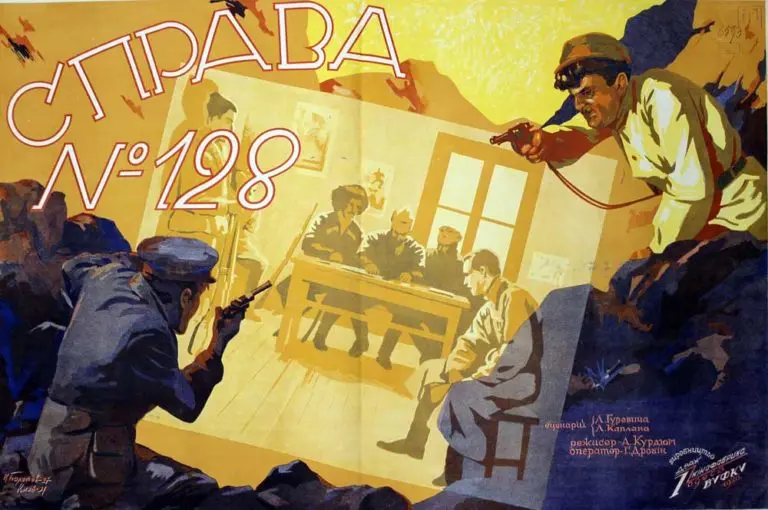
Should you invest your time in a century-old Soviet legal drama? Short answer: Yes, but only if you appreciate the cold, structural beauty of early cinema more than a fast-paced plot.
Delo No. 128 is for the patient viewer, the history buff, and the cinephile who finds meaning in the flicker of a shadow. It is absolutely not for anyone seeking the high-octane thrills of modern crime cinema or the lighthearted escapism found in films like A Gentleman of Leisure.
1) This film works because it utilizes the limitations of silent cinema to create an atmosphere of claustrophobic paranoia that dialogue would only ruin.
2) This film fails because its second act meanders into didactic territory, prioritizing political messaging over the emotional arc of its characters.
3) You should watch it if you want to see the roots of the legal thriller and how early directors used montage to build suspense without a single spoken word.
The direction of Delo No. 128 is a masterclass in utilitarian aesthetics. Unlike the more experimental flair of something like The Lure, this film opts for a grounded, almost brutalist visual style. The cinematography by the uncredited camera team focuses on high-contrast lighting that turns the legal offices and interrogation rooms into a labyrinth of black and white. There is a specific scene involving a desk lamp and a stack of files where the light hits Dmitriy Fedorovskiy’s face at such an angle that he looks less like a man and more like a statue of grief. It is haunting.
The pacing is deliberate. Some might call it slow. I call it honest. The film doesn't rush to its conclusion because it wants the audience to feel the weight of the legal system. Every paper signed and every door closed feels heavy. This is a stark contrast to the more whimsical pacing of Mirandy Smiles. Here, time is an enemy.
Dmitriy Fedorovskiy delivers a performance that is surprisingly modern. In an era where many actors were still relying on the exaggerated gestures of the stage, Fedorovskiy remains internalized. His eyes do the heavy lifting. When he is confronted with the evidence in Case 128, his reaction isn't a gasp or a dramatic faint; it is a subtle tightening of the jaw. It works. But it’s flawed by the surrounding cast who occasionally slip back into the pantomime style of the early 20s.
Sergei Minin provides a sturdy foil, representing the unyielding arm of the law. Their scenes together are the highlight of the film, creating a tension that feels like a precursor to the great noir face-offs of the 1940s. While it lacks the supernatural intrigue of La bruja, the human stakes here feel much higher because they are so grounded in reality.
If you are asking if Delo No. 128 provides entertainment in the contemporary sense, the answer is likely no. However, if you are asking if it provides a profound look into the soul of a transitioning society, the answer is a resounding yes. It captures a moment in time where the world was being rebuilt, and the law was the blueprint. It is a difficult watch, but a rewarding one for those who can stomach the grim atmosphere.
Pros:
Cons:
One of the most striking things about Delo No. 128 is how it treats its 'villain.' In many films of this period, such as The Splendid Crime, the antagonist is a clear-cut figure of malice. Here, the person at the center of Case 128 is treated with a strange, almost uncomfortable empathy. The script by Lyubov Gurevich and M. Kaplan suggests that the crime is not just a failure of the individual, but a failure of the environment. It is a radical stance for 1927, and it makes the film feel far more intellectual than its contemporaries.
"The law is a mirror; if it shows a monster, we must ask who built the mirror." - A thematic sentiment that echoes throughout the film's final act.
Delo No. 128 is a grim, meticulously crafted relic that demands your full attention. It isn't 'fun' in the traditional sense, but it is deeply evocative. It stands as a testament to the power of silent cinema to tackle complex social issues with nuance and grit. While it lacks the avant-garde energy of El apóstol, it makes up for it with a grounded, humanistic approach to the crime genre. It is a sharp, jagged piece of history. It is flawed, but it is essential for anyone serious about the evolution of the legal thriller.
IMDb 5.5
1919
Community
Log in to comment.