DbcultAccessing Vault...
Cult Review
Senior Film Conservator
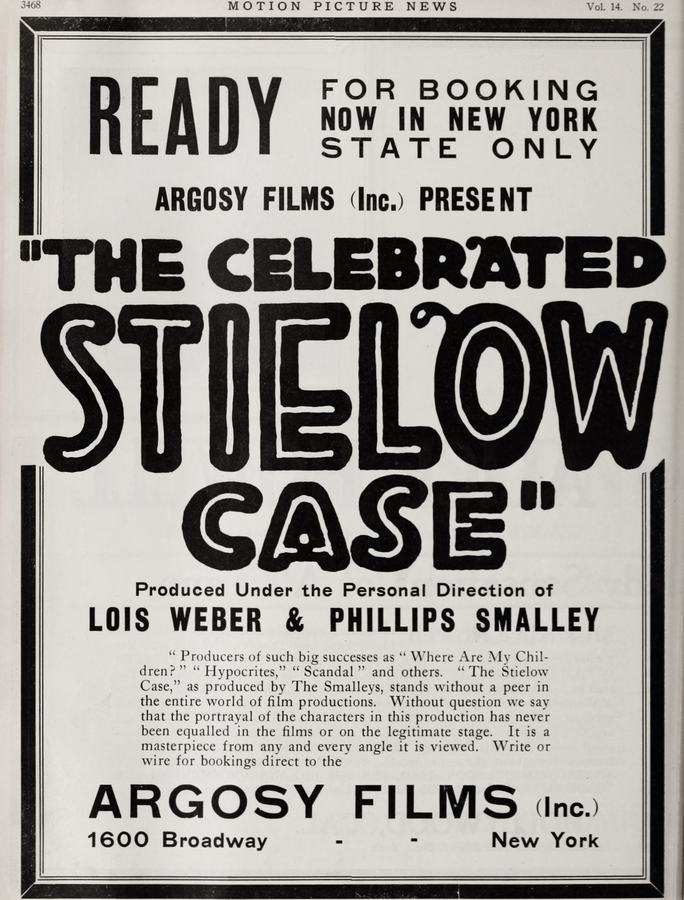
In the annals of early American cinema, few figures loom as large or as ethically formidable as Lois Weber. With The Celebrated Stielow Case, Weber did not merely direct a motion picture; she orchestrated a cinematic intervention. Released in 1916, while the actual Charles Stielow was still fighting for his life on death row, the film represents a daring fusion of reportage and advocacy. It is a work that eschews the escapism found in contemporaries like A Bunch of Keys, opting instead for a gritty, uncompromising look at the fallibility of human law. The film’s existence is a testament to the belief that art can—and should—function as a lever for social change, a concept that remains as potent today as it was during the silent era's burgeoning maturity.
The plot centers on a simple, hardworking immigrant, portrayed with a heartbreaking sense of bewilderment by the cast. Stielow’s tragedy is not one of malice, but of circumstance. Accused of a double homicide in a rural New York town, his inability to navigate the nuances of the English language or the complexities of the American legal apparatus leads to a swift and erroneous conviction. Unlike the fantastical elements seen in The Sky Monster, the horror here is rooted in the mundane: the signature on a confession he couldn't read, the witness who misremembered a face, and the prosecutor more interested in a conviction than the truth. Weber’s direction ensures that the audience feels every ounce of Stielow's claustrophobia, transforming the cinema seat into a witness stand.
Lois Weber, collaborating with her husband Phillips Smalley and the talented Rupert Julian, utilizes a visual grammar that prioritizes emotional resonance over mere spectacle. While films like De røvede Kanontegninger focused on the intrigue of espionage, Weber focuses on the interiority of the accused. The use of lighting is particularly evocative; the shadows in Stielow’s cell are not merely aesthetic choices but represent the encroaching darkness of an impending execution. The film’s pacing is deliberate, mirroring the agonizing crawl of time for a man awaiting the electric chair. This is not the kinetic energy of The Corbett-Fitzsimmons Fight, but a slow, methodical build of tension that demands the viewer’s undivided attention and moral engagement.
When examining the landscape of 1916 cinema, The Celebrated Stielow Case stands out for its raw proximity to its subject matter. Many films of the period, such as The Great Problem, touched upon societal ills through a lens of melodrama. Weber, however, strips away the artifice. Her work here shares a spiritual kinship with Life's Whirlpool, where the crushing weight of poverty and systemic failure is depicted without the sugar-coating of a traditional happy ending. The film challenges the audience to look past the "otherness" of the immigrant protagonist, a theme also explored in The Reclamation, though Weber’s approach is far more urgent and politically charged. It is a cinema of conscience that refuses to provide the easy catharsis found in What Love Can Do.
The performances in the film are notably restrained for the era. Rupert Julian avoids the histrionics often associated with silent melodrama, opting instead for a quiet, simmering despair that is far more effective. In scenes that require a delicate touch, such as the interactions between Stielow and his family, the film reaches a level of poignancy comparable to Redeeming Love. The editing, handled with precision, juxtaposes the cold, bureaucratic movements of the prison guards with the frantic, desperate efforts of the activists trying to save Stielow. This cross-cutting creates a rhythmic heartbeat of suspense that is far more sophisticated than the linear storytelling of The Clue or the episodic nature of Timothy Dobbs, That's Me.
The historical significance of The Celebrated Stielow Case cannot be overstated. By releasing the film while the case was still active, Weber and her team were essentially lobbying the public and the governor through the medium of light and shadow. This was a radical move. While Macbeth dealt with the cosmic and psychological consequences of murder and guilt, Weber’s film dealt with the immediate, tangible consequences of a state-sanctioned killing. It transformed the movie theater into a space for civic discourse. The film’s influence can be seen in the way it handles the atmosphere of dread, a precursor to the gothic sensibilities of The Isle of the Dead, yet it remains firmly grounded in the harsh light of reality.
As we reflect on this monumental work over a century later, its relevance has not diminished. The themes of xenophobia, judicial bias, and the irreversible nature of the death penalty continue to haunt our contemporary discourse. Weber’s ability to weave these complex issues into a compelling narrative is a masterclass in filmmaking. She understands that to change minds, one must first touch hearts. The film does not rely on the grand, mythic settings of The Land of the Lost or the suspenseful mystery of In the Shadow; rather, it finds its power in the simple, devastating truth of a man’s innocence. It is a harrowing journey through the dark night of the soul, lit only by the flickering hope of justice.
Ultimately, The Celebrated Stielow Case is more than a relic of the silent era. It is a vibrant, breathing document of human rights activism. Lois Weber’s courage to tackle such a contentious issue at the height of her career is a reminder of the artist's responsibility to speak truth to power. In the face of a system that often treats individuals as mere statistics, this film restores the humanity of Charlie Stielow, ensuring that his name and his struggle would never be forgotten. It remains a cornerstone of socially conscious cinema, a beacon for any filmmaker who believes that the screen can be a mirror for society’s failures and a blueprint for its redemption. By the time the final frame flickers out, the viewer is left not just with a sense of relief for the protagonist, but with a profound questioning of the structures that allowed such a travesty to occur in the first place.
Note: This review was written with an eye toward the historical impact of Lois Weber's work and its pioneering role in the abolitionist movement within American cinema. The film's contribution to the eventual pardon of Charlie Stielow in 1918 remains one of the most significant examples of art influencing legal outcomes in history.
IMDb —
1934
Community
Log in to comment.