DbcultAccessing Vault...
Cult Review
Senior Film Conservator
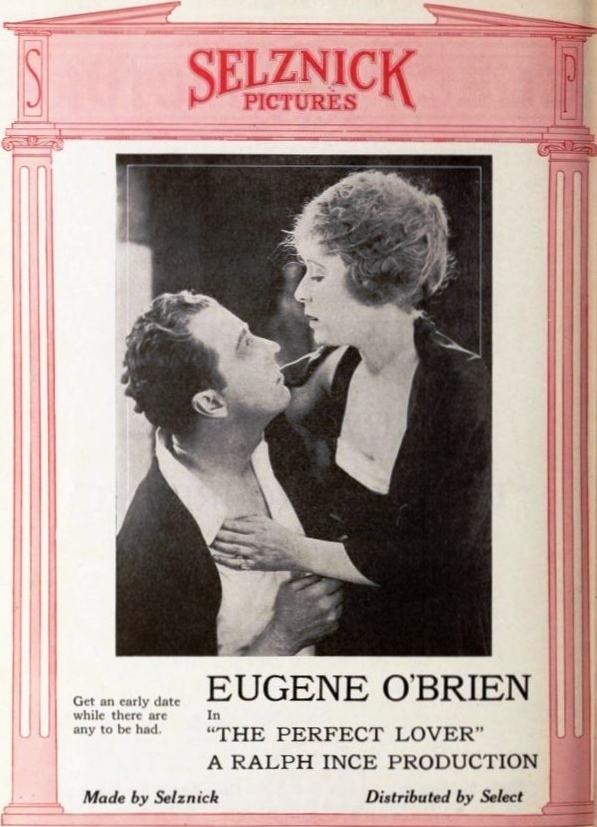
The year 1919, a period of profound societal flux emerging from the shadows of a devastating global conflict, offered fertile ground for cinematic explorations of morality, aspiration, and the often-treacherous currents of human desire. Edmund Goulding’s 'The Perfect Lover,' a silent film of remarkable depth written by Leila Burton Wells, emerges from this era not merely as a historical artifact, but as a surprisingly incisive social commentary that continues to echo with relevance today. It's a narrative woven with threads of artistic ambition, societal seduction, and the ultimate search for authentic connection, all played out against a backdrop of stark contrasts between urban opulence and rural simplicity. This film, starring the compelling Eugene O'Brien as Brian Lazar, delves into the superficiality of high society with a keen, almost surgical precision, dissecting the emptiness that often lurks beneath a veneer of glamour and privilege.
Our protagonist, Brian Lazar, begins his journey as an earnest, if struggling, artist, his hands stained with paint, his heart brimming with the genuine desire to create. This initial portrayal establishes a critical baseline: Brian is a man of inherent talent and, presumably, integrity. His world, however, is soon to be irrevocably altered by the magnetic pull of Mrs. Byfield, portrayed with a captivating blend of charm and calculated self-interest by Lucille Lee Stewart. Mrs. Byfield, a figure emblematic of the era's leisured class, feigns an interest in Brian’s artistic endeavors, a thinly veiled ruse to ensnare him in a romantic entanglement. This pivotal encounter serves as a gateway, not just to a new relationship, but to an entirely new existence for Brian. His portrait of Mrs. Byfield, far from being a mere artistic achievement, becomes his unwitting ticket into the rarefied circles of society's elite. Suddenly, the struggling artist is transformed into 'the perfect lover,' a coveted companion for women whose husbands, consumed by the relentless pursuit of wealth and status, have long neglected their emotional and romantic needs. This transformation is both a blessing and a curse, offering Brian material comfort but at the cost of his artistic soul and personal authenticity.
This narrative arc resonates with the societal critiques found in other films of the period. One might draw parallels to Cecil B. DeMille’s Male and Female, released in the same year, which similarly dissects the intricate, often hypocritical, dynamics of class and gender roles within high society. Both films, in their own distinct ways, expose the performative nature of upper-class existence and the inherent emptiness that can plague those who prioritize appearances over genuine human connection. Brian, in his new role, becomes a living embodiment of this societal malaise, a commodity traded for affection and attention, a silent testament to the emotional void within these gilded lives. Eugene O'Brien's performance here is particularly noteworthy, conveying the subtle shifts from idealistic artist to a man caught in a web of obligations, his expressive eyes communicating a growing sense of disillusionment even amidst the opulence.
The life of a 'perfect lover' in a world of imperfect relationships is, by its very nature, unsustainable. Brian's downfall is initiated not by a grand moral failing, but by the simple, inescapable reality of his situation: he and Mrs. Byfield are discovered in a compromising position. This public exposure shatters the delicate illusion he has meticulously maintained, ripping away the veneer of societal acceptance. The discovery isn't just a personal embarrassment; it's a profound moment of clarity for Brian. He becomes acutely aware of the futility, the sheer emptiness, of the life he has been leading. The shallow affections, the transactional nature of his relationships, the constant performance – all of it suddenly seems hollow and without substance. This realization serves as a powerful catalyst, propelling him away from the very society that had once embraced him. It's a poignant moment of self-reckoning, a rejection of the superficial for the promise of something more authentic, even if that authenticity comes wrapped in hardship.
This thematic exploration of disillusionment and the search for meaning beyond societal expectations is a recurring motif in early cinema. Films like A Soul Enslaved often depicted characters grappling with moral compromises and the consequences of sacrificing personal integrity for social standing. Brian's journey mirrors this struggle, but with a unique emphasis on the commodification of affection. His return to the town of his youth signifies a deliberate attempt to shed the false identity he had assumed and reconnect with the foundational values he had abandoned. It's a classic cinematic trope – the prodigal son returning, albeit one who has merely been 'prodigal' with his heart and artistic spirit rather than his inheritance. The contrast between the glittering, yet morally bankrupt, city and the rustic, honest simplicity of his hometown is starkly drawn, serving as a powerful visual and thematic dichotomy.
Back in the familiar embrace of his past, Brian encounters Eileen Hawthorn, played with understated grace by Marguerite Courtot. Eileen is the daughter of his former teacher, a figure untainted by the metropolitan artifice that had nearly consumed Brian. Their romance blossoms organically, rooted in mutual respect and genuine affection, a stark contrast to the transactional relationships he had cultivated in the city. This love story is presented as pure and unadorned, a testament to the restorative power of authentic human connection. It signifies Brian’s profound transformation, his movement from a life defined by external validation to one grounded in internal fulfillment. He has found not just a lover, but a partner who sees beyond the superficial, who values the man, not the 'perfect lover' persona.
Their decision to return to the city, despite their newfound poverty, is a powerful statement. It's not a surrender to the past, but a defiant assertion of their love's resilience in the face of adversity. Their shared struggle against poverty imbues their relationship with a depth and strength that Brian’s previous dalliances could never have offered. This period of hardship underscores the film's central message: true happiness and fulfillment are not found in material wealth or social standing, but in genuine human connection and integrity. The juxtaposition of their humble existence against the backdrop of the opulent city serves as a constant reminder of the choices Brian has made and the values he now holds dear. It’s a narrative choice that strengthens the film’s moral backbone, showing that the path to redemption is often paved with sacrifice and struggle.
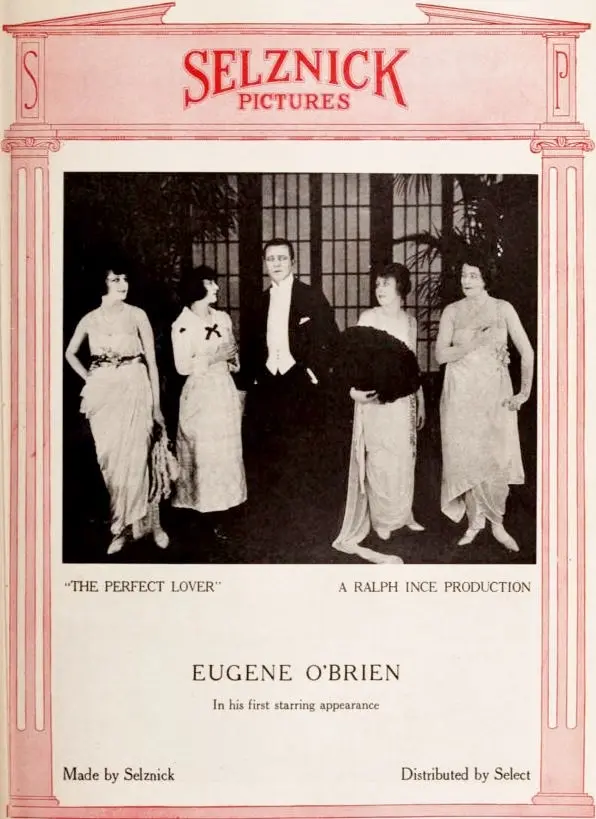
The past, however, has a tenacious grip. One of Brian’s former society acquaintances, in a misguided attempt at charity or perhaps a lingering sense of obligation, gives him a valuable ring to pawn. This seemingly innocuous act sets the stage for the film’s climactic confrontation. The same woman, later and inexplicably, accuses Brian of theft, bringing a detective (Tom McRayne) to his shabby dwelling. This moment thrusts Brian back into a world of judgment and suspicion, a world he thought he had left behind. The accusation is a cruel twist of fate, threatening to undo all the progress he has made, to brand him once more as a man of questionable character.
Brian's plea for an opportunity to tell his story is not merely a defense against a criminal charge; it is a desperate attempt to articulate his arduous journey, to lay bare the truth of his transformation. His narrative, however, is met with skepticism by the detective, a figure representing the unyielding logic of the law, unsympathetic to the nuances of human experience and moral evolution. It is in this moment of profound vulnerability and potential despair that Brian makes his most powerful, most irrefutable argument. He doesn't offer more words, more elaborate explanations. Instead, he simply presents his wife, Eileen, and their newborn baby. This silent tableau, a vivid testament to his new life, to the purity and strength of his genuine connections, transcends mere words. It is a visual manifesto of his redemption, an undeniable symbol of the authentic love he has found and built.
The impact of this scene is immense. The sight of the innocent child and the devoted wife finally pierces the hardened heart of the accuser. Her repentance is immediate and profound, signifying a recognition of the true value of Brian's life. She leaves them to their happiness, having witnessed firsthand the transformative power of love and family. This ending, while perhaps leaning towards a melodramatic resolution typical of the era, nonetheless delivers a potent message: that genuine human connection, integrity, and the sanctity of family ultimately triumph over societal judgment, superficiality, and past transgressions. It’s a powerful affirmation of the film's moral compass, suggesting that true wealth lies not in material possessions but in the bonds we forge.
Eugene O'Brien, as Brian Lazar, carries the emotional weight of the film with remarkable skill. His transition from the naive artist to the jaded 'perfect lover' and finally to the redeemed family man is conveyed through nuanced facial expressions and body language, essential tools in the silent film era. His portrayal captures the internal conflict of a man torn between societal expectations and personal authenticity. Lucille Lee Stewart’s Mrs. Byfield is equally compelling, embodying the seductive yet ultimately empty allure of the upper class. Her initial charm and later accusation highlight the capricious nature of the world Brian initially sought to conquer. Marguerite Courtot’s Eileen provides the much-needed contrast, a beacon of sincerity and unwavering love that grounds Brian’s tumultuous journey.
Leila Burton Wells' screenplay, under Edmund Goulding's direction, navigates complex moral terrain with a surprising degree of sophistication for its time. The narrative skillfully employs symbolism, such as the valuable ring representing both temptation and redemption, and the shabby dwelling contrasting with the opulent mansions, to underscore its thematic concerns. The film’s pacing, a crucial element in silent cinema, allows moments of quiet introspection to coexist with dramatic confrontations, building tension effectively. The use of intertitles is artful, providing necessary exposition without detracting from the visual storytelling. This careful crafting ensures that the audience remains invested in Brian's fate, understanding the profound choices he faces at each turn.
Beyond its engaging plot, 'The Perfect Lover' offers a potent critique of societal values that remains remarkably relevant. It challenges the notion that happiness can be bought or found in superficial relationships, advocating instead for the profound fulfillment that arises from integrity, hard work, and genuine affection. In an age where the lines between public persona and private reality are increasingly blurred, and where social media often commodifies personal lives, the film's message about authenticity resonates with particular force. Brian Lazar's journey is a timeless parable about losing oneself in the pursuit of external validation and finding redemption in the embrace of true connection. It reminds us that the 'perfect' life isn't about societal approval or material wealth, but about the richness of one's inner world and the sincerity of one's relationships.
Comparing it further, one might reflect on films like The Wife He Bought, which explored transactional relationships and the societal pressures surrounding marriage, albeit from a different angle. While that film focused on the dynamics of acquisition within matrimony, 'The Perfect Lover' delves into the more subtle, yet equally damaging, commodification of affection outside of it. The subtle nuances of human interaction and the complexities of moral choice are handled with an earnestness that speaks to the era's grappling with evolving social norms. The film's enduring power lies not just in its historical significance as a product of early Hollywood, but in its profound and universal exploration of the human heart's yearning for something real in a world often consumed by illusion. It’s a cinematic gem that deserves to be rediscovered and appreciated for its timeless wisdom and compelling narrative. The final image of Brian, Eileen, and their child, bathed in the quiet dignity of their love, leaves a lasting impression, a powerful testament to the enduring human spirit and its capacity for transformation and genuine happiness.
Ultimately, 'The Perfect Lover' is more than just a period piece; it's a mirror reflecting the perennial human struggle between the glitter of superficiality and the gold of authentic connection. It is a testament to the power of cinema to not only entertain but also to provoke thought, challenge norms, and affirm the enduring values that truly enrich our lives. The film, through its compelling characters and poignant narrative, continues to serve as a vital reminder that true perfection is found not in a manufactured image, but in the unvarnished truth of a life lived with integrity and love. It’s a quiet masterpiece that speaks volumes, even without a single spoken word.
IMDb —
1919
Community
Log in to comment.