DbcultAccessing Vault...
Cult Review
Senior Film Conservator
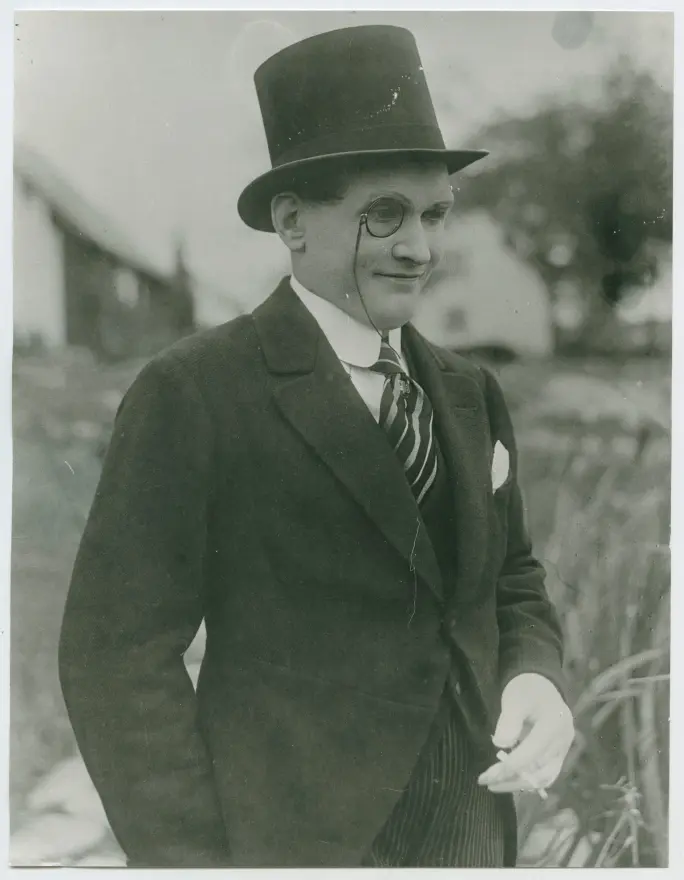
Is 'Den gamla herrgården' worth seeking out in the modern age? Short answer: yes, but with significant caveats. This early Swedish silent drama offers a fascinating, if sometimes challenging, window into a bygone era of filmmaking and storytelling, making it a valuable experience for cinephiles and historians, but perhaps less so for casual viewers seeking immediate entertainment.
This film is for anyone with a deep appreciation for silent cinema, early European film history, or those interested in the foundational narratives that shaped the medium. It is decidedly not for those accustomed to fast pacing, complex dialogue, or polished contemporary production values. Approach it as an artifact, and its charms become apparent.
This film works because: It provides a clear, resonant snapshot of early 20th-century societal anxieties, particularly around class and marriage, presented with the earnest, unvarnished emotion characteristic of silent drama.
This film fails because: Its pacing can feel glacial to modern viewers, and some of the melodrama, while authentic to its time, borders on caricature, lacking the subtle nuances we now expect from character development.
You should watch it if: You are a student of film history, a silent film enthusiast, or someone curious about the evolution of cinematic narrative and performance.
‘Den gamla herrgården’, or 'The Old Manor', plunges us into a world where social standing dictates destiny, and the desires of the heart are often secondary to the demands of the ledger. At its core, the narrative is a timeless tale of forbidden love, rendered through the lens of early 20th-century Swedish society.
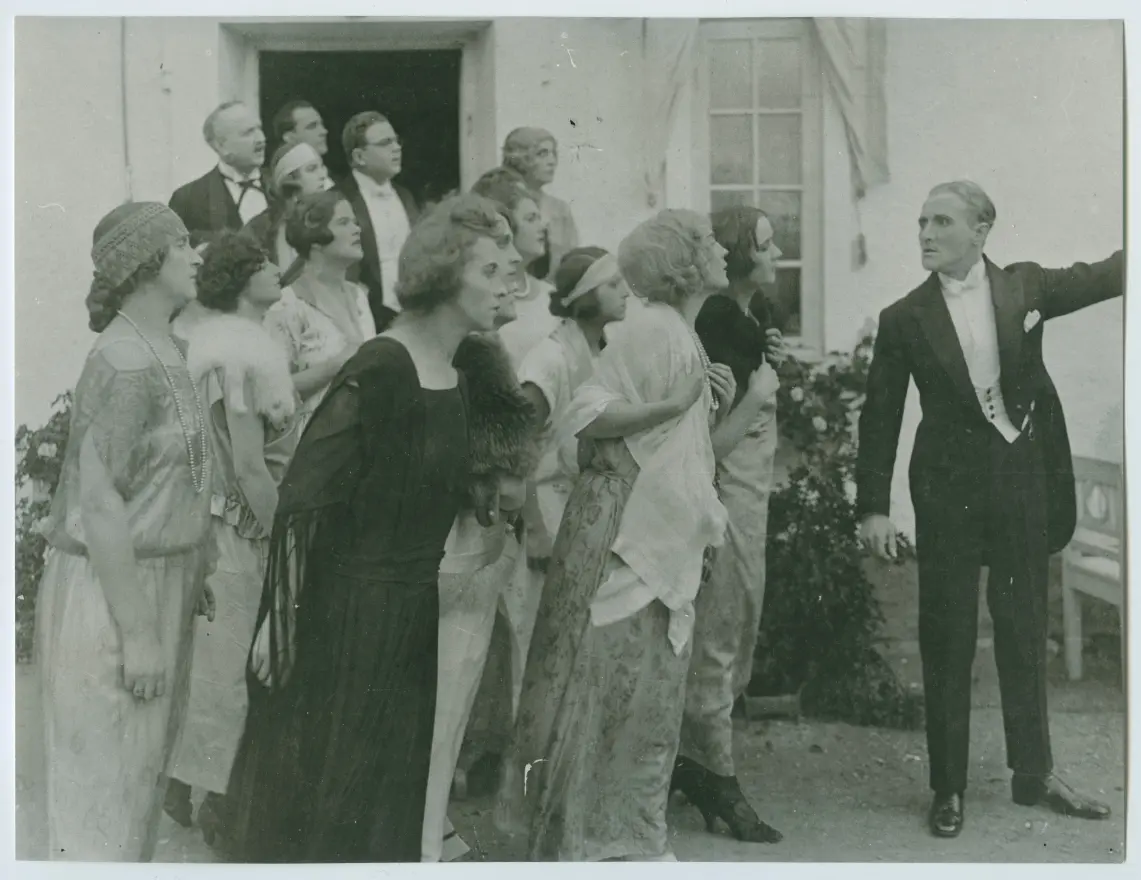
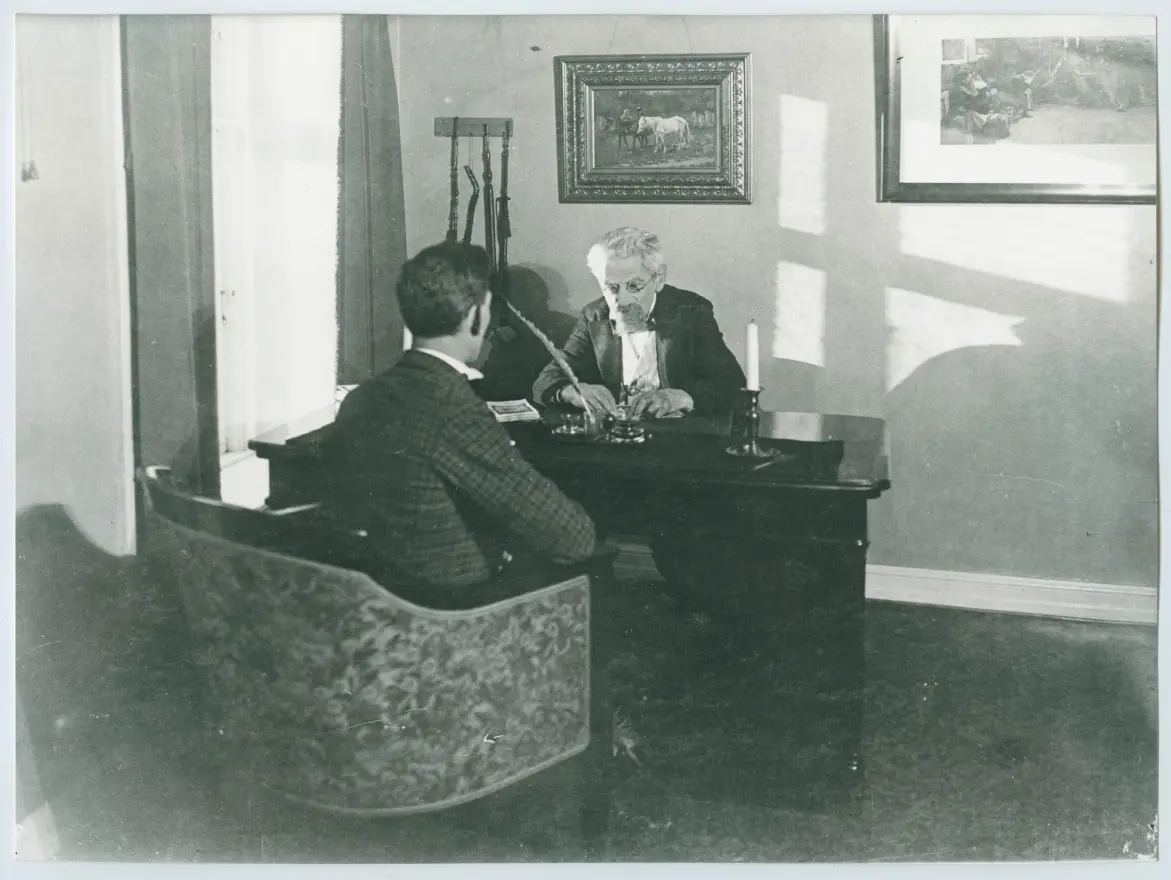
We are introduced to Bertil Bergencrantz, a formidable figure whose control over his daughter Ann-Margret’s future is absolute. His disdain for her blossoming romance with Torsten, a mere student, forms the central conflict. Bertil’s motivations are clear: he seeks to secure his family’s legacy, not through love, but through advantageous alliance.
His solution is the young Count Cronhielm, a suitor who embodies the social and economic stability Bertil covets. The film, penned by Edvard Persson, skillfully sets up this classic dynamic: the rigid parent, the star-crossed lovers, and the ‘suitable’ rival. It’s a simple premise, yet one that allows for exploration of profound themes.
The strength of this plot, despite its familiarity, lies in its directness. There’s no ambiguity about who wants what, or why. This clarity was essential for silent storytelling, where visual cues and broad emotional strokes carried the weight of the narrative. The old manor itself, a silent observer, becomes almost a character, embodying the weight of tradition and expectation.
The film doesn’t stray far from its established path, building towards the inevitable clash between paternal authority and youthful rebellion. While the outcome might feel predictable to a contemporary audience, the journey itself, punctuated by the expressive performances and the evocative setting, remains compelling for those willing to engage with its historical context.
Directed by John W. Brunius, 'Den gamla herrgården' exhibits a directorial hand that, while perhaps not groundbreaking, was certainly competent for its era. Brunius understands the language of silent film, relying heavily on tableau staging and dramatic close-ups to convey emotion. The camera, often static, serves as a window into the unfolding drama, allowing the actors to command the frame.
Axel Lindblom’s cinematography, while lacking the dynamic movement of later eras, is nonetheless effective in establishing mood and place. The use of natural light, particularly in the manor’s interiors, creates a sense of authenticity and sometimes, a claustrophobic atmosphere that perfectly mirrors Ann-Margret’s predicament. There’s a particular scene, early on, where Ann-Margret gazes out a window, bathed in a soft, melancholic light. This simple shot speaks volumes about her longing and confinement without a single intertitle.
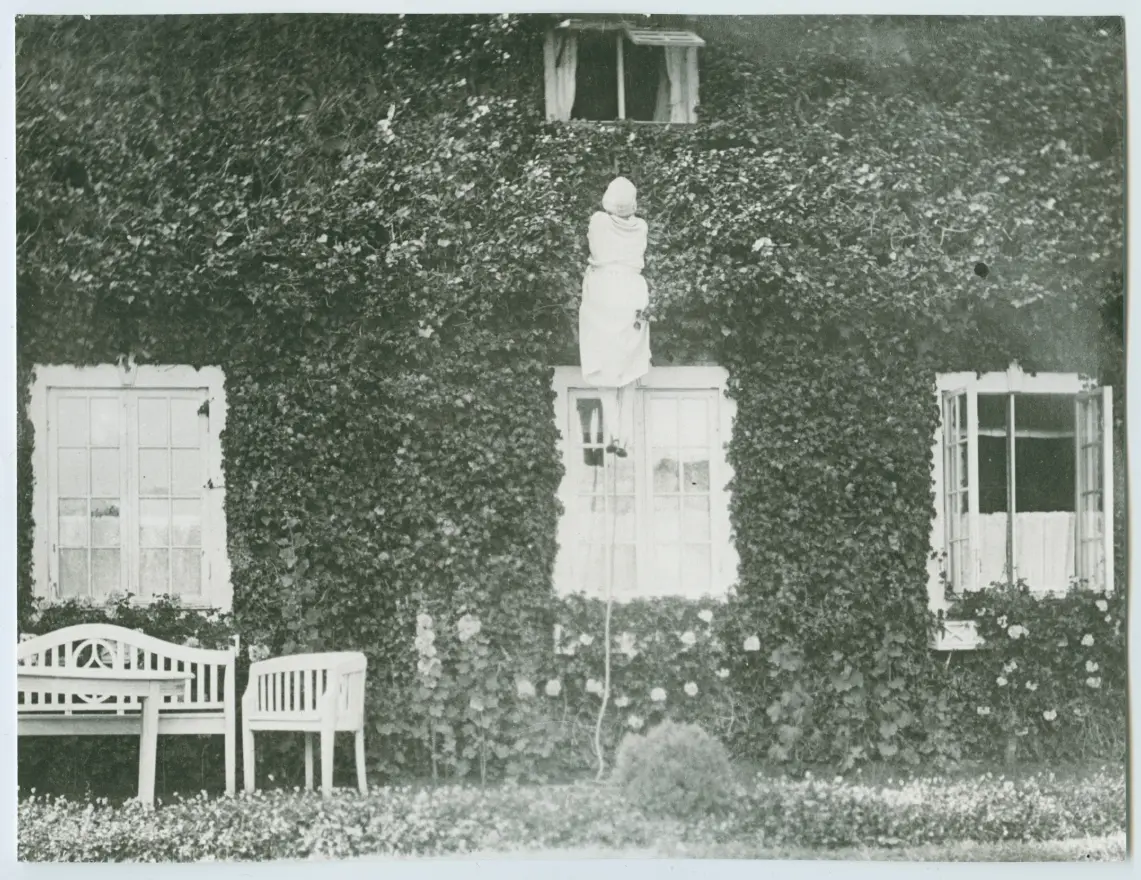
The exterior shots, showcasing the Swedish countryside, offer a stark contrast to the manor’s interiors, hinting at the freedom that Ann-Margret and Torsten yearn for. These visual juxtapositions are a hallmark of silent storytelling, a way to add subtext without dialogue.
However, one must acknowledge the limitations. The camera rarely moves, which can make certain scenes feel stagey. While this was common for the period, it means the film relies almost entirely on the actors’ expressions and the strength of the dramatic situation to maintain engagement. Modern audiences, accustomed to fluid camera work and rapid editing, might find this demanding.
Despite these constraints, there's a certain elegance to the composition. Brunius often frames his characters within doorways or against imposing architectural features, subtly emphasizing their place within a rigid social structure. It’s a quiet form of visual commentary that, upon closer inspection, reveals thoughtful design. The film’s visual grammar is largely functional, but it serves the story with a clear purpose, making it a valuable case study in early cinematic technique.
Ellen Rosengren, as Ann-Margret, delivers a performance that oscillates between demure obedience and passionate defiance. Her large, expressive eyes are her most potent tool, conveying sorrow, hope, and despair with remarkable clarity. There’s a scene where she silently pleads with her father, her hands clasped, her face a mask of desperation. It’s a moment that transcends the melodramatic trappings and genuinely evokes empathy.
Georg Wallgren's Torsten, the earnest student, is perhaps the most restrained of the main trio. His portrayal is one of quiet determination, a stark contrast to the more flamboyant expressions of his counterparts. This subtlety, however, allows him to stand out, making his character feel more grounded, a beacon of authenticity amidst the societal posturing.
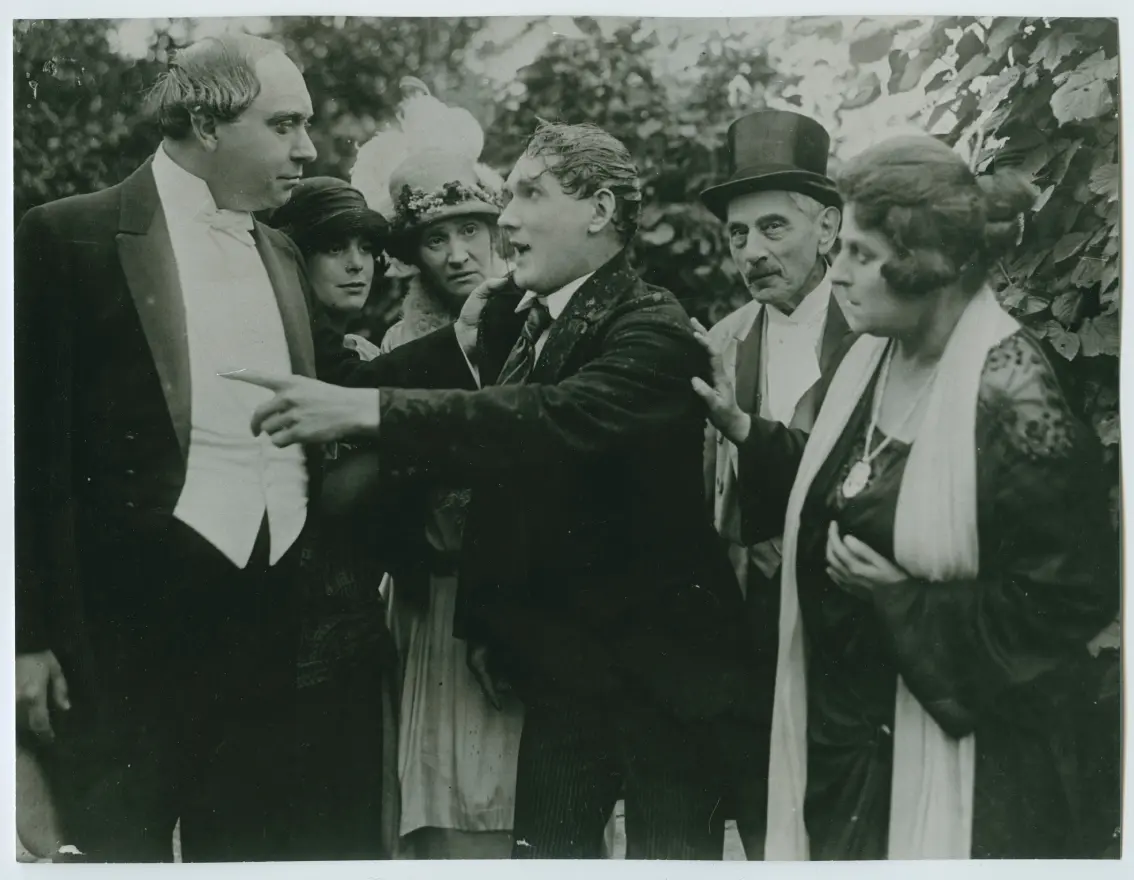
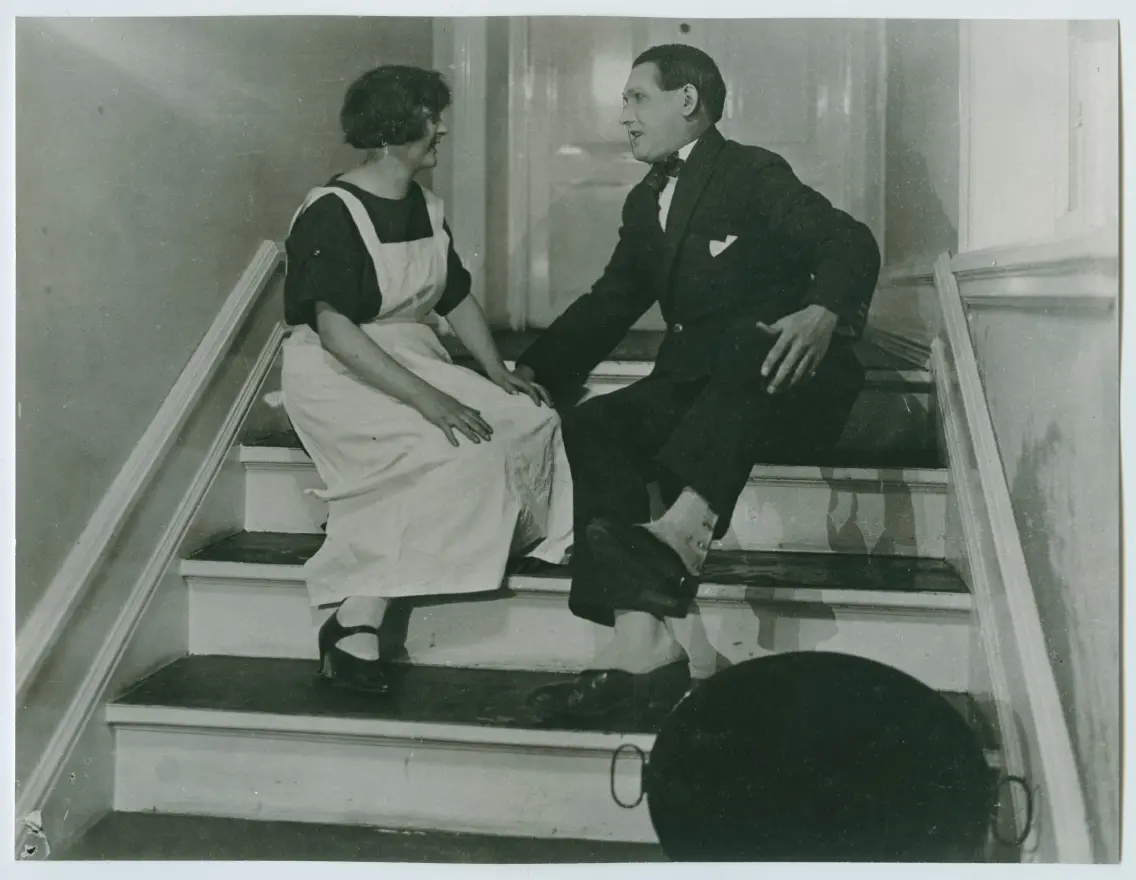
The supporting cast, including the inimitable Edvard Persson (who also wrote the screenplay) in a smaller role, fills out the world with believable, if sometimes one-dimensional, characters. Their contributions, though brief, add texture to the social fabric the film portrays. It’s fascinating to see Persson, a future Swedish cinema icon, in an early acting capacity, even if his screen presence here is not yet fully developed.
While some modern viewers might find the acting style overly dramatic, it’s crucial to remember that these actors were pioneers, developing a new language of performance. They were translating stagecraft for the screen, and in doing so, laid the groundwork for future generations. Their commitment to their characters, even through pantomime, is undeniable. It’s a testament to their skill that even without spoken words, their intentions and emotions are rarely misunderstood.
The pacing of 'Den gamla herrgården' is a true reflection of its time. Silent films often embraced a more contemplative, deliberate rhythm, allowing scenes to unfold slowly, giving the audience time to absorb the visual information and emotional beats. For contemporary viewers, this can feel like a test of patience. There are long takes, extended reaction shots, and moments of quiet introspection that would be drastically condensed in a modern production.
The film takes its time to establish the setting and the characters' predicaments, building the emotional stakes gradually. While this can sometimes lead to a sense of sluggishness, it also allows for a deeper immersion into the film’s atmosphere. It forces the viewer to slow down, to observe, and to interpret the subtle cues that replace dialogue. This deliberate pace, for all its potential challenges, is also part of the film's unique charm, a hallmark of early cinematic artistry.
The tone is overwhelmingly melodramatic, as expected from a silent romantic drama. Emotions are heightened, conflicts are stark, and moral lines are clearly drawn. There’s a clear sense of good versus evil, or at least, tradition versus progress. This overt emotionality, while sometimes bordering on the theatrical, is what gives the film its raw power. It speaks directly to universal human experiences of love, loss, and rebellion, albeit through a highly stylized lens.
The use of intertitles, sparse but impactful, guides the narrative and fills in crucial dialogue or exposition. These are not merely functional; they often carry an emotional weight of their own, delivered with a dramatic flair that complements the on-screen action. The film’s overall tone is serious, earnest, and deeply romantic, albeit in a tragic vein. It’s a world where societal pressures are immense, and personal happiness often comes at a great cost.
One might argue that the film could have benefited from a slightly tighter edit, even for its era. However, to judge it solely by modern standards would be to miss the point. Its unhurried pace is integral to its identity, a deliberate choice that invites a different kind of engagement, a more meditative viewing experience. It works. But it’s flawed.
Yes, 'Den gamla herrgården' is absolutely worth watching for specific audiences. If you are a student of film history, particularly silent cinema or early Swedish filmmaking, this is a valuable historical document. It offers a clear example of narrative construction and performance style from its period.
For general audiences, it requires a significant adjustment of expectations. You must be prepared for slower pacing, exaggerated acting, and a reliance on visual storytelling. It is not a film for passive viewing, but an active engagement with a foundational piece of cinema.
It serves as an excellent case study for understanding how stories were told before the advent of sound and how universal themes like class conflict and forbidden love were explored through nascent cinematic techniques. Its historical significance alone makes it worthy of preservation and study.
While on the surface 'Den gamla herrgården' might appear to be a straightforward romantic drama, it functions as a fascinating cultural artifact, revealing deeper societal anxieties of its time. The central conflict between Ann-Margret’s love for Torsten and her father’s desire for a match with Count Cronhielm transcends mere personal preference; it's a microcosm of the class struggle prevalent in early 20th-century Europe.
Bertil Bergencrantz is not merely a cruel father; he embodies the rigid, aristocratic mindset clinging to tradition in the face of nascent social mobility. His fear isn’t just of Torsten, but of the erosion of an entire social order that he represents and benefits from. This makes the film surprisingly relevant in its depiction of generational divides and the clash between old money and new ideals. It's a film about power dynamics as much as it is about passion.
The very setting of 'the old manor' reinforces this theme. It’s a symbol of inherited wealth and tradition, but also a cage for Ann-Margret, a place where her individual desires are stifled by the weight of her family’s legacy. The film subtly suggests that true freedom lies beyond these ancient, imposing walls, in a world where love can exist independent of social contracts.
One could even argue that the film, inadvertently, critiques the very systems it portrays. While it presents the melodrama with a degree of earnestness, the audience is clearly meant to sympathize with the young lovers, not with the oppressive father. This positions the film, however subtly, as a commentary on the restrictive nature of class-bound societies.
Compared to other silent films of its time, such as the more overtly political If the Huns Came to Melbourne or the fantastical The Dream Cheater, 'Den gamla herrgården' grounds its social commentary within a very personal, emotional narrative. It's a testament to the power of simple storytelling to illuminate complex societal truths. It’s not just a love story; it’s a quiet rebellion.
'Den gamla herrgården' is more than just an old film; it is a vital piece of cinematic archaeology. It's a reminder of how storytelling evolved, how emotions were conveyed before sound, and how universal themes have resonated across generations. While it demands a certain level of commitment and a willingness to appreciate its historical context, the rewards are significant.
It’s a film that speaks to the enduring power of love against the backdrop of rigid societal structures, a narrative that feels as relevant today in its core message as it did a century ago. It’s not a film for everyone, nor does it pretend to be. But for those with an open mind and a love for the origins of cinema, it offers a surprisingly rich and poignant experience.
This isn't just a recommendation; it's an invitation to step back in time, to witness the nascent art of filmmaking in action. Go in with patience, and you'll find a quiet beauty in 'The Old Manor' that transcends its age. It’s a testament to the fact that even the simplest stories, when told with conviction, can leave a lasting impression.
IMDb —
1927
Community
Log in to comment.