DbcultAccessing Vault...
Cult Review
Senior Film Conservator
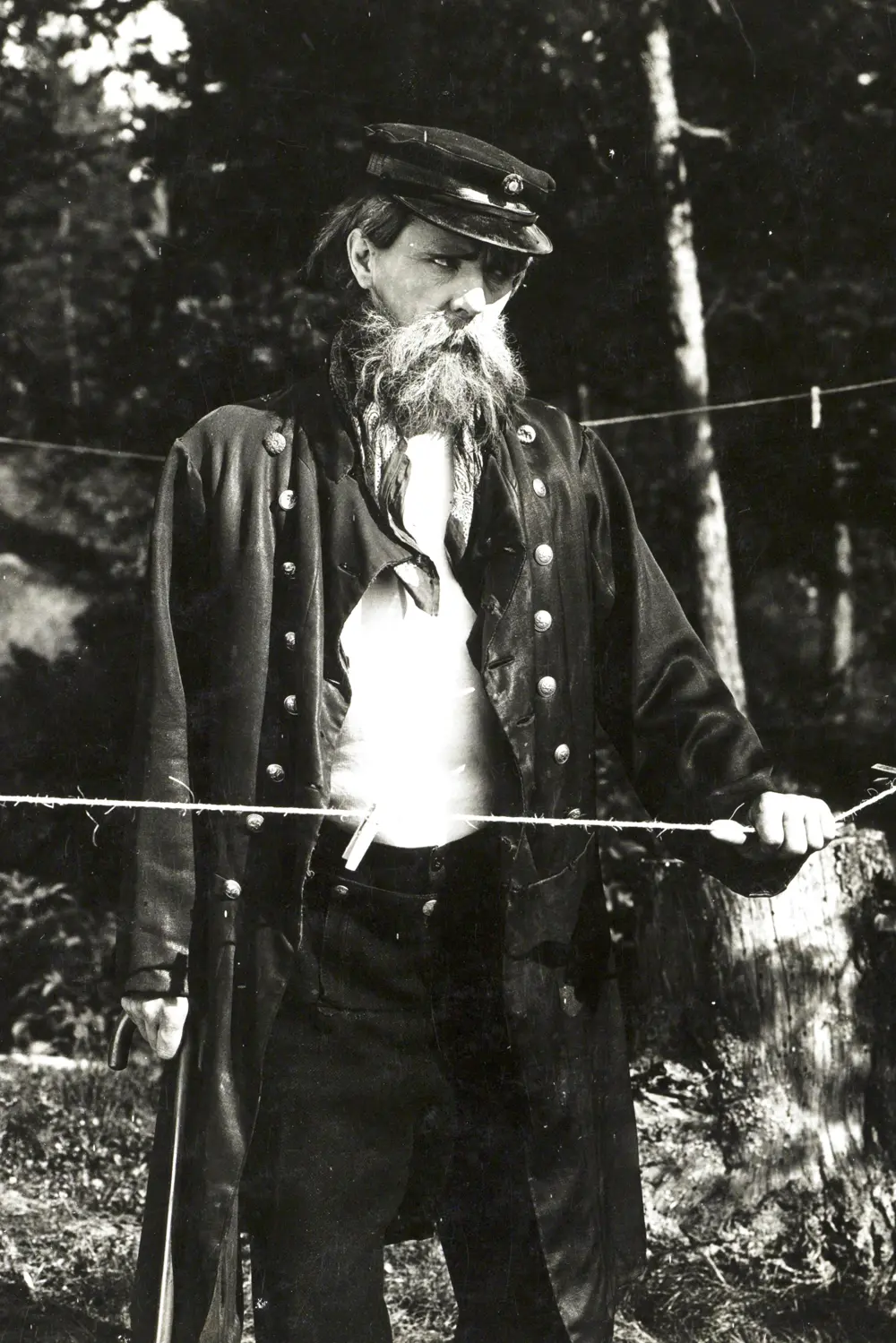
Is Den glade enke i Trangvik a necessary watch in the modern era? Short answer: yes, but with significant caveats. This film is a fascinating historical document for those interested in early cinema and societal shifts, but it’s likely to test the patience of viewers accustomed to contemporary narrative pacing.
It's a film for the dedicated cinephile, the social historian, and anyone curious about the roots of cinematic comedy and drama. It is decidedly not for those seeking fast-paced entertainment, high-definition spectacle, or a narrative that strictly adheres to modern storytelling conventions.
The premise of Den glade enke i Trangvik is deceptively simple: a woman wears a bathing suit, and a town loses its collective mind. Yet, beneath this seemingly trivial conflict lies a rich vein of social commentary, intentional or not, on the clash between burgeoning modernity and entrenched conservatism. The film, released in an era when cinema itself was still finding its voice, captures a particular societal anxiety – the fear of the 'improper,' the 'new,' the 'unconventional' – manifesting in a small, isolated community.
Sigrun Svenningsen’s Helene Dyring is less a fully-fledged character and more a catalyst, a living symbol of the shifting tides. Her choice of attire isn't just a costume; it's a declaration. It challenges the very fabric of Trangvik’s perceived moral order, sparking a chain reaction that reveals the fragility of that order. The film, in its own quaint way, explores themes of individual liberty versus communal expectation, a timeless struggle that resonates even today, albeit in different guises.
The power of this film isn't in its technical prowess, which by today's standards is rudimentary, but in its ability to document a moment. It serves as an accidental ethnographic study of early 20th-century Norwegian provincial life, filtered through the nascent art form of moving pictures. The reactions of the townspeople, though perhaps exaggerated for comedic effect, offer a window into the anxieties of a society grappling with changing norms, particularly concerning female autonomy and public presentation.
This film works because... it offers invaluable historical insight into early filmmaking techniques, societal values, and the cultural anxieties of its time. It’s a compelling artifact.
This film fails because... its pacing is glacial by contemporary standards, its comedic elements are largely lost on a modern audience, and character development is minimal.
You should watch it if... you are a serious student of film history, cultural studies, or have a deep appreciation for the unique challenges and triumphs of silent and early sound cinema.
The ensemble cast of Den glade enke i Trangvik operates within the stylistic confines of early cinema, where performances often leaned towards theatricality and broad gestures to convey emotion without the aid of synchronous dialogue. Sigrun Svenningsen, as Helene Dyring, embodies a quiet defiance. Her performance isn't one of grand speeches or overt rebellion, but rather a stubborn persistence, a simple refusal to conform. Her presence, often framed against the backdrop of an agitated crowd, provides a calm counterpoint to the town’s escalating hysteria. One particular moment, where she simply gazes out at the sea, seemingly oblivious or indifferent to the commotion she has caused, speaks volumes about her character's inner resolve.
The supporting players, including seasoned actors like Sæbjørn Buttedahl, Erling Drangsholt, and Lalla Carlsen, are tasked with portraying the collective outrage. Their roles are less about individual arcs and more about embodying the various facets of the town’s moral panic. Buttedahl likely plays a figure of authority, his expressions of consternation and indignation forming the backbone of the town's opposition. Lalla Carlsen, known for her comedic timing, might have brought a touch of farcical exaggeration to her role, making the town's reaction feel both absurd and genuinely felt. Their exaggerated facial expressions and physical comedy, typical of the era, are the primary drivers of the film’s humor, though much of it may now feel dated or simply quaint.
Direction in early cinema was often about staging rather than fluid camerawork. The director of Den glade enke i Trangvik, whose name is not provided but whose vision shaped this piece, likely focused on establishing shots that capture the entire scene, allowing the actors’ movements and interactions to tell the story. The framing of crowd scenes, particularly those depicting the 'uproar,' would have been crucial, showing the sheer number of townsfolk united in their moral indignation. There's a particular artistry in how early filmmakers managed to convey complex social dynamics with such limited tools, often relying on the sheer force of collective physical reaction. The camera often remains static, like an impartial observer, allowing the drama to unfold within its fixed gaze. This approach, while slow, provides a clear, almost documentary-like window into the events.
The cinematography of Den glade enke i Trangvik, as with most films of its period, would have been rudimentary by modern standards. Expect static shots, perhaps some rudimentary panning, and lighting that prioritizes visibility over artistic nuance. The visual language is direct, functional, and serves the narrative without drawing undue attention to itself. What might strike a contemporary viewer is the raw, unfiltered quality of the images, a stark contrast to the polished sheen of today's digital productions. This rawness, however, is part of its charm, offering an authentic texture of early filmmaking.
Pacing is where many modern viewers will find the biggest hurdle. The film unfolds at a leisurely, almost deliberate pace, allowing scenes to play out in their entirety, often with extended shots of characters reacting or simply existing within the frame. This isn't a flaw of the film itself, but a characteristic of its era. Early cinema often prioritized clarity and the simple act of showing over rapid-fire editing or quick cuts. The narrative builds slowly, accumulating tension through repeated interactions and the growing scale of the town’s collective response. The humor, too, is often derived from this slow build-up, allowing the absurdity of the situation to gradually become apparent.
The tone is a fascinating blend. Ostensibly a comedy, there's an underlying current of social satire, perhaps even drama. The humor often arises from the sheer overreaction of the townspeople, their moral outrage disproportionate to Helene’s innocent act. Yet, there’s also a hint of genuine societal anxiety, making the film feel less like a simple farce and more like a cultural snapshot. The contrast between Helene's placid enjoyment of her holiday and the town's agitated fervor creates a compelling, if subtle, dramatic tension. It’s a time capsule. Flawed, but important.
Absolutely, but with a specific mindset. Den glade enke i Trangvik isn't going to offer the kind of immediate gratification or immersive experience that modern blockbusters provide. Instead, it offers a different kind of reward: a journey back in time, a chance to observe the nascent stages of an art form, and a unique perspective on social history. It's a film that demands patience and an appreciation for context.
For those who view cinema as more than just entertainment – as a cultural record, a historical mirror, or an evolving art form – this film is invaluable. It provides a tangible link to the past, showing us not just how films were made, but what concerned societies of that era. The 'scandal' of a bathing suit might seem quaint now, but the underlying themes of conformity, social judgment, and individual expression remain remarkably relevant. It’s a quiet testament to how little human nature truly changes, even as our outward customs evolve.
My unconventional observation is this: the film's most compelling 'character' isn't a human at all, but the bathing suit itself – a silent, vibrant symbol of an encroaching modernity that frightens and fascinates in equal measure. It’s the true antagonist, or protagonist, depending on your perspective.
While Den glade enke i Trangvik is a product of its time, its core themes of societal uproar over perceived impropriety echo through cinematic history. One might draw parallels to other early films that challenged norms, like Sex, which directly confronted taboos, or even later works that satirized small-town conservatism. The collective moral panic seen in Trangvik finds its descendants in countless films where an outsider disrupts the status quo, from lighthearted comedies to intense dramas.
The exaggerated reactions of the townspeople can be seen as a precursor to the heightened reality often found in farcical comedies, or even the heightened drama of films that explore mob mentality. The film, in its simplicity, lays bare the mechanisms of social control and the powerful, sometimes irrational, force of communal judgment. It's a foundational text for understanding how cinema began to explore the complexities of human society.
Den glade enke i Trangvik is not a film for everyone, nor is it a casual recommendation. It is, however, an indispensable piece of cinematic archaeology. Its value lies not in its ability to entertain a broad modern audience, but in its capacity to educate, to document, and to provoke. It’s a fascinating, if sometimes arduous, journey into the past, revealing anxieties and social structures that, in their essence, are not so different from our own. While it may struggle to hold the attention of many, its place in film history and its subtle sociological insights are undeniable. Seek it out if you have a genuine curiosity about where cinema began and how society reacted to its own changing reflection. It's a film that deserves to be studied, if not universally loved. It works. But it’s flawed. And that, in itself, is part of its unique charm and historical importance.
IMDb —
1914
Community
Log in to comment.