DbcultAccessing Vault...
Cult Review
Senior Film Conservator
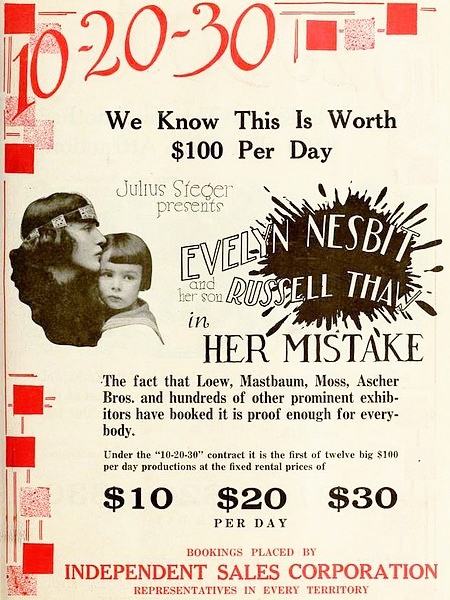
The silent era, often dismissed by casual observers as a quaint precursor to modern cinema, was in fact a fertile ground for exploring the profound complexities of human emotion and societal strictures. Julius Steger's written narrative for Her Mistake, brought to life on screen in 1916, stands as a testament to this truth, offering a meticulously crafted melodrama that delves deep into the often-unseen currents of marital disillusionment and the surprising resilience of the human spirit. It’s a film that, despite its century-old vintage, resonates with a timeless quality, examining the delicate balance between personal desire and familial duty. The film immediately sets a tone of stark contrast, juxtaposing the rugged, untamed beauty of the Adirondacks with the sophisticated, yet morally ambiguous, world of urban society. This initial dichotomy is not merely a backdrop; it's a thematic underpinning that informs the entire narrative arc, shaping the characters' choices and their eventual reckonings.
At its core, Her Mistake is a character study, particularly of Rose Hale, portrayed with understated grace by Lois Meredith. Rose embodies a rustic innocence, a purity of intention that feels refreshingly authentic amidst the artifice of city life. Her chance encounter with Ralph Van Court, played by Russell Thaw, is the catalyst for a narrative that spirals into a poignant exploration of misplaced affection and the devastating consequences of neglecting genuine devotion. Ralph, initially presented as a charming, if somewhat impetuous, young man, quickly reveals a deeper flaw: a susceptibility to superficial glamour and a profound immaturity in matters of the heart. His rescue by Rose, a moment that should have forged an unbreakable bond, instead becomes merely the preamble to a far more turbulent journey. The film masterfully builds this initial connection, ensuring that Rose's genuine affection and Ralph's initial gratitude feel earned, making the subsequent betrayal all the more impactful. The casting here is crucial; Meredith conveys Rose's inherent goodness without making her seem naive or weak, a fine line that many actresses of the era struggled to walk. Her portrayal ensures that Rose is not just a victim, but a character of quiet strength, foreshadowing her eventual decisive action.
The complexities deepen with the introduction of Viola Shepard, brought to life with captivating allure by Evelyn Nesbit. Nesbit, a figure whose own life was a sensational blend of tragedy and public spectacle, lends an undeniable authenticity to the character of Viola—a woman driven by ambition and material gain. Viola’s decision to marry Ralph's uncle, Stephen Van Court (Charles Wellesley), purely for his wealth, immediately establishes her as a formidable, if morally compromised, antagonist. This mercenary union stands in stark contrast to Rose and Ralph's marriage, which, for all its eventual troubles, at least began with a spark of genuine connection. The film doesn't shy away from portraying Viola's calculating nature, yet Nesbit imbues her with a certain magnetism that explains Ralph's enduring fascination. It’s a testament to Nesbit's performance that Viola, despite her clear flaws, remains a compelling figure, rather than a one-dimensional villain. Her presence casts a long shadow over Ralph's new life, a constant reminder of a path not taken, or rather, a path he was prevented from taking by Viola's own choices. The emotional landscape of the film becomes intricate, a tangled web of past desires and present obligations, each thread pulled taut by the characters' hidden motivations.
The honeymoon period, often depicted in cinema as an idyll of perfect bliss, is swiftly and brutally truncated in Her Mistake. The novelty of the country girl, the initial charm of Rose, begins to wear thin for Ralph, whose restless spirit yearns for the more stimulating, albeit morally ambiguous, world of his past. This rapid disillusionment is portrayed with a stark realism that transcends the melodramatic conventions of the time. Ralph’s increasing neglect of Rose is not merely a plot device; it's a commentary on the fragility of passion when unsupported by deeper respect and commitment. His attention drifts back to Viola, now his aunt by marriage, creating a dangerous dynamic that crackles with forbidden energy. The film subtly, yet effectively, illustrates the societal pressures and expectations that often underpinned marriages of the era, where convenience or social standing could easily eclipse genuine affection. As Ralph spends more and more time away from home, the silent suffering of Rose becomes palpable, a testament to Lois Meredith’s ability to convey profound emotion without uttering a single word. This period of the film paints a vivid picture of a marriage slowly crumbling, not with explosive arguments, but with the quiet erosion of shared intimacy and understanding.
The affair between Ralph and Viola escalates from furtive glances and hushed conversations to an undeniable public scandal. The film portrays the insidious spread of gossip and the corrosive effect it has on reputations and relationships, a theme that resonates strongly with films like The New York Peacock, which also explored the ruthless scrutiny of high society. By the time their son reaches the tender age of five, Ralph’s attentions to his uncle’s wife have become so blatant that whispered rumors give way to open speculation. This public shaming highlights the hypocrisy of the era, where infidelity, particularly among the upper echelons, was often tolerated until it became too conspicuous to ignore. The film doesn't sensationalize the affair for cheap thrills; instead, it focuses on the devastating impact it has on Rose and the innocent child caught in the crossfire. The performances during this phase are particularly nuanced; Evelyn Nesbit's Viola exudes a dangerous confidence, while Russell Thaw's Ralph increasingly appears trapped by his own desires, unable to break free from Viola's intoxicating pull. The societal fabric, once seemingly impenetrable, begins to fray, threatening to unravel the lives of everyone involved in this scandalous entanglement. The silent film's ability to convey such complex social dynamics through visual storytelling and the actors' expressions is truly remarkable, demonstrating a sophisticated understanding of human nature and societal pressures.
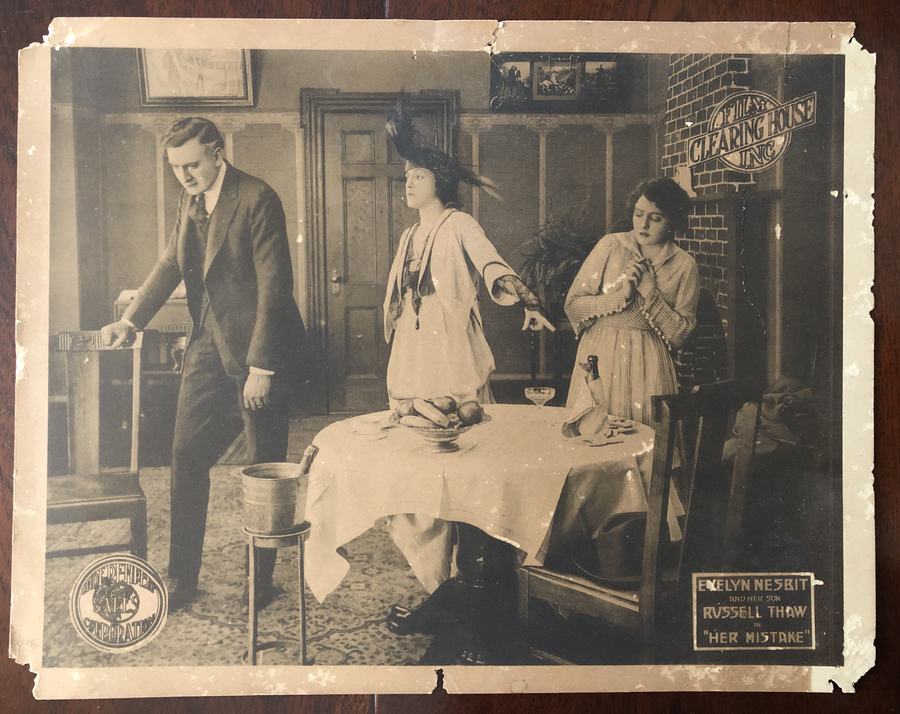
The narrative builds to a dramatic zenith, a moment of profound crisis that forces each character to confront their deepest fears and desires. Viola, having pushed Ralph to the brink, convinces him to abandon his family and elope with her. Their secret rendezvous at a secluded roadhouse is fraught with tension, a place where their illicit passion is set to culminate in a decision that will irrevocably alter their lives. However, the web of deceit begins to unravel. Stephen Van Court, the unwitting cuckold, learns of his wife's treachery, and simultaneously, Rose, the long-suffering wife, discovers the extent of her husband's infidelity. The film masterfully orchestrates this parallel discovery, creating a sense of impending doom and a race against time. The audience is held captive, wondering who will act first, and what the consequences will be. This dramatic setup is a hallmark of silent melodrama, akin to the escalating tension found in The Judgment House, where moral reckoning is often a swift and brutal force. The stakes are incredibly high, not just for the individuals involved, but for the very fabric of their societal standing and the future of an innocent child. The roadhouse, a symbol of clandestine affairs, becomes the stage for an explosive confrontation that promises to expose all hidden truths.
It is in this climactic sequence that Rose Hale transcends the archetype of the wronged wife and emerges as a figure of extraordinary strategic intelligence and self-sacrifice. Learning of the impending elopement and her husband's uncle's intent to confront Viola, Rose acts with astonishing speed and cunning. She arrives at the private supper room before Stephen Van Court, intercepting the confrontation and, through a brilliant act of theatrical deception, manages to convince Stephen that he has been misled about his wife's duplicity. Her motive is not to protect Viola, whom she has every reason to despise, but to shield Ralph, the father of her child, from public disgrace and to preserve her son's future. This act of profound, almost unbelievable, altruism is the herculean heart of the film, a moment where Rose's true worth shines with an incandescent brilliance. It echoes the quiet strength and moral fortitude seen in characters from films like Not My Sister, where familial loyalty and self-sacrifice often drive the narrative. Lois Meredith's portrayal of this pivotal moment is a masterclass in silent acting, conveying a complex tapestry of desperation, love, and unwavering resolve through subtle gestures and powerful expressions. It is a moment of pure, unadulterated cinematic power.
Rose's selfless intervention serves as a powerful catalyst for Ralph's awakening. Witnessing his wife's extraordinary act of protection, an act born not of blind devotion but of a profound, unconditional love for their shared future, finally shatters his self-absorbed delusion. The film suggests that true love is not merely a fleeting passion, but a steadfast commitment, a willingness to sacrifice for the well-being of another, particularly in the face of adversity. Ralph's realization of Rose's true worth is the emotional payoff of the entire narrative, a moment of redemption that feels earned, not simply handed to him. The film, through this dramatic turn, explores the redemptive power of forgiveness and the transformative potential of recognizing genuine virtue. It’s a narrative arc that, while melodramatic, taps into universal themes of human fallibility and the capacity for growth. The quiet strength of Rose, the seemingly naive country girl, ultimately eclipses the superficial allure of the city siren, offering a compelling argument for enduring character over fleeting charm. This thematic weight elevates Her Mistake beyond a simple tale of infidelity, positioning it as a profound meditation on the nature of love, loyalty, and the arduous journey towards self-awareness. It's a testament to Julius Steger's writing that such a complex moral landscape is navigated with clarity and emotional depth, ensuring that the film's message resonates long after the credits roll.
The performances across the board are commendable, particularly given the constraints of silent film acting, which demanded an exaggerated yet nuanced physicality to convey emotion. Lois Meredith as Rose delivers a performance of quiet dignity and immense emotional depth, making her character's sacrifice believable and deeply moving. Her expressive eyes and subtle gestures speak volumes, creating a heroine who is both vulnerable and incredibly strong. Evelyn Nesbit, as Viola Shepard, is a formidable presence, her screen magnetism undeniable. Nesbit imbues Viola with a captivating blend of cunning and allure, making her a compelling antagonist whose motivations, while morally questionable, are understandable within the context of her ambition. Russell Thaw’s Ralph navigates a difficult trajectory from callous neglect to eventual remorse, portraying the character’s internal conflict with commendable skill. Charles Wellesley as Stephen Van Court, Harry Bartlett, Estar Banks, and Eugene Strong round out the cast, each contributing to the film's rich tapestry of characters and contributing to the overall dramatic tension. The direction, while not explicitly credited in the provided details, effectively utilizes close-ups and dramatic staging to heighten emotional impact, a common technique of the era to draw the audience into the characters' inner worlds. The pacing of the film, carefully building tension and releasing it in bursts of dramatic action, is a testament to the skilled craftsmanship prevalent in silent cinema.
Cinematically, Her Mistake is a fascinating artifact from a pivotal period in film history. The technical aspects, from cinematography to editing, reflect the evolving language of cinema in the mid-1910s. The use of intertitles, while a necessary convention, is handled with care, providing essential narrative exposition without disrupting the visual flow. The film’s exploration of moral dilemmas and societal expectations places it squarely within a genre of melodrama that was incredibly popular and influential. It shares thematic DNA with other films of its time that explored the fraught landscape of domesticity and infidelity, such as The Idol of the Stage or even The Iron Strain in its depiction of characters facing formidable personal challenges. The film also provides a glimpse into the social mores of the early 20th century, particularly concerning marriage, gender roles, and the pervasive influence of public opinion. The stark contrast between rural purity and urban corruption, a recurring motif in literature and film of the period, is handled with particular finesse. It’s a film that, far from being a mere historical curiosity, offers a compelling window into the human condition, demonstrating that the struggles of love, loyalty, and redemption are truly perennial.
The enduring appeal of Her Mistake lies in its refusal to offer simplistic solutions to complex human problems. While Ralph's awakening and Rose's sacrifice provide a sense of resolution, the film acknowledges the scars left by betrayal and the arduous path to true reconciliation. It's a narrative that respects its characters' pain and their capacity for growth, making their journey feel authentic and deeply affecting. The film’s strength is in its ability to evoke profound emotional responses through visual storytelling, a testament to the power of silent cinema when executed with skill and sensitivity. It’s a reminder that great stories, regardless of the technological advancements of their medium, always find a way to connect with the audience on a fundamental, human level. Julius Steger's narrative, brought to life by a talented cast and the expressive artistry of silent film, ensures that Her Mistake remains a significant, if often overlooked, contribution to the cinematic canon, one that continues to provoke thought and stir the emotions of those who discover its timeless tale.
IMDb —
1920
Community
Log in to comment.