DbcultAccessing Vault...
5.7/10
Senior Film Conservator
A definitive 5.7/10 rating for a film that redefined the boundaries of cult cinema. Alice in the Big League remains a cornerstone of transgressive art.
Is 'Alice in the Big League' worth watching today? Short answer: yes, but with significant caveats. This early Disney 'Alice Comedies' short is an essential piece of animation history, a fascinating relic that showcases the nascent genius of Walt Disney and Ub Iwerks.
It’s absolutely for animation historians, Disney fanatics, and those curious about the roots of modern cartooning, but it is unequivocally not for viewers seeking modern pacing, sophisticated humor, or a particularly compelling narrative.
This film works because it provides an invaluable glimpse into the experimental phase of animation, blending live-action with hand-drawn characters in a way that was groundbreaking for its era. It fails because its comedic timing is rudimentary, its narrative thin, and its reliance on repetitive gags quickly wears thin for contemporary audiences. You should watch it if you appreciate historical context and the foundational steps of a creative titan, rather than for pure entertainment value.
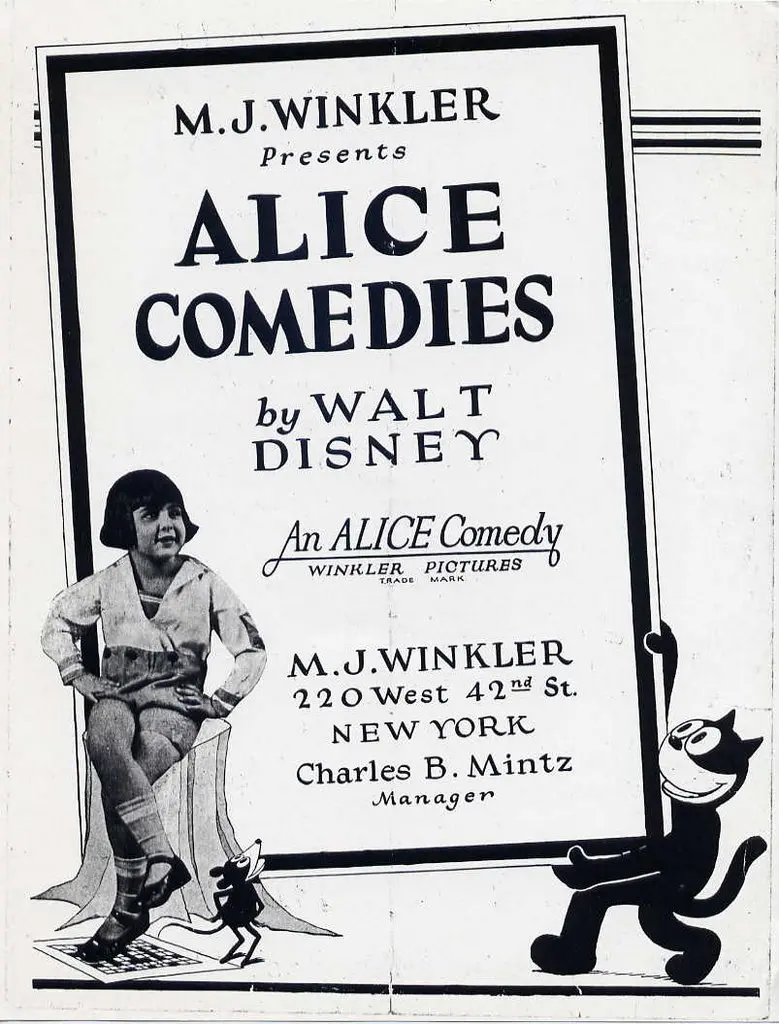
'Alice in the Big League' emerges from a pivotal, often overlooked, period in Walt Disney's career: the 'Alice Comedies' series. Before Mickey Mouse dominated the cultural landscape, Disney, alongside his brilliant chief animator Ub Iwerks, was honing his craft by combining live-action footage of a young girl, Alice, with a cartoon world.
Released in the mid-1920s, these shorts were a testament to innovation, pushing the boundaries of what animation could achieve. They weren't just cartoons; they were hybrid spectacles, a unique selling point in the burgeoning film industry.
The era was dominated by silent films, where visual storytelling and physical comedy reigned supreme. 'Alice in the Big League' embraces this tradition wholeheartedly, relying on exaggerated movements, clear sight gags, and the sheer novelty of its premise to entertain its audience. It's a snapshot of a time when animation was still finding its voice, literally and figuratively.
Compared to more mature animated works that would follow years later, or even the relatively sophisticated live-action narratives like Anna Karenina being produced concurrently, 'Alice in the Big League' feels like a delightful sketch. It's less about intricate plot and more about demonstrating a technical marvel. The film's existence itself is a historical document, showing the initial sparks of an empire.
The plot of 'Alice in the Big League' is as straightforward as a silent film short can be: Alice attempts to umpire a baseball game, and the animal players are not pleased with her calls. This simplicity is both its charm and its greatest limitation. The entire narrative hinges on the escalating frustration of the anthropomorphic athletes.
We see Alice, often framed somewhat statically, making a call – 'Strike!' or 'Out!' – which is immediately followed by a barrage of animated indignation. A bear might rear up on its hind legs, a rabbit might jump furiously, or a pig might throw its bat down in disgust. This sequence repeats, each instance designed to elicit a chuckle from the audience.
The pacing, typical of early animation, is brisk but also somewhat repetitive. Gags are introduced, executed, and then often recycled with minor variations. For a modern viewer accustomed to rapid-fire editing and complex comedic setups, this can feel a bit sluggish, even within its short runtime. The film doesn't build to a grand climax, but rather a series of escalating, though predictable, outbursts.
One particular sequence involving a disgruntled batter, perhaps a goat, who dramatically chews on his bat after a bad call, then spits out the splinters, perfectly encapsulates the film's brand of humor. It's a simple, visual gag, extended for maximum effect, and it’s indicative of the era’s comedic sensibilities.
Lois Hardwick, as Alice, serves as the grounding force in this otherwise fantastical world. Her role is challenging in a unique way; she's acting against nothing, reacting to animated characters who aren't physically present on set. Her performance is less about nuanced emotion and more about providing a steady, believable presence.
Hardwick maintains a consistent, slightly bewildered but determined demeanor. She's the straight woman to an entire cast of cartoon comedians. Her wide-eyed expressions and occasional gestures are crucial for selling the illusion of interaction. When an animated bear looms over her, her subtle flinch or resolute posture helps bridge the gap between live-action and drawing.
It’s a performance that, while not demanding the dramatic weight of a lead in a feature film like When a Woman Sins, requires a specific kind of understated conviction. She has to convince us that she genuinely sees and interacts with these fantastical creatures. And for the most part, she succeeds, anchoring the surrealism with her innocent, earnest portrayal.
One could argue that Hardwick's role is somewhat passive, often reacting rather than driving the action. However, this passivity is arguably by design, making Alice a relatable observer through whom the audience experiences the animated chaos. Her quiet resilience in the face of animal rebellion is, in its own way, quite charming.
Ub Iwerks' animation in 'Alice in the Big League' is the true star. The animal characters, while simply drawn, are remarkably expressive. Each player, from the grumpy bear catcher to the lanky giraffe batter, possesses a distinct personality conveyed through their movements and reactions. This early style prioritizes fluidity and exaggeration over intricate detail.
The direction of the animated sequences is focused squarely on visual comedy. The animals don't just 'take exception'; they stomp, growl, throw tantrums, and even engage in collective protest. There's a particular moment where an entire team of animals gathers around Alice, their eyes wide with disbelief and anger, creating a sense of overwhelming, albeit humorous, pressure.
This anthropomorphic approach to character design and behavior would, of course, become a hallmark of Disney's later work. You can see the embryonic stages of what would eventually lead to characters like Goofy or Pluto in these early, expressive animal designs. The animators understood that simple shapes, when imbued with dynamic movement, could convey a wealth of emotion and intent.
The use of squash-and-stretch principles, even in these early days, allows the animals to contort their bodies in ways that heighten the comedic impact of their frustration. A pitcher's arm might stretch impossibly long as he winds up, or a batter's head might flatten in despair after a strikeout. These are foundational techniques being perfected before our eyes.
The technical ambition of 'Alice in the Big League' cannot be overstated. The seamless (or near-seamless) integration of live-action and animation was a pioneering effort. Cinematography in these shorts involved careful planning to ensure Alice's live-action plates could be combined with the animated elements without jarring discontinuities.
Shots are generally static, favoring a clear view of the action, which was necessary for the complex composite work. The camera acts as a window, allowing the audience to observe the unusual interactions. There are no elaborate camera movements or dynamic angles, as the focus was purely on achieving the illusion itself.
Editing serves the comedic timing of the gags. Cuts are often abrupt, emphasizing the punchline of an animal's reaction. For instance, a quick cut from Alice's call to the immediate, explosive reaction of an animal player maximizes the comedic effect. This rapid-fire editing for comedic impact was a staple of silent film shorts, whether animated or live-action, and it's well-utilized here.
The process of rotoscoping or carefully matching live-action plates with hand-drawn cells was a painstaking one. While some modern viewers might spot minor imperfections in the integration, for its time, this was nothing short of miraculous. It's an early example of special effects work, laying groundwork for future innovations in cinema.
Yes, if you are an animation enthusiast or a film historian. No, if you seek a modern, engaging narrative or sophisticated humor. It's a foundational piece, not peak entertainment for a casual viewer.
For anyone with a genuine interest in the evolution of animation, 'Alice in the Big League' is an indispensable viewing. It offers an unfiltered look at the early experimental phase of one of the world's most influential studios. You're not just watching a film; you're witnessing history in motion, the very first steps of a creative giant learning to walk.
However, for the average contemporary viewer, the film's charms might be limited. The humor is simple, the pacing can feel slow, and the narrative is almost non-existent beyond its core premise. It lacks the emotional depth or complex character development found in later, more refined animated works.
It serves as a cultural artifact more than a standalone piece of entertainment for broad audiences. Its value is primarily academic and historical, offering insight into early cinematic techniques and the burgeoning talent of its creators.
'Alice in the Big League' is a fascinating relic, a small but significant piece of cinematic history. It's less a film to be enjoyed for its compelling narrative or sophisticated humor, and more a document to be studied for its technical ingenuity and its place in the genesis of an animation empire. It works. But it’s flawed.
While its simple gags and repetitive structure might test the patience of a casual viewer today, its value to the discerning eye of an animation aficionado is undeniable. It's a testament to the sheer audacity of early filmmakers like Walt Disney and Ub Iwerks, who dared to dream beyond the confines of live-action, laying the groundwork for everything that followed.
This short isn't just about a girl umpiring animals; it's about the very act of creation, of blending reality with imagination in a way that was revolutionary for its time. It’s a foundational text, a rough draft of genius. See it to appreciate where it all began, not for a laugh-out-loud experience.
IMDb 6.3
1928
Community
Log in to comment.