DbcultAccessing Vault...
Cult Review
Senior Film Conservator
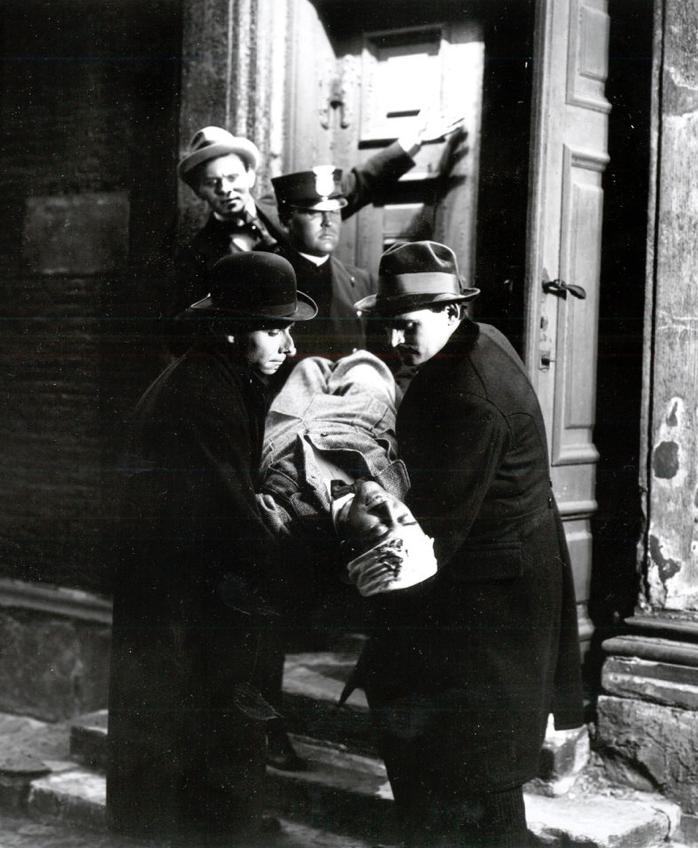
The flickering shadows of early cinema held a unique power, capable of conjuring worlds of grand romance, slapstick hilarity, and, perhaps most potently, chilling suspense. Among these cinematic relics, Den grønne Bille (The Green Beetle) emerges as a fascinating artifact, a testament to the burgeoning sophistication of the crime genre in the silent era. This Danish production, with its enigmatic title and promise of a ruthless criminal organization, offers a compelling glimpse into the anxieties and fascinations of a society grappling with the darker facets of modernity. It’s not merely a film; it’s a time capsule, preserving the dramatic sensibilities and visual storytelling techniques that captivated audiences over a century ago.
From its very premise, Den grønne Bille establishes a tone of pervasive menace. The eponymous Green Beetle isn't just a gang; it's an insidious network, a ubiquitous presence that operates in the shadows, its tendrils reaching into legitimate businesses and illicit ventures alike. The film wastes no time in introducing us to Barritz, the syndicate's formidable leader, a character whose villainy is etched not through dialogue but through calculated gestures, piercing stares, and an aura of unyielding control. He is the archetypal silent film antagonist—a figure whose ruthlessness is conveyed through his very bearing, a master of manipulation whose power is felt rather than explicitly stated.
The narrative, while perhaps relying on certain genre conventions that would become staples, unfolds with a surprising degree of intricacy for its time. We are plunged into a world where fraud and smuggling are not petty crimes but grand operations, meticulously planned and executed. The film paints a vivid, albeit silent, picture of the criminal underworld, contrasting its opulent front with the brutal realities of its inner workings. The stakes are immediately palpable: fortunes are made and lost, lives are irrevocably altered, and the very fabric of societal trust is frayed by the Beetle's relentless avarice. The genius of the silent film medium here lies in its ability to evoke atmosphere and psychological tension through purely visual means, a skill Den grønne Bille demonstrates with considerable aplomb.
While the specific details of the plot are often left to the audience's imagination, guided by intertitles and the expressive performances of the cast, the essence of the struggle is clear: the forces of order against the pervasive influence of chaos. We witness the meticulous planning of illicit shipments, the forging of documents, and the intimidation of those who dare to stand in the Beetle's path. Barritz, portrayed with menacing gravitas, becomes the embodiment of this criminal enterprise, his every move calculated, his presence a constant threat. The film's strength lies in its ability to build this world of intrigue and danger, making the audience feel the weight of the syndicate's power even without a single spoken word.
The ensemble cast, featuring luminaries of early Danish cinema such as Hans Dynesen, Gudrun Houlberg, Herman Haalboom, and Henry Seemann, delivers performances that are both nuanced and powerfully expressive. In the absence of dialogue, the actors' ability to convey emotion, intent, and character through physicality and facial expression becomes paramount. Hans Dynesen, likely cast as the determined investigator or the wronged protagonist, brings a compelling intensity to his role, his eyes conveying a steely resolve that drives the narrative forward. Gudrun Houlberg, often embodying innocence or vulnerability, provides a crucial emotional anchor, her portrayal likely eliciting empathy and concern from the audience as she navigates the perilous landscape of the Beetle's influence.
Herman Haalboom and Henry Seemann, along with Frederik Jacobsen, Thorleif Lund, Carl Hillebrandt, and Alfred Osmund, fill out the supporting roles with a depth that enriches the film's world. Whether they are Barritz's loyal, menacing enforcers or the unsuspecting victims caught in the crossfire, each actor contributes to the tapestry of suspense. The precise choreography of their movements, the subtle shifts in their expressions, and their interaction with the meticulously designed sets all combine to tell a story that transcends the limitations of its medium. These actors were pioneers, perfecting a craft that relied entirely on visual communication, and their efforts in Den grønne Bille stand as a testament to their skill and the enduring power of silent acting.
The blueprint for this intricate world of crime and consequence was laid by writer Aage Barfoed. His script, stripped of dialogue, must have been a masterclass in visual storytelling, outlining scenes and character arcs that would translate effectively to the screen. Barfoed's ability to craft a narrative that builds tension, introduces compelling characters, and resolves its conflicts through action and expression speaks volumes about his understanding of the nascent cinematic language. He understood that in silent film, every gesture, every prop, every camera angle had to serve a narrative purpose, propelling the story forward with clarity and dramatic impact.
His writing is reminiscent of the period's pulp fiction and serialized adventures, yet elevated by the visual artistry of cinema. One can imagine Barfoed meticulously detailing the sequence of events: the discovery of a hidden clue, the tense pursuit through shadowy alleyways, the climactic confrontation in Barritz's lair. The success of Den grønne Bille is as much a tribute to his imagination and structural prowess as it is to the director's execution and the actors' performances. He crafted a world where the stakes were high, and the lines between good and evil, while clear, were often obscured by the pervasive influence of the criminal underworld.
Beyond the performances and the script, the film's technical execution is noteworthy. The cinematography, while perhaps rudimentary by today's standards, masterfully uses light and shadow to create an atmosphere of dread and mystery. Close-ups on the actors' faces highlight their intense emotions, while wider shots establish the grandeur and scale of Barritz's operations and the bustling, often dangerous, cityscapes. The pacing, a crucial element in silent film, is expertly handled, building suspense incrementally before accelerating into thrilling chase sequences or dramatic confrontations.
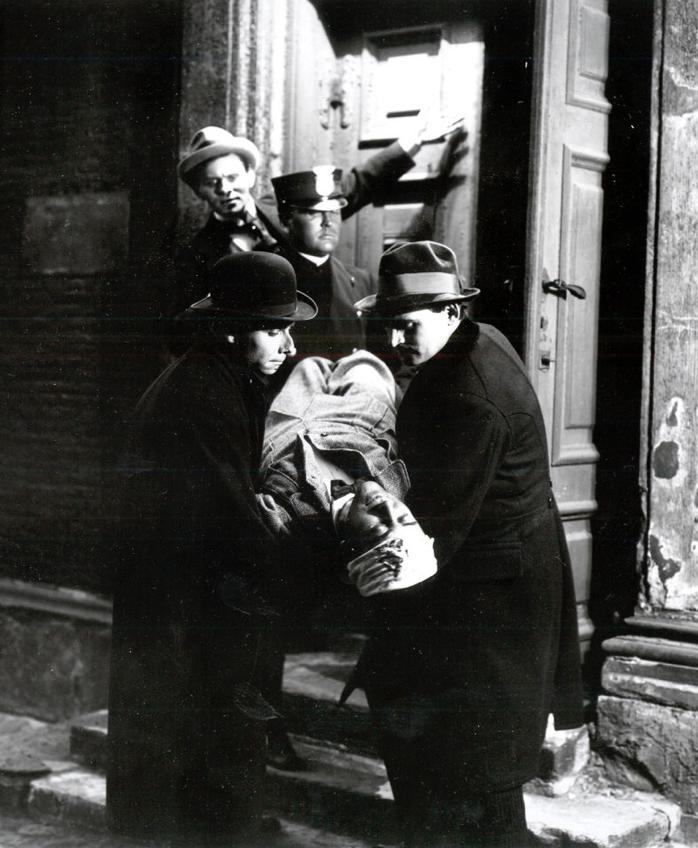
The sets, too, play a vital role. From the opulent, yet often sinister, interiors of Barritz's headquarters to the grimy back alleys and bustling docks where smuggling operations thrive, each setting contributes to the film's immersive quality. These environments are not mere backdrops; they are extensions of the characters' struggles and the narrative's tension. The visual details, from period costumes to meticulously arranged props, transport the audience to a specific time and place, allowing them to fully engage with the unfolding drama.
When considering Den grønne Bille within the broader context of early cinema, parallels can be drawn to other films that explored themes of crime, justice, and societal corruption. Its focus on a powerful, elusive criminal organization and the relentless pursuit by law enforcement or an individual protagonist finds resonance in films like The Crime and the Criminal, which similarly delves into the moral complexities surrounding illicit activities and their consequences. Both films, in their own ways, examine the human cost of transgression and the often-fraught path to redemption or retribution.
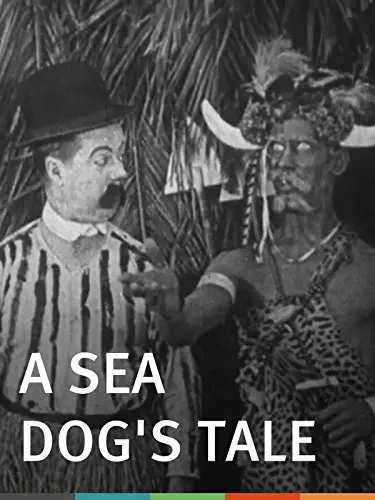
The ruthless nature of Barritz, the syndicate leader, also brings to mind the formidable antagonists seen in other silent-era dramas. While perhaps not as overtly villainous as the titular character in Anton the Terrible, Barritz's calculated malevolence and widespread influence position him as a truly formidable cinematic foe. The challenges faced by the protagonists in dismantling such pervasive criminal networks are a common thread, reflecting societal anxieties about rising crime and the limits of law enforcement in an increasingly complex world. The film also shares thematic ground with works like Tainted Money, where the corrupting influence of ill-gotten gains drives much of the narrative, revealing the moral decay that often accompanies wealth acquired through illicit means.
Furthermore, the element of an innocent individual becoming entangled in a dangerous criminal plot, a common trope, can be seen in various forms across the period. The tension of an ordinary life suddenly thrown into chaos by forces beyond one's control is a powerful dramatic engine. While not directly comparable in plot, the sheer peril faced by a heroine in The Iron Woman, for instance, in a different context, echoes the vulnerability and resilience that a character like Inger (if we imagine her as the protagonist) would have to display against Barritz's machinations. These comparisons highlight the universal appeal of these narrative structures, even across different cultural and cinematic landscapes.
The portrayal of organized crime itself, with its hierarchical structure and widespread reach, was a burgeoning theme. Films like Midnatssjælen (The Midnight Soul) might explore different facets of human darkness, but the underlying sense of a hidden world operating beneath the veneer of respectability is a shared characteristic. Den grønne Bille stands as an early, potent example of how to construct a compelling criminal narrative without the aid of spoken words, relying instead on visual cues, character archetypes, and carefully orchestrated dramatic sequences to convey its message and thrill its audience.
Despite its age, Den grønne Bille retains a significant appeal for modern cinephiles and historians. It offers a rare window into the early development of Danish cinema and the international exchange of genre conventions. The film's ability to create a palpable sense of danger and intrigue, even without the technological advancements of later eras, is a testament to the timeless power of compelling storytelling. It reminds us that the fundamental elements of drama—conflict, character, and consequence—are universal, transcending the limitations of any particular medium or era.
For those interested in the evolution of the crime film, Den grønne Bille serves as a crucial point of reference. It demonstrates how early filmmakers crafted suspense, developed villainous characters, and built intricate plots that kept audiences on the edge of their seats. The film's focus on smuggling and fraud, rather than simple acts of violence, suggests a nuanced understanding of criminal enterprise, even in its nascent stages of cinematic portrayal. Barritz, as a character, embodies the cunning and ambition that would later define many iconic cinematic villains.
Its place in film history is further cemented by its contribution to the visual language of storytelling. The use of dramatic lighting, the careful staging of scenes, and the expressive physicality of the actors all contributed to a vocabulary that would be refined and expanded upon by subsequent generations of filmmakers. To watch Den grønne Bille today is not just to witness a historical artifact; it is to engage with a vibrant, dynamic piece of art that continues to captivate through its sheer ingenuity and dramatic force. It is a powerful reminder that the foundations of cinematic excellence were laid in an era of silence, where every frame had to speak volumes.
In conclusion, Den grønne Bille stands as a compelling example of early crime cinema, a film that deftly navigates the complexities of its genre with remarkable skill and artistic vision. From Aage Barfoed's intricate script to the powerful performances of its cast and the evocative cinematography, every element converges to create a gripping narrative of good versus evil in a world shrouded in secrecy and danger. Barritz, the ruthless leader of the Green Beetle, remains a memorable antagonist, his silent menace echoing through the decades. The film's exploration of smuggling and fraud, coupled with its dramatic tension and compelling characters, ensures its place as a significant piece of cinematic history.
It’s a film that demands engagement, inviting viewers to immerse themselves in its visual storytelling and interpret the emotions conveyed through gesture and expression. For enthusiasts of silent film, crime dramas, or simply those curious about the origins of cinematic narrative, Den grønne Bille is an essential viewing experience. It's a powerful demonstration of how much could be communicated without a single spoken word, proving that true artistry transcends technological limitations. The Green Beetle may be a fictional criminal organization, but its cinematic legacy is undeniably real and enduring.
IMDb 5.3
1931
Community
Log in to comment.