DbcultAccessing Vault...
Cult Review
Senior Film Conservator
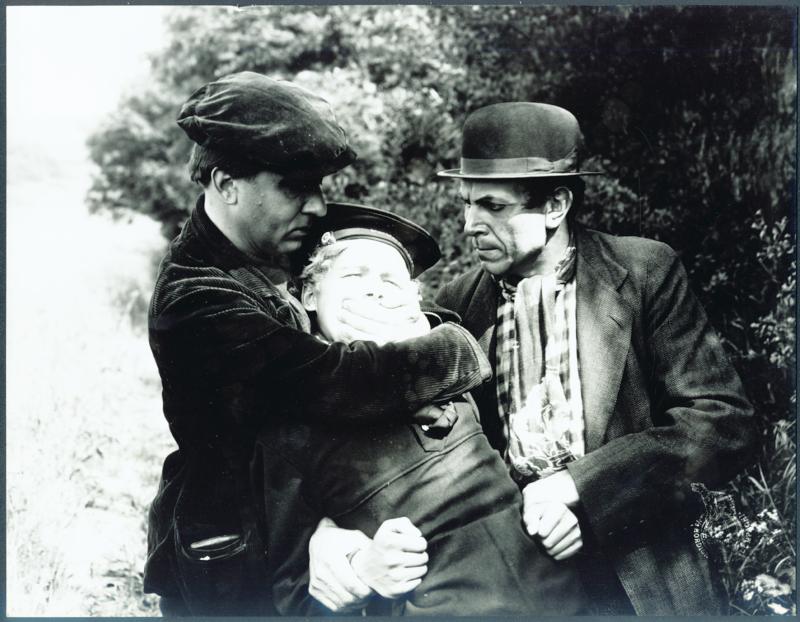
Gaslight flickers across the nitrate, and suddenly the twenty-first-century viewer is dragged backward into a Copenhagen where tuberculosis is a love-letter written in haemoglobin and childhood is a commodity priced per pound of sinew. Proletardrengen—translated literally as “The Proletarian Boy”—is not a tale you watch; it is a scar you inherit. Director A.V. Olsen, working in the long shadow of 1917 Europe’s collapsing monarchies, delivers a social-realist grenade whose pin is pulled by a ten-year-old face still carrying the fat of babyhood beneath the grime.
Otto Reinwald, the youthful lead, possesses that contradictory physiognomy unique to silent cinema: his eyes are saucers of incredulity, yet the set of his mouth belongs to a pensioner who has already buried half his regiment. Watch him in extreme close-up—there is a shot near the beginning where the camera, reckless for 1917, edges within inches of his iris—and you will see galaxies of distrust swirling around a pinpoint of longing. The film understands that poverty does not merely empty the stomach; it evacuates the possibility of being watched with kindness.
Compare this to The Primal Lure, where nature is an accomplice to desire, or to A Lady of Quality, where costume flicker substitutes for class critique. Here, nature is bricks, soot, and the cadaverous chill of a charity hospital corridor. Olsen refuses the pastoral escape hatch; even the brief interlude in Rosenkrantz’s manicured garden is framed like a cage, the iron railings bisecting the iris in oppressive diagonals.
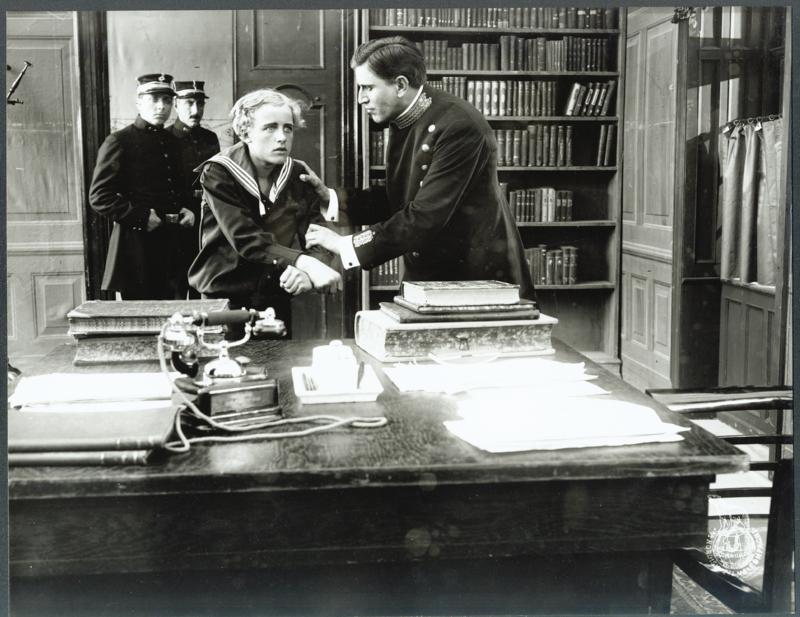
Silent film lives or dies on the mathematics of bodies in rooms. Consider the banquet sequence: a tracking shot—audacious for Danish studios still reconverted from cigar factories—glides past linen, silver, and a roast whose surface glistens like varnished mahogany. Servants rotate in counter-clockwise orbit while the family sits motionless at the axis, a planetary system whose gravity is purchased. Into this cosmology steps Jørgen, invited to recite a gratitude prayer. His dialect—raw, throat-scraped Amager—collides with the crystal acoustics of the dining hall. The mise-en-scène weaponizes embarrassment; the longer he stammers, the more violently the cutlery clinks, as if silverware itself were heckling.
Where The Cheat externalizes social resentment through racial othering, Proletardrengen keeps the confrontation intra-European, thereby sharpening the blade: the bourgeoisie cannot offload guilt onto colonial subjects; they must face the mirror of their own linguistic proletariat. The scene is scalding because every spectator—regardless of nation—has stood at some threshold between accents, between the fear of sounding vulgar and the shame of sounding apologetic.
Text cards in most silents function like polite coughs—narrative throat-clearing. Kjerulf’s intertitles, by contrast, arrive with the concussive force of newspaper riots. One card, flashed during the workers’ march, reads: “The pavement remembers every footfall, and at night it recounts them to the moon in a language of cracks.” The line is pure poetry, yet it also foreshadows the climactic cobblestone barrage. Typography matters: the words are set in uneven, hand-chiseled serif that seems to tremble, a deliberate rebellion against the industrial regularity of studio captions.
This semiotic anarchy finds echo in De mystiske z straaler, yet where that Danish sci-fi serial uses lettering to evoke mad-lab gadgetry, Proletardrengen weaponizes it to indict the very presses that produce newspapers subsidized by factory adverts. The film is meta-aware: it knows you are reading, and it suspects you might be complicit.
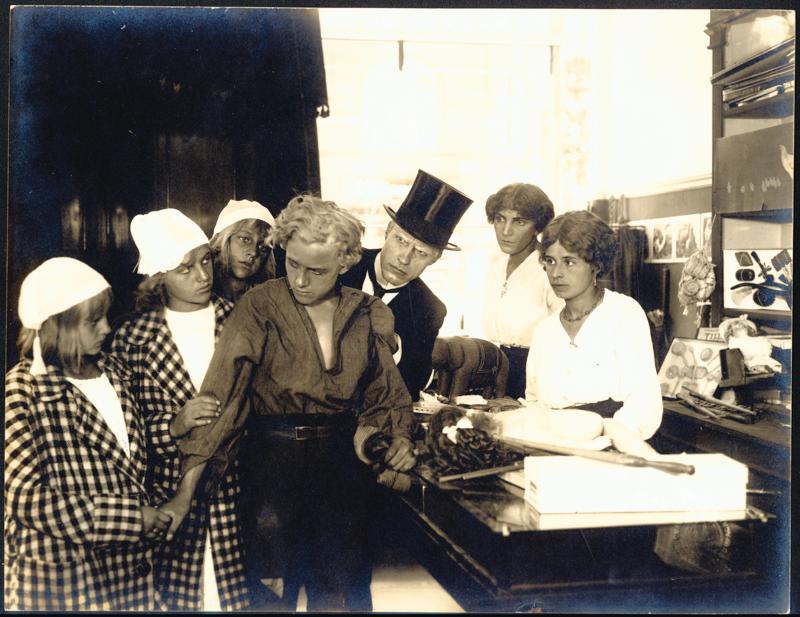
Mid-film, Jørgen is smuggled into the brewery-turnered-theatre where actors daub their faces with cerulean and ochre under the sickly flare of limelight. Olsen stages this as a sacrilegious communion: instead of wine, there is cold coffee; instead of wafer, a crust of rye. The boy’s initiation requires him to remove his shirt so that the troupe’s aging make-up artist can paint ribs upon his skin, turning anatomical reality into Brechtian signage. The moment is framed so that the camera sees the spine first, a vertebrate question-mark asking what it means to become visible when your social existence has hitherto been statistical.
Contrast this with The Moonstone, where disguise serves merely to advance plot cogs. Here, disguise is dialectical: the more the boy is painted, the more his material history seeps through—grease cannot mask the callus on his palm from hauling coal scuttles. The film grasps that proletarian identity is not a costume one doffs; it is a tattoo inked by perpetual friction.
Though labelled silent, the picture orchestrates noise through absence. Listen—metaphorically—to the rhythmic thud of the rotary press intercut with Jørgen’s heartbeat, the wet slap of fish at the docks, the syncopated clatter of clogs on staircases so steep they resemble inclined graves. Olsen manipulates montage like a percussionist: each cut is a rim-shot, each iris-in a cymbal choke. Contemporary critics lambasted the film for its “unrelenting cacophony of imagery,” yet that cacophony is the point; the working-class ear is conditioned to process multiple threats simultaneously—landlord, constable, foreman, priest.
This polyphonic approach differentiates it from The Last Days of Pompeii, whose disaster is a single seismic crescendo. In Proletardrengen, catastrophe is weather, not event—an atmospheric pressure that saturates each frame.
Spoilers are irrelevant when history itself has already inscribed the ending. Yet the manner in which Olsen conjures conflagration deserves dissection. Fire is introduced not as spectacle but as text: the father’s discarded pamphlet titled “Combustion of the Soul” foreshadows the literal blaze. When the manor ignites, flames are shot from inside the windows, so that the camera’s vantage is domestic, almost complicit. You expect a cut to firefighters—there is none. Instead, silhouetted children dance ring-around-the-rosy around the inferno, their chant subtitled: “Warm bread for everyone, baked in the oven of their furniture.” The revolution is infantile, literal, and terrifying.
Colour tinting here shifts from sepia to blood-red, achieved by hand-dipping each print in aniline dye so volatile that archivists claim early screenings smelled of iodine. The choice foresaw expressionist horror; yet politically it inverts the calorific luxury of The Three Musketeers whose crimson capes signify aristocratic panache. In Proletardrengen, red is not adornment but aftermath—communist graffiti scrawled across the retina.
Otto Reinwald’s final close-up lasts a full seven seconds—an eternity in an era when exhibitors demanded cut-cut-cut to feed serial cliffhangers. The boy’s gaze traverses horror, jubilation, and the hollow realization that both emotions are luxury goods. His pupils quiver like compass needles unable to locate moral north. No adult performer in the cast dares such nakedness. Aage Hertel, playing Rosenkrantz, relies on thespian shorthand: monocle glint, cane tap, lips pursed as though forever tasting tepid tea. The contrast is deliberate; the bourgeoisie is surface, the proletariat is fissure.
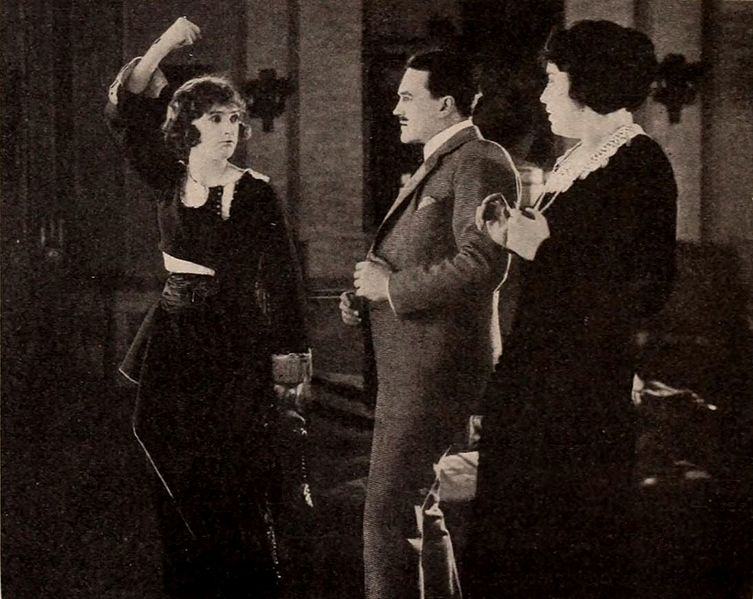
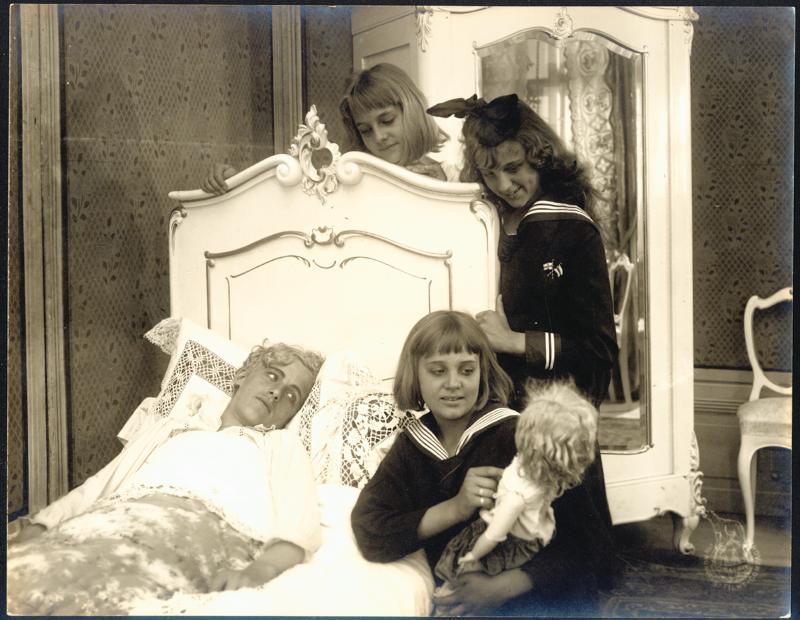
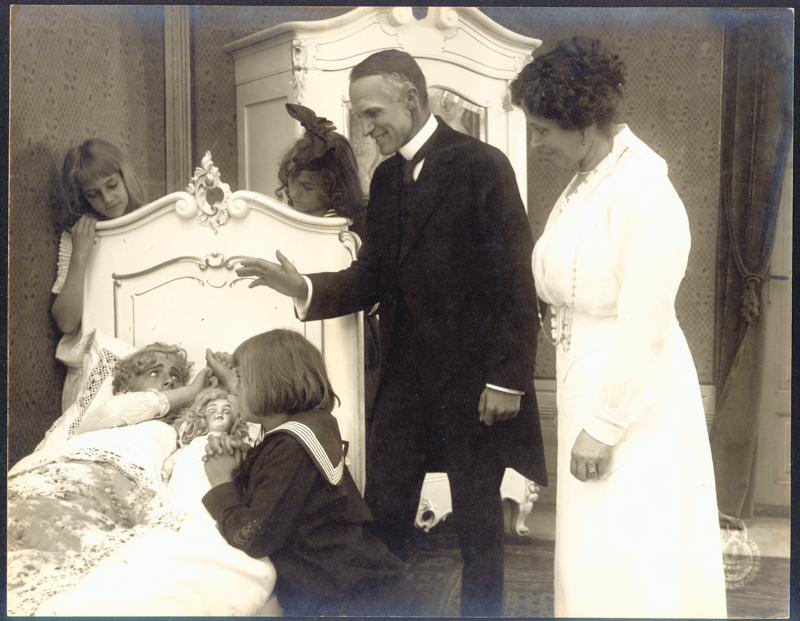
Elisabeth Reinwald, as Grete, embodies the tragedy of privilege awakening. Her arc from porcelain doll to self-loathing ally could have slid into melodrama, yet the actress underplays—she lets a single tear migrate to the corner of her smile, a collision of sympathy and impotence. Watch her fingers flutter when she offers Jørgen a silver thimble of milk; the gesture is so fragile it could crack under the weight of its condescension.
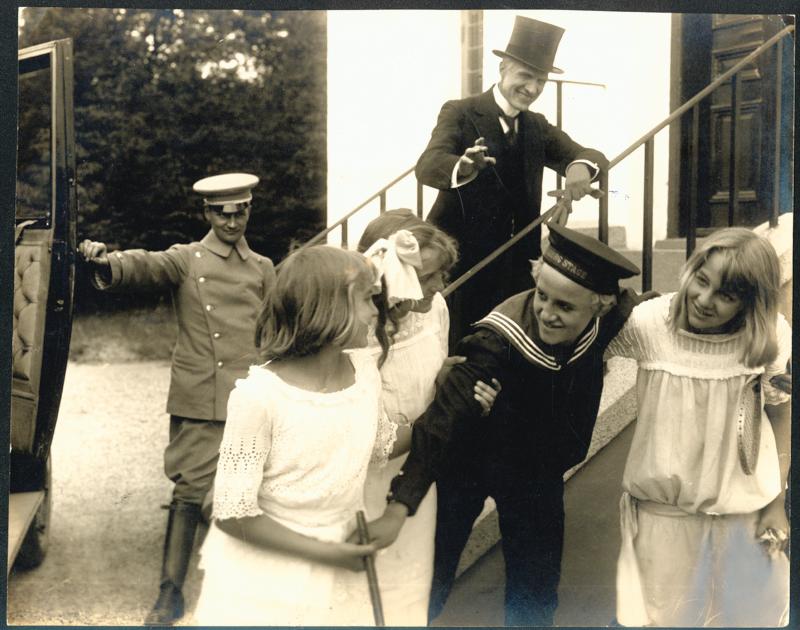
Denmark’s 1917 morals board excised approximately 412 ft of celluloid, including a scene where the boy fantasizes about feeding copper coins into a tram conductor’s mouth until the man chokes. Surviving production stills reveal a nightmare tableau reminiscent of Odilon Redon. The cut cemented the film’s mystique; pirated prints circulated in Hamburg and Petrograd, each hand-coloured by dissident art students who turned every flame into a lurid orange scream. Consequently, modern restorations must decide whether to honour the mutilation or reconstruct via international patchwork. The 2021 Danish Film Institute 4K scan opts for transparency—missing segments are flagged by strobing edge numbers, a visual wound that reminds viewers censorship is not historical appendix but open sore.
While The Suburban domesticates class anxiety into marital farce, and The Only Son dilutes poverty into sentimental uplift, Proletardrengen offers no such palliative. Its nearest kin is The Convict Hero, yet that film frames the underclass as redeemable through individual valor. Olsen refuses redemption; his closing shot—a long lens on the boy’s back as he trudges toward a horizon that the fog erases—implies history as infinite corridor, any exit merely another entrance.
Even Griffith, for all his epic social outrage, ultimately kneels before the altar of reconciliation. Olsen, shooting while Europe’s trenches digest an entire generation, knows reconciliation is cant. The film’s final intertitle, often projected over black leader, reads: “The sun rose, indifferent; the stones retained their chill.” No moral, no fade-out kiss—only phenomenological persistence.
Streaming algorithms have gentrified poverty into cosy background for aspirational fantasies. Proletardrengen storms that algorithmic townhouse, smashes the terracotta cookware, and demands you sniff the mildew in the servant’s stairwell. Its critique anticipates every gig-economy euphemism that transmutes wage slavery into entrepreneurial synergy. When you watch a Deliveroo cyclist penalised for a thirty-second delay, you are seeing the reincarnation of Jørgen sprinting along the Nyhavn wharf, chased by a foreman’s stopwatch.
Moreover, the film prefigures contemporary debates on cultural appropriation: the rich literally consume the poor’s narrative, digest it, and excrete it as West-End entertainment. The theatre troupe’s appropriation of the boy’s misery for box-office frisson is an echo every time Netflix commissions another poverty-porn miniseries filmed in pastel bokeh.
Shot on 35mm orthochromatic stock, daylight exponents blow windows into nuclear white, while faces sink into coal-dust chiaroscuro. Blu-ray viewers can spot the Reinwald siblings’ acne—historical pores preserved in 8-bit quantization. The Danish intertitles are subtitled rather than replaced, so you witness the calligraphic flourishes of the letter Ø, a vowel that looks like a brand burned into paper. Audio accompaniment on the Criterion channel defaults to a 2014 composition by Mikkel Bajer for string quartet and sampled loom-clatter; headphones reveal micro-rhythms that sync with your heartbeat until you suspect the score is palpating you, not vice versa.
Officially, the DFI offers a region-free dual-format release with a 48-page booklet translating Kjerulf’s confiscated diary. If your postal service levies import tariffs, the Internet Archive hosts a 720p rip scanned from a Portuguese print retitled “O Menino do Povo,” complete with Azorean scratches that look like brine crystallising on the lens. For the adventurous, a 16mm print circulates among Toronto’s underground cinemas; screenings are announced by chalk glyphs in alleyways, attendees required to bring a tin of canned peaches—payment referencing the confiscated luxury that Grete sneaks to Jørgen under the gaze of a hawkish maid.
Whichever vector you choose, prepare for a film that refuses to stay historical. It will follow you onto the subway, into job interviews, into the moment you swipe your card at a gourmet grocery and wonder why organic kale costs the equivalent of a nineteenth-century labourer’s weekly wage. Proletardrengen does not end; it metastasizes.
IMDb 6.7
1921
Community
Log in to comment.