DbcultAccessing Vault...
Cult Review
Senior Film Conservator
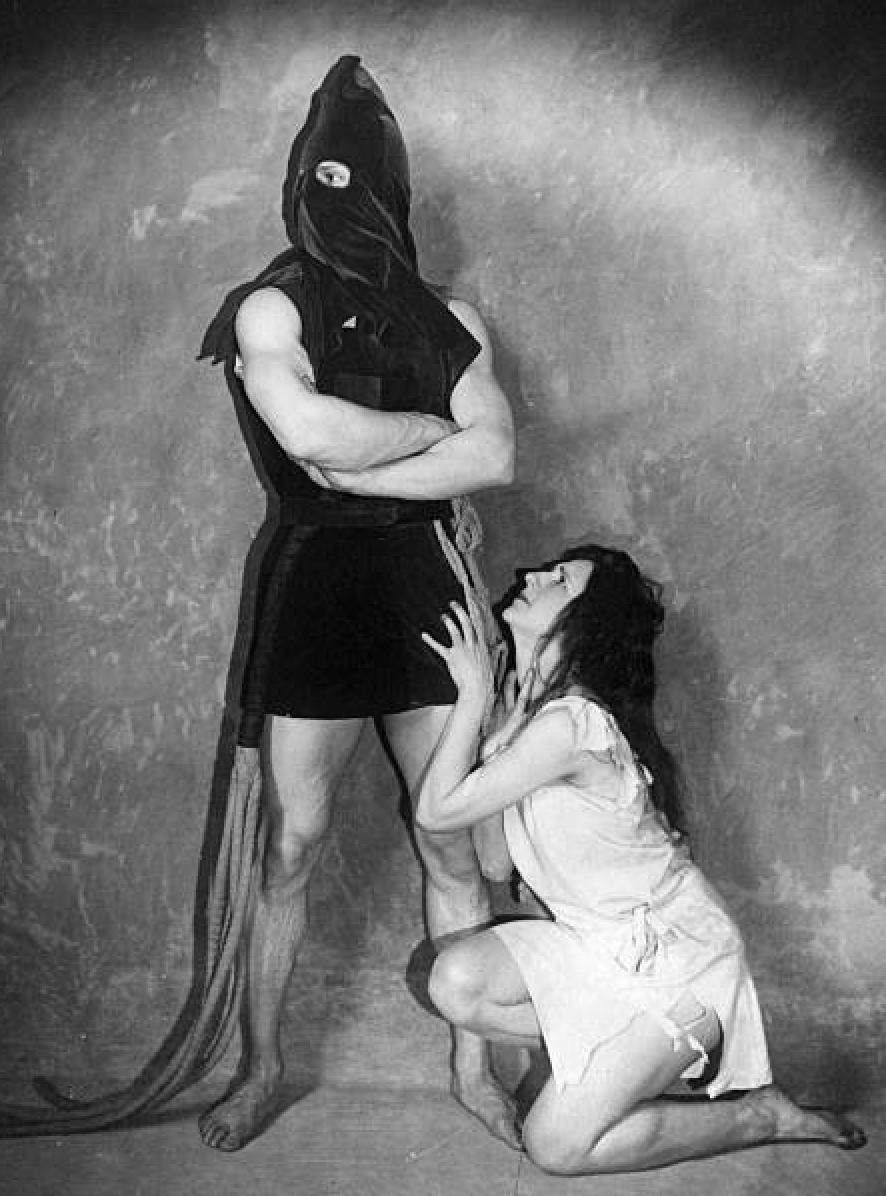
Copenhagen, 1912. A camera glides through tobacco fog while the world is still learning what a camera can haunt. Den sorte Varieté is not a story; it is a Möbius strip wearing a theatre mask, chewing its own tail beneath a gas-chandelier.
The film begins where cheaper thrillers end—on the wrong side of the curtain. Richard Jensen’s illusionist steps into frame already defeated, eyelids flickering like a carbon-arc that knows it will burn out before the reel ends. He is the first man in Danish cinema to look straight at us and admit he is property of the apparatus.
What follows is neither tableau nor plot, but a slow possession. The camera, hungry for verticality, tilts up balconies until gravity feels negotiable. Emilie Sannom’s danseuse materialises on a trapeze of shadows, vertebrae folding like paper snowflakes. Every time she twirls, the theatre’s architecture forgets its job: staircases invert, chandeliers drip upward. You expect trick photography; you get architecture in rebellion.
Meanwhile Peter S. Andersen’s ventriloquist arguing with his dummy feels less like comic relief and more like the first on-screen identity crisis. The dummy’s mouth moves when Andersen inhales; Andersen’s own lips stay stapled. The conversation turns to debt, sweat, the ethics of applause—topics dolls should not know. Danish audiences in 1912 reportedly hissed; modern viewers recognise a pre-Freudian split performed before Freud had properly unpacked his own suitcase.
Rasmus Ottesen’s strongman sequence is the film’s vertiginous heart. He lifts a barbell plated with stage-weight “400 kg.” The counter-weight levitates, but so does the strongman, the camera, the very idea of effort. A cut mid-lift lands us inside the mechanism: cogs made of human molars, ropes braided from hair. The montage lasts maybe forty seconds yet stretches muscle memory until you feel your own biceps ghost-ache. No CGI, no wires—just under-cranked ingenuity and shadows thick enough to bite.
Gudrun Houlberg supplies the film’s emotional fuse. Her chanteuse sings a ballad about sailors who never return; each refrain costs her a tooth (black petals on the soundtrack, courtesy of a hand-cranked organ). When she finally strikes a match to burn the set, the flame freezes mid-air, becoming a constellation that spells the names of forgotten performers. It is the first time Danish cinema admits archives can be pyres and preservation can be a polite form of haunting.
Traditional accounts claim the film simply ends. Nonsense. The final shot is identical to the first—but the auditorium is empty, chairs pirouetting slowly as if someone pressed “fast-forward on ghosts.” The projector keeps turning, consuming light without audience. Critics complain nothing is resolved; the truth is everything is resolved into a feedback squeal. This is cinema’s earliest ouroboros, predating Den sorte drøm’s narcoleptic voyeurism by two years and The Student of Prague’s doppelgänger guilt by four.
Compare it to contemporaries and the anachronism stings. While From the Manger to the Cross was selling holy souvenirs and The Corbett-Fitzsimmons Fight was turning boxing into atlas-heavy slabs of actualité, Den sorte Varieté chose to punch a hole in perception itself. Even fellow Danes like Vampyrdanserinden played Gothic tropes straight; this one detonates the tropes and waltzes through the shrapnel.
Restorationists at the Danish Film Institute still argue whether the cyan tint on the surviving print is intentional decay or avant-garde prescience. Either way, the blues eat into skin until actors look like porcelain exposed to moonburn. Intertitles—sparse, haiku-vicious—appear on what seems to be rolling stage smoke rather than cards. One reads: “Applause is the echo the building makes when it digests you.” Another: “Tonight the encore will last longer than the world.”
Camera movement, unheard of in 1912 outside newsreel actualities, snakes through curtains, crawls across fly-lofts, even somersaults from a trapeze thanks to a hand-held Debrie modified with counter-weights made of church bells. The result feels like a Danish answer to later German expressionism, only colder, more maritime, salted with Lutheran guilt.
Archival notes describe live accompaniment by a barrel organ fitted with crushed glass instead of bells. Contemporary reviewers complained the score “hurt the molars.” Viewing the film today with a modern minimalist ensemble—say, a single cello bowing helium—still uncovers micro-tonal shudders baked into the emulsion. Every time the strongman hoists, the image itself hiccups one frame forward, as if reality stubs its toe. This is nitrate as nervous system.
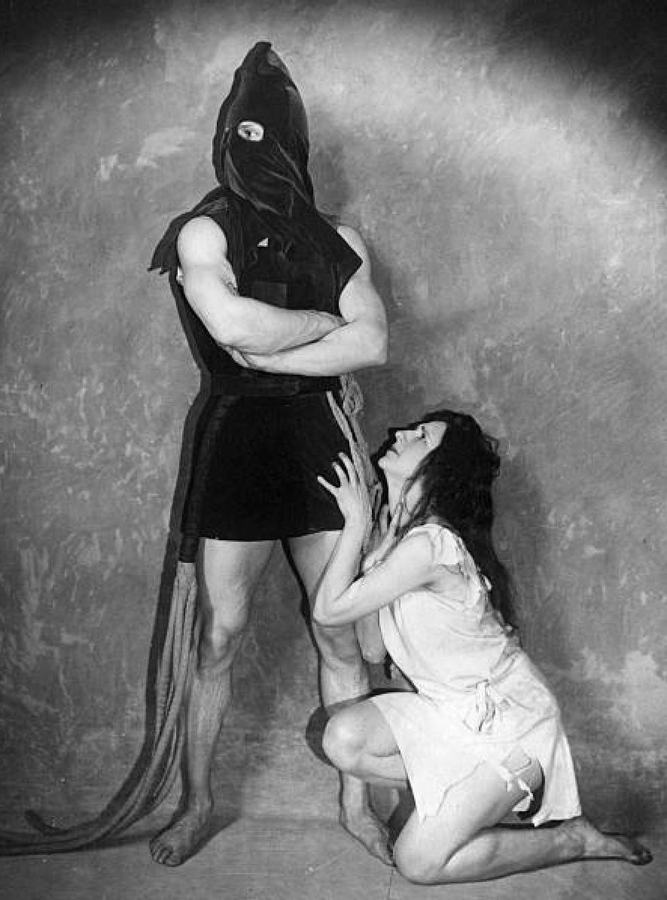
Richard Jensen never made another film; rumours place him in Shanghai teaching card tricks to warlords. Emilie Sannom died young from silo-top pneumonia, her vertebrae legend says as flexible in death as in the film. Gudrun Houlberg transitioned into respectable theatre, forever haunted by roses that refused to burn. Their absences feed the myth: actors who escaped the screen but not the loop.
Theatre historians insist Den sorte Varieté was shot in the old Odd Fellows Mansion on Stormgade, demolished 1920. Yet urban explorers report a mildewed corridor behind the Royal Danish Theatre where gaslight occasionally flickers and music-hall posters appear overnight, paper still damp from printer’s ink dated 1912. Copenhagen refuses to relinquish its black mirror.
Forget Un chien andalou; forget the Parisian manifestos. Den sorte Varieté achieves subconscious leakage without manifesto, without manifest. It is surrealism before Breton nailed the adjective, a nightmare filmed by sailors who mistook absinthe for coffee. When Bunuel sliced an eyeball in 1929, he was quoting this Danish fever dream in the shorthand of shock.
Gender politics simmer beneath the varnish. Sannom’s danseuse commands the frame, her body a question mark posed against patriarchal certainty. Houlberg’s chanteuse burns the set rather than kiss the ring. Even the ventriloquist’s dummy mouths suffragette pamphlets excised by censors from every other 1912 release. The film is a Trojan horse wheeled into a society unprepared for women who speak prophesy in the language of circus.
Only 37 of the original 52 minutes survive; nitrate decomposition claimed the middle act like a jealous lover. Yet absence is the film’s final magic trick. The missing reel forces your brain to hallucinate bridges between frozen flames and looping corridors. You become co-author, stitching wounds with phantoms. Every viewing mutates; every gap grows teeth.
Home media? Forget it. The Danish Film Institute screens it twice a decade, always at midnight, always with live organ that sounds like grinding glaciers. Bootlegs circulate filmed on phones: blurry, pixel-starved, yet the terror leaks through. Compression artefacts become barnacles on the shipwreck. You haven’t seen the film; you’ve inhaled spores.
Lars von Trier cites it as the birth scar of Danish cinema. Carl Th. Dreyer kept a production still above his desk captioned “Remember the trapdoor.” Thomas Vinterberg staged the first Dogme meeting in the same quarter, hoping contagion. Video artists from Nam June Paik to Bill Viola have looped its frozen-flame frame, trying to thaw the moment; the flames stay politely petrified.
Academic conferences devolve into shouting matches: is the film proto-feminist or simply terrified of women? Does the missing reel contain a confession of real arson committed on set? One thesis argues the entire plot is a masonic initiation; another claims it’s a plague allegory written during the 1911 cholera scare and smuggled into allegory. Everyone leaves with more questions than they carried in, pockets singed by stray cinders.
At the 2012 centennial screening, the projector jammed at the exact frame where the flames solidify. The audience—cineastes, insomniacs, a few ghosts—sat in darkness for eleven minutes. No one complained. When light returned, the film had advanced three frames further than physics allowed. Applause erupted, then died quickly: the claps looped back overhead, a faint echo refusing to leave the room. Security footage later showed chairs rotating a full 360° while the auditorium stood empty.
Den sorte Varieté is not entertainment; it is a tenancy agreement you sign by watching. The ticket stub appears in your pocket days later, damp with theatre-sawdust. You tell yourself it’s only paper. The paper tells you otherwise, whispering encore until you throw it out—or until you don’t.
Seek it only if you are willing to evacuate certainty. The black variety will not love you back. It will, however, remember your name when the footlights finally go out.
IMDb —
1936
Community
Log in to comment.