DbcultAccessing Vault...
Cult Review
Senior Film Conservator
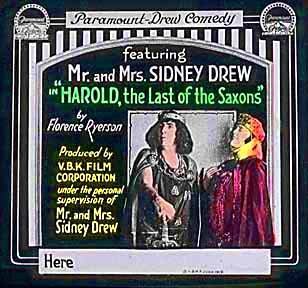
Stepping back into the nascent years of cinematic storytelling, one unearths a myriad of forgotten treasures, each a flickering window into a bygone era of both filmmaking and societal norms. Among these, the unassuming yet profoundly resonant 'Harold, The Last of the Saxons' (1915) stands as a testament to the power of simple narratives imbued with deep thematic resonance. Penned by the collaborative brilliance of Mrs. Sidney Drew, Sidney Drew, Florence Ryerson, and Tom Bret, this film, even a century later, speaks volumes about the human condition, particularly the eternal struggle between the comfort of tradition and the relentless march of progress. It's a poignant character study, a subtle allegory, and a fascinating artifact from a period when cinema was rapidly discovering its voice.
At its core, 'Harold, The Last of the Saxons' is a tender elegy for a disappearing world. The narrative gravitates around Harold (portrayed with remarkable gravitas by Sidney Drew), a master cooper whose life is inextricably bound to the ancient craft of barrel-making. He inhabits a quaint, almost anachronistic corner of rural England, where the rhythm of life still beats to the hammer on wood, the scent of oak, and the steady patience of artisanal creation. Harold is not merely a craftsman; he is a living embodiment of the 'Saxon' spirit – resilient, rooted, and deeply resistant to the encroaching 'Norman' tide of industrialization. His barrels, each a testament to meticulous handiwork and time-honored techniques, are increasingly overshadowed by the cheaper, faster, albeit less soulful, products churned out by burgeoning factories. This isn't a bombastic battle, but a quiet, almost melancholic attrition, where the beauty of the handcrafted is slowly, inexorably, yielding to the efficiency of the machine.
The film introduces us to Elara (a luminous Mrs. Sidney Drew), Harold’s granddaughter, who finds herself precariously balanced between two worlds. Her youthful spirit is drawn to the allure of the new – the promise of convenience, the sheen of modern goods, the vibrant energy of a changing society. Yet, her heart remains tethered to her grandfather's steadfast dedication and the quiet dignity of his craft. This internal conflict is exquisitely rendered, a microcosm of the broader societal shift. P. O'Connor, as Mr. Finch, the smooth-talking entrepreneur representing the new industrial order, serves as the catalyst for Harold's ultimate reckoning. Finch's modern, mass-produced containers are not inherently evil, but they symbolize an impersonal efficiency that threatens to erase the very essence of Harold’s identity. The tension isn't one of villainy, but of conflicting ideologies – a poignant clash between tradition and innovation, a theme that remains startlingly relevant even today. The narrative arc, culminating in Harold's reluctant acceptance of a changed world, is handled with a delicate touch, avoiding melodrama in favor of a profound, understated humanism.
The early 20th century was a crucible for cinematic innovation, and Sidney Drew, along with his wife Mrs. Sidney Drew (born Lucille McVey), were instrumental figures in shaping the comedic and dramatic sensibilities of the era. Their work, often characterized by its gentle humor and keen observation of human foibles, frequently explored domestic life and social changes. While many remember them for their comedic shorts, 'Harold, The Last of the Saxons' reveals their capacity for profound, character-driven drama. This film, appearing amidst a flurry of shorter, often lighter fare, distinguishes itself through its contemplative pace and serious thematic engagement. The Drews understood the unique language of silent film, conveying emotion and narrative through gesture, expression, and the careful staging of scenes. Their collaboration, both on screen and behind the camera (Sidney Drew often directed, and both contributed to writing), forged a distinctive style that was both accessible and artistically sophisticated for its time.
Considering the broader landscape of early cinema, 'Harold, The Last of the Saxons' shares a certain contemplative spirit with films like The King's Game, which might also explore the weight of tradition or the pressures of changing power structures, albeit in a different context. It stands apart from the more overt slapstick of contemporaries like Crooky or the exoticism of Die Lieblingsfrau des Maharadscha, instead opting for an introspective look at a character grappling with his place in a rapidly evolving world. The film is a testament to the Drews' versatility, showcasing their ability to move beyond their popular comedic personas to craft a deeply moving drama.
Sidney Drew's portrayal of Harold is nothing short of masterful. Without the aid of spoken dialogue, Drew communicates a lifetime of dedicated labor, quiet pride, and deep-seated weariness through subtle shifts in posture, the slump of his shoulders, and the profound sadness in his eyes. His performance is understated, avoiding the theatrical excesses sometimes associated with silent film acting. He embodies Harold's stubborn attachment to his craft not as mere obstinacy, but as a profound respect for heritage and a resistance to a perceived devaluation of true skill. It's a performance that speaks volumes in its quietude, making Harold's struggle palpably real. Similarly, Mrs. Sidney Drew, as Elara, navigates her character’s internal conflict with remarkable grace. Her expressions convey both her deep affection for her grandfather and her burgeoning curiosity about the modern world, creating a nuanced portrait of youthful dilemma. Her scenes with Drew are particularly affecting, showcasing a genuine warmth and understanding that transcends the limitations of silent film. P. O'Connor, though perhaps less central, effectively embodies the 'new order,' his demeanor confident and forward-looking, yet not overtly villainous, making the conflict more existential than personal.
The direction, likely overseen by Sidney Drew himself, is characterized by its clarity and emotional intelligence. The camera often lingers on Harold's hands as he works, emphasizing the tactile beauty of his craft, a detail that would have been lost in a less attentive directorial vision. The use of natural light and the carefully chosen rustic settings lend an authentic, almost documentary-like quality to the film, grounding its allegorical themes in a tangible reality. The pacing is deliberate, allowing the audience to absorb the emotional weight of each scene, a stark contrast to the often frenetic energy of other contemporary shorts. While we don't see the elaborate set pieces of a film like Ivan the Terrible (a much later, grander epic), 'Harold' excels in its intimate scale, focusing on the minute details that reveal character and theme. The intertitles are used judiciously, complementing the visual storytelling rather than dominating it, a hallmark of skilled silent film direction.
The collective genius of Mrs. Sidney Drew, Sidney Drew, Florence Ryerson, and Tom Bret in crafting this screenplay cannot be overstated. Their ability to distill such profound themes into a relatively short format, relying almost entirely on visual storytelling and character interaction, is commendable. The narrative structure is elegant in its simplicity: introduction of Harold's world, the subtle encroachment of modernity, Elara's internal struggle, the catalyst of Mr. Finch, and Harold's eventual, bittersweet resolution. The writers expertly weave the allegorical 'Last of the Saxons' into Harold's personal journey without ever making it feel heavy-handed. It's a testament to their skill that the film manages to evoke such deep empathy for Harold's plight while also acknowledging the inevitability, and perhaps even the necessity, of progress. The dialogue (implied through intertitles and performance) feels natural and serves to advance the emotional core of the story rather than merely explaining plot points. Their collaboration produced a story that is both specific to its time and universally resonant.
The screenplay's strength lies in its character development, particularly for Harold and Elara. They are not caricatures but fully realized individuals grappling with complex emotions. This depth is what elevates 'Harold, The Last of the Saxons' beyond a mere period piece into a timeless exploration of human identity and change. One might draw parallels to the character-focused dramas of later periods, demonstrating how early screenwriters were already honing the craft of emotional storytelling. While perhaps not as overtly dramatic as a film like A Lady of Quality, which explored societal constraints, 'Harold' achieves its drama through a more internal, reflective struggle.
'Harold, The Last of the Saxons' may not be as widely known as some of its more boisterous contemporaries, but its quiet power ensures its place as a significant piece of early cinema. Its themes—the tension between tradition and innovation, the dignity of labor, the generational divide, and the bittersweet nature of change—are as pertinent today as they were over a century ago. In an age dominated by rapid technological advancement and the constant threat of obsolescence for certain skills and industries, Harold's story resonates with a profound contemporary relevance. He represents the artisan, the individual whose skill is threatened by mass production, a struggle that continues to play out in various forms. The film serves as a gentle reminder to appreciate the beauty and value of things made with care and intention, even as we embrace the efficiencies of the modern world.
Moreover, for cinephiles and historians, the film offers invaluable insight into the evolution of cinematic language. It showcases the sophisticated techniques used by silent filmmakers to convey complex emotions and narratives without dialogue, relying instead on visual cues, nuanced performances, and thoughtful direction. It stands as a testament to the artistic ambition present in early cinema, proving that even short films could tackle weighty subjects with grace and depth. Its exploration of personal struggle against overwhelming societal forces is a theme echoed in countless films across genres and eras, from the subtle character dynamics in The Chaperon to the more overt social commentary of Danger, Go Slow. 'Harold, The Last of the Saxons' is a quiet masterpiece, a film that, despite its age, continues to speak to the enduring human experience of adaptation, loss, and the eternal search for meaning in a world perpetually in flux. It's a film that deserves to be rediscovered and cherished for its timeless message and its understated artistry.
IMDb 5.4
1933
Community
Log in to comment.