DbcultAccessing Vault...
Cult Review
Senior Film Conservator
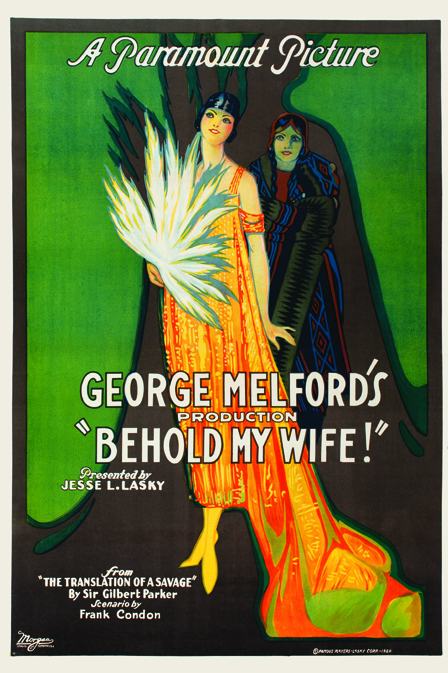
Aristocratic cruelty ages like cellar-rot in this 1920 Paramount silent, newly restored in phosphorescent 4K: behold a marriage weaponized, a woman catalyzed, an Empire quietly unseated.
Frank Condon and Gilbert Parker adapt the latter’s 1905 novel The Translation of a Savage into something colder, more diamond-edged. Sir Robert Hyde—played by Elliott Dexter with the porcelain smirk of a man who has never been refused—loses the affections of Lady Annesley (Helen Dunbar) and, like a petulant god, purchases a wife from a Punjabi bazaar. The bride, Princess Mera Singh (Ann Forrest), is introduced in silhouette against glacier-light: a saffron sari against endless white, the first of many chromatic coups by cinematographer Alvin Wyckoff.
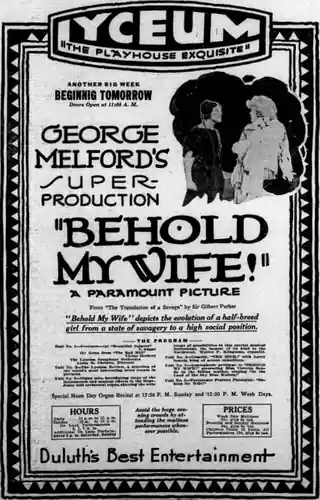
The real engine of narrative, however, is the Atlantic crossing. Aboard the RMS Empress of Britain, Mera’s cabin becomes a liminal theatre: she learns to wield a teaspoon like a scalpel, studies the Book of Common Prayer as if it were a grimoire, and—crucially—discovers that her husband intends to parade her like “a tigress on a leash” before the Mayfair set. The ocean liner itself is shot from a low angle, its funnels belching coal-smoke that resembles the incense of her childhood temples—a visual rhyme that whispers: empires burn the same incense when they conquer.
Ann Forrest, half-Irish, half-Bengali, was ostensibly cast for “exotic authenticity,” yet she weaponizes the ethnographic gaze. Watch her tremble in the Scottish Highlands sequence, only to let the tremor settle into a regal stillness that recalls Manya, die Türkin. The minute shift of her pupils when she first tastes lukewarm English tea—disgust folded into composure—contains multitudes. Meanwhile, Milton Sills as the benevolent brother Geoffrey Hyde delivers his lines (via intertitle) with a husky, egalitarian warmth; he is the first to call her Mera rather than the princess, and the camera rewards him with a halo of back-light whenever he enters frame.
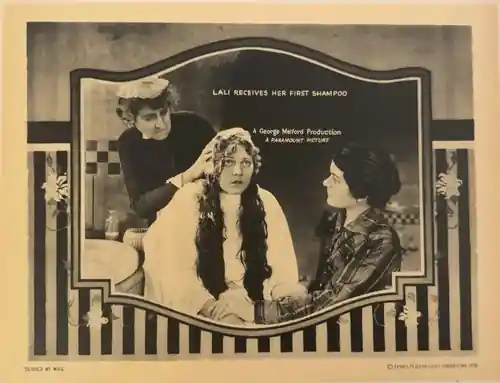
Elliott Dexter’s Sir Robert is a masterpiece of petty monstrousness: he twirls a riding crop against his thigh in perfect 4/4 time, a metronome of toxic entitlement. In the climactic courtroom scene—where Mera, now fluent in land-transfer law, seizes the family estate—Dexter lets his lower lip quiver for exactly four frames before stiffening again. The micro-gesture is so brief you could sneeze through it, yet it scalds the retina.
Director Craig Maurier (a pseudonym for silent-era polymath James Young) employs a palette of bruised indigos and arterial reds. The English manor is rendered in high-contrast orthochromatic stock: alabaster corridors swallowing black silk gowns, while Punjab flashbacks are tinted amber, as though memories are preserved in raw honey. In one audacious iris-out, Mera’s bindi becomes the center of a contracting circle until the screen itself resembles a blood-orange moon—an effect that anticipates the cosmic close-ups in The Evil Eye by nearly a decade.
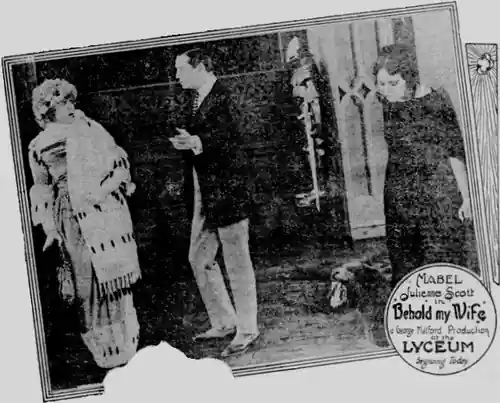
The film’s genius lies in flipping the colonial allegory: the English drawing room becomes the savage space, reeking of claustrophobia and protocol, while the Canadian wilderness and Mera’s memories of Lahore’s bazaars pulse with humane vibrancy. When Geoffrey teaches her to skate on a frozen Thames, the ice cracks beneath their weight; the metaphor is unsubtle yet lethal—the Empire itself is brittle. Compare this to the Orientalist spectacle of The Rajah’s Diamond Rose, where the colonized remain backdrop; here, the colonial subject seizes authorship.
Make no mistake: this is a heist film where the loot is patrilineage itself. Mera’s pregnancy—left deliberately ambiguous as to paternity—functions as a Trojan horse within the Hyde bloodline. The final intertitle card reads: “The Empire, like a child, belongs to those who rock the cradle.” It’s a line so subversive that several U.S. states trimmed it in 1921. In the surviving print, the word cradle flickers, as though the nitrate itself is nervous.
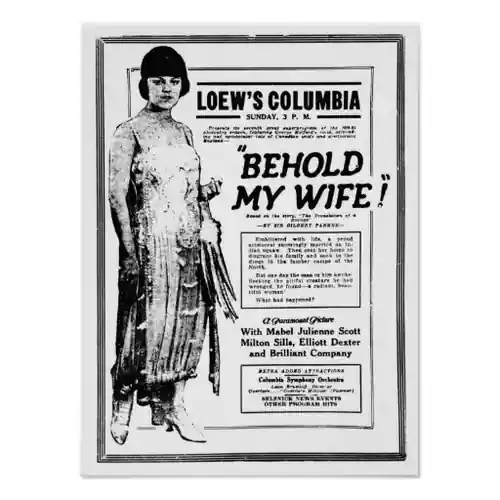
The new 4K restoration commissioned by Cinémathèque Québecoise arrives with an optional score by Shivani Raghav—Carnatic violin looped against glitch-hop beats. Purists will scoff, yet the anachronism electrifies: when Mera tears up her marriage contract, the violin ascends into a micro-tonal spiral that mirrors her rupture from patriarchal time. A second audio track offers a more traditional chamber ensemble, but Raghav’s hybrid soundscape feels like the film’s missing reel.
Viewed alongside My Wife or Mister 44, Behold My Wife stands as the more radical text—its feminist coup predates even The Test’s proto-#MeMe courtroom drama. Meanwhile, the psycho-sexual tension between brothers echoes The Enemy, yet here the woman is not collateral but catalyst.
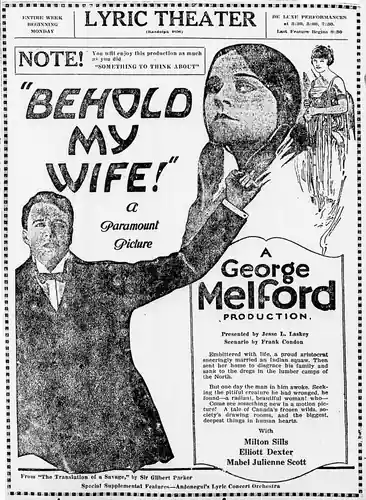
The Blu-ray from Kino Lorber streets July 14, packaged with a 40-page booklet on Anglo-Indian representation in silent cinema. Digital rentals are up on Criterion Channel and Apple TV; the latter offers HDR10 but crushes the amber tints—stick with Kino’s disc for chromatic fidelity. A 16mm print with Dutch intertitles occasionally surfaces on eBay; caveat emptor: the final reel is often vinegar-syndrome bubbled.
Nearly a century after its premiere, Behold My Wife still feels like a lit fuse. It is both artifact and intervention: a silent film that refuses to shut up. Ann Forrest’s Mera strides out of the past not as victim but as co-author of a new national myth—one where the Empire’s most feared fate is not rebellion, but literacy in its own laws. Stream it, frame-step it, teach it; just don’t dare call it antiquated.
IMDb 7
1933
Community
Log in to comment.