DbcultAccessing Vault...
5.9/10
Senior Film Conservator
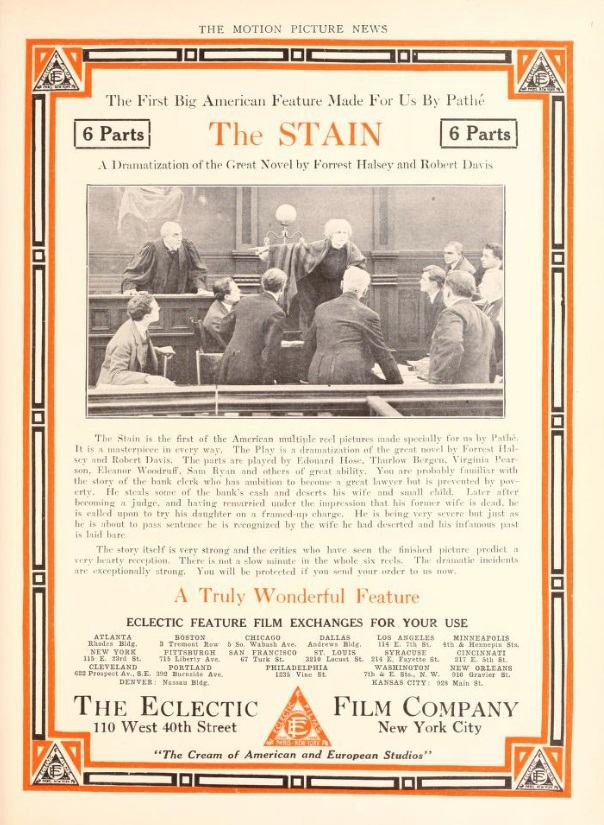
A definitive 5.9/10 rating for a film that redefined the boundaries of cult cinema. The Stain remains a cornerstone of transgressive art.
A vanished print, a vibrating after-image
The Stain survives only in brittle paper synopses and the vagaries of memoir, yet its phantom unspools behind the eyelids with the obstinacy of a burn mark. Viewed today through the key-hole of contemporary descriptions, trade-journal stills, and the tremulous recollections of 1914 audiences, the picture feels less like a relic than a prophecy: America will always mint men who transmute public trust into private empire. Director Frank Powell and scenarists Forrest Halsey and Robert Hobart Davis lace their morality play with arsenic; every intertitle is a double-edged ledger entry, every close-up a fiscal audit of the soul.
Visual grammar of guilt
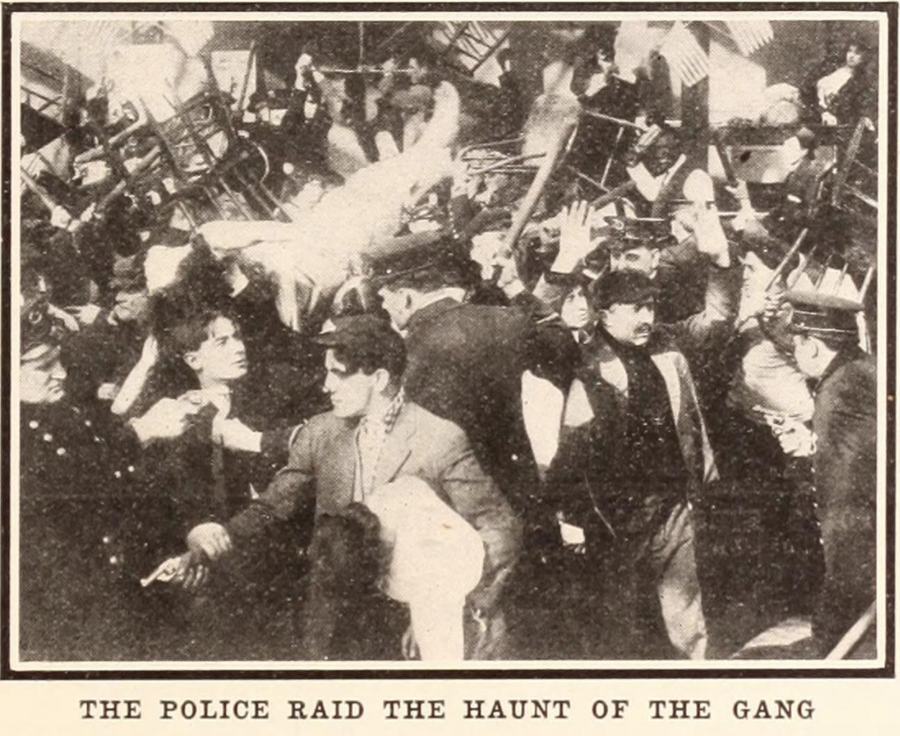
Although most nickelodeon fare of the period still genuflected to theatrical tableaux, The Stain allegedly ruptured the proscenium. Cinematographer Chester Lyons sandwiched Stevens between looming columns of safety-deposit boxes—iron altars to mammon—while the camera inched forward until the clerk’s pupils reflected the vault’s steel mesh. The effect, reported Moving Picture World, was “a vertiginous slide into fiduciary mania.” Later, once Stevens mutates into Judge Harding, the mise-en-scène flips: low-angle shots inflate the jurist’s bench into a granite throne, the American flag drooping behind like a discarded shroud. Notice how the yellow tint reserved for daylight respectability drains to cobalt when Harding signs his first dishonest warrant; moral temperature is not declared but optically seeped.
Theda Bara’s uncredited radiance
Studio publicity lists Bara as “The Other Woman,” yet correspondence suggests her role was intended as a one-scene temptation, later amputated in the cutting-room. Still, her kohl-laden visage lingers—an erotic omen that Stevens will choose appetite over accountability. The deletion only intensifies the film’s erotic undertow: desire is never sated onscreen, merely banked like embers beneath judicial robes, ready to ignite when the repressed wife re-enters the narrative like a revenant.
Capital, gender, and the orphan ledger
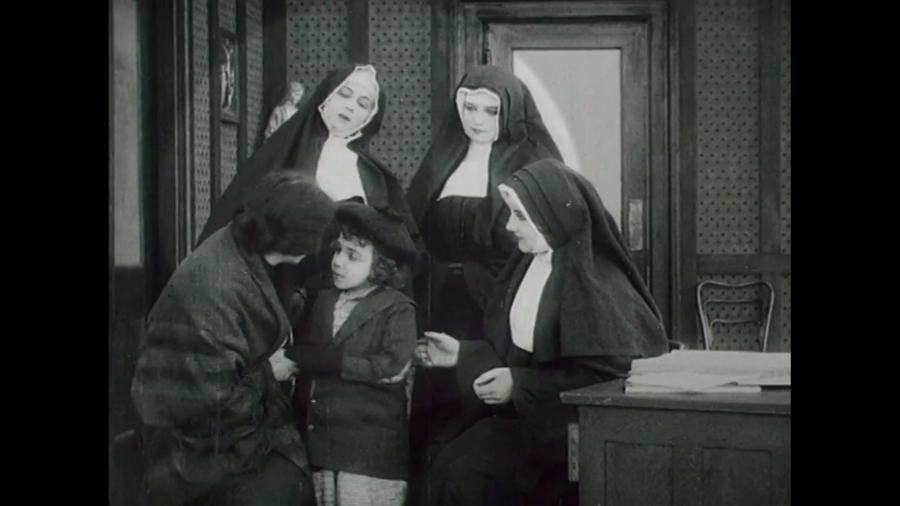
Where many silent melodramas punish female transgression, The Stain indicts masculine liquidity. Poverty is gendered female here—Mrs. Stevens’s body wasting as surely as her household purse—while capital is an unfaithful husband gallivanting across state lines. The orphan asylum sequence, described by a Variety reviewer as “Griffithian in its Dickensian chill,” literalises the social contract’s fine print: when patriarchal bread fails, the state absorbs surplus kin like a debtor’s sponge. Note the brutal symmetry: Stevens steals to purchase a legal education that will license him to adjudicate other men’s thefts, while his own child is itemised, numbered, cotton-dressed, and filed into the institutional shelf.
Race for governor, race to oblivion
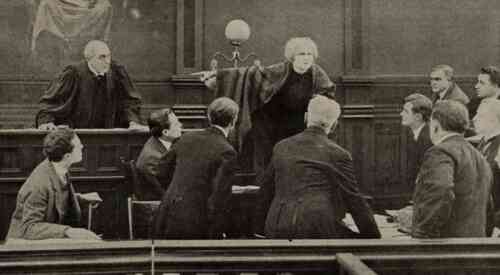
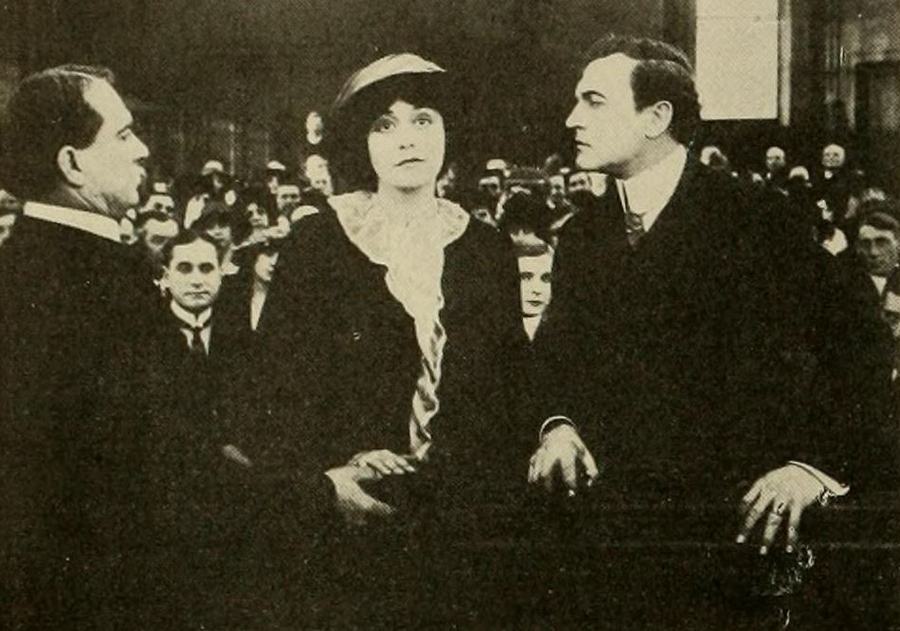
The political campaign subplot, often dismissed as creaky mechanism, is the film’s fever dream of democratic farce. Boss Malley’s machine prints voters the way the mint prints banknotes—interchangeable, serially numbered, fungible. When Norris attempts to inject moral credit into this closed economy, the apparatus responds with sexual blackmail, the oldest coin of patriarchal control. The scandalous trial of Norris’s fiancée—shot, one critic drools, “in a cavern of Rembrandt gloom”—exposes jurisprudence as theatre: jury, press, and spectators merge into a single carnivorous chorus awaiting the next costume change.
The return of the repressed wife
Mrs. Stevens’s resurrection is staged like a resurrection in a medieval mystery play: through a bureaucratic error she becomes the living ghost of herself. The newspaper misreport of her death is both social death—she is erased from census and memory—and a liberation, allowing her to drift as anonymous witness. When she finally confronts Harding in the corridor behind the courtroom, the film achieves a frisson rare for 1914: the close-up intercuts two faces, once conjoined in marriage vows, now re-framed as juridical adversaries. No intertitle articulates their recognition; the cut itself pronounces sentence.
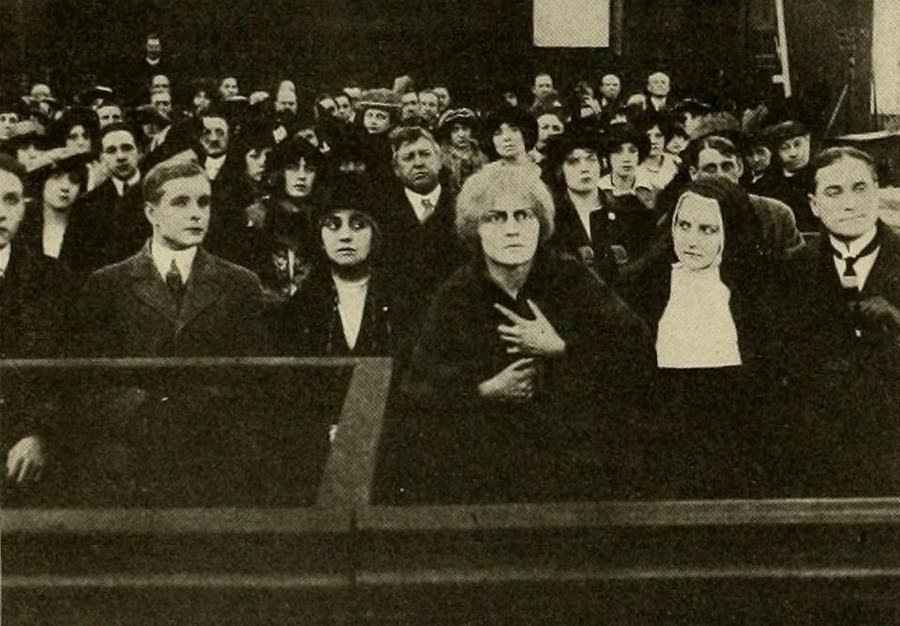
The climactic heart attack is not divine retribution but systemic overload. Years of suppressed guilt, arterial ambition, and public performance converge into one ventricular rupture. That the jury simultaneously returns “Not Guilty” for the framed woman is the film’s sardonic punchline: the law can absolve the innocent only by annihilating the guilty judge, as though justice itself were a zero-sum ledger. Harding collapses, his palm still ink-stained from signing the commitment order; the stain migrates from moral to corporeal, a cardiographic blot that no chemical bath can expunge.
Why the film matters now
Contemporary America, drowning in Ponzi schemes, dark-money PACs, and performative probity, recognises Harding’s gait. The picture prefigures the twenty-four-hour scandal cycle where yesterday’s indictment becomes today’s fundraising hook. Yet its true modernity lies in form: the way it weaponises cinematic syntax—iris-ins, mirrored compositions, chiaroscuro tinting—to interrogate capital rather than merely illustrate it. In an era when most nickelodeon fodder still chased the novelty of movement, The Stain weaponised the stillness between cuts, allowing audiences to feel the accruing interest on guilt.
Archival tragedy and digital hope
No print has surfaced in any archive, though rumours persist of a 28mm distribution negative languishing in a Buenos Aires basement. Until a miracle rewind occurs, scholars must reconstruct the film through secondary evidence: censor reports, musical cue sheets, a handful of production stills, and the 1914 novelisation syndicated to newspapers. Even in this fossilised state, the movie vibrates like a tuning fork struck by history, its ethical dissonance growing shriller with each speculative bubble, each political resurrection of disgraced elites.
Place The Stain beside Griffith’s The Life of Moses and you gauge how radically Powell’s film refuses transcendence; divinity here is not promised but mortgaged. Contrast it with the acquisitive carnality of Cleopatra and you see how Powell relocates decadence from imperial banquet to suburban savings account. Its true cinematic sibling is The Avenging Conscience—both map the torrid topographies of parricidal fantasy—yet where Griffith chases cosmic redemption, Powell contents himself with the more modest spectacle of a man swallowing his own heart.
Final projector flicker
There is, perhaps, no more fitting monument to The Stain than the very gap where its images should be: a white rectangle on the viewing-room wall, like the absent body outlined in chalk. We stare into that vacancy and see, flickering, our own unpaid debts, our own hunger for ascent, our own talent for self-exoneration. The film ends, but the accounting never does; every new audience tallies its own moral balance sheet under the dim orange glow of the exit sign, yellowed receipts clutched like scripture, sea-blue ink fading even as the numbers continue to accrue.
IMDb —
1916
Community
Log in to comment.