DbcultAccessing Vault...
7.5/10
Senior Film Conservator
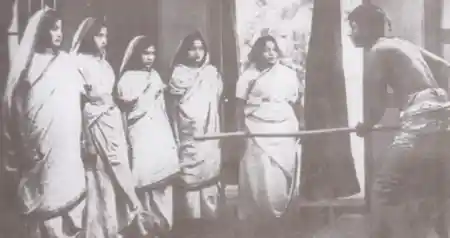
A definitive 7.5/10 rating for a film that redefined the boundaries of cult cinema. Dena Paona remains a cornerstone of transgressive art.
Should I tell you to watch a movie from 1931 that sounds like it was recorded inside a rusty tin can? Yes, but only if you actually care about how movies learned to talk. If you need clean CGI and fast action, please run away now because this will bore you to tears. 😅
Dena Paona is famous for being one of the first ever Bengali talkies, based on a story by Sarat Chandra Chattopadhyay. It is all about the absolute nightmare of the dowry system in rural India.
The plot is basically about a poor father trying to marry off his daughter, and the greedy in-laws making everyone miserable. Honestly, the story still hurts to watch because the issue is still so real today.
But let's talk about how this thing actually feels to watch now. The first thing you notice is definitely the sound.
It is so scratchy and hissy, like someone is frying fish right next to the microphone. You can tell the actors were terrified of moving too far from where the mics were hidden.
They stand so stiff, like statues who occasionally remember to blink. Uma Sashi is sweet as the lead, but her acting is pure theatre.
She throws her hands up and looks at the sky whenever she is sad. It reminds me of the intense acting style in silent classics like Battleship Potemkin, where every look had to reach the very back row.
But here, they have words too, so it feels like double the drama. There is this one scene where a guy is arguing about money, and you can hear a random dog barking in the distance.
I am pretty sure that dog was not in the script, but back then, they just had to keep rolling. 🐶
The editing is also super abrupt. A scene will just end in the middle of a sentence, cutting to a black screen for a second before the next bit starts.
It is beautiful in its clunkiness. Unlike other early social dramas of the era, like Corruption, this one feels very grounded in its local culture, even if the tech is holding it back.
The music is another weird thing. The songs just sort of happen, and the audio quality drops even lower, making the singers sound like they are singing through a thick wet blanket.
But Jahar Ganguli has this screen presence that somehow cuts through the terrible print quality. You can see the spark in his eyes even through the fuzzy gray pixels.
Is it a masterpiece? Probably not if we are being brutally honest about the pacing.
But as a time machine? It is absolutely priceless.
IMDb 6.6
1927
Community
Log in to comment.