DbcultAccessing Vault...
6.6/10
Senior Film Conservator
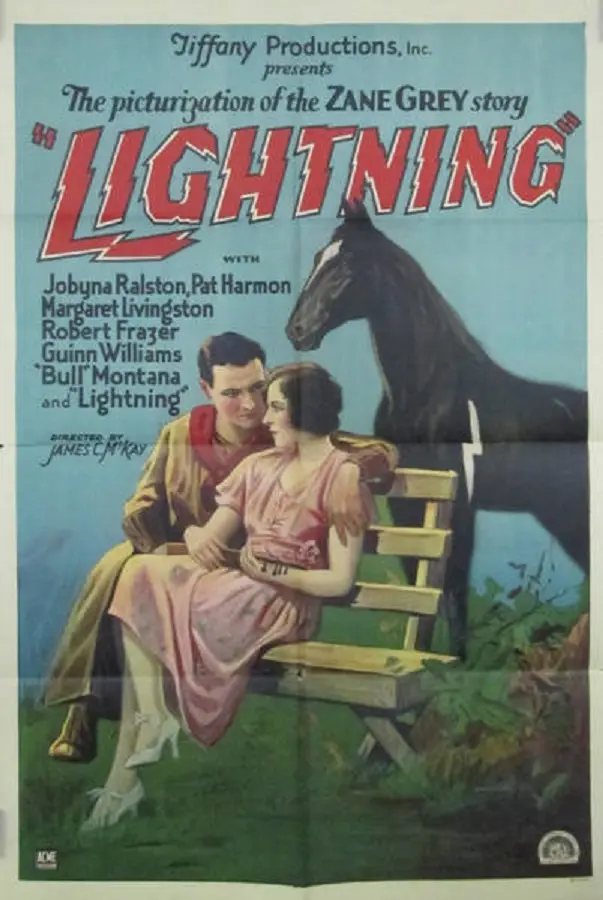
A definitive 6.6/10 rating for a film that redefined the boundaries of cult cinema. Lightning remains a cornerstone of transgressive art.
Is 'Lightning' worth watching today? Short answer: yes, but with a significant caveat. This early Western, penned by Zane Grey, offers a fascinating glimpse into a bygone era of filmmaking, blending raw frontier action with an unexpectedly clumsy romantic subplot. It's a film for those who appreciate the historical context of cinema and the foundational myths of the American West, but it absolutely is not for viewers seeking modern pacing, nuanced character development, or progressive storytelling.
This film works because of its authentic Western spirit and the raw, untamed beauty of its landscape cinematography. The sequences involving the wild horse, Lightning, and the wranglers' determined pursuit are genuinely thrilling and capture the essence of man versus nature with a palpable energy. The commitment to on-location shooting and practical horse stunts provides a visceral quality often missing in later, more polished productions. It’s a genuine window into the early days of Western filmmaking, showcasing a raw ambition that is palpable.
This film fails because its romantic subplot feels jarringly out of place, often undermining the grounded realism established by the Western elements. The abrupt shift in tone and the problematic 'capture' of the women are significant narrative missteps that date the film considerably. The character motivations in this section are thin, and the depiction of gender dynamics is, by modern standards, deeply uncomfortable, pulling the viewer out of the otherwise engaging frontier narrative.
You should watch it if you are a devotee of early Westerns, a Zane Grey enthusiast, or a film historian keen to observe the evolution of cinematic storytelling. Its historical value and pioneering spirit are undeniable, offering a unique window into silent-era genre conventions. Those interested in the technical aspects of early outdoor cinematography and practical animal wrangling will find much to appreciate, despite the film's narrative shortcomings.
The initial segments of 'Lightning' are its undeniable strong suit, immediately plunging the viewer into the rugged, sun-baked world of horse wrangling in Utah's Sevier River mountains. Director John Ford could have taken notes from the sheer, unvarnished grit on display here, long before his own iconic Westerns. Lee and Cuth Stewart, embodied by Guinn 'Big Boy' Williams and Robert Frazer, respectively, are presented as archetypal frontiersmen: skilled, determined, and almost preternaturally attuned to the rhythms of the wild.
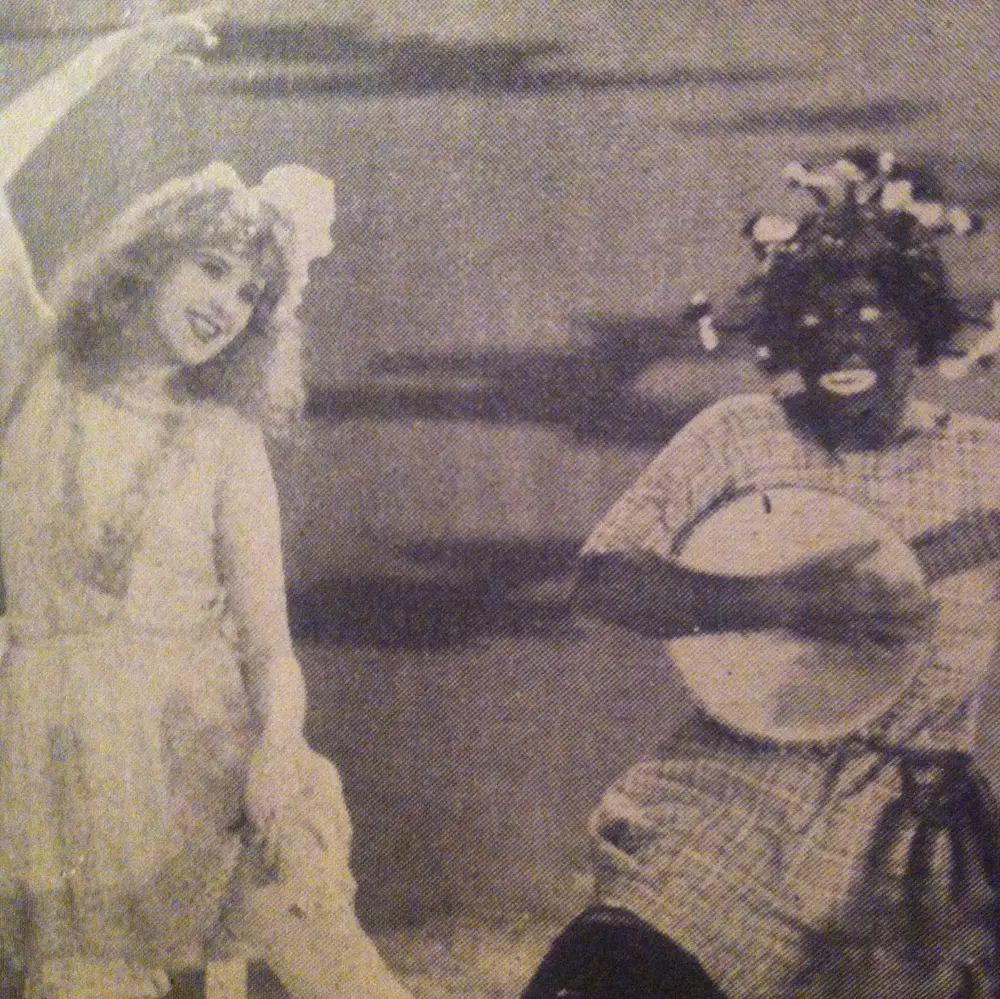
Their elusive quarry, the magnificent stallion, Lightning, is not merely an animal but a force of nature, a symbol of untamed wilderness that defies human dominion. The early chase sequences, though limited by the technology of the era, possess a surprising kinetic energy. You feel the dust, the strain of the horses, the sheer physical exertion involved. It’s a compelling opening that promises a straightforward, exhilarating Western.
Then, the film veers sharply off course, transporting our stoic cowboys to the bustling, bewildering metropolis of Chicago. This sudden shift is, frankly, jarring. It’s as if the screenwriters, Jack Natteford and Zane Grey, felt compelled to inject a dose of 'modernity' or perhaps a conventional romantic subplot into what was otherwise a robust man-versus-nature tale. Here, the brothers encounter Dot and Mary, played by Margaret Livingston and Jobyna Ralston, two vaudeville entertainers. The flirtation is swift, the proposals even swifter, and the subsequent betrayal, though predictable, feels entirely out of sync with the grounded realism established earlier.
This urban interlude is the film’s first major stumble. It lacks the authenticity of the Western scenes and instead feels like a perfunctory attempt to introduce a romantic conflict, one that ultimately serves to complicate rather than enrich the narrative. The rapid-fire romance and the girls' subsequent departure with the cowboys' money feel less like a natural progression of events and more like a narrative contrivance designed solely to propel the characters back into the desert for a reunion. It's a clumsy narrative device that sacrifices organic character development for plot mechanics, leaving the audience questioning the motivations of all involved.
Back in Utah, the narrative regains some of its footing, albeit with a fresh dose of narrative absurdity. Lightning, the very stallion the brothers couldn't capture, becomes infatuated with Lee's mare, Bess, and absconds with her. This provides a convenient, if somewhat contrived, impetus for the brothers to once again brave the wilderness. The chase into the desert is visually striking, showcasing the vast, unforgiving landscapes of Utah, captured with a stark beauty that is a testament to the era's cinematography.
It’s in this desolate expanse that the film orchestrates its most improbable coincidence: Dot and Mary, now attempting an airplane crossing, suffer a forced landing in the very same desert. The chances of this happening are, of course, astronomical, but such is the willing suspension of disbelief required for early cinema. The ensuing 'capture' of the girls by the cowboys, who then put them to work, is where 'Lightning' truly shows its age, and not in a charming, nostalgic way.
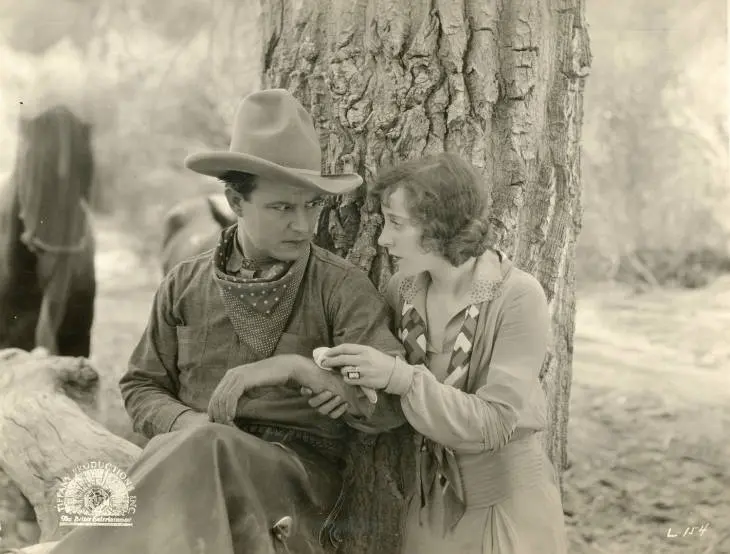
This particular plot development is deeply uncomfortable. The notion of 'taking women prisoner' and forcing them into labor, even within the context of a rough-and-tumble Western, feels regressive and misogynistic. It’s a testament to the differing sensibilities of the era, but it’s a difficult pill to swallow for a modern audience. The film attempts to frame this as a form of rough justice or perhaps a bizarre courtship ritual, but it comes across as crude and ethically dubious. This is a point where the film’s entertainment value significantly wanes, replaced by a sense of historical discomfort.
The girls’ subsequent escape into a sandstorm and their near-demise is meant to heighten the drama and provide an opportunity for the heroes to redeem themselves through rescue. It works. But it’s flawed. The dramatic tension is undercut by the problematic setup, leaving a lingering distaste even as the climax unfolds. The sequence itself is visually impactful, conveying the sheer terror and power of the natural elements, but the narrative context makes it a difficult moment to fully invest in emotionally.
The performances in 'Lightning' are, as expected for a silent film of this vintage, often broad and theatrical, relying heavily on exaggerated gestures and facial expressions to convey emotion. Guinn 'Big Boy' Williams, in particular, embodies the rugged cowboy archetype with a certain earnestness. His physical presence is commanding, especially in the action sequences involving the horses, where his authenticity shines through the silent medium. Robert Frazer, as Cuth, provides a more subdued counterpoint, but their chemistry as brothers feels authentic enough, grounded in shared experience and unspoken understanding.
Margaret Livingston and Jobyna Ralston, as the city girls, manage to convey a sense of feistiness and vulnerability, though their characters are largely defined by their initial deception and subsequent helplessness. Livingston, known for her more dramatic roles in films like Infatuation, brings a certain vivacity, but even her talent can't fully elevate the underwritten material she's given here. Their characters often feel less like individuals and more like plot devices designed to catalyze the cowboys' next adventure, which is a common failing of early cinema's portrayal of women.
The pacing of 'Lightning' is undeniably uneven. The initial Western sequences are brisk and engaging, propelled by the relentless pursuit of the wild stallion. However, the Chicago interlude grinds the narrative to a halt, forcing a tonal shift that the film never quite recovers from. The subsequent desert sequences, while visually impressive, suffer from the weight of the contrived romantic plot, making the film feel less like a cohesive narrative and more like a collection of loosely connected events. There are moments of genuine excitement, particularly the sandstorm sequence, but these are often punctuated by stretches of narrative awkwardness that test a modern audience's patience.
The film struggles to integrate its disparate elements, resulting in a viewing experience that oscillates between compelling action and somewhat tedious melodrama. This unevenness is a hallmark of many silent films grappling with evolving narrative structures, but in 'Lightning,' it's particularly pronounced due to the stark contrast between its two primary settings and character types.
Despite its narrative stumbles, 'Lightning' shines brightest in its visual presentation of the American West. The cinematography, particularly in the exterior shots, is genuinely impressive for its time. The vast, sweeping panoramas of the Sevier River mountain area and the desolate desert landscapes are captured with a raw beauty that feels both authentic and grand. One can almost feel the scorching sun and the biting wind, a testament to the skill of the cinematographers working with the limitations of early cameras and film stock.
There’s an unpolished, documentary-like quality to the horse wrangling scenes that lends them a surprising realism. These aren't pristine studio sets; they are real horses, real dust, and real danger. This commitment to on-location shooting elevates the film significantly, providing a powerful sense of place that many contemporary Westerns, even those with higher budgets, sometimes struggled to achieve. The film’s visual language is, at its best, stark and evocative, making the natural environment a character in itself, constantly challenging and shaping the human drama unfolding within it.
The director, though uncredited in some records, alongside writers Jack Natteford and Zane Grey, manages to orchestrate some truly memorable action sequences. The struggle to tame Lightning, for instance, is depicted with a visceral energy that transcends the silent film format. The close-ups of the horse's struggle and the wranglers' determined faces convey the intensity without a single spoken word. It’s in these moments that 'Lightning' truly feels like a pioneering work, laying some of the groundwork for the epic Westerns that would follow decades later. The sheer scale of the landscape shots suggests an ambition that belies the film's relatively simple plot, demonstrating an early understanding of how to use the vastness of the West to enhance cinematic storytelling.
Yes, 'Lightning' is worth watching for specific audiences. It offers a valuable historical perspective on early Western filmmaking. The authentic portrayal of horse wrangling is a highlight. However, its outdated gender politics are a significant drawback. It's best viewed as a cinematic artifact, not a modern entertainment piece.
This film will appeal to film students and silent film enthusiasts. It provides insight into early narrative structures. Casual viewers may find its pacing slow. The film’s problematic elements require historical context. It is a fascinating, if imperfect, window into the past.
Ultimately, 'Lightning' is a fascinating, if deeply flawed, relic of early American cinema. It offers a powerful, unvarnished look at the Western frontier, showcasing impressive horsemanship and breathtaking natural landscapes. These elements hold up remarkably well, providing a compelling glimpse into a foundational genre. However, its narrative ambitions are frequently hampered by a romantic subplot that feels both forced and, by contemporary standards, deeply uncomfortable. The shift from the dusty, authentic West to a rather artificial urban romance, and then back again with a problematic 'capture' narrative, creates a disjointed experience.
It’s a film that demands a generous spirit and a keen historical eye from its audience. Strip away the problematic gender dynamics and the clunky urban detour, and you’re left with a core Western narrative that still possesses a raw, untamed energy. But those problematic elements are not easily stripped away; they are integral to its structure and significantly impact its watchability today. For the dedicated film historian or the ardent fan of Zane Grey’s frontier tales, 'Lightning' is a worthwhile, if challenging, watch. For everyone else, it’s a curio – an important stepping stone in cinematic history, but one best approached with a full understanding of its historical context and its very evident imperfections. It’s a bold film, often beautiful, sometimes baffling, and ultimately, a product of its time in every conceivable way, reflecting both the strengths and significant limitations of its era.
IMDb 6.7
1932
Community
Log in to comment.