DbcultAccessing Vault...
Cult Review
Senior Film Conservator
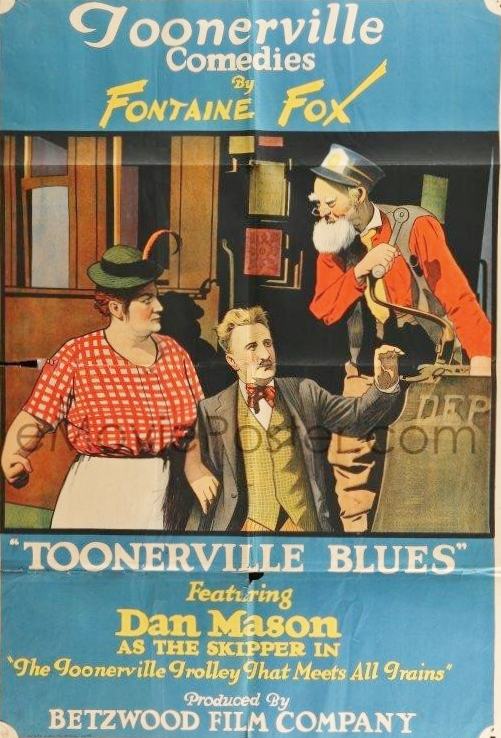
To witness Toonerville Blues is to step into a distorted mirror of 1920s Americana, a place where the logic of the comic strip dictates the physics of the physical world. Fontaine Fox, the architectural mind behind the 'Toonerville Folks' syndicated strip, found a peculiar cinematic partner in Ralph Spence. Together, they distilled the anxieties of rural life—specifically the encroachment of legal corruption and the desperate hope for a 'get-rich-quick' miracle—into a narrative that feels both archaic and strangely prophetic. Unlike the more grounded pastoral dramas of the era, such as Jubilo, Toonerville Blues leans heavily into the grotesque and the whimsical, utilizing Dan Mason’s rubbery physicality to bridge the gap between ink and celluloid.
The plot, while ostensibly simple, functions as a critique of the burgeoning legalistic bureaucracy that began to suffocate small-town independence. Our villain, a lawyer whose moral compass is as skewed as the trolley tracks of Toonerville, represents the predatory 'outsider'—a theme common in silent cinema but handled here with a slapstick cynicism that feels unique to Spence’s writing style. The heroine, portrayed with a resilient grace by Wilna Wilde, is not merely a damsel in distress but a symbol of the land itself, under threat of annexation by a pen-wielding tyrant. This struggle for sovereignty over one’s own destiny mirrors the themes found in The Mediator, though the resolution here is far more explosive.
The central conceit of the film—finding oil in the outfield of a baseball game—is a masterstroke of American surrealism. Baseball, the quintessential pastoral pastime, becomes the site of industrial salvation. This intersection of leisure and labor reflects the 1920s obsession with the 'strike it rich' mentality that would eventually lead to the Great Depression. When the hero’s slide into base results not in a cloud of dust but a geyser of crude oil, the film transitions from a sports comedy into a socio-economic fantasy. This pivot is handled with a frantic energy that distinguishes it from the more deliberate pacing of Work and Win 'Em, where success is earned through sweat rather than geological fortune.
The cinematography during the baseball sequences utilizes wide angles to capture the sprawling chaos of the Toonerville townspeople, creating a sense of community that is both endearing and claustrophobic. Every frame is packed with the visual noise Fox was famous for, from the rickety trolley to the exaggerated costumes of the local eccentrics.
One cannot discuss Toonerville Blues without acknowledging the linguistic dexterity of Ralph Spence. In an era where title cards were often utilitarian, Spence infused his dialogue with a sharp, biting wit that elevated the slapstick. His ability to characterize the crooked lawyer through brief, acidic exchanges provides a necessary counterpoint to the physical comedy of Dan Mason. Spence’s work here serves as a precursor to the sophisticated wordplay of the talkies, proving that silent film was never truly 'silent' in its intellectual ambition. The contrast between the high-flown legal jargon of the antagonist and the salt-of-the-earth vernacular of the hero creates a linguistic tension that mirrors the narrative conflict.
While films like The Faith Healer explored the spiritual and psychological manipulation of the masses, Toonerville Blues remains firmly rooted in the material. The 'blues' of the title aren't just a mood; they are a condition of the working class, only remediable through the literal extraction of wealth from the earth. It is a cynical view of the American Dream, suggesting that hard work (baseball) is only valuable if it happens to sit atop an untapped resource.
Wilna Wilde’s performance is a study in silent-era nuance. In a film dominated by the broad gestures of Dan Mason and the exaggerated villainy of the lawyer, Wilde provides the emotional anchor. Her reactions to the lawyer's advances are not merely histrionic; there is a calculated wariness in her eyes that suggests a character well-aware of the precariousness of her social standing. This level of internal performance is reminiscent of the depth seen in The Virtuous Model, where the female lead must navigate a world designed by men for their own benefit.
The technical restoration of this film reveals a surprising level of detail in the production design. The 'Toonerville' set is a masterpiece of folk-art aesthetic, with every building and prop looking as though it were hand-sketched by Fox himself. This commitment to the source material’s visual identity is what prevents the film from becoming a generic comedy of the period.
To place Toonerville Blues within the wider canon of 1924 cinema, one must look at how it deviates from the European avant-garde or the high-gloss Hollywood productions of the time. While European directors were experimenting with shadow and psychology in films like L'énigme, the American 'Toonerville' series was doubling down on a specific brand of populist surrealism. There is no interest here in the existential dread of Alone with the Devil; instead, the film embraces a chaotic optimism. Even the villain’s defeat is handled with a light touch, emphasizing his humiliation over any real sense of justice being served.
The motif of the 'crooked lawyer' is a fascinating cultural artifact. In the early 20th century, as the United States transitioned from an agrarian society to a more complex industrial and legalistic one, the lawyer became a shorthand for the loss of communal trust. Toonerville Blues weaponizes this trope, making the attorney's eventual defeat by an oil-slicked baseball player a cathartic moment for the audience. It is a victory for the physical man over the paper man, for the athlete over the clerk. This same thematic thread can be traced through No Man's Land, albeit in a much more somber and militaristic context.
The inclusion of the Toonerville Trolley itself, though secondary to the oil plot, provides the necessary connective tissue to Fox’s larger universe. The trolley is more than a vehicle; it is a character with its own stubborn personality, much like the rickety machinery found in Saved in Mid-Air. It represents a technology that is just barely functioning, a metaphor for the town of Toonerville itself. The fact that this community is saved by oil—the very fuel that would eventually make the trolley obsolete—is an irony likely lost on 1924 audiences but glaringly obvious to the modern viewer.
In terms of pacing, Toonerville Blues is relentless. The transition from the legal threats to the baseball game to the oil strike happens with a breathlessness that mimics the reading of a Sunday comic strip. There is no room for the contemplative silences found in Love's Pilgrimage to America or the melancholic undertones of A Viuvinha. This is cinema as pure adrenaline, a frantic attempt to capture the manic energy of a nation on the brink of a massive cultural shift.
The direction (often attributed to the collective efforts of the production house under Fox's supervision) prioritizes the 'gag' over the 'scene.' Each sequence is built around a central visual joke, which is then elaborated upon until it reaches a crescendo. This modular approach to filmmaking allows for a high density of humor but can sometimes lead to a fragmented narrative. However, the overarching threat of the lawyer provides enough glue to hold the disparate elements together. The use of depth in the baseball scenes—showing the hero in the foreground and the encroaching lawyer in the background—demonstrates a sophisticated understanding of visual storytelling that belies the film's 'low-brow' comic strip origins.
Comparing this to the royal intrigues of Prinsens Kærlighed or the feline-focused drama of A Lion's Alliance highlights the sheer variety of the silent era. While other films were seeking to emulate theater or literature, Toonerville Blues was pioneering the 'cartoon logic' that would later define the works of Buster Keaton and, eventually, the animated shorts of the 1930s. It is a foundational text in the history of the American slapstick, proving that the most effective way to defeat a villain isn't through a duel or a court case, but through a well-timed slide into home plate that unearths a fortune.
Ultimately, Toonerville Blues is a fascinating artifact of a time when the boundaries between different forms of media were porous. It captures the spirit of Fontaine Fox’s illustrations while injecting them with the kinetic possibilities of film. The discovery of oil on a baseball field remains one of the most absurdly delightful 'deus ex machina' moments in silent cinema, a literal 'black gold' standard for the happy endings of the era. Whether viewed as a piece of comic history, a critique of the legal profession, or simply a bizarre sports comedy, the film stands as a testament to the creative fertility of the 1920s.
For those interested in the evolution of the American character on screen, this film offers a glimpse into a world that was rapidly disappearing—a world of trolleys, small-town diamonds, and the enduring belief that a better life was just a few feet beneath the surface of the earth. It lacks the pretension of Child of M'sieu and the gothic intensity of Hidden Charms, opting instead for a vibrant, messy, and thoroughly entertaining slice of life in Toonerville. It is a blues song played on a slide whistle, a legal brief written in crayon, and a baseball game won by a gusher.
IMDb —
1918
Community
Log in to comment.