DbcultAccessing Vault...
Cult Review
Senior Film Conservator
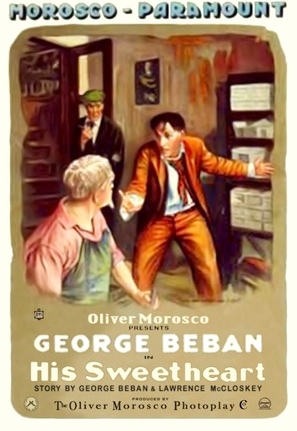
In the bustling, often unforgiving crucible of early 20th-century New York's East Side, where the grit of urban life met the vibrant spirit of immigrant communities, a compelling narrative unfolds in "His Sweetheart." This silent film, a poignant testament to human resilience and familial bonds, introduces us to Joe, portrayed with a remarkable blend of earnestness and inherent goodness by George Beban. Joe is a man of the people, carving out an honest living from his humble basement establishment, a purveyor of ice, coal, and wood. His world, a microcosm of the wider immigrant experience, is one of hard work, simple pleasures, and deep-seated community ties. The initial ambiguity surrounding the arrival of his "sweetheart" from Italy cleverly sets a stage for expectation, only to tenderly reveal the profound truth: it is his beloved "Mama Mia," his aged mother, whose presence embodies the very essence of home and heritage. This revelation, a heartwarming twist, also brings a quiet sigh of relief to Trina, the discerning daughter of the neighborhood cobbler, old Capino, whose unspoken affection for Joe hints at a burgeoning romance waiting in the wings. This early character establishment is crucial, painting Joe as a pillar of his community, a man whose heart is as open as his shop door, and whose familial devotion forms the bedrock of his existence. The film, through these initial brushstrokes, immediately draws the viewer into a world where personal integrity clashes with the often-harsh realities of societal perception and legal machination.
The narrative quickly pivots from heartwarming domesticity to a stark examination of justice, or rather, its perilous misapplication. District Attorney Godfrey Kelland, a figure of burgeoning political ambition eyeing the governorship, becomes an unwitting catalyst in Joe's life. Joe, ever the loyal citizen, throws his support behind Kelland, believing in the promise of law and order. However, the very system Kelland represents soon turns its formidable gaze upon Joe's innocent family. The first tremor of misfortune strikes when "The Weasel," a notorious criminal, is apprehended seeking refuge in Joe's unassuming home. This unfortunate coincidence casts a long, insidious shadow of suspicion over Mama Mia, her gentle nature and immigrant status rendering her vulnerable in the eyes of an often-prejudiced society. The situation escalates dramatically with the disappearance of Mrs. Kelland’s prized diamond pin. In a cruel twist of fate, the pin is discovered among Mama Mia’s laundry, a discovery that seems to seal her guilt. The true culprit, however, is revealed to be the Kelland baby, an infant whose innocent playfulness—placing the sparkling object into Mama Mia’s basket—becomes the unwitting instrument of a grave injustice. This particular plot device, while potentially melodramatic, serves as a powerful commentary on how easily the innocent can be ensnared by circumstantial evidence, especially when compounded by societal biases against the "other." Mama Mia, a woman whose life is defined by care and devotion, is swiftly condemned, sentenced to a harrowing two years in the penitentiary. This segment of the film is particularly heart-wrenching, showcasing the devastating impact of a flawed legal system on an individual and an entire family. It forces the audience to confront the uncomfortable truth that justice, even in its most well-intentioned forms, can be blind to the nuances of truth and character.
What amplifies the tragedy is Kelland’s unyielding stance. Despite Joe and Mama Mia having previously intervened to save Kelland’s life during an assassination attempt – an act of selfless heroism that should have earned them his unwavering trust – the District Attorney remains steadfast in his prosecution. His political ambitions, perhaps, cloud his judgment, or perhaps he is simply too entrenched in the letter of the law to see its spirit. This rigid adherence to the superficial facts, ignoring the deeper human context, paints Kelland as a complex, if initially unsympathetic, character. His vigorous pursuit of Mama Mia’s conviction, even after her demonstrable loyalty, highlights a central theme: the often-impersonal nature of institutional justice pitted against the deeply personal bonds of family and community. The audience is left to ponder the cost of political aspiration when it demands the sacrifice of moral clarity and human empathy. The film, in this regard, offers a subtle yet potent critique of the justice system and the individuals who operate within it, suggesting that true justice requires more than just adherence to rules; it demands discernment, compassion, and a willingness to look beyond the surface.
The wheels of justice, though slow, eventually begin to grind towards a more equitable outcome, albeit through an almost identical, tragicomic repetition. Mrs. Kelland, disturbed by the earlier events, eventually observes her own child, the unwitting perpetrator of Mama Mia’s misfortune, placing another piece of jewelry into a basket. This serendipitous observation provides the crucial, undeniable proof of Mama Mia’s innocence. It is a moment of profound revelation, not just for Mrs. Kelland, but for the audience, who have long known the truth. This scene, while somewhat contrived, effectively underscores the theme of hidden truths and the power of observation. It’s a classic narrative device, echoing tropes seen in countless dramas where a small, overlooked detail finally unravels a grand injustice. Mrs. Kelland’s realization is a pivotal turning point, injecting a much-needed ray of hope into the somber proceedings. Her subsequent efforts to clear Mama Mia’s name represent a triumph of conscience over convenience, a testament to the inherent human desire for fairness.
However, the narrative is far from resolved, as a new, more sinister threat emerges, casting a long, malevolent shadow over the promise of reconciliation. Two nefarious figures from "The Weasel’s" gang, intent on silencing District Attorney Kelland and thwarting his political ascent, concoct a diabolical plot. Their plan: to "plant" a golf ball filled with nitroglycerin, orchestrating an "accident" that would eliminate Kelland without a trace of foul play. This Machiavellian scheme, designed to exploit Joe’s good nature and his prior connection to the criminal element, draws him into its dangerous orbit. The crooks, masters of manipulation, play upon Joe’s deep-seated feelings of loyalty and his desperate desire to protect his family and clear Mama Mia’s name, inducing him to place the deadly golf ball. This moment presents Joe with an agonizing moral dilemma: to participate, however indirectly, in an act of violence, or to risk the continued suffering of his mother and the potential ruin of his family. His decision, born out of desperation and a misguided sense of obligation, plunges him into a moral abyss, setting the stage for the film’s dramatic climax. The tension builds palpably as Kelland prepares to strike the fateful ball, unaware of the explosive secret it harbors.
The climax of "His Sweetheart" is a masterclass in silent film melodrama, delivered with an emotional punch that transcends the decades. Just as Kelland is poised to strike the explosive golf ball, Mrs. Kelland and Trina, drawn by an unseen force, enter the grounds. Their unexpected presence transforms Joe’s internal struggle into an immediate, desperate imperative. Faced with the horrifying prospect of their deaths alongside Kelland’s, Joe makes an instantaneous, selfless decision. In a breathtaking act of unparalleled heroism, he throws himself upon the deadly ball, absorbing the full force of the blast to save the lives of those he cares for, and even the man who inadvertently caused his mother’s suffering. This moment, raw and visceral, is the emotional core of the film. It is a testament to Joe’s inherent goodness, his boundless capacity for love, and his ultimate commitment to protecting the innocent. His sacrifice is not merely an act of physical bravery but a profound moral statement, a refusal to allow further injustice or violence to prevail. The ensuing chaos and the image of Joe, broken but alive, serve as a stark reminder of the film’s dramatic stakes and the profound consequences of political intrigue and criminal machination.
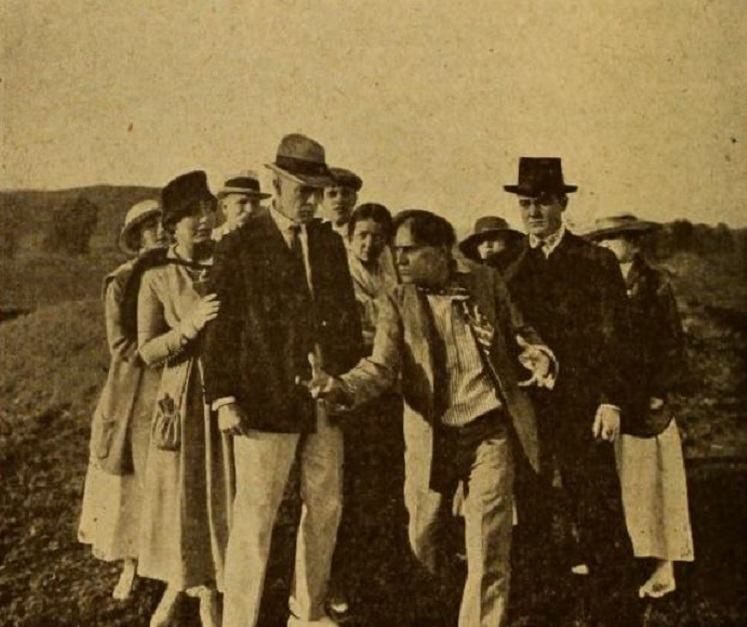
Joe’s subsequent confession, revealing that the ball was intended for Kelland, initially ignites the District Attorney’s fury. The politician, still reeling from the near-fatal attempt on his life, struggles to comprehend the depths of the betrayal and the complexities of Joe’s involvement. However, it is Mrs. Kelland, now armed with the irrefutable truth of Mama Mia’s innocence and moved by Joe’s heroic sacrifice, who becomes the voice of reason and compassion. Her impassioned recounting of the baby’s innocent role in the diamond pin incident, coupled with her fervent pleadings, begins to chip away at Kelland’s hardened exterior. This scene is pivotal, marking the transformation of Kelland from a rigid, ambitious politician to a man capable of empathy and understanding. The narrative deftly navigates the treacherous waters of moral ambiguity, ultimately leading to a resolution that, while perhaps idealized, speaks to the enduring power of forgiveness and the possibility of redemption. The little Italian family, battered but unbroken, is finally reunited, their bonds strengthened by adversity. And for Trina, whose quiet devotion has been a constant undercurrent throughout the ordeal, her happiness is at last secured, a gentle promise of a future built on love and mutual respect.
"His Sweetheart" transcends its melodramatic trappings to offer a surprisingly rich tapestry of thematic exploration. At its core, the film is a profound meditation on the immigrant experience in America, particularly the struggles faced by communities striving for acceptance and dignity amidst prejudice and misunderstanding. Joe and Mama Mia embody the virtues often associated with immigrant families: hard work, unwavering loyalty, and a deep sense of community. Their ordeal, particularly Mama Mia’s unjust conviction, serves as a searing indictment of a system that often fails to see beyond superficial appearances or cultural differences. It subtly critiques the xenophobia prevalent in early 20th-century American society, where an Italian mother could be so readily presumed guilty based on flimsy evidence.
The film also delves into the complex nature of justice itself. Is justice merely the strict application of law, or does it demand a deeper understanding of human context, intent, and circumstance? Kelland’s initial rigidity, contrasted with Mrs. Kelland’s eventual empathy, highlights this tension. The narrative argues for a more compassionate, nuanced form of justice, one that prioritizes truth and human dignity over political expediency or the cold letter of the law. The role of the innocent baby, an unwitting agent of both injustice and its eventual rectification, adds a layer of tragic irony, underscoring how easily lives can be derailed by unforeseen, benign acts. This element can be seen in other silent dramas where innocence clashes with harsh realities, perhaps even echoing the profound emotional weight of films like Sumerki zhenskoy dushi, which explores the fragile psychological states of individuals navigating societal pressures and personal betrayals, albeit with a different focus on the female psyche.
George Beban, not only starring as Joe but also contributing to the screenplay, delivers a performance that anchors the entire film. His portrayal is imbued with a genuine warmth and an understated strength that makes Joe’s eventual sacrifice all the more impactful. Beban avoids caricature, presenting an Italian-American character with dignity and depth, challenging the often-stereotypical depictions of immigrants in early cinema. His ability to convey profound emotion through gesture and expression, a hallmark of silent film acting, is particularly commendable. The supporting cast, including Helen Jerome Eddy as Trina and Sarah Kernan as Mama Mia, also contribute significantly to the film’s emotional resonance, each portraying their characters with conviction and nuance. The film's direction, while typical of its era, effectively builds tension and elicits strong emotional responses, particularly during the climax. The visual storytelling, reliant on intertitles and expressive acting, successfully communicates the complex plot and character motivations without spoken dialogue.
"His Sweetheart" also touches upon the insidious nature of political corruption and criminal influence. The "Weasel" and his gang represent the darker underbelly of urban life, a constant threat to the honest citizens. The manipulation of Joe into participating in the assassination plot is a stark reminder of how easily good people can be coerced or exploited by malevolent forces. The film, in this sense, serves as a moral fable, cautioning against the dangers of unchecked ambition and the seductive power of revenge. The narrative arc of Kelland, from a rigid prosecutor to a man softened by empathy and gratitude, is central to the film's message of redemption. His transformation is not instantaneous but gradual, earned through a series of dramatic revelations and personal introspection. This arc offers a glimmer of hope that even those entrenched in power can be swayed by moral truth and the undeniable force of human compassion.
In an era where cinema was still finding its voice, "His Sweetheart" stands out for its ambitious plot, its compelling characters, and its surprisingly sophisticated thematic concerns. It’s a film that resonates beyond its historical context, speaking to universal themes of family loyalty, the pursuit of justice, and the redemptive power of sacrifice. While some elements might feel dated to a modern audience, the core emotional journey remains potent. The film’s ability to evoke such strong feelings without a single spoken word is a testament to the artistry of silent cinema and the enduring power of a well-told story. It reminds us that heroism often emerges from the most unexpected places and that true strength lies not just in physical courage, but in the unwavering commitment to love and truth. The ultimate reunion of the family, and the securing of Trina's happiness, provides a cathartic conclusion, affirming the triumph of good over adversity, and the enduring strength of human connection. The film, in its quiet way, argues for a world where empathy triumphs over prejudice, and where the bonds of family can withstand even the most brutal assaults of fate.
The sheer artistry of silent films like "His Sweetheart" often gets overlooked in contemporary discourse, overshadowed by the advent of sound and subsequent technological advancements. Yet, there is an unparalleled beauty in their reliance on visual storytelling, on the nuanced expressions of actors, and on the evocative power of musical scores (even if unseen by today's viewer). This film is a prime example of how compelling a narrative can be crafted without dialogue, forcing the audience to engage more deeply with the characters' emotions and the unfolding drama through their actions and reactions. The dramatic pacing, the use of intertitles to convey essential dialogue and plot points, and the careful framing of shots all contribute to a powerful cinematic experience. It is a reminder that the essence of storytelling in film lies not just in what is said, but in what is shown, felt, and inferred. The enduring appeal of "His Sweetheart" lies in its timeless themes and its masterful execution within the constraints of its medium, making it a valuable piece of cinematic history that continues to speak volumes without uttering a single word. Its place among other influential silent films, such as The House of Lies, which also explored intricate plots of deception and moral ambiguity within a social context, solidifies its standing as a significant work that challenged audiences to consider complex ethical dilemmas through purely visual means.
IMDb —
1929
Community
Log in to comment.