DbcultAccessing Vault...
Cult Review
Senior Film Conservator
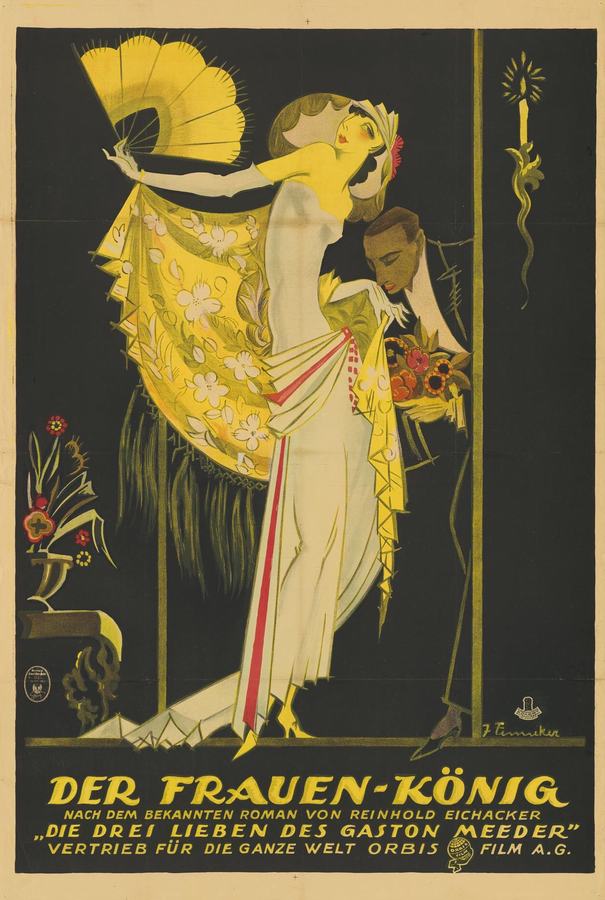
Step back into the shadowy, opulent salons of Weimar-era Berlin, where the human heart, still reeling from the ravages of war, sought solace, fame, or perhaps just a reflection of its own yearning. Johannes Brandt's Der Frauenkönig (The Women's King) emerges from this crucible of post-conflict ennui and artistic ferment as a stark, yet mesmerizing, psychological drama. It is a film that, even a century later, feels unnervingly contemporary in its dissection of charismatic manipulation and the often-perilous pursuit of artistic validation. The canvas upon which this intricate human tapestry is painted is one of societal facades, where the glitter of genius often conceals a void of profound moral indifference. The narrative unfurls with a deliberate, almost hypnotic rhythm, drawing the viewer into a world where power dynamics are as finely sculpted as the protagonist's own creations, and where the human cost of such artistry is tallied in shattered dreams and broken spirits.
At its core, Der Frauenkönig is a character study, a deep dive into the psyche of Baron Viktor von Waldeck, portrayed with a chilling magnetism by Ralph Arthur Roberts. Roberts, a titan of the German stage and screen, imbues Viktor with an almost mythical quality – a man whose very presence commands attention, whose every gesture is imbued with an artistic grace that belies the predatory nature of his intentions. He is not merely an artist; he is an alchemist of human emotion, transmuting the affections and aspirations of those around him into fuel for his own self-aggrandizement. His studio, a cavernous space bathed in dramatic, often chiaroscuro lighting, becomes less a place of creation and more a gilded cage where his muses, both willing and unwitting, are ensnared. Roberts' performance is a masterclass in silent film acting, conveying volumes with a mere glance, a subtle shift of posture, or the faint, almost imperceptible curl of a lip. He embodies the 'Frauenkönig' not as a benevolent monarch, but as a sovereign of the soul, whose dominion is built on the fragile foundations of feminine devotion.
The women who orbit Viktor are not mere caricatures; they are complex, richly drawn figures, each representing a different facet of societal expectations and personal yearning. Marija Leiko delivers a poignant portrayal of Countess Sophie von Hohenfels, the aging, immensely wealthy patron whose love for Viktor is a desperate, almost tragic, attempt to reclaim lost youth and vitality. Her lavish support for his art is a thinly veiled bid for his affection, a transaction of patronage for presumed devotion. Leiko conveys Sophie's vulnerability and self-deception with remarkable nuance, her expressions often a blend of hopeful delusion and the creeping dread of inevitable betrayal. Her character brings to mind the societal pressures on women of a certain age in that era, often left with wealth but devoid of genuine companionship, making them susceptible to the charms of a younger, charismatic figure, much like the thematic undercurrents explored in The Woman Above Reproach, where social standing often dictated personal happiness.
Then there is Lena Schmidt, played with an ethereal innocence by Esther Carena. Lena is the film's moral compass, or rather, the instrument through which Viktor's moral bankruptcy is most starkly revealed. Her transformation from a naive, aspiring dancer, brimming with raw talent and genuine spirit, to a polished but increasingly hollow 'muse' is heartbreaking to witness. Viktor's 'elevation' of her from poverty is less an act of benevolence and more a calculated move to secure a fresh source of inspiration and adulation. Carena's performance perfectly captures the gradual erosion of Lena's independence, her initial awe slowly giving way to a quiet desperation as she realizes the true cost of Viktor's patronage. Her story arc resonates with the tragic exploitation seen in films like Her Body in Bond, where vulnerability is preyed upon under the guise of opportunity.
Stella Arbenina, as the fiery, bohemian painter Isolde Richter, offers a stark contrast to Lena's innocence. Isolde is a woman scorned, a former lover discarded by Viktor, yet still tethered to him by a potent cocktail of resentment and lingering, bitter affection. Arbenina imbues Isolde with a fierce independence and a sharp intellect, making her the only one who truly sees through Viktor's facade from the outset. Her observations, delivered through subtle gestures and piercing gazes, serve as a constant, simmering counterpoint to the adulation Viktor receives. She represents the unheeded voice of warning, the harbinger of the inevitable downfall. Her artistic temperament and passionate nature bring a dynamic energy to the ensemble, preventing the film from descending into mere melodrama by providing a character with agency and a clear, if painful, understanding of the villain's true nature.
And finally, Mia Pankau's Martha Braun, a practical, working-class woman, represents the silent, enduring consequences of Viktor's casual cruelty. Her past entanglement with Viktor and the secret child she struggles to raise add a layer of poignant realism to the narrative. Martha is not part of Viktor's glamorous world, yet her quiet suffering and potent desire for justice form a crucial undercurrent, highlighting the far-reaching impact of his self-centered existence. Pankau's performance is understated but powerful, her eyes conveying a lifetime of hardship and a simmering resolve that will ultimately contribute to Viktor's undoing. Her character grounds the film in a stark reality, contrasting sharply with the artistic pretensions and societal illusions that define Viktor's inner circle.
Johannes Brandt's screenplay for Der Frauenkönig is a masterclass in thematic density. It probes the insidious nature of narcissism, the blurred lines between artistic inspiration and exploitation, and the societal structures that enable such predatory behavior. The film brilliantly uses the art world as a metaphor for Viktor's life—his creations are often beautiful, but they are built upon the sacrifice and suffering of others. The sculptures he produces, particularly those inspired by Lena, are stunning, yet they feel like monuments to his ego rather than genuine expressions of shared humanity. This thematic exploration of art as a double-edged sword, capable of both elevating and destroying, is a recurring motif that lends the film a profound intellectual weight.
The visual language of Der Frauenkönig is equally compelling. The cinematography, while typical of the silent era in its reliance on expressive acting, employs dramatic lighting and evocative set design to amplify the film's psychological tension. Shadows play a crucial role, often enveloping Viktor in an aura of mystery and danger, or highlighting the vulnerability of his victims. The opulent settings of his studio and the Countess's mansion contrast sharply with the stark reality of Martha's humble abode, visually reinforcing the class disparities and the different worlds these characters inhabit. The film's aesthetic leans into the expressionistic tendencies of German cinema of the period, using exaggerated angles and stark contrasts to convey emotional states and internal turmoil. One can draw parallels to the moody atmospherics of films like The Dark Star, where visual storytelling takes precedence in conveying deeper meanings.
The direction, while uncredited in the prompt, clearly understood the power of visual metaphor and the nuanced performances required to bring this complex narrative to life. The pacing is deliberate, allowing moments of quiet introspection to breathe amidst the escalating drama. The use of close-ups is particularly effective in silent cinema, capturing the subtle shifts in emotion on the actors' faces, making their internal struggles palpable to the audience. The film avoids cheap thrills, instead opting for a slow burn, building tension through character interaction and the gradual unraveling of Viktor's carefully constructed illusion. It’s a testament to the directorial vision that such a nuanced narrative could be conveyed without dialogue, relying almost entirely on visual cues and the sheer interpretive power of its cast.
The supporting cast, while not always in the direct orbit of Viktor's manipulations, provide crucial context and reaction. Hugo Flink and Georg Alexander, though their roles might be secondary, serve as observers or minor figures within Berlin's social scene, their reactions often mirroring broader societal attitudes towards Viktor's unconventional lifestyle and undeniable talent. Their presence helps to paint a picture of a society both fascinated and perhaps subtly repulsed by the Baron, yet ultimately unwilling or unable to challenge his perceived genius until the cracks become too wide to ignore. Ernst Pittschau and Adolphe Engers, along with Margit Barnay, likely fill out the periphery of this world, perhaps as gallery owners, fellow artists, or society figures, each contributing to the rich tapestry of the film's setting. Their collective presence enhances the verisimilitude of the era, grounding the intense personal drama within a believable social milieu.
The film also subtly critiques the societal structures of its time. The ease with which Viktor exploits the Countess's wealth and Lena's innocence speaks volumes about the vulnerability of women in a patriarchal society, even those of high social standing. The lack of legal recourse for Martha, the abandoned mother, further underscores the systemic disadvantages faced by women. In this regard, Der Frauenkönig can be seen as a precursor to later films that directly challenged gender norms and societal expectations, perhaps even sharing a spiritual kinship with the social commentary found in Schwert und Herd, albeit with a different focus on the domestic sphere. The film doesn't preach, but rather presents a stark reality, allowing the audience to draw their own conclusions about the moral failings of its central figure and the complicity of the society that enables him.
The climax of Der Frauenkönig is an emotionally charged crescendo, where the disparate threads of Viktor's manipulations converge into a powerful, unified front of disillusionment. The collective awakening of these wronged women, each having suffered at his hands in their unique ways, leads to a dramatic confrontation that shatters the carefully constructed illusion of his invincibility. It is a moment of profound catharsis, not just for the characters, but for the audience, who have witnessed the slow, agonizing process of their entrapment and eventual liberation. Viktor, stripped of his pedestal and exposed as a mere mortal, a king without a kingdom, faces the ultimate reckoning: the loss of his most vital resource – the adoration and inspiration he so ruthlessly extracted from others. His downfall is not violent, but rather a quiet, devastating collapse of his self-perception, a stark realization of his own emptiness without the reflected glory of his muses.
In its exploration of psychological manipulation and the corrosive nature of unchecked ego, Der Frauenkönig stands as a powerful testament to the enduring human capacity for both deception and resilience. It is a film that transcends its silent era origins, offering insights into human nature that remain relevant today. The performances are captivating, the narrative intricate, and the visual storytelling evocative. It invites reflection on the nature of genius, the cost of ambition, and the quiet strength of those who, despite being exploited, ultimately reclaim their agency. For aficionados of silent cinema, or indeed, anyone fascinated by the darker corners of the human psyche, Der Frauenkönig is an essential viewing experience, a forgotten gem that deserves to be rediscovered and celebrated for its timeless relevance and artistic brilliance. Its intricate character work and morally ambiguous protagonist could even draw comparisons to the complex anti-heroes sometimes found in modern dramas, proving that the silent screen was capable of profound psychological depth. It reminds us that the human heart, in its pursuit of love, art, or recognition, can be both remarkably resilient and tragically vulnerable, a theme that echoes throughout cinematic history, from early German expressionism to contemporary indie dramas.
IMDb 7.1
1927
Community
Log in to comment.