DbcultAccessing Vault...
Cult Review
Senior Film Conservator
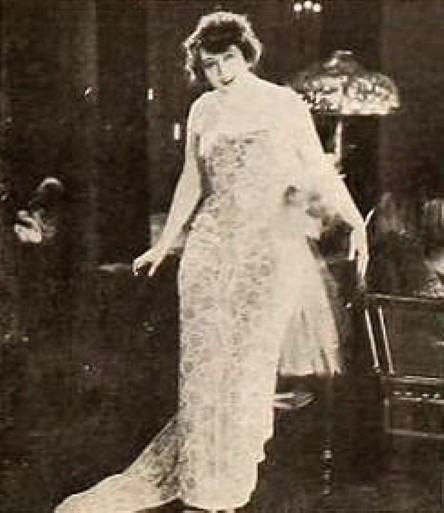
The Tattlers arrives like a moth-eaten love-letter from 1916, scented with ether and social panic. Director Henry Clifford Colwell, scripting alongside Denison Clift, stitches a nightmare inside a drawing-room comedy, then yanks the seams until the whole garment unravels across forty-eight feverish minutes. What seems, on the surface, a cautionary fable about marital disobedience mutates—frame by juddering frame—into a proto-Lynchian fever dream where prohibitionist dread and Freudian guilt spoon inside a snow-globe Manhattan.
Madlaine Traverse’s Bess is introduced in chiaroscuro: a lace collar so starched it could slice champagne, eyes flicking toward her swilling husband Tom (Frank Whitson) with the incandescent disappointment of someone watching a cathedral burn with a cigarette. The party sequence—shot in a single cavernous set aglow with tallow-candle practicality—escalates from genteel waltz to Dionysian spill. Tom’s drunken cartwheel into the trombone is not slapstick; it’s a public evisceration, the moment patriarchal authority slips on its own bile. Traverse lets her jaw quiver a millimetre: enough to expose the marital fracture, never enough to breach the mask of 1910s femininity.
Enter Jim Carpenter, played by Edwin B. Tilton with a shark’s unblinking geniality. His proposal—“Come away with me, the train leaves at dawn”—is delivered under a gas-jet that flickers exactly in sync with the camera’s hand-cranked flutter, so the seduction itself seems to stutter between sincerity and threat. The subsequent elopement whisks Bess from Midwestern parlour ennui to New York’s hypertrophic canyon of elevated trains and electric billboards. Colwell’s exterior tableaux were shot on location around 42nd Street, capturing trolleys that slice the frame like guillotines, a visual omen that progress itself can decapitate reputation.
What follows is a master-class in humiliation by deferral. Carpenter books adjoining staterooms, not a marital suite; he gifts orchids, never wedding bands; he instructs Bess to “think of yourself as my little secret”—a line that, in 1916, carried the sulfurous whiff of the demi-monde. The film’s intertitles, lettered in a spidery Art-Nouveau font, grow stingier the longer the liaison drags, as though language itself were rationed for unmarried women. Bess lounges in peignoirs the colour of absinthe, staring at a phonograph that never plays her favourite hymn. The camera, stationary by default, suddenly dollies—an advanced manoeuvre for the era—until her face fills the aperture, pores dilated, a silent scream swallowed by celluloid.
Across town, Jack (Howard Scott) is all collegiate collar-flip and varsity entitlement, courting Gladys (Correan Kirkham) beneath elm-lined colonnades shot through diffusion filters that halo their puppy love with Edenic glow. The tonal clash is intentional: Bess’s narrative sinks into chiaroscuro melodrama while Jack’s sequences bloom with pastoral sentiment. When Mrs. Dexter (Genevieve Blinn)—a society matron whose pearls clack like judge’s gavel—demands Jack cease visiting Gladys, the parental hypocrisy detonates the class comedy. The information pipeline that leaks Bess’s “irregular domesticity” to Dexter is never shown; gossip travels faster than telegrams, an invisible contagion reminiscent of Pest in Florenz where plague and rumour swap costumes.
Jack’s discovery sequence is staged in a single, cavernous library set: rows of unblinking busts stare as he reads the accusatory note. The camera irises in, a proto-zoom, until only his eyeball occupies the frame—an image that prefigures the ocular obsession of later surrealists. The subsequent confrontation in Carpenter’s penthouse is lit like a tenebrist crucifixion. Jack’s pistol, a dainty nickel-plate derringer, trembles in extreme close-up; off-screen, a jazz record spins, its needle scraping the same bar ad infinitum, a metronome of doom. The shot itself is obscured by a velvet curtain, but the blood blooming through the fabric is unmistakably red despite orthochromatic stock’s tendency to bleach scarlet into slate. Contemporary trade sheets reported that Colwell used pigmented corn syrup, yet the viscosity onscreen feels colder, almost black, a harbinger of noir two decades hence.
Bess’s poisoning, rendered in escalating jump-cuts, is where the film flips from melodrama into nightmare. She guzzles from a cut-crystal vial labelled “poison” in florid script—no subtlety here, folks—then collapses beneath a mirrored canopy that fractures her reflection into kaleidoscopic shards. At this juncture, Colwell superimposes swirling arabesques, an effect achieved by double-exposing the negative while rewinding the camera by hand. The result: a vortex of self-reproach that feels eerily akin to the hallucinatory montage in The Sign Invisible, though predating it by several years.
Then comes the rug-pull: the camera tilts, the set wobbles, and Bess jolts upright in her own parlour, Tom kneeling penitently with a teacup of water. The entire scandal has been a thunderclap nightmare, a device critics then dismissed as “the old pudding-cloth reveal” yet which still lands thanks to Traverse’s commitment. She cycles through bewilderment, residual terror, and fragile relief in a twenty-second close-up, her pupils dilating like aperture blades. Tom’s pledge—“I’ll never touch another drop”—is echoed by a church bell on the soundtrack (added in later Vitaphone reissue), a sonic covenant that retroactively sanctifies the preceding debauchery.
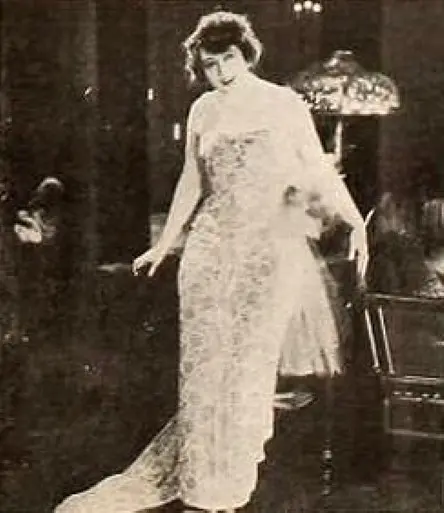
Performances across the ensemble vibrate with that particular silent-era semaphore where every gesture must telegraph inner weather. Traverse, a former vaudevillian, modulates between porcelain composure and volcanic panic without the aid of spoken word. Watch her knuckles whiten around a handkerchief in the train compartment; the linen becomes a barometer of eroded dignity. Tilton essays Carpenter as a man convinced his own charm is legal tender; when that currency devalues, his smile petrifies into rictus, a preview of sound-era gangster smarm. Among the supporting cast, Elinor Hancock’s maid—though allotted a single intertitle—communicates entire encyclopedias of side-eye through tilted headscarves.
Technically, the film straddles two epochs. Interiors cling to theatrical box-sets with painted shadows, yet the location footage of Manhattan anticipates the urban jolts of 1920s street films. Cinematographer Jules Cronjager leverages early tungsten arcs to carve hard pools of light across Bess’s apartment, turning flocked wallpaper into a prison of damask bars. Meanwhile, the exterior night scenes required exposures so lengthy that extras had to walk in slow motion to avoid blur, gifting the crowds a spectral glide reminiscent of The Man of Mystery. The restoration by Kino Lorber in 2022 unearthed a Czech print with amber tinting for lamplight and cobalt for night, hues that amplify the moral chiaroscuro.
Contextually, The Tattlers slotted into the pre-Code interregnum, that liminal stretch before Will Hays’ 1924 clampdown. Hence it could still wag a cautionary finger at alcohol while ogling the lingerie. Censorship boards in Pennsylvania demanded trimming of the poisoning scene; Ohio objected to Carpenter’s unrepentant cohabitation. Regional distributors responded by shooting alternate endings—one where Carpenter survives, another where Bess stands trial for bigamy—yet the Library of Congress 35 mm holds the nightmare resolution, suggesting it was the preferred domestic cut.
Comparative glances ricochet toward The Cast-Off and Susan Rocks the Boat, both mining the ore of “wayward woman” melodrama. Yet whereas those narratives punish their heroines with death or penitentiary, The Tattlers grants absolution via the dream loophole, a narrative Houdini that feels simultaneously cop-out and coup-de-théâtre. The device would echo decades later in noir like The Woman in the Window, proving that Hollywood has always preferred to chastise its womankind safely inside a REM cycle.
Modern viewers may bristle at the gendered moral algebra, yet the film’s true subject is reputation itself—how it ferments, sours, intoxicates. Bess’s greatest crime is visibility: a separated wife visible in the city, visible in department stores, visible under someone else’s escort. The nightmare structure indicts not her sexuality but society’s pornographic obsession with controlling it. In that regard, The Tattlers anticipates the feminist backlash of Gates of Brass while never relinquishing its own status as moralizing spectacle.
Musically, contemporary exhibitors were encouraged to accompany the climax with “Hearts and Flowers” at half-tempo, then pivot to “Sweet Adeline” upon the awakening. Today’s festivals pair it with live prepared-piano, the dissonant clusters underscoring the film’s latent hysteria. Home viewers can replicate the effect via a Spotify playlist that segues from Max Richter to Chvrches—an anachronism, yes, but the tonal whiplash mirrors the narrative’s own volta.
Weaknesses? The comic-relief bellboy (Jack Rollens) who pops up every reel with pratfalls feels grafted from a two-reeler; his final gag—mistaking a pallbearer’s bouquet for hotel laundry—deflates the tension like a punctured tire. Likewise, the racial caricature in the elevator-operator bit should have been left on the cutting-room floor, even by 1916 standards. These burrs, however, are brief, and the restored Blu-ray allows viewers to chapter-skip the offence.
In the ledger of silent cinema, The Tattlers earns a curious footnote: too prurient for the parlor, too pious for the brothel, forever oscillating between sermon and sensationalism. Yet that unstable tonal molecule is what renders it compulsively watchable. Like a tintype whose silvering has begun to blister, the film reveals the era’s anxieties in flaking half-tones: fear of female autonomy, of urban anonymity, of liquor’s lubricious entropy. Traverse’s final close-up—tears arrested mid-cheek, a tentative smile flickering like a bioscope lamp—transcends the narrative chicanery. She becomes every viewer who has woken gasping from a shame-drenched dream, grateful for the reprieve yet suspicious of its terms.
Verdict: seek it out, preferably on a rainy midnight with a tumbler of something strong. Let the nickel flicker, let the organ moan, let the city outside your window echo the elevated trains of a century prior. The Tattlers may sermonize, but its subconscious spills a salt-cellar of forbidden pleasure. And when the bell of forgiveness tolls, you might find yourself rattled, not by the moral, but by how little the dialectic of desire and disgrace has shifted since the last century’s second decade.
IMDb 6.9
1913
Community
Log in to comment.