DbcultAccessing Vault...
1.3/10
Senior Film Conservator
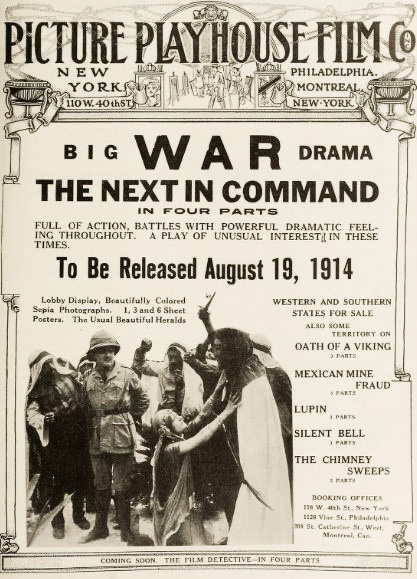
A definitive 1.3/10 rating for a film that redefined the boundaries of cult cinema. The Next in Command remains a cornerstone of transgressive art.
Stepping back into the nascent days of cinematic storytelling, one occasionally stumbles upon a forgotten gem, a film that, despite the passage of decades, still resonates with an urgent, visceral power. Such is the case with 'The Next in Command,' a compelling silent drama that masterfully weaves a narrative of honor, betrayal, and the insidious creep of corruption. Far from a simplistic melodrama, this picture, with its intricate plot and deeply etched characters, offers a surprisingly sophisticated commentary on power dynamics within institutions, a theme as relevant today as it was in its initial theatrical run.
The film plunges us headfirst into the austere world of a military academy, where ideals are meant to be forged, and duty is paramount. Frank Sidwell, in a performance that truly anchors the film, embodies Captain Arthur Vance, an officer whose unwavering moral compass and commitment to principle set him apart. Sidwell's portrayal is a study in quiet determination, his expressive eyes conveying a depth of character that transcends the limitations of silent dialogue. We witness his initial optimism, his burgeoning suspicions, and ultimately, his steely resolve as he navigates a treacherous landscape of deceit. It's a performance that speaks volumes without a single spoken word, relying instead on nuanced gestures and a profound understanding of Vance's inner turmoil.
Opposite Sidwell's noble Vance stands James Gordon's Colonel Harding, a character so chillingly rendered that he becomes the very embodiment of institutional rot. Gordon, with a subtle smirk and an air of deceptive geniality, crafts a villain who is not a mustache-twirling caricature but a terrifyingly plausible figure of authority gone awry. Harding, the titular 'next in command,' is a man whose ambition has curdled into a cynical disregard for human life and national security. His scheme to profit from faulty military equipment is not just a plot device; it's a stark indictment of the moral compromises made at the highest levels. Gordon's performance is a masterclass in understated menace, his every calculated move radiating an icy self-interest that is truly unsettling.
The narrative’s strength lies in its ability to build tension incrementally. It doesn't rush to its explosive revelations but rather allows the viewer to experience Vance's growing unease alongside him. The film leverages the visual medium to its fullest, employing carefully composed shots and evocative intertitles to guide us through the protagonist's perilous investigation. The stakes are palpable, not just for Vance's career, but for the lives of the young recruits who unknowingly become pawns in Harding's venal game. This sense of impending doom is skillfully maintained throughout, a testament to the directorial hand that understood the power of suspense in an era before synchronized sound.
No less vital to the film's emotional core is Betty Harte's portrayal of Clara, Vance's fiancée. Harte imbues Clara with a gentle yet unyielding spirit, a character who is far from a mere damsel in distress. As a nurse, she is uniquely positioned to observe the unexplained illnesses plaguing the recruits, her compassionate concern evolving into a crucial piece of the puzzle Vance is attempting to solve. Clara represents the moral conscience outside the military's rigid hierarchy, her observations providing the initial spark that ignites Vance's investigation. Harte's performance is understated but powerful, her eyes reflecting both tenderness and a growing apprehension, making her character a compelling emotional anchor in the escalating drama. Her agency in uncovering the truth, rather than merely reacting to events, sets her apart from many female roles of the period, hinting at a progressive sensibility in the film's construction.
The film's exploration of systemic rot finds parallels in other works of the era, though 'The Next in Command' distinguishes itself through its specific focus on military integrity. One might draw thematic comparisons to the societal critiques embedded within `Tess of the Storm Country`, which, while different in setting, similarly dissects the injustices faced by individuals against formidable, often corrupt, societal structures. Both films, in their own ways, champion the resilience of the human spirit in the face of overwhelming adversity, albeit with different narrative tools and outcomes.
F.A. Turner's role, though perhaps less central than the leads, is nonetheless critical in fleshing out the moral ambiguities that permeate the film. As a subordinate caught between loyalty to his superiors and the stirrings of his own conscience, Turner delivers a performance rich in subtle conflict. His character serves as a poignant reminder of the pervasive pressure to conform, even when confronted with stark ethical dilemmas. The flicker of doubt, the hesitant glance, the internal struggle conveyed through his body language adds a layer of human frailty to the otherwise black-and-white morality often seen in early cinema. This nuanced portrayal elevates the story beyond a simple good-versus-evil confrontation, suggesting the broader societal implications of corruption and the difficult choices it forces upon ordinary individuals.
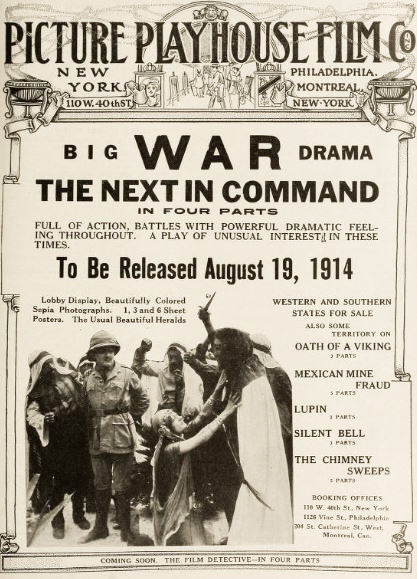
The visual language of 'The Next in Command' is remarkably sophisticated for its time. The use of deep focus in certain scenes, allowing for multiple layers of action and character interaction within a single frame, demonstrates a keen understanding of cinematic composition. Lighting choices, while perhaps rudimentary by today's standards, are effectively employed to create mood and emphasize character states – the stark shadows that cling to Harding, for instance, in contrast to the more open, illuminated spaces occupied by Vance, subtly underscore their moral standing. The film understands that in the absence of spoken dialogue, every visual element must carry weight, contributing to the overall narrative and emotional impact.
The pacing of 'The Next in Command' is a masterclass in sustained tension. The initial investigations are deliberate, allowing the audience to absorb the unfolding conspiracy. As Vance closes in on the truth, the tempo quickens, propelling us towards a thrilling climax. The sequence where Vance, having been framed, escapes his confinement and races against time to gather irrefutable evidence is particularly exhilarating. It’s a tightly choreographed chase, utilizing the era's limited special effects to maximum impact, reminiscent of the thrilling escapades found in serials like `The Adventures of Kathlyn`, though 'The Next in Command' grounds its action in a more serious, less fantastical reality. The final confrontation, a public spectacle where Vance must lay bare Harding's treachery, is a powerful exercise in dramatic resolution, where justice, hard-won and precarious, finally prevails.
Beyond its immediate thrills, 'The Next in Command' serves as a fascinating historical artifact, reflecting societal anxieties about institutional integrity and the potential for abuse of power. It speaks to a universal fear – the betrayal from within – and the courage required to confront it. The film's portrayal of the military, not as an infallible bastion of virtue but as an organization susceptible to human failings, was perhaps a bold statement for its time. This nuanced perspective elevates it beyond mere entertainment, inviting critical reflection on the nature of authority and accountability. In this regard, it shares a thematic thread with films like `The Great Mistake`, which, through its own narrative of misjudgment and consequence, similarly explores the fallibility of those in positions of trust.
The enduring power of 'The Next in Command' lies not just in its compelling performances or its well-crafted plot, but in its timeless themes. The struggle of an honest individual against a corrupt system, the moral burden of uncovering uncomfortable truths, and the ultimate triumph of integrity are narratives that resonate across generations. While it may not possess the grand, sweeping vistas of something like `Captain Starlight, or Gentleman of the Road`, its intimate focus on character and moral conflict provides a different, but equally potent, form of cinematic engagement. It reminds us that even in the earliest days of film, storytellers were grappling with complex human dilemmas, using the nascent medium to hold a mirror up to society.
In an era often dismissed as primitive in cinematic terms, 'The Next in Command' stands as a powerful refutation. It demonstrates a sophisticated understanding of visual storytelling, character development, and thematic depth. The performances from Betty Harte, Frank Sidwell, James Gordon, and F.A. Turner are not merely relics of a bygone era; they are compelling portrayals that speak to the universal human condition. For enthusiasts of early cinema, and indeed for anyone interested in the evolution of narrative film, 'The Next in Command' is an essential viewing experience, a testament to the enduring artistry and profound impact of the silent screen. It is a film that demands rediscovery, offering a rich tapestry of intrigue and moral fortitude that continues to captivate and provoke thought long after the final frame flickers into darkness.
The meticulous attention to detail in the film's production, from the authentic-looking military uniforms to the convincing set designs, further immerses the viewer in its world. While the technology of filmmaking was still in its infancy, the dedication to creating a believable environment is evident, enhancing the dramatic realism of the narrative. This commitment to verisimilitude serves to amplify the stakes, making Harding's betrayal feel all the more egregious and Vance's struggle all the more heroic. It's a testament to the vision of its creators that they were able to craft such a cohesive and impactful experience with the tools available to them.
Ultimately, 'The Next in Command' is more than just a historical curiosity; it is a vibrant piece of cinematic art that speaks to the timeless struggle for justice. It challenges its audience to consider the personal cost of integrity and the insidious nature of unchecked power. Its narrative, while rooted in a specific time, carries universal weight, making it a powerful and relevant viewing experience even today. The film solidifies its place as a significant, if often overlooked, contribution to the canon of early American cinema, a testament to the profound narrative capabilities of the silent era.
IMDb 2.1
1936
Community
Log in to comment.