DbcultAccessing Vault...
Cult Review
Senior Film Conservator
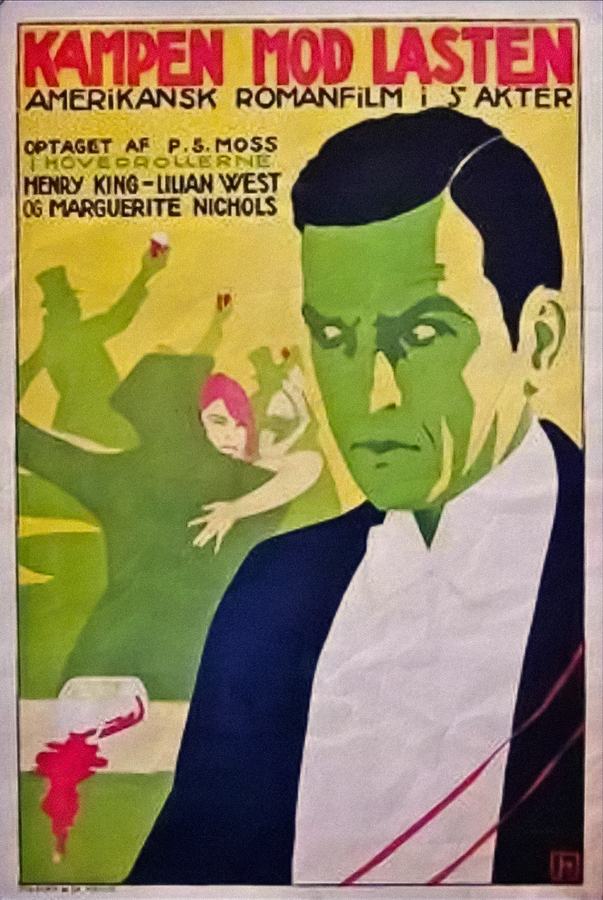
In the annals of early cinema, where narratives often served as moral parables, George Bronson Howard's screenplay for The Power of Evil (1916) emerges as a particularly potent exploration of human frailty and the arduous path to redemption. This silent film, directed with a keen eye for dramatic tension, plunges viewers into the turbulent life of Stuart Merwin, portrayed with a compelling blend of vulnerability and internal conflict by Henry King. Merwin is not merely a protagonist; he is a canvas upon which the era's anxieties about inherited vice, societal expectations, and the transformative potential of selfless love are vividly painted. From its opening frames, the film establishes a world of stark contrasts: the glittering, yet morally ambiguous, upper echelons of society juxtaposed against the gritty, authentic underbelly where true compassion often resides.
Merwin's plight is rooted in a generational curse: the shadow of his father's alcoholism looms large, a genetic predisposition that manifests as an almost irresistible craving for strong liquor. This isn't merely a character flaw; it's presented as a tragic inheritance, a deeply ingrained vulnerability that defines his early struggles. His initial romantic entanglement with Laurine Manners, brought to society's attention by the formidable Mrs. Willie Clowes (Victory Bateman), serves as a fragile anchor in his tumultuous existence. Laurine, embodied by Marguerite Nichols with a delicate balance of charm and nascent opportunism, represents the promise of respectability and a conventional future. However, this veneer of normalcy is shattered at Mrs. Clowes' party, a pivotal scene where Merwin, succumbing to his hereditary demons, overindulges. His subsequent disgrace, witnessed by a disgusted Laurine, marks his precipitous fall from grace, a moment of profound public humiliation that propels him away from the gilded cages of high society and into the literal and metaphorical darkness.
The film doesn't shy away from depicting the stark realities of Merwin's self-destruction. His immediate retreat to "Harry Slavin's," a disreputable establishment, is less a choice and more an inevitable gravitational pull towards the abyss. This setting, a smoky, boisterous haven for the downtrodden and the morally compromised, serves as a powerful counterpoint to the sterile elegance of Mrs. Clowes' drawing-room. It is here, amidst the cacophony of a forgotten world, that Merwin's narrative takes an unexpected, redemptive turn. The raw, unvarnished portrayal of vice in Slavin's is reminiscent of the gritty realism found in films like The Sea Wolf, which dared to explore the darker, more primal aspects of human nature, albeit through a different lens. The narrative's unflinching gaze into Merwin's initial degradation sets the stage for a redemption arc that feels hard-won and genuinely earned, rather than a facile narrative contrivance.
Within the squalor of Slavin's, Merwin encounters Jeano (Lillian West), a woman of the streets whose life is as precarious as his own. Their meeting is not a romanticized encounter but a brutal initiation, as Merwin's innate decency compels him to intervene in a violent altercation between Jeano and her paramour, "Slick Mike" (Edward Peters). This act of chivalry, though it leaves Merwin senseless, sparks a profound recognition within Jeano. She perceives not the drunken wreck, but the dormant potential for goodness within him. This moment is the true genesis of Merwin's redemption. Jeano's decision to take him into her humble home and tirelessly urge him towards a new life is an act of extraordinary altruism, a love unburdened by societal expectations or material gain. Her character stands in stark contrast to the calculating machinations of society women, embodying a purity of spirit often found in the most unexpected corners of early cinematic narratives, much like the compassionate figures in Fior di male, which also explored the humanity of women living on the fringes.
Jeano's unwavering faith in Merwin's capacity for change is the engine of his initial reformation. He secures humble employment, enduring the toil with a newfound courage, a testament to the transformative power of genuine affection and belief. This period of quiet struggle and hard-won sobriety is crucial, showcasing Merwin's intrinsic desire for a better life, not for wealth or status, but for self-respect. Frank Erlanger, Philo McCullough, and Gordon Sackville, while in supporting roles, contribute to the tapestry of this world, lending authenticity to both the societal and underworld settings, making the environments feel lived-in and impactful. The film makes a clear statement about the source of true strength: it does not lie in inherited wealth or social standing, but in the moral fortitude to overcome personal demons, often inspired by an external, unconditional love.
While Merwin is undergoing his spiritual rebirth, Laurine's trajectory veers in an opposing direction. She becomes fully immersed in the "fast set," a world of superficiality and fleeting pleasures, actively encouraged by the predatory Mrs. Clowes, who views society as her personal hunting ground. Mrs. Clowes' influence, a subtle yet insidious force, urges Laurine into a desperate flirtation with Tommy Carter, a vapid sprig of society. This subplot serves as a biting critique of societal hypocrisy, where appearances and strategic alliances trump genuine affection and moral integrity. The film masterfully illustrates how easily individuals can be swayed by external pressures, losing sight of authentic values in the pursuit of social standing. This theme resonates with other contemporary social dramas, highlighting the era's fascination with the moral decay perceived within the upper classes.
Upon observing Merwin's reformation, Laurine, guided by Mrs. Clowes' pragmatic advice, renews her determination to marry him. This decision is less about rekindled love and more about reclaiming a valuable social asset. Their subsequent marriage, orchestrated with calculated precision, is a hollow victory. Merwin, despite his marital vows, finds his heart still yearning for Jeano, a poignant echo of the sacrifices he made for a semblance of societal acceptance. The film's portrayal of this marriage is a powerful indictment of unions based on convenience rather than genuine connection, a theme explored with varying degrees of cynicism in other films of the period, such as The Marriage of Kitty. Merwin's neglect by Laurine, who quickly reverts to her old friends and frivolous pursuits, leaves him heartbroken and vulnerable. The emotional void created by this superficial relationship proves too much for his still-fragile sobriety. He succumbs to despair, reverting to his old life, once again seeking solace in the numbing oblivion of alcohol at Slavin's resort, becoming a broken wreck.
The narrative builds to a powerful, emotionally charged climax that brings all the disparate threads together. Jeano, having embraced the uplift work of the Salvation Army, a poignant symbol of her own redemption and desire to help others, ventures into Slavin's. Her mission of mercy leads her to the horrific discovery of Merwin, sprawled in a drunken stupor, a stark reminder of his relapse. Her shock and anguish are palpable, conveyed with remarkable depth by Lillian West, showcasing the raw emotional power of silent film acting. This scene is a testament to the enduring nature of her love and commitment, even in the face of profound disappointment.
Simultaneously, in a cruel twist of fate, Laurine and her fashionable friends, after copious amounts of champagne, decide to embark on a "slumming party" – a condescending excursion into the very underworld that has claimed Merwin. This ill-conceived adventure serves as a stark commentary on the moral bankruptcy of their privileged existence, their callous disregard for the humanity of those less fortunate. The collision of these two worlds – the sanctimonious curiosity of the elite and the raw desperation of the demimonde – is inevitable and profoundly impactful. Laurine's entrance into Slavin's brings her face-to-face with Jeano, who is tenderly ministering to the prostrate Merwin. The tableau is devastating: Jeano's selfless devotion contrasted with Laurine's horrified realization. In Merwin's gaze, as he looks upon Jeano, Laurine sees not just affection, but profound adoration, a love that transcends social boundaries and material possessions, a love that she, in her pursuit of superficiality, could never inspire.
The revelation is shattering for Laurine. On her knees, she begs Merwin's forgiveness, a moment of genuine contrition that finally strips away her facade of societal artifice. This act of humility, however, comes too late. Merwin, his better instincts fully awakened and solidified by Jeano's unwavering love, makes his definitive choice. He takes Jeano by the hand, and together, they leave the sordid hovel, walking away from the shadows of his past and the empty promises of his present. This final departure signifies a true liberation, a commitment to a life built on authenticity, mutual respect, and profound affection. It's a powerful statement about choosing genuine connection over superficial status, a theme that resonates deeply and elevates the film beyond a mere melodrama.
The Power of Evil, under the skilled direction and the nuanced screenplay by George Bronson Howard, is more than just a cautionary tale about alcoholism; it's a profound meditation on the nature of good and evil, the corrosive influence of societal pressures, and the redemptive power of selfless love. The performances, particularly from Henry King and Lillian West, are remarkably expressive, conveying complex emotions without the aid of spoken dialogue. Their silent gestures and facial expressions communicate volumes, a testament to the artistry of early cinema. The film's enduring relevance lies in its timeless exploration of moral dilemmas that continue to plague humanity: the struggle against inherited vices, the pursuit of genuine happiness versus societal approval, and the transformative capacity of compassion. It reminds us that true salvation often lies not in grand gestures or material wealth, but in the quiet, unwavering devotion of another soul.
The juxtaposition of settings – the opulent but morally barren homes of the elite against the squalid but often more emotionally honest environments of the working class – is a visual metaphor that underpins the entire narrative. The film critiques a society that values appearances over character, where a man's worth is measured by his wealth rather than his integrity. In this regard, it shares a lineage with other social commentaries of its time, such as Pay Dirt, which also delved into the moral complexities of wealth and class. The character of Mrs. Clowes, with her cynical manipulation, serves as a chilling embodiment of this societal decay, a stark contrast to Jeano's unwavering moral compass. The film's resolution, with Merwin choosing Jeano and a life of humble authenticity, is not just a happy ending but a declaration of moral victory, a triumph of spirit over the corrupting influences of both inherited weakness and societal artifice.
The Power of Evil stands as a compelling example of how silent films, despite their technical limitations by modern standards, could deliver narratives of profound emotional resonance and moral complexity. The film's ability to tackle weighty themes like addiction, class disparity, and redemption with such clarity and impact speaks to the power of visual storytelling. It demonstrates an early mastery of cinematic grammar, using composition, performance, and narrative structure to engage the audience on a deeply personal level. The clear character arcs and the dramatic irony inherent in the plot twists ensure that the viewer remains invested in Merwin's tumultuous journey.
While not as widely remembered as some of its contemporaries, this film offers a valuable window into the social concerns and artistic conventions of its era. It is a testament to the enduring power of classic narratives that explore the fundamental struggles of the human condition. The film's message, that true power lies not in wealth or social standing but in moral courage and the capacity for love, remains as relevant today as it was over a century ago. It reminds us that redemption is often found in the most unexpected places and through the most selfless acts, urging us to look beyond superficial judgments and embrace the inherent goodness that can exist even in the face of profound adversity. The performances, particularly by Henry King as Merwin and Lillian West as Jeano, carry the emotional weight of the story, their silent expressions conveying a depth of feeling that transcends the lack of spoken dialogue, making their ultimate union feel genuinely earned and profoundly moving. The film's final image of them walking away together, hand in hand, into an uncertain but hopeful future, is a powerful and lasting testament to the triumph of the human spirit over the pervasive power of evil.
IMDb —
1923
Community
Log in to comment.