DbcultAccessing Vault...
6.3/10
Senior Film Conservator
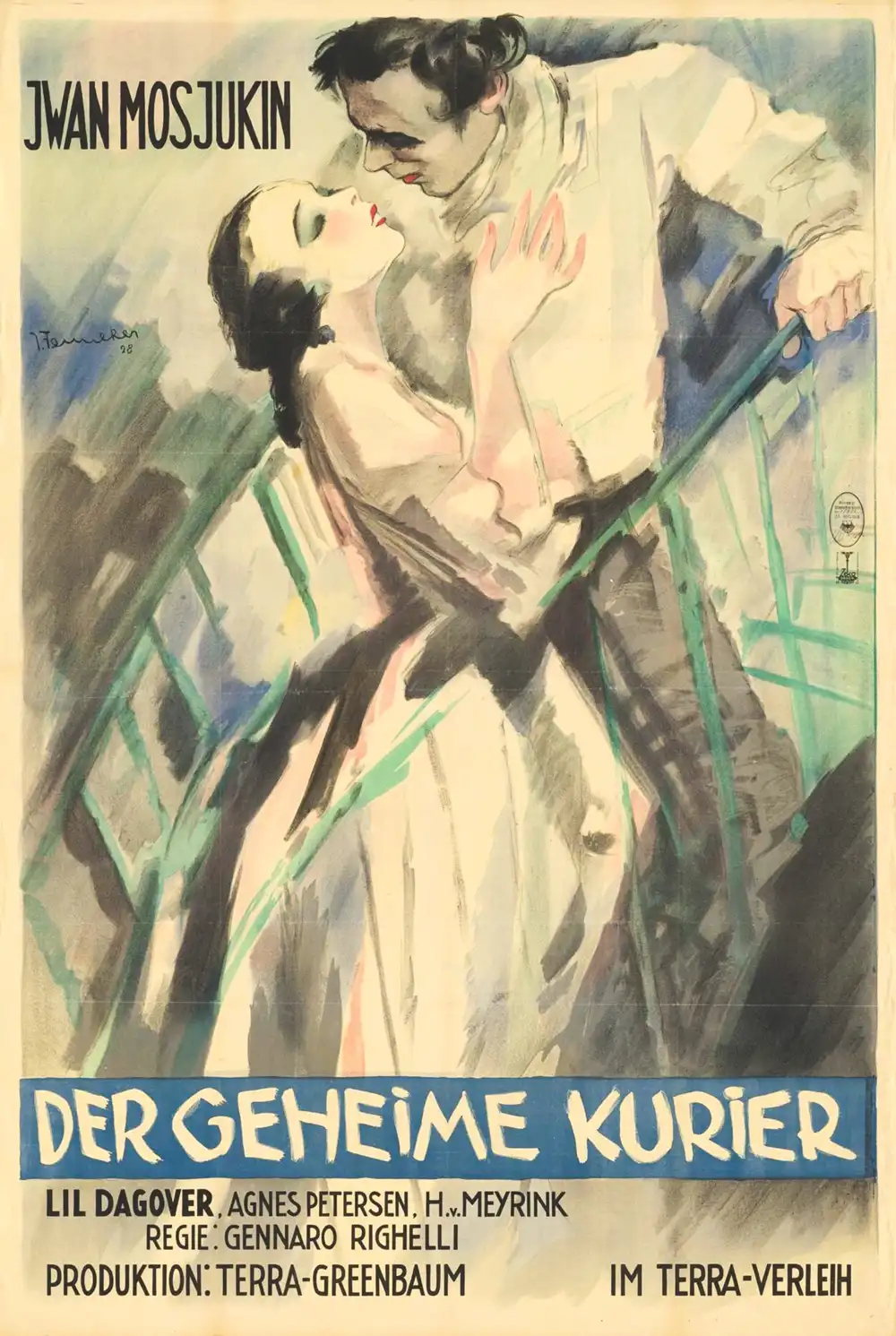
A definitive 6.3/10 rating for a film that redefined the boundaries of cult cinema. Der geheime Kurier remains a cornerstone of transgressive art.
If you are coming to Der geheime Kurier (The Secret Courier) expecting a faithful, page-by-page translation of Stendhal’s The Red and the Black, you will likely be disappointed. However, if you want to see one of the greatest actors of the silent era, Ivan Mozzhukhin, turn internal psychological turmoil into something visible on screen, this is essential viewing. It is a film for those who appreciate the 'late silent' style—where the camera moves with confidence and the lighting is used to tell us more about a character's soul than the title cards ever could.
Casual viewers might find the pacing of the second half a bit rushed, as the film tries to cram a massive novel into a manageable runtime. But for fans of European silent cinema, it is a fascinating look at how German and Italian production styles merged in the late 1920s to create something visually sumptuous and emotionally heavy.
The entire film rests on Ivan Mozzhukhin’s shoulders. Playing Julien Sorel is a difficult task because Sorel is often a deeply unlikeable protagonist—he is calculating, cold, and frequently opportunistic. Mozzhukhin doesn't try to make him a hero. Instead, he lean into Sorel’s intensity. There is a specific scene early on where Sorel is tutoring the children of Monsieur de Rênal. The way Mozzhukhin holds his body—stiff, slightly defensive, yet with eyes that are constantly scanning the room for an advantage—tells you everything you need to know about his social anxiety and his pride.
One detail only a viewer would catch is the way Mozzhukhin uses his hands. In the presence of his 'social betters,' his hands are often clenched or hidden, as if he’s trying to physically restrain his anger. When he is alone or in a position of power, his movements become fluid, almost feline. It’s a physical performance that makes the lack of sound irrelevant. You don't need to hear his internal monologue because you can see it in the twitch of his jaw.
Director Gennaro Righelli makes some bold visual choices that elevate the film above a standard costume drama. The contrast between the two worlds Sorel inhabits is stark. The provincial home of the Rênals is shot with a certain softness, often utilizing naturalistic light through windows that suggests a sort of trap. In contrast, the Parisian segments in the Marquis de la Mole’s household are all sharp angles, deep shadows, and cavernous halls. The set design here emphasizes Sorel’s insignificance; he looks like a small black inkblot against the massive, ornate white walls of the aristocracy.
There is a particularly striking sequence involving a ladder—a literal and metaphorical climb—where the lighting creates a cage-like effect with the shadows of the balcony railings. It’s a classic late-silent trope, but it’s executed here with such precision that it feels fresh. The film captures the 'red' (the military) and the 'black' (the clergy) through costume and lighting rather than just dialogue, which is exactly what a good silent adaptation should do.
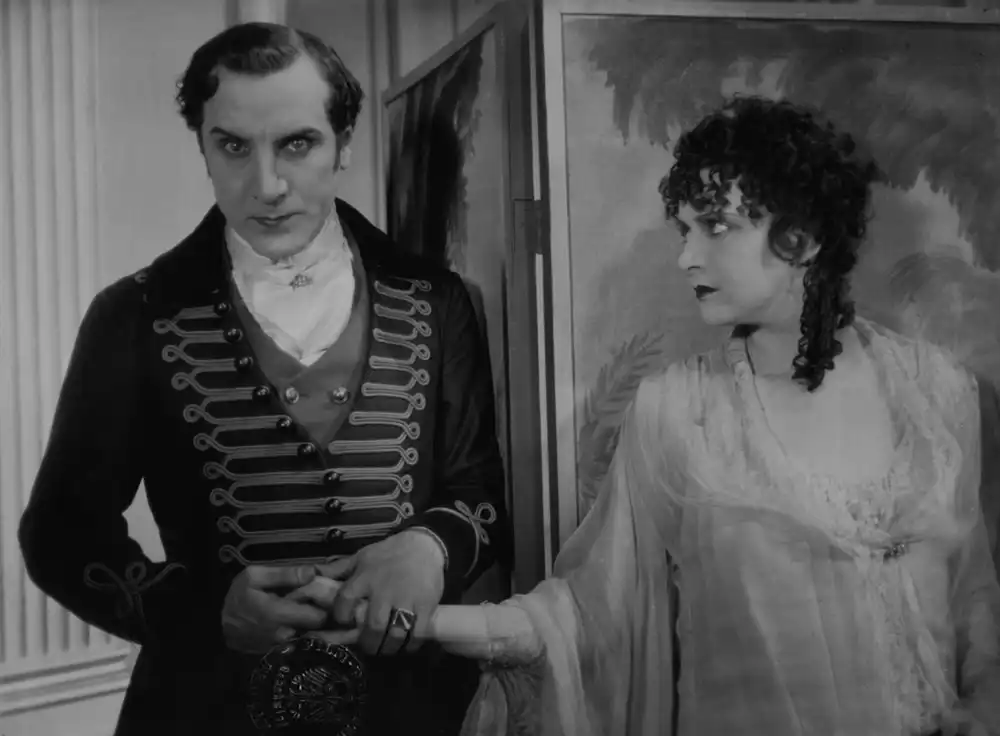
Lil Dagover, a staple of German expressionist cinema, brings a haunting quality to Madame de Rênal. While the novel portrays her as somewhat more naive, Dagover plays her with a weary, tragic elegance. Her scenes with Mozzhukhin are the emotional heart of the film. There is a moment in the garden where they barely touch, but the tension is palpable through a series of tight close-ups that linger just a second too long, making the audience feel the discomfort of their forbidden connection.
Agnes Petersen as Mathilde de la Mole provides a necessary foil. Where Dagover is soft and tragic, Petersen is sharp and demanding. Her performance can feel a bit 'theatrical' in the Parisian scenes, but it fits the character of a woman who views life as a series of dramatic gestures. The chemistry between her and Mozzhukhin is colder, more like a chess match than a romance, which aligns perfectly with the themes of social climbing seen in films like The Snob.
The film isn't perfect. The transition from the provincial life to the Parisian high society happens with a jarring speed that might leave those unfamiliar with the book a bit confused. The 'secret courier' aspect of the title refers to a political subplot that is largely glossed over in favor of the romantic entanglements. Because of this, Sorel’s ultimate downfall feels a bit more like a sudden script requirement than a slow-motion car crash.
The editing rhythm in the final third becomes frantic. The trial scene, while visually impressive with its high-contrast lighting and shots of the judgmental crowd, moves too quickly for the emotional weight of the verdict to really land. It’s a common problem in silent adaptations of long novels—the 'greatest hits' approach to storytelling where the connective tissue is sacrificed for the sake of the big scenes.
Der geheime Kurier is a beautiful artifact of a dying era. Released just as sound was beginning to take over, it represents the peak of visual literacy in cinema. It doesn't have the experimental wildness of some of Mozzhukhin's earlier Russian work, but it has a polished, professional gloom that is very satisfying.
Is it a definitive version of Stendhal? No. But it is a definitive version of Ivan Mozzhukhin. If you want to see a film that understands how to use a human face as a landscape of ambition and regret, this is it. It’s a solid, well-crafted drama that manages to be more than just a costume piece. It’s a study of a man who hates where he came from and is terrified of where he’s going, and that is a theme that remains relevant long after the silent era ended.
"I am not a man, I am a tool," Sorel seems to say with every glance, and the film captures that tragedy beautifully.
For those interested in the era's focus on physical form and social positioning, it makes an interesting companion piece to the more documentary-style Wege zu Kraft und Schönheit, though Der geheime Kurier is far more interested in the dark corners of the psyche than the health of the body.
IMDb 5.7
1934
Community
Log in to comment.