DbcultAccessing Vault...
Cult Review
Senior Film Conservator
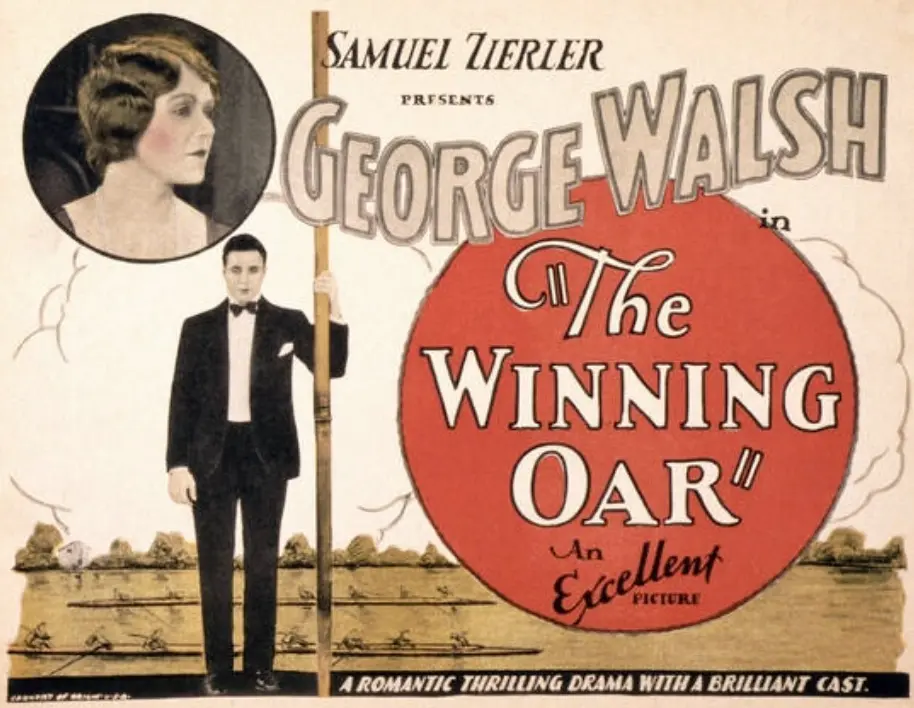
Is The Winning Oar a mandatory viewing experience for the modern cinephile? Short answer: No, unless you possess a deep-seated reverence for the evolution of the sports-drama archetype or a specific interest in the physical career of George Walsh.
This film is for the silent cinema completionist and the sports historian who wants to see the DNA of the modern 'underdog' story; it is absolutely not for the casual viewer who finds the pacing of pre-Talkie melodramas to be an exercise in patience. It demands a specific kind of attention, one that looks past the flickering nitrate and into the raw physicality of early 20th-century performance.
1) This film works because George Walsh brings a genuine, muscular intensity to the rowing sequences that feels far more authentic than the staged athletics of his contemporaries.
2) This film fails because the romantic subplot involving Gladys Frazin is so thin it nearly evaporates between the race sequences, leaving the midsection feeling hollow.
3) You should watch it if you want to understand how early cinema translated the 'thrill of victory' without the benefit of a roaring soundtrack or synchronized commentary.
In the current landscape of hyper-edited sports cinema, there is something strangely meditative about The Winning Oar. It doesn't rely on the quick-cut frenzy of a modern training montage. Instead, it lets the camera linger on the synchronized movement of the oars, a choice that highlights the sheer exhaustion of the sport. While it lacks the theological weight of a film like Christus, it possesses a secular earnestness that is equally compelling in its own right.
However, the narrative is as predictable as a metronome. You know exactly where the 'rivalry' with Harry Southard's character is going from the first frame they share. If you are looking for the narrative complexity found in The Ghosts of Yesterday, you will be disappointed. This is a film of action and archetype, not psychological nuance.
George Walsh was always more of an athlete than a traditional thespian, and The Winning Oar plays to his strengths with ruthless efficiency. Unlike the more delicate leads of the era, Walsh has a presence that feels grounded and heavy. When he is in the boat, you see the tension in his forearms and the sweat on his brow. It’s a performance of the body. One particular scene, where he stares down the river before the final heat, conveys more about the character's internal pressure than any of the intertitles do.
Compare this to the more stylized, almost dance-like movements found in The Tiger Band. Walsh is doing something different here; he’s trying to be a 'real' man in a genre that often favored the 'romantic' man. It’s an unconventional choice for 1927, and it’s what keeps the film from being a total relic. He doesn't just act; he poses with the confidence of a man who knows his jawline is his best asset, yet he manages to inject a sense of genuine stakes into the climax.
Arthur Hoerl’s direction is workmanlike. He isn't trying to reinvent the wheel or push the boundaries of the medium like the creators of Hypocrites. His camera placement during the rowing scenes is functional, designed to show the lead’s prowess rather than to create a sense of artistic vertigo. There is a lack of visual flair that makes the film feel a bit static during the domestic scenes.
For example, the scenes in the parlor with Dorothy Hall are shot in standard medium-wide frames that feel like a filmed stage play. There is no attempt to use shadows or innovative blocking to heighten the tension of the love triangle. It’s a stark contrast to the kinetic energy of the river scenes. The film feels like it was made by two different directors: one who loved the water and one who was bored by the shore.
Filming on water in the late 1920s was a nightmare of logistics. The Winning Oar manages to overcome some of these hurdles, but the limitations are visible. The lighting in the outdoor sequences is often harsh, blowing out the highlights on the water and making the actors squint. Yet, there is a beauty in this rawness. It feels less like a studio backlot and more like a captured moment in time.
The pacing, however, drags like an anchor in the second act. The film spends far too much time on the social politics of the rowing club. These sequences lack the charm of a light comedy like Nurse Marjorie or the satirical bite of Madame Doesn't Want Children. Instead, they feel like filler, padding the runtime until we can get back to the oars. It’s a common flaw in silent features, but it’s particularly noticeable here because the 'action' is so much more interesting than the 'drama.'
Pros:
Cons:
Arthur Hoerl’s script is a fascinating artifact. On one hand, it’s a standard 'big game' story. On the other, it occasionally touches on the class anxieties of the 1920s. There’s a sense that the protagonist’s success on the water is his only ticket into a social circle that would otherwise reject him. This subtext is never fully explored, which is a shame. It could have elevated the film to the level of social commentary seen in In the Balance.
Instead, the script retreats into the safety of the genre. The 'villain' is villainous because he is arrogant, not because he represents a structural flaw in the system. The 'hero' is heroic because he works hard and loves the right girl. It works. But it’s flawed. It’s a safe film made in a time when cinema was beginning to take much bigger risks.
The Winning Oar is a competent, occasionally thrilling example of the silent era’s fascination with the masculine ideal. It doesn't have the whimsy of Im weißen Rößl or the exoticism of L'île enchantée. It is a blue-collar film about a white-collar sport. George Walsh’s performance is the glue that holds the entire production together, providing a physical gravity that the script lacks.
Ultimately, the film is a victim of its own genre constraints. It hits every expected beat with the precision of a coxswain’s shout, but it rarely surprises. It is a solid, three-star experience that serves as a perfect time capsule for 1920s collegiate life, even if it fails to row its way into the pantheon of all-time greats. Watch it for the sweat, the water, and the jawline—just don't expect it to change your life.

IMDb 7.1
1916
Community
Log in to comment.