DbcultAccessing Vault...
6/10
Senior Film Conservator
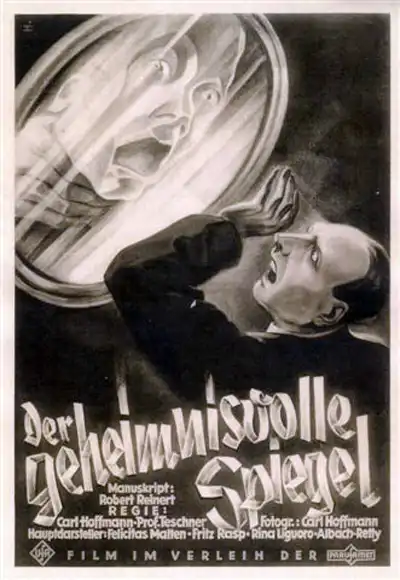
A definitive 6/10 rating for a film that redefined the boundaries of cult cinema. Der geheimnisvolle Spiegel remains a cornerstone of transgressive art.
This is definitely one of those films that feels more like a historical artifact than a modern piece of entertainment, but if you've got a soft spot for early German cinema or just really love the idea of a spooky old castle and some existential dread, then maybe, just maybe, Der geheimnisvolle Spiegel is worth digging up. It's not for anyone looking for action, or even particularly nuanced drama. You'll probably hate it if you need quick pacing or characters you can actually root for. It's slow, often theatrical, and pretty much a guaranteed downer.
The whole thing revolves around this ancient mirror tucked away in a creepy old Bavarian castle. Under a full moon, it shows you your future. Sounds cool, right? But the catch is, it's never good news. Everyone who dares to peek gets a vision of their own miserable end or some impending tragedy.
The castle itself is great. Just the right amount of crumbling majesty. There's a shot early on, a wide angle looking up at the battlements, that really sets the mood. You can almost feel the cold stone. It’s a silent character, really.
Pacing is... deliberate. Very deliberate. There are long stretches where characters just stand and stare, either at the mirror or off into the middle distance, contemplating their doom. It's supposed to be heavy, I think, but sometimes it just feels like the director forgot to yell "cut." A few of those reaction shots linger so long they almost become funny, like watching paint dry, but with more furrowed brows.
Wolf Albach-Retty, as our eventual 'hero,' has a very particular way of looking anguished. It's less an internal struggle and more a series of pronounced facial contortions. You get the idea he's suffering, sure, but it's not exactly subtle. The close-ups on his face when he sees his fate are a masterclass in silent film melodrama. He commits to it, at least.
The film has this repetitive structure: someone looks, they react, they mourn, then the next person steps up. It can get a bit monotonous after a while. You start to anticipate the exact moment of their despair, like a macabre conveyor belt of doom. One of the visions, I think it was one of the minor noblemen, just shows him getting stabbed. It's so quick, almost a throwaway. Then he just... accepts it. No big fuss. It’s a strange contrast to the more drawn-out, operatic fates.
The costumes are pretty standard for the era, but there's one character, a woman, whose elaborate headpiece feels slightly out of place in the otherwise somber setting. It’s a small thing, but it catches the eye, almost distracting from the general gloom.
Dialogue, what little there is, is often delivered in this very formal, almost declamatory style. It contributes to the film's theatricality, absolutely, but it doesn't exactly make the characters feel like real people. More like archetypes of despair, moving through a fated dance.
The tone is consistently dark. There's no relief, no humor, not even a glimmer of hope anywhere. Which, I guess, is the point. But it makes for a pretty heavy watch. You really feel the weight of everyone's impending doom, and honestly, after a while, you just want someone to smash the damn mirror.
There's a scene where a woman, I believe it's Alice Kempen's character, looks into the mirror and just collapses. Her collapse feels a little too graceful, almost choreographed, like a dancer falling. It breaks the illusion of pure, raw despair for a second, just enough to notice.
The magic of the mirror itself is quite simple but effective. The way they superimpose the visions onto the glass, slightly distorted, gives it a genuinely eerie quality. It’s not flashy, but it works. The flickering light from the full moon, too, adds to the atmosphere, a nice touch of practical effects.
Towards the end, when Albach-Retty's character decides he's had enough, the whole sequence feels inevitable. His decision to smash the mirror and then... well, you know. That final act is visually striking, the shattering glass, but then the mirror just puts itself back together. It’s a neat trick, a real "oh, so that's how it is" moment that underlines the futility of fighting fate. The film isn't subtle about its message, that's for sure.
The crowd scenes, if you can even call them that, are sparse. There are a few shots of people milling about in the castle courtyard, but they feel like they're just waiting for their cue, not actually living in this world. It gives the whole thing an isolated, almost stage-play feel, even more so than other films of the period.
It's a curious watch, more for its historical value and the sheer commitment to its bleak premise than for any engaging narrative. If you're into the weird corners of silent film, or just want to feel deeply, deeply sad for an hour or so, give it a shot. Otherwise, maybe stick to something with a bit more sunshine. Or at least a happy ending.
IMDb —
1924
Community
Log in to comment.