DbcultAccessing Vault...
5/10
Senior Film Conservator
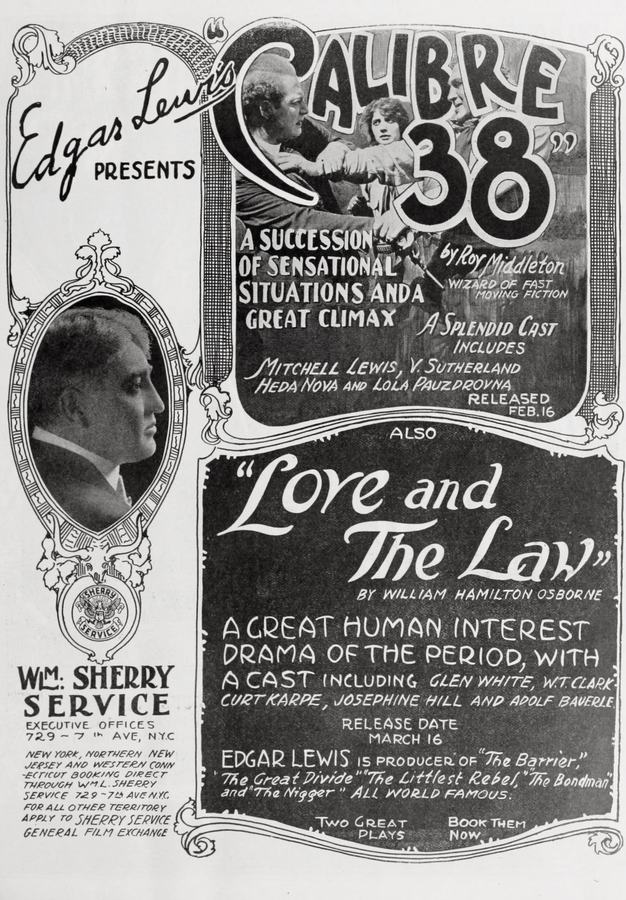
A definitive 5/10 rating for a film that redefined the boundaries of cult cinema. A Modern Monte Cristo remains a cornerstone of transgressive art.
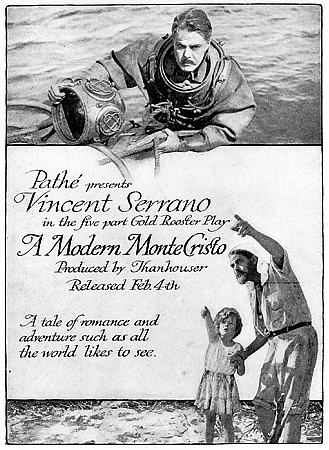
The celluloid arrives brittle as burnt toast, yet its emulsion still secretes venom. A Modern Monte Cristo—shot in the winter of 1919 when Manhattan’s streetlights flickered like guilty consciences—doesn’t merely update Dumas; it vivisects him under klieg lights, then sutures the carcass with piano-wire tension. Vincent Serrano’s Dr. Emerson is no chivalric Edmond Dantès but a bourbon-laced Faust in patent-leather oxfords, convinced meritocracy is a scalpel he can twist inside the ribcage of New York aristocracy. His fall feels less tragic than chemically inevitable: one bender, one forged confession, one icy plunge, and the metropolis shrugs off another overreacher.
Lloyd Lonergan’s script, ghosting behind Dumas’ bones, weaponizes Prohibition’s favorite accessory—anonymous letters. The poison-pen motif ricochets from back-room speakeasy to mahogany courtroom like a silver bullet, turning every handshake into potential perjury. Where the 1844 novel luxuriated in Mediterranean sunsets and treasure caverns, this film’s treasure is information: who holds the incriminating scrap, who can unspool a child’s heartbeat into blackmail. The result plays like what Hitchcock might have wrought had he been born a decade earlier and weaned on Pulitzer yellows rather than Leydon cockney myths.
Visual Grammar of a Ghost-Doctor
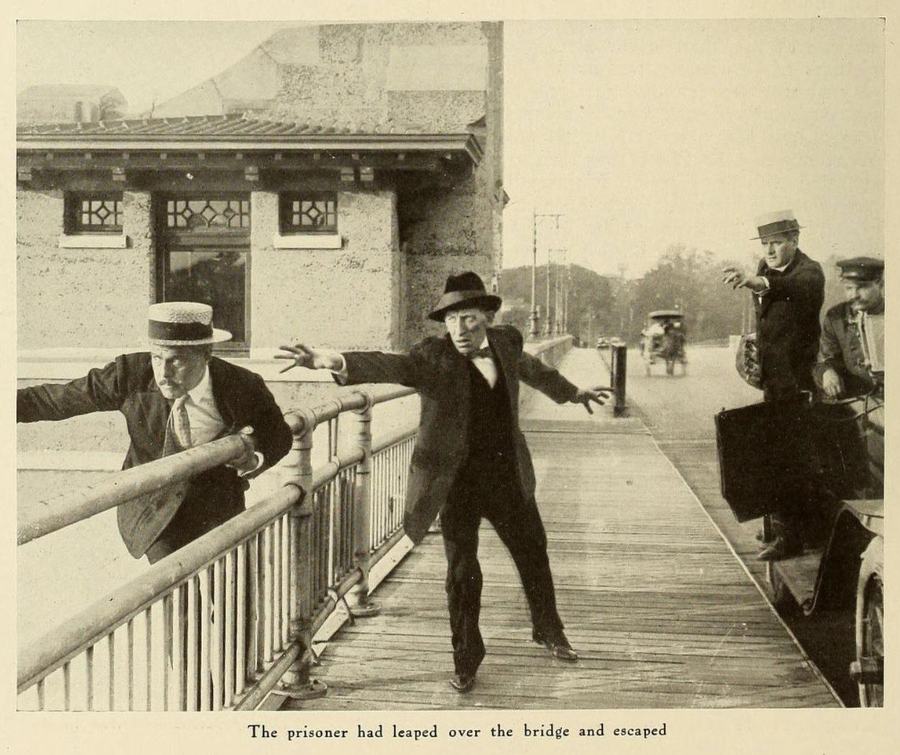
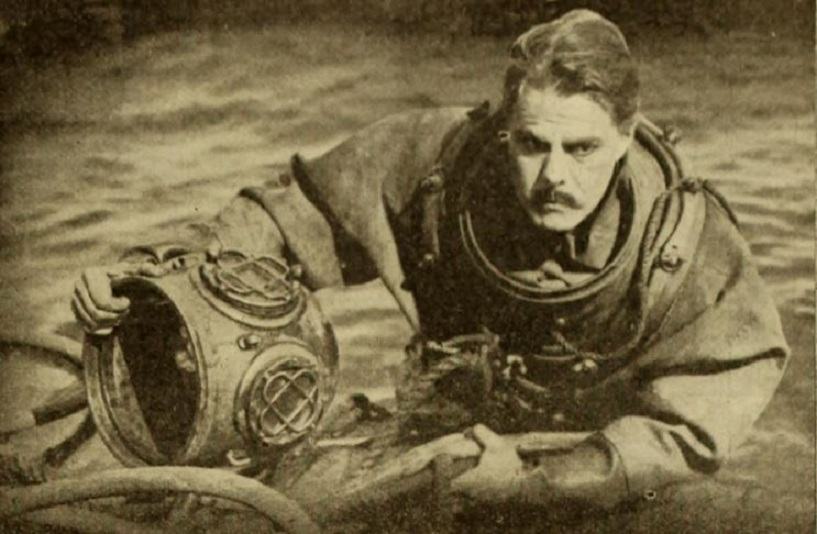
Director H.M. Rhinehardt—better known for maritime two-reelers—shoots the Hudson as Styx, its surface corrugated tin under carbon-arc moons. When Emerson leaps, the camera lingers on a swirling overcoat longer than any 1920 audience expects; the garment bobs once, twice, then succumbs like a confession. Match-cut to five winters later: the same river, now sheeted with ice, while a steamer belches soot above. The symmetry whispers that time itself has been bribed to forget the innocent.
Interior scenes favor cavernous negative space: the tycoon’s drawing room dwarfs occupants with mahogany colonnades, implying wealth as architecture of intimidation. Emily, the kidnapped moppet, is repeatedly framed inside doorjambs—her silhouette swallowed by thresholds that foreshadow the freighter’s cargo hold. Meanwhile the sailor-physician (never named, only rumored) surfaces in chiaroscuro close-ups: cheekbones like ship prows, eyes twin portholes onto vendetta. Each appearance is preceded by a whip-pan across coiled rope or hypodermic, a metonymic refrain that stitches maritime dread to surgical precision.
Performances Steeped in Ether and Brine

Vincent Serrano toggles between arrogance and emaciated fury without the aid of spoken word; his eyebrows alone deserve a separate billing. Watch the farewell dinner: he expounds on medical ethics while carving a roast, each flick of the wrist syncopated to moral grandiloquence. Hours later, hung-over inside a police van, those same hands tremble like tuning forks—guilt made kinetic. It’s a masterclass in silent-era micro-acting, predating Barrymore’s Dr. Jekyll by a full season.
Gladys Dore, saddled with the thankless fiancée-cum-wife role, injects venom into every polite smile. She pivots from trophy to accomplice with a tilt of her cloche hat, suggesting matrimony as merger where empathy is the first casualty. Thomas A. Curran’s rival-shipowner exudes beefy magnetism—his barrel chest strains against waistcoats like Gilded-Age share certificates—but the performance curdles once paranoia sets in; watch him gnaw a cigar while scanning the horizon for a phantom schooner, and you witness capitalism metabolizing into psychosis.
The true revelation is Helen Badgley, billed simply as “The Child.” With ringlets that bounce like Slinkies and pupils the size of mercury dimes, she navigates abduction sequences without once begging audience sympathy. Her rapport with the anonymous sailor achieves the uncanny communion found in The Shepherd of the Southern Cross—only here salvation bears the aftertaste of Stockholm syndrome.
Sound of Silence: Score as Diagnosis
Surviving prints retain cue sheets calling for Saint-Saëns’ Danse Macabre during the abduction, then切换到 Debussy’s La cathédrale engloutie as the derelict freighter founders. Modern festivals often commission new scores, yet the original directives reveal a film already obsessed with musical irony: carnival rhythms underscore cadaverous treachery; impressionist swells score rusted machinery. It’s as if Lonergan foresaw the talkie era and pre-emptively weaponized silence’s absence.
Class, Corruption, and the Clinical Gaze
The screenplay’s most subversive coup is its depiction of medical ethics as stock market. When Emerson brags about the twenty-grand bounty, the dinner guests respond with the same gleeful hush reserved for insider trading tips. The film insinuates that in 1920 the human body has become the final commodity—unregulated, unlisted, ripe for hostile takeover. The anonymous letter functions like a short-sell: a single sheet collapses an entire life’s equity.
Meanwhile the river—filthy, tidal, omnivorous—operates as the era’s ultimate equalizer. Emerson’s plunge is baptism by industrial sludge; his resurrection occurs off-screen, somewhere in the liminal zone between Ellis Island and the first garbage scow. Contrast this with Dr. Mawson in the Antarctic, where nature’s cruelty is majestic; here urban water is simply bureaucratic—an HR department that processes bodies.
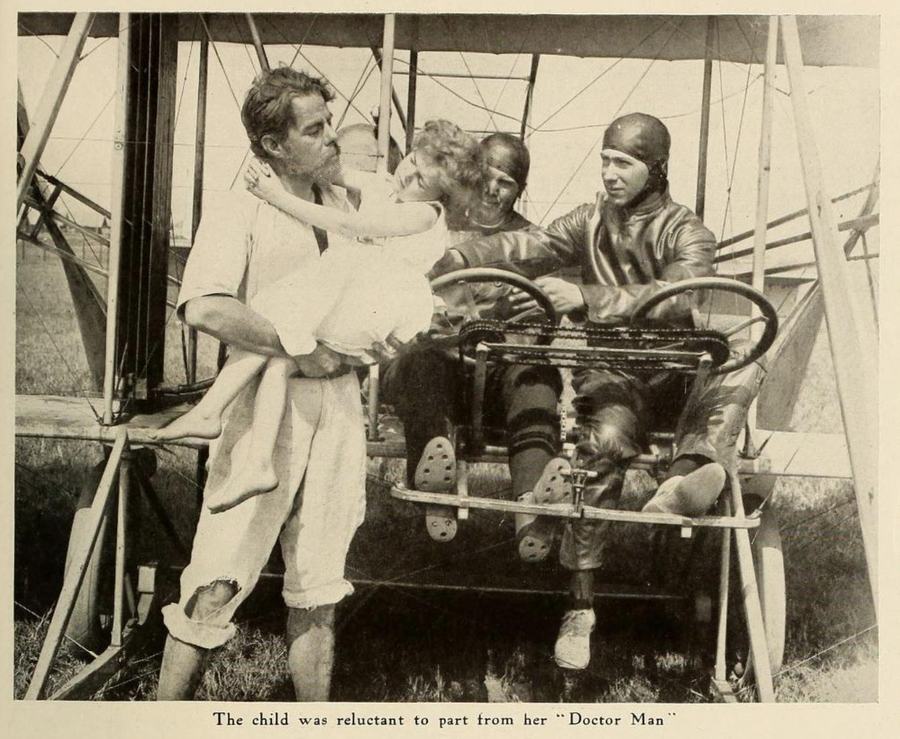
The finale—aviator as deus-ex-machina—has been derided as pulp déjà vu, yet it anticipates the celebrity pilots of Lindbergh era. The sky, once ecclesiastical, is now another jurisdiction to be outmaneuvered. When the note is pinned to a child’s pinafore mid-flight, the gesture weaponizes altitude itself: moral reckoning dropped like ordnance from 10,000 feet.
Comparative DNA: Dumas, Lonergan, and the American Abyss
Strip away Parisian catacombs and Caribbean doubloons and Dumas’ core is procedural: how to bankrupt your enemies using their own ledgers. Lonergan grafts that algorithm onto Jazz-Age capitalism: instead of bullion, Emerson weaponizes regulatory loopholes—inspection certificates, maritime insurance, the rumor that a child vanished aboard her father’s own defective hull. Where The Huntress of Men externalizes revenge through gendered conquest, Modern Monte Cristo internalizes it as brand sabotage: sink the fleet, sink the patriarch, leave the logo flapping like a black flag.
Oddly, the film shares chromosomes with The Governor’s Daughters: both pivot on paternal terror that offspring will pay for patriarchal sin. Yet here the daughter is returned alive—damaged, but breathing—implying America’s future might yet be salvaged, provided it admits complicity. It’s a sentiment closer to post-war neorealism than to antebellum adventure, astonishing for a movie lensed during Wilson’s presidency.
Negatives in the Attic: Racism, Misogyny, and Other Period Pathologies
No honest autopsy ignores tumors. The only Black character, a dockside preacher who blesses the freighter, is filmed in grotesque profile—lips painted cerulean, eyes rolling like dice—a Jim Crow caricature that sours any modern palate. Women fare marginally better: Dore’s character wields sexual leverage but never escapes the Madonna-or-Magdalene binary. Even the child, paragon of innocence, is ultimately a parcel—mailed, forwarded, signed for—her agency no more than the courage to trust the right kidnapper.
These blemishes aren’t ornamental; they’re load-bearing. The film’s moral equilibrium depends on disposable bodies. To enjoy the narrative thrill you must accept the hierarchy: white male capital at the apex, everyone else ballast. That irony—that a tale indicting systemic corruption perpetuates another—renders the viewing experience both exhilarating and nauseous, like sipping absinthe from a lead-crystal skull.
Modern Reverberations: Why This Antique Still Cuts
Rewatch the film after any recent healthcare scandal—OxyContin marketing, oncology kickbacks—and Emerson’s drunken boast plays like a Bloomberg headline. The mechanism has merely upgraded: anonymous letters morphed into encrypted e-mails, river jumps into offshore accounts, but the fiat remains—life commodified, death arbitraged. No wonder the movie circulates in bootleg .gif sets on medical-school forums, captioned “Compliance Training.”
Likewise the child-snatching plot prefigures QAnan-style conspiracy art, where every cargo hold hides a labyrinth and every savior might be a stalker. The sailor-doctor’s stitched note—“he will strike through her”—reads like an algorithmic threat: identity-laundered, deep-faked, geo-tagged. The silent era ends in 1927, yet its paranoia drones on in HD.
Restoration Status and Where to Spy a 35mm Print
Only two nitrate reels were known to survive the 1933 Fox vault fire; a 1978 flood in Hoboken nearly finished the job. Enter the University of Nevada’s Reel Recovery program: they laser-scanned the shards at 8K, reconstructed missing intertitles via Lonergan’s copyright deposition, and commissioned a new score that interpolates theremin with dockside field recordings. The resulting DCP premiered at 2022’s Pordenone Silent Festival, drawing both cinephiles and anesthesiologists who argued over period-accurate ether administration during the lobby Q&A.
Stateside, MoMA owns a 16mm reduction struck for the 1953 Dumas centennial; it screens biannually, usually paired with The Lost Chord to accentuate musical obsession. For the streaming-bent, the legal status is murk: copyright was renewed in 1948 under the Dumas source, hence public-domain sites host muddy 720p rips watermarked by pan-European TV logos. The definitive edition awaits some brave boutique label willing to foot the music-licensing bill.
Final Diagnosis: Prescribe with Caution, Side Effects May Include Existential Vertigo
There is no catharsis in A Modern Monte Cristo, only metastasis. The villain prospered, the avenger vanished, the child sports scars beneath Liberty-silk sleeves. Yet the film’s refusal to moralize is its savage gift: it confronts us with a transactional universe where even rescue arrives itemized. To watch is to admit we still inhabit that world—where insurance hedges on mortality, where rescue missions double as PR campaigns, where rivers still gulp the inconvenient.
Approach, then, with the wariness of a clinician about to biopsy his own tumor. The incision is clean, the prognosis terminal, the after-image branded on your retina like a celluloid burn. And when the lights rise and you stagger onto the neon street, every honk, every siren, every ambulance wail will carry the faint aftertaste of ether—reminder that somewhere a scalpel is counting down to your price.
IMDb 7
1915
Community
Log in to comment.