DbcultAccessing Vault...
Cult Review
Senior Film Conservator
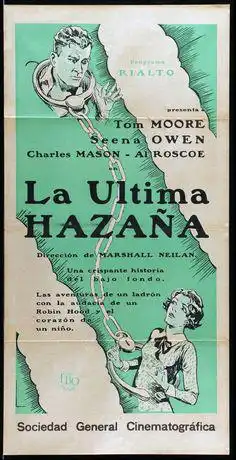
Is His Last Haul worth your time today? Only if you’re the kind of person who finds comfort in the specific, grainy shadows of late-1920s crime melodramas. If you’re looking for a tight, high-stakes heist movie, you’re going to be disappointed. It’s slow. It’s a bit sentimental. But if you like watching Tom Moore try to look conflicted while wearing very well-tailored suits, there’s a certain charm to it. Most people will probably find it a bit repetitive, especially since we’ve seen this 'one last job' trope played out a thousand times since 1928.
Tom Moore plays Joe, and he has one of those faces that was built for silent cinema—expressive, but in a way that feels like he’s constantly about to apologize for something. He’s a crook, but the movie goes out of its way to show us he’s a good crook. You know the type. He doesn't want to hurt anyone; he just happens to be very good at opening things that don't belong to him. When he meets Seena Owen’s character, the movie shifts gears into a romance that feels a little unearned. They look at each other, the music (if you’re watching a scored version) swells, and suddenly he’s ready to throw away a decade of safe-cracking. It’s fast, even for a silent film.
There is a scene early on in a hideout where the lighting is actually fantastic. It’s all harsh angles and deep blacks. It reminded me a bit of the atmosphere in Sealed Lips, where the environment seems to be doing more work than the script. You can see the smoke in the air—real smoke, probably from the crew off-camera—and it gives the whole thing a texture that modern digital films just can't replicate. But then the scene drags. They sit around talking (through title cards, obviously) for what feels like five minutes too long about the ethics of their trade. We get it, Joe wants out.
The child actor, Helen Parrish, is... well, she’s a child actor from 1928. She has this way of staring directly into the soul of the other actors that feels a bit like she’s waiting for her cue to go to lunch. There’s a moment where she’s interacting with Moore, and he looks genuinely terrified of her energy. It’s one of the few times the movie feels unpredictable.
I noticed a weird editing choice during the 'haul' itself. There’s a cut from Joe looking at a window to a close-up of his hands that feels completely disconnected, like the two shots were filmed weeks apart in different buildings. The geography of the house they’re robbing makes no sense. He enters through a balcony but somehow ends up in a basement? It’s the kind of thing you notice when the plot isn't quite tight enough to keep your brain occupied. It’s not as distractingly messy as Call a Cab, but it’s close.
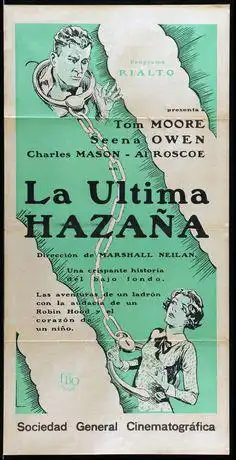
Seena Owen is fine, I guess. She has this one expression of 'pious concern' that she relies on heavily. It’s the same look my grandmother gives me when I tell her I’m still not married. It works for the character, but it doesn't leave much room for chemistry. When she and Moore are in a frame together, they feel like two people standing near each other at a museum rather than two people in love. There's more heat between Moore and the safe he's trying to crack.
Speaking of the safe, the 'tension' during the robbery scenes is pretty thin. In 1928, maybe the sight of a man turning a dial was heart-stopping, but here it just feels like he’s trying to remember a locker combination. The movie tries to convince you the stakes are life and death, but the pacing is so leisurely that you never really feel the heat. It’s a far cry from the tighter energy you see in something like Stage Struck, which at least feels like it’s moving toward a destination.
The writers—Randolph Bartlett, Scott Darling, and Louis Sarecky—seem to have been working from a checklist.
One thing that really stuck with me was the costume design for the gang members. They all look like they’re trying too hard to look like 'the help.' It’s a bit funny to see these guys in caps and rough jackets trying to blend into a high-society party. They stick out like sore thumbs, yet nobody in the movie seems to notice. It’s that classic movie logic where a character is invisible just because the script says they are.
The ending is a bit of a thud. It’s one of those 'all’s well that ends well' situations that feels forced. After all the buildup about the danger of the job, the resolution happens so quickly you might miss it if you blink. It lacks the punch of The Man Who Played God, which at least tries to leave you with something to think about. Here, you’re just left with the feeling that everyone went home, got paid, and moved on to the next production.
Is it a bad movie? No. It’s just a very '1928' movie. It’s caught in that transition period where the visual language of silents was peaking but the stories were starting to feel a bit tired. If you’re a fan of the era, the cinematography alone is worth a look. If you’re not, you’ll probably find yourself checking your watch—or your phone—by the forty-minute mark. It’s a haul, alright, but maybe not a 'last' one you'll remember for very long.
IMDb —
1920
Community
Log in to comment.