DbcultAccessing Vault...
6.7/10
Senior Film Conservator
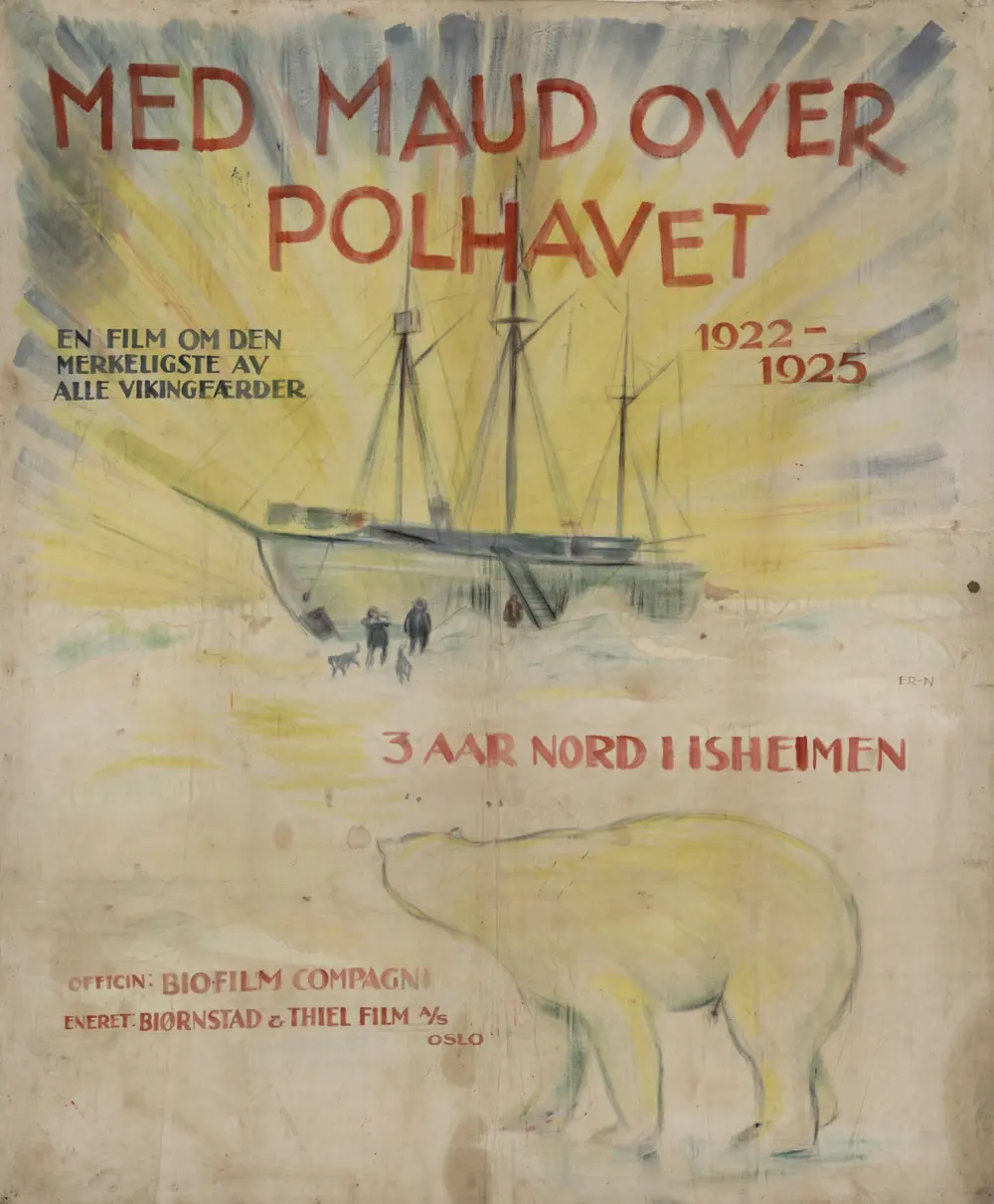
A definitive 6.7/10 rating for a film that redefined the boundaries of cult cinema. Med 'Maud' over Polhavet remains a cornerstone of transgressive art.
Can a century-old expedition documentary truly captivate a modern audience? The short answer is yes, but with significant caveats. While 'Med 'Maud' over Polhavet' offers an unparalleled, unvarnished glimpse into a monumental historical endeavor, its pacing and presentation are undeniably products of its era, demanding a specific kind of viewership.
This film is unequivocally for history buffs, enthusiasts of early cinema, and those fascinated by polar exploration and the sheer grit of human ambition. It is not for anyone seeking a fast-paced, character-driven narrative or a modern documentary's polished production values. Approach it as a living artifact, and its value becomes immeasurable.
Before delving into the technicalities, let's establish a foundational understanding of 'Med 'Maud' over Polhavet'. This is less a film in the contemporary sense and more an extraordinary collection of moving images, a visual diary compiled from the very heart of Roald Amundsen's audacious, and ultimately troubled, attempt to drift the ship Maud across the North Pole between 1922 and 1925. It is, by its very nature, a primary historical document.
The film works because it provides an unfiltered, immediate connection to a pivotal moment in exploration history. You are watching the actual people, on the actual ship, in the actual environment. It’s a raw, unmediated experience that modern documentaries, for all their sophistication, can rarely replicate.
This film fails because its lack of modern narrative structure and often rudimentary cinematography can make it challenging for contemporary viewers to engage with on a purely entertainment level. It demands patience and a willingness to interpret rather than be spoon-fed information.
You should watch it if you possess a deep appreciation for historical footage, are fascinated by the human spirit of adventure, or wish to understand the genesis of documentary filmmaking. It’s a window, not a ride.
The plot, as it exists, is simple: document the expedition. But within that simplicity lies a profound story of struggle. The Maud was not merely a vessel; it was a floating fortress designed to withstand the crushing pressures of the polar ice. The footage meticulously, if often repetitively, showcases the ship's journey, the crew's daily routines, and the overwhelming, desolate landscape they inhabited for years.
We see the men battling ice, conducting scientific observations, and attempting to maintain some semblance of normal life amidst extraordinary circumstances. There are moments of stark beauty, like the sun glinting off vast, pristine ice fields, juxtaposed with the grim realities of equipment failure, bitter cold, and the ever-present threat of the unpredictable Arctic.
The film doesn't shy away from showing the drudgery. This isn't a Hollywood adventure; it's a record of sustained hardship. One particular sequence, showing the crew attempting to free the ship from a particularly stubborn ice trap, highlights the sheer physical effort involved, the men like ants against a colossal, indifferent force.
Crediting a single 'director' in the modern sense for 'Med 'Maud' over Polhavet' feels anachronistic. What we witness is the work of expedition members, likely including Amundsen himself and his scientists, operating early motion picture cameras under the most brutal conditions imaginable. The 'directing' here is less about artistic vision and more about the practical decision of what to point the camera at and when.
Despite these limitations, the raw cinematography is its greatest strength. The images are often grainy, occasionally out of focus, and sometimes jumpy, but they are authentic. There's a particular shot of the Maud, dwarfed by towering ice floes, that conveys the immense scale of the Arctic in a way few studio-bound productions ever could. This isn't staged; it's simply *there*.
The choice of what to film – the scientific instruments, the dogs, the ice, the faces of the weary crew – speaks volumes about the priorities of the expedition. It’s a record, first and foremost, for posterity and scientific documentation, which gives it a unique, almost accidental artistic merit. Unlike, say, the more overtly propagandistic If the Huns Came to Melbourne, this film’s agenda is purely informational, making its visual impact feel more honest.
My surprising observation is how much personality emerges from the crew members, despite the lack of direct interviews or close-ups. Their interactions with the dogs, their shared laughter in moments of respite, and the quiet determination etched on their faces offer profound insights into the human spirit under duress. It's a testament to the power of observation, even without a formal narrative.
The pacing of 'Med 'Maud' over Polhavet' is glacial, mirroring the environment it depicts. This is not a criticism, but a simple statement of fact. There are long stretches dedicated to showing the ship moving slowly through ice, or the crew performing routine tasks. Modern audiences, accustomed to rapid cuts and constant narrative progression, will find this challenging.
However, this deliberate pace contributes significantly to the film's tone. It instills a sense of the immense scale of time and distance that defined polar exploration. You feel the isolation, the endlessness of the journey, and the sheer patience required to survive. There's an underlying tension, a constant awareness that disaster could strike at any moment, even in the mundane.
The tone is largely one of stoic determination, punctuated by moments of harsh reality and occasional, brief glimpses of camaraderie. There’s no manufactured drama; the drama is inherent in the situation. It’s a brutally simple depiction of a brutally difficult endeavor.
While the film doesn't focus on individual character arcs, the presence of the crew members, and indeed Amundsen himself, is central. We see them, bundled in furs, their faces often obscured by beards and hoods, but their movements and interactions convey a shared experience. There’s a palpable sense of teamwork and mutual reliance.
Amundsen’s own appearances are infrequent but impactful. He is depicted less as a heroic figure and more as a pragmatic leader, overseeing operations, always with a watchful eye on the unforgiving environment. His quiet authority is evident in his demeanor, a man utterly at home in the most extreme conditions.
The animals – primarily the sled dogs – play an equally vital role. Their resilience, their playful moments, and their crucial contribution to the expedition are documented with affection. The bond between men and dogs, essential for survival, is subtly but effectively conveyed.
The true value of 'Med 'Maud' over Polhavet' lies in its status as a historical artifact. It predates the modern documentary genre, offering a window into a time when film was still a nascent medium, its potential for documentation only just being explored. It’s a testament to the courage not only of the explorers but also of those who chose to bring a camera along to such a perilous journey.
This film isn't just about a polar expedition; it's about the very act of seeing and recording. It’s a foundational text for anyone interested in the history of exploration, the history of science, or the history of cinema. Its imperfections are not flaws, but rather genuine indicators of the challenges faced in its creation.
I firmly believe this film's historical significance outweighs any perceived cinematic shortcomings. To dismiss it based on modern aesthetic preferences would be to ignore a priceless piece of human endeavor and early filmmaking. It’s a film that demands respect, if not always immediate enjoyment.
To review 'Med 'Maud' over Polhavet' through a contemporary lens of cinematic excellence would be to misunderstand its purpose and its profound historical value. It is not a film designed for entertainment in the way we understand it today, but rather an indispensable visual record of human ambition, scientific endeavor, and the unforgiving grandeur of the Arctic.
While it demands patience and a willingness to engage with its archaic style, the rewards are considerable. It offers a rare, direct connection to the past, allowing us to witness, almost firsthand, one of the most audacious expeditions ever attempted. It works. But it’s flawed. Yet, its flaws are inextricably linked to its unique power.
A must-see for those who cherish history and the pioneering spirit, 'Med 'Maud' over Polhavet' is a foundational piece of documentary filmmaking that continues to resonate with its stark, undeniable truth. Its impact transcends mere cinematic critique; it is a vital chapter in the story of humanity's relentless push into the unknown.

IMDb 7.1
1933
Community
Log in to comment.