DbcultAccessing Vault...
Cult Review
Senior Film Conservator
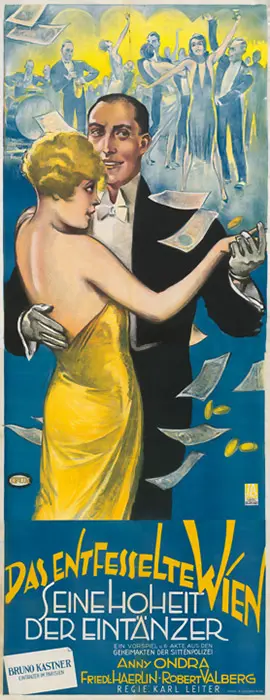
Is Seine Hoheit, der Eintänzer worth watching today? Short answer: yes, absolutely, but with specific caveats that will largely determine your enjoyment. This silent era drama is a fascinating window into early 20th-century European cinema, offering a unique blend of social commentary, romance, and an inventive use of visual storytelling that, while occasionally dated, still resonates.
This film is unequivocally for cinephiles, students of film history, and those with an appreciation for the nuanced artistry of silent performances. If you're someone who enjoys deciphering emotion through gesture and expression, and can forgive the occasional theatricality inherent to the period, you'll find much to admire. It is decidedly not for viewers seeking fast-paced plots, modern dialogue, or CGI spectacle; those expecting contemporary cinematic conventions will likely find its rhythm too slow and its dramatic flourishes too broad.
Walter Reisch’s 1927 silent drama, Seine Hoheit, der Eintänzer (His Highness, the Gigolo), unfolds a narrative steeped in the societal anxieties and romanticism of the interwar period. The film introduces us to Prince Rudolf (Cornelius Kirschner), a man born into privilege but now navigating the precipice of financial ruin. To sustain his aristocratic facade and, more importantly, to survive, Rudolf adopts a clandestine life as an 'Eintänzer' — a professional dance partner for hire in the opulent, yet morally ambiguous, ballrooms of Vienna.
This dual existence forms the core of the film's conflict. By day, Rudolf attempts to maintain the illusion of his noble standing; by night, he waltzes into the arms of society's wealthiest women, his charm a carefully constructed mask designed to conceal his true identity and his desperation. Reisch, through his writers, crafts a world where appearance is everything, and the line between genuine affection and transactional relationships is constantly blurred.
The plot thickens with the arrival of Liane (Anny Ondra), a vibrant, independent woman who embodies a new, more liberated spirit. Liane is drawn to Rudolf, not for his title, which she is unaware of, but for the inherent melancholy and grace she perceives in his movements. Their burgeoning romance is a delicate dance itself, perpetually threatened by the exposure of Rudolf’s secret profession. The film masterfully builds tension around the inevitable reveal, questioning whether love can truly flourish when built upon a foundation of deception and class-driven necessity.
I'd argue this film's true genius lies not in its grand narrative, but in its quieter, more intimate moments of character study, particularly in Kirschner's nuanced portrayal of a man trapped between two worlds.
This film works because of its surprisingly modern thematic depth and the compelling performances from its lead actors. The exploration of identity, class struggle, and the performative nature of society feels remarkably relevant even today.
This film fails because its pacing can feel sluggish by contemporary standards, and some of the melodramatic plot devices, while typical of the era, might test the patience of modern audiences. The narrative occasionally relies too heavily on convenient coincidences.
You should watch it if you have an interest in silent cinema, European history, or character-driven dramas that prioritize emotional expression over explicit dialogue. It's a must-see for fans of Anny Ondra and those curious about the early works of Walter Reisch.
The ensemble cast of Seine Hoheit, der Eintänzer delivers performances that are a testament to the power of silent acting. Cornelius Kirschner, as Prince Rudolf, embodies the tragic elegance of a fallen nobleman with remarkable subtlety. His posture, a blend of inherent regality and weary resignation, speaks volumes. In the ballroom scenes, his movements are fluid and precise, transforming him from a burdened prince into a charismatic 'Eintänzer,' his eyes conveying the loneliness behind the practiced smile. One particular moment, where he briefly catches his reflection in a polished floor, a fleeting look of self-disgust crossing his face before he recomposes himself, is profoundly impactful.
Anny Ondra, a genuine star of the era, shines as Liane. Her character is a breath of fresh air, imbued with a vivacity and independence that feels progressive for the time. Ondra's expressive face and dynamic physicality allow her to convey a wide range of emotions, from playful curiosity to profound heartbreak, without uttering a single word. Her scenes with Kirschner possess a palpable chemistry, built on longing glances and tentative touches, far more potent than any spoken dialogue could achieve. Her confrontation with Rudolf after discovering his secret, conveyed through a series of sharp, accusatory gestures and a single, tearful close-up, is a masterclass in silent dramatic acting.
Victor Kutschera, playing a rival or perhaps a friend-turned-antagonist, brings a necessary tension to the narrative. His more overtly theatrical style provides a stark contrast to Kirschner's understated portrayal, highlighting the different acting conventions prevalent in the silent era. The supporting cast, including Friedl Haerlin and Bruno Kastner, contribute to the vibrant tapestry of Viennese society, each actor, even in brief appearances, adding a distinct flavor to the film's rich atmosphere. The inclusion of the Wiener Staatsopernballett for the grand ballroom sequences is a stroke of genius, lending an authentic, breathtaking elegance to the pivotal dance scenes that are central to Rudolf's dual identity.
Walter Reisch, a prolific writer who also directed this feature, demonstrates a keen eye for visual storytelling, even in this relatively early directorial effort. His direction is characterized by a deliberate pace that allows the emotional beats to fully land. Reisch understands the power of the close-up, frequently employing it to capture the subtle shifts in his actors' expressions, drawing the audience into their internal struggles.
The cinematography, though uncredited, plays a crucial role in establishing the film's distinct atmosphere. The use of light and shadow, typical of German Expressionist influences of the period, is particularly effective in differentiating Rudolf's two worlds. The opulent ballrooms are often bathed in a soft, almost ethereal glow, emphasizing their dreamlike, deceptive nature. In contrast, scenes depicting Rudolf's private moments of despair or the grittier aspects of his life are often rendered in deeper, starker contrasts, creating a sense of isolation and moral ambiguity.
One particularly memorable sequence involves a tracking shot through a bustling Viennese street, showcasing the city as a character itself – vibrant, indifferent, and full of hidden narratives. This dynamic camera work, unusual for its time, lends a fluidity to the narrative that prevents the film from feeling static. The editing, while not as frenetic as some contemporary American productions, is precise, ensuring that each scene serves a clear narrative or emotional purpose. Reisch's ability to juxtapose the grandeur of the balls with the quiet desperation of his protagonist is a testament to his burgeoning directorial skill.
While often lauded for its technical ambition, I find its reliance on melodrama ultimately undermines its more poignant social commentary, pulling punches where a sharper critique might have served the story better.
The pacing of Seine Hoheit, der Eintänzer is undeniably a product of its time. It is a slow burn, allowing scenes to unfold deliberately, building atmosphere and character depth through extended takes and nuanced visual cues. For modern viewers accustomed to rapid-fire editing, this might initially feel sluggish. However, if one adjusts to its rhythm, the film rewards patience with a rich, immersive experience.
The tone is a fascinating tightrope walk between romantic melodrama, social satire, and moments of genuine pathos. Reisch manages to infuse the story with both a lighthearted, almost farcical charm in the ballroom sequences, where Rudolf's deceptions play out with a certain comedic elegance, and a deep undercurrent of tragedy. The contrast between the glittering surface of high society and the personal struggles beneath is expertly handled. The tone shifts seamlessly from the grand, sweeping gestures of romance to the quiet despair of a man losing his identity, a balance that speaks to the sophistication of early European cinema.
There are moments of genuine heartbreak, particularly when Rudolf's isolation becomes clear, contrasting sharply with the joyous energy of the dance. This tonal complexity is one of the film's greatest strengths, allowing it to transcend simple genre classifications and offer a more multifaceted viewing experience. It's a film that asks you to invest emotionally, to read between the lines of its silent narrative, much like Soul Mates did in its own exploration of romantic entanglements.
At its heart, Seine Hoheit, der Eintänzer is a profound exploration of class distinctions and the fluid nature of identity. Rudolf's transformation from prince to 'Eintänzer' is not merely a plot device but a metaphor for the societal pressures that force individuals into roles that may contradict their true selves. He is a man caught between the remnants of an old aristocratic order and the emerging realities of a more meritocratic, though equally judgmental, society. His struggle highlights the vulnerability of status and the human need for dignity, regardless of one's birthright.
The film also delves into the theme of deception and authenticity. Rudolf's entire existence is a lie, a performance designed to protect his pride and livelihood. This raises questions about what constitutes 'true' identity – is it birth, profession, or the choices one makes in the face of adversity? Liane, with her genuine nature, serves as a foil to Rudolf's carefully constructed facade, forcing him to confront the superficiality of his world and the profound longing for genuine connection.
Furthermore, Reisch subtly critiques the hypocrisy of high society, where wealth and status often mask moral failings and superficial relationships. The ballrooms, while beautiful, are also arenas of transaction and pretense, where emotions are often bought and sold. This social commentary, while not as overtly political as some German films of the era, is woven throughout the narrative, providing a rich subtext to the romantic drama. It's a testament to the film's enduring power that these themes remain relevant in our own stratified society.
Yes. But it’s flawed. For those willing to engage with its unique cinematic language, Seine Hoheit, der Eintänzer offers a rich and rewarding experience. It’s a beautifully crafted silent film that, despite its age, still possesses a compelling narrative and powerful emotional resonance. Its exploration of class, identity, and the masks people wear for survival is timeless. While the pacing might initially challenge viewers accustomed to modern films, the depth of character and the artistry of its visual storytelling make it a worthwhile watch for anyone interested in the history and evolution of cinema.
It stands as a testament to the sophistication of silent European cinema, showcasing a period when visual storytelling reached its peak. For instance, its nuanced character development, even without dialogue, can be compared to the subtle human drama found in early American films like Disraeli, though with a distinct Viennese charm.
Seine Hoheit, der Eintänzer is more than just a historical curiosity; it's a compelling piece of cinematic artistry that, despite its age, still has much to say about human nature and societal pressures. Walter Reisch, even in this early directorial venture, showcases a remarkable ability to craft a deeply felt narrative without the benefit of spoken dialogue. The performances are captivating, the themes resonant, and the visual storytelling often breathtaking. While it demands a certain patience and an open mind, the rewards are substantial. It’s a film that invites you to slow down, observe, and feel, much like the slow, deliberate steps of a Viennese waltz.
For those willing to embrace its unique charms, Seine Hoheit, der Eintänzer offers a profound and beautiful experience, a testament to the enduring power of silent cinema. It’s a film that deserves to be rediscovered, not just for its historical value, but for its timeless exploration of the human heart. It works. But it’s flawed. And those flaws, paradoxically, make it feel more human, more real, more like a forgotten treasure waiting to be unearthed. Give it a chance; you might just find yourself swept away by its quiet, elegant rhythm.
IMDb —
1934
Community
Log in to comment.