DbcultAccessing Vault...
5.8/10
Senior Film Conservator
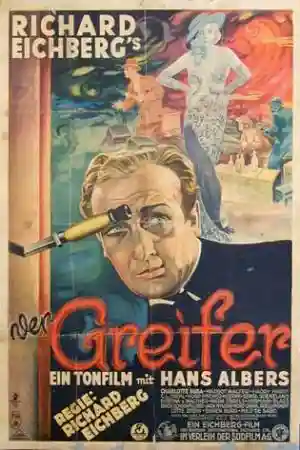
A definitive 5.8/10 rating for a film that redefined the boundaries of cult cinema. Der Greifer remains a cornerstone of transgressive art.
If you have any interest in German cinema history, you basically have to watch Der Greifer. It is the movie where Hans Albers stops being just an actor and becomes The Hans Albers. 🕺
Is it worth watching today? Honestly, yeah, but mostly if you like seeing a star being born. If you hate the static, stagey feel of early sound films where everyone shouts at the furniture, you might want to skip it. But for the rest of us, it is a fun ride.
Albers plays Sergeant Harry Limmer. He is a cop who does not really care about the rules, which feels like a trope now, but back in 1930, it felt fresh. He’s got this incredible swagger. He wears his hat at an angle that should be physically impossible.
The plot is a bit of a mess, to be fair. It is based on a play, and you can really tell. Most of the action happens in rooms where people stand around and talk about things that happened off-screen. It reminds me a bit of the pacing in The Hard Guy, where the dialogue carries way more weight than the actual movement.
Everything in this movie exists just to make Hans look cool. He walks into a bar, and the whole energy of the film shifts. It is not even that he is a 'good' actor in the traditional sense here. He’s just loud and confident and looks like he is having a better time than anyone else on set.
There is this one scene in a crowded club where he is trying to be undercover. He is about as subtle as a brick through a window. He’s grinning, leaning back, taking up all the space in the frame. You can almost see the other actors thinking, 'How am I supposed to compete with this guy?'
The female lead, Hertha von Walther, does her best, but the script doesn't give her much. She’s mostly there to be worried. It’s a bit like the dynamic in Brothers, where the supporting cast is just kind of... there to react to the main guy's drama.
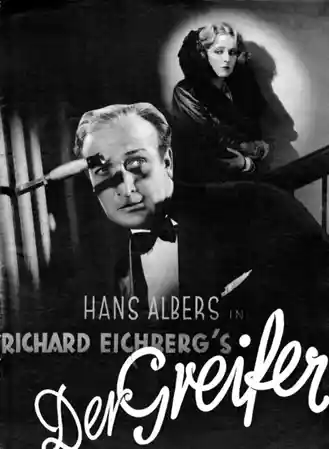
You can tell the crew was still figuring out microphones. Sometimes a character will walk two steps to the left and their voice suddenly sounds like they are shouting from underwater. 🌊
There’s a lot of clunking. Every time someone sets a glass down on a table, it sounds like a car crash. It’s charming in a way. It makes the movie feel very physical, very real, even when the acting is a bit over the top.
The pacing is... let's say 'leisurely'. There is a long stretch in the middle where they just talk about a character named 'The Ringer' (this is based on an Edgar Wallace story) and it starts to feel a bit like a radio play. I found myself looking at the background extras instead. Some of them look genuinely confused about where they are supposed to stand.
It’s a lot less polished than something like The City of Beautiful Nonsense, but it has way more teeth. It’s grittier. Or at least, it tries to be gritty between the musical numbers. Oh yeah, there are songs. Because it’s 1930 and you couldn't have a movie without a song back then.
The ending comes out of nowhere. It’s very abrupt. One minute they are chasing the guy, the next minute—bam, it’s over and everyone is happy. It lacks the slow build you see in something like The Last Trail, but I didn't mind. I was ready for a snack anyway.
Is it a masterpiece? No way. But it’s a vibe. It’s the kind of movie you put on a rainy Sunday when you want to see a guy in a great coat be smarter than everyone else in the room. It feels human and messy and loud. 🍺
If you want to see where the 'tough guy' archetype in German film really started, this is the blueprint. Just don't expect a tight plot. Expect Hans Albers being Hans Albers. And really, that’s enough.
IMDb —
1919
Community
Log in to comment.