DbcultAccessing Vault...
Cult Review
Senior Film Conservator
Stepping back into the nascent days of moving pictures, "Love's Reward" emerges as a delightful relic, a testament to the burgeoning narrative sophistication and comedic timing that characterized early 20th-century cinema. Released in an era when film was rapidly evolving from mere novelty to a potent storytelling medium, this picture, while modest in its ambition, encapsulates a fascinating blend of slapstick, romance, and unexpected heroism. It's a charming glimpse into the tropes and archetypes that would come to define popular entertainment for decades, rendered with an endearing earnestness that contemporary audiences might find both quaint and utterly captivating.
At its core, "Love's Reward" spins a tale as old as time, albeit with a uniquely cinematic twist. We are introduced to a hotel clerk, a young man whose professional duties are apparently overshadowed by his amorous inclinations. His object of affection? The daughter of the hotel's proprietor, a figure of patriarchal authority whose temper is as fiery as his sense of ownership. The narrative catalyst arrives in the form of the inn's "Hawkshaw," a busybody whose tattling leads to the clerk's swift and unceremonious dismissal. This initial conflict sets the stage, highlighting the rigid social hierarchies and the often-farcical nature of romantic pursuits in a constrained environment.
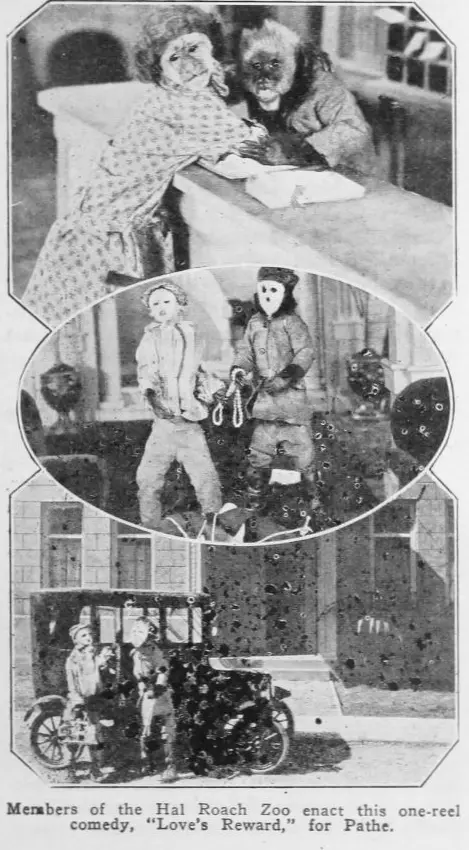
However, our protagonist is not one to be easily deterred. His banishment from the hotel only fuels his resolve, transforming him from a mere employee into a determined suitor. His dramatic return involves scaling a water pipe, a quintessential silent film trope that immediately signals both his daring spirit and the comedic undertones of his quest. It's an act of romantic derring-do that simultaneously evokes laughter and admiration, a perfect encapsulation of the era's storytelling sensibilities. This kind of physical comedy and escalating stakes can be seen in other contemporary works focusing on daring escapes or unlikely heroes, perhaps even finding distant echoes in the more dramatic "The Skipper's Narrow Escape" or the adventurous spirit of "The Sea Wolf" (1920), albeit with vastly different tonal registers.
The plot then takes an abrupt, yet surprisingly seamless, turn from romantic escapade to high-stakes thriller. As our agile hero ascends the building, he stumbles upon a far graver peril. Two nefarious villains, having successfully pilfered the hotel safe, are now threatening the irate proprietor with dynamite. It's a sudden escalation, a narrative pivot that transforms the lovelorn clerk into an accidental savior. This juxtaposition of a personal romantic quest with a public, life-threatening danger is a stroke of genius, allowing the film to explore multiple facets of heroism without feeling disjointed. The clerk's immediate transition from hopeful eloper to quick-thinking guardian is remarkably effective, making him a ready-made hero precisely when one is most needed.
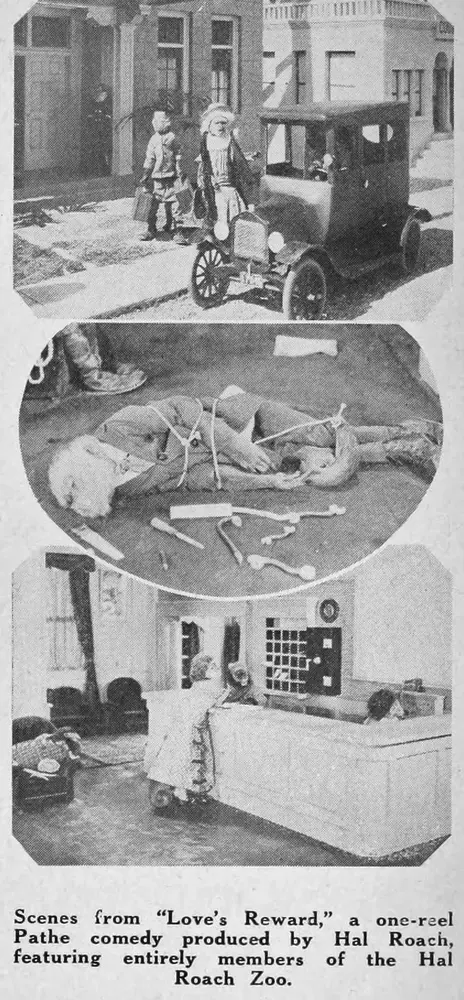
The resolution is swift and, as the title suggests, rewarding. The thwarted villains, the saved proprietor, and the grateful daughter converge in a conclusion that solidifies the young man's newfound status. His reward is the hand of the daughter, a classic romantic payoff. Yet, the script injects a delightful ambiguity with the phrase, "or is it the paw," hinting at a possible comedic twist or an anthropomorphic element that, while not explicitly detailed in the synopsis, adds a layer of whimsical intrigue. This playful uncertainty is a hallmark of early cinema's willingness to experiment with narrative conventions and inject humor into even the most earnest of resolutions.
While specific directorial credits or a full cast list beyond Len Powers are not provided, the film's success hinges significantly on the performance of its lead. Len Powers, a figure whose contributions to early cinema often warrant deeper exploration, likely embodies the archetypal silent film hero – expressive without words, capable of both physical comedy and dramatic gravitas. In a medium where exaggerated gestures and facial expressions were paramount, an actor like Powers would have been crucial in conveying the clerk's journey from romantic dreamer to valiant protector. His ability to switch between the playful flirtation, the determined lover scaling the wall, and the quick-witted hero disarming villains would have been central to the film's appeal. The nuanced portrayal of such a character, even within the broad strokes of silent acting, separates memorable performances from the merely functional. We can imagine Powers bringing a certain youthful exuberance to the role, making his character's plight and eventual triumph all the more engaging for the audience.
Considering the technological constraints and nascent artistic vocabulary of the era, "Love's Reward" likely showcases the ingenuity inherent in early filmmaking. Without the luxury of sound, filmmakers relied heavily on visual storytelling: expressive intertitles, dynamic staging, and carefully composed shots to convey emotion, plot points, and

IMDb 5.3
1935
Community
Log in to comment.