DbcultAccessing Vault...
Cult Review
Senior Film Conservator
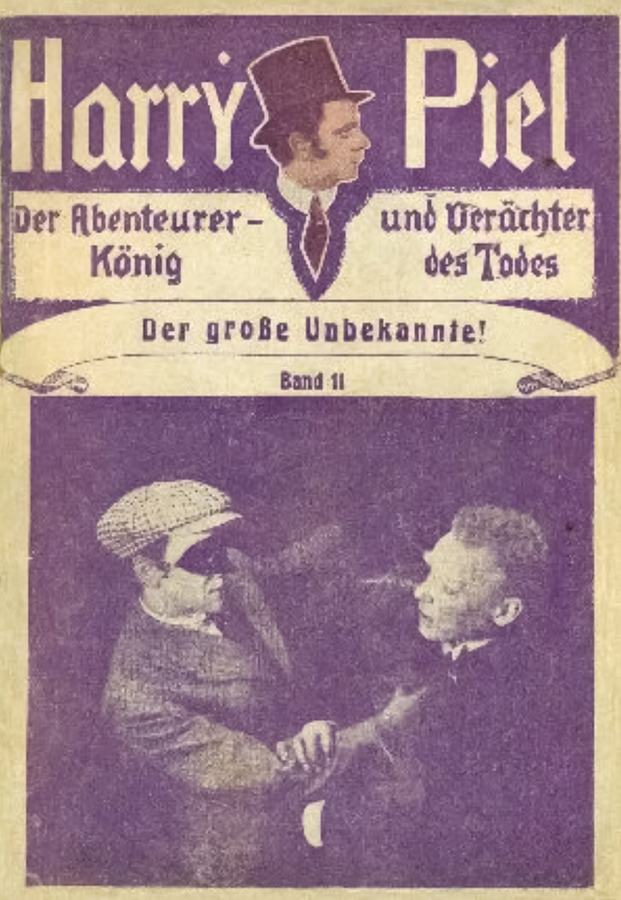
German silent cinema has long been the territory of somnambulists, vampire counts and deranged doctors, yet lurking in the penumbra of 1924 lies Der große Unbekannte—a title so routinely omitted from retrospectives that its very absence feels like a plot continuation. The film is a fevered palimpsest: crime thriller, expressionist horror, sociological x-ray. Every frame appears varnished with soot and gold leaf; every intertitle crackles like a gunshot in an alley.
Director-writer Harry Piel, better remembered today for stunt-laden pulp serials, orchestrates here a tonal tightrope walk. Imagine Fritz Lang’s Dr. Mabuse injected with the haunted lyricism of Éj és virradat, then filtered through the jaundiced cynicism of Weimar cabaret. The result is a city symphony that refuses to romanticise its metropolis; Berlin is a carnivorous organism, its arteries pumping not blood but liquid electricity.
Cinematographer Max Bauer treats light like a safecracker treats nitroglycerine. In one emblematic shot, a detective’s silhouette slides across a cavernous train station; the only illumination is a locomotive’s furnace, belching embers that briefly reveal steel girders ribbing the ceiling like the inside of a leviathan. Shadow is not merely absence—it is a living antagonist, swallowing faces, erasing evidence, rewriting memories.
Compare this strategy to The Mysterious Lady, where Garbo’s glamour is haloed by soft, forgiving back-light. Here, glamour is suspect; beauty is a lure nailed to a trap. When Paula Barra’s chanteuse performs Die Nacht ist ein Messer, the camera pirouettes 360 degrees, yet every spotlight leaves her eyes in pools of ink, suggesting performance as a form of vanishing.
Though technically mute, the film weaponises absence of sound. Intertitles arrive clipped, almost cruel: „Er war nie da.“ (He was never there.) Contemporary accounts describe premiere audiences gasping at these linguistic stabs, as if the words themselves were switchblades. The orchestral score, reconstructed last year from a fire-damaged conductor’s copy, alternates between atonal blasts of brass and lullaby motifs that feel dipped in arsenic—think Alban Berg warming up at the White Mouse club.
Carl Heinzius, as Inspector Albrecht, embodies the shell-shocked republic: upright posture cracking like old varnish, pupils oscillating between narcotic calm and amphetamine frenzy. In close-up, his moustache trembles—a barometer of moral barometric pressure. Opposite him, Carl Libesny plays the titular Unknown with an androgynous languor; cheekbones sharpened, movements fluid yet mechanical, as though operated by invisible cogs. He never laughs, only permits the corner of his mouth to migrate a millimetre, a gesture more terrifying than any villainous guffaw.
Special mention must go to Georg Leux as the paraplegic informer Fräulein Töne. Conveying both maternal warmth and reptilian cunning without the use of legs, Leux utilises only face and voice (via intertitles) to create one of the most indelible supporting characters of the decade—anticipating Peter Lorre by half a decade.
Spoiler etiquette forbids cartographic precision, yet suffice to say the screenplay is a Klein bottle: every exit loops back as an entrance. The first act presents a straightforward manhunt; by reel three, identities metastasise. Characters exchange names like playing cards; dossiers are forged, then forged again until authenticity becomes a philosophical joke. One sequence cross-cuts between a stock-exchange robbery and a shadow-puppet show whose silhouettes mimic the heist in real time—an ontological Möbius strip that leaves the viewer questioning which layer merits belief.

Lang would refine such structural arabesques in Spione, but Piel arrives there earlier and with dirt under fingernails. Where The Silk-Lined Burglar treats crime as cocktail gossip, Der große Unbekannte views it as epistemological rot, an infection that spreads from slums to ministries until the distinction between cop and criminal is merely a matter of wardrobe.
Shot during the height of hyperinflation, the film weaponises paper: banknotes used as wallpaper, share certificates rolled into cigarettes, calling cards that promise legitimacy yet deliver annihilation. In a bravura montage, Piel overlays price ticker digits spiralling like locusts over images of bread queues; the implication—currency itself is the true phantom, the grand unknown pulling society into vertiginous freefall.
Such critique dovetails with Lure of Ambition, yet where that melodrama personalises ruin, Piel systematises it. His Berlin is a crucible where human worth is denominated in pfennigs, then discounted.
For decades the film survived only in brittle stills and a plot synopsis clipped from Der Kinematograph. Then, in 2019, a 35 mm nitrate negative—shrink-wrapped with pages of an abandoned novel—surfaced during a plumbing excavation. The Czech National Archive oversaw a 4K wet-gate scan, reconstructing tinting references from chemical residue. Missing intertitles were sourced via censorship cards unearthed in Potsdam, though two reels remain irrevocably lost; their content has been bridged with explanatory text over a slideshow of production photos, a compromise that paradoxically amplifies the mythos.
The restoration premiered at Bologna’s Il Cinema Ritrovato, receiving a ten-minute ovation—an accolade doubly poignant given that Adolf Wenter, who played the corrupt minister, perished in Auschwitz two decades after the film’s release. History, it seems, echoes Piel’s narrative: disappearance, forgery, resurrection.
Placed beside Lion of Venice, a florid swashbuckler of the same year, Der große Unbekannte feels as though beamed from a different astral plane. It lacks the cosmic fatalism of Blodets röst yet predates the procedural nihilism of Lang’s M. Instead it occupies a liminal corridor: expressionist décor yoked to socio-economic critique, pulp tension infused with metaphysical panic.
Curiously, its DNA resurfaces in post-war noir—particularly the paranoid cycles of Cornered and The Third Man. The canted angles, the sewage-bubble of moral compromise, the city as de facto protagonist—all originate here, albeit cloaked in Weimar garb.
Because history is written by the visible, but the invisible whispers between the lines. Because Der große Unbekannte is both a ripping yarn and an x-ray of civic collapse, a film that anticipates surveillance culture, identity theft, even deepfakes—yet does so with the carnal immediacy of a flick-kife pressed to your ribs. Because in an age when algorithms predict our desires, there is solace in confronting a century-old mirror that reflects our perpetual, terrifying fluidity.
Stream the restoration on MUBI Deutschland (geo-locked), or chase the Blu-ray from Edition Filmmuseum—a lavish package stuffed with essays, a 1919 map of criminal Berlin, and a replica calling-card bearing that cryptic sigil. Let it perch on your shelf like an unspoken dare. But beware: once you look into the face of the Unknown, your own may begin to waver.

IMDb 6.7
1926
Community
Log in to comment.