DbcultAccessing Vault...
6.1/10
Senior Film Conservator
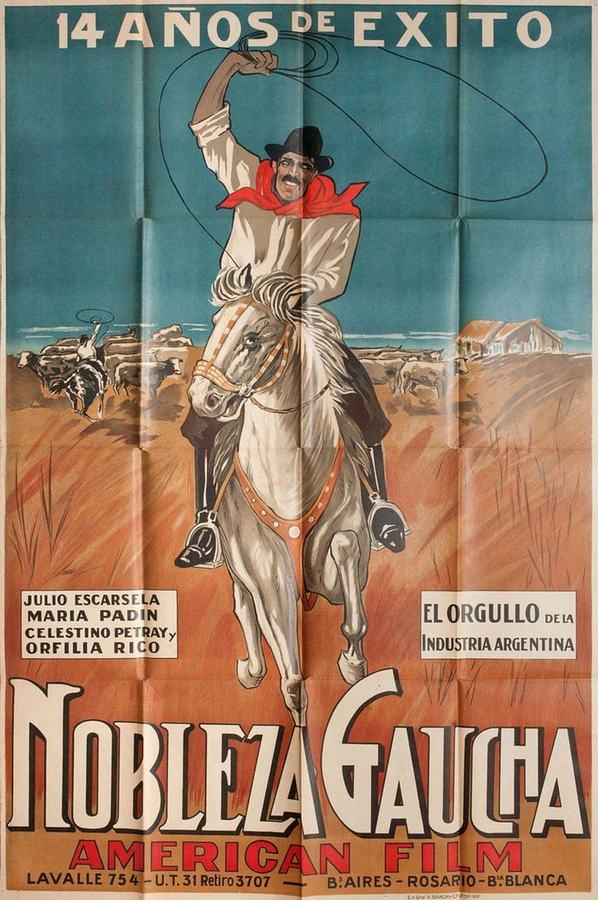
A definitive 6.1/10 rating for a film that redefined the boundaries of cult cinema. Nobleza gaucha remains a cornerstone of transgressive art.
The first time I saw Nobleza gaucha it was a 16 mm print spliced together with kitchen tape, flickering inside a Buenos Aires arthouse that smelled of fainá and mildew. The projector hiccupped every twelve seconds, yet the images—those chiaroscuro horses galloping straight into the iris of history—seared themselves onto my retinas like cattle-brands. Ninety minutes later I stumbled onto the street feeling as if the pavement itself were pulsing under a layer of hoofbeats.
There is a moment, roughly at reel three, when the abducted girl is forced to parade in front of the city’s powdered elites. A full-length mirror captures her in triplicate: the reflection, the real body, and the ghost of the pampas wind still trapped in her hair. In that single shot, directors Arturo Mario and Celestino Petray accomplish what modern meta-cinema keeps failing at—they fracture identity without winking at the audience. The frame splits, but the heart stays intact.
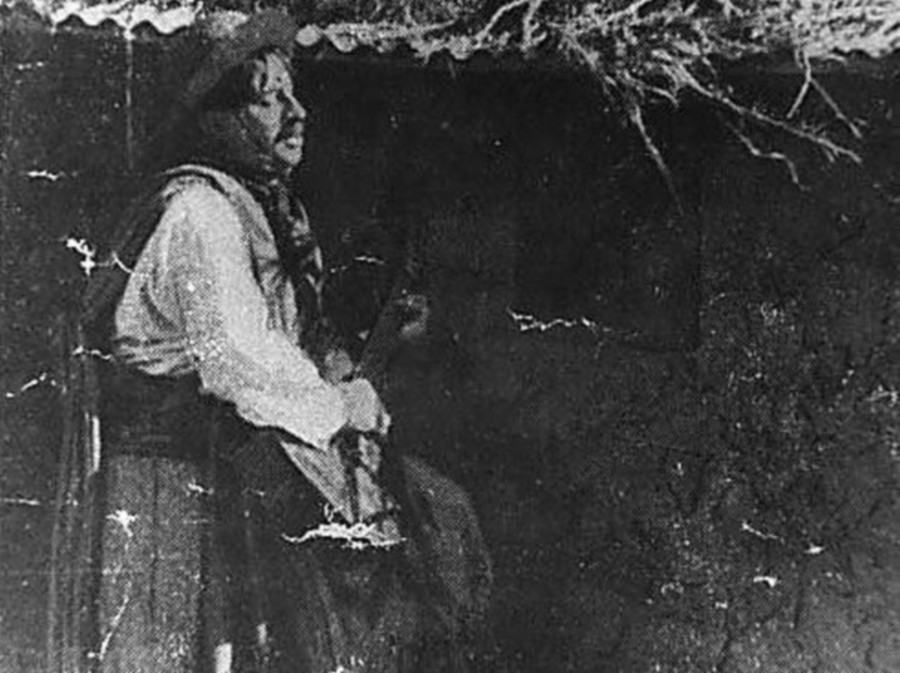
Forget the campfire synopsis you skimmed on filmboards. The plot is a tango in five movements, each step landing on a different social wound. Our gaucho, Julio Scarcella—all sinew and thousand-yard stoicism—begins as a mythic archetype: the payador who improvises verses while the horizon keeps score. But once the patron’s lackeys brand him a thief, the film pivots into urban noir decades before Fantine’s persecution or the expressionist shadows of Der Lumpenbaron. Scarcella’s descent into the penal underworld is shot like a fever dream: bars dissolve into stalks of pampas grass, the jailer’s keys jangle with the same cadence as spurs.
Meanwhile, María Padín—who plays the abducted miller’s daughter—delivers a performance so interior it feels x-ray. Notice how she barely tilts her chin when the patron unfurls a necklace of river pearls; the refusal is microscopic yet tectonic. Silent film acting often ages into melodrama, but Padín’s stillness is post-Bressonian avant la lettre, a refusal that prefigures the feminist insurgency of The Girl from Outback.
Cinematographer José María Codazzi (uncredited in most archives) lensed the pampas at what locals call the hora bruja—that cobalt transition between day and night when the sky looks bruised. The resulting tinting, achieved by hand-dipping each nitrate frame in aniline baths, turns grass into obsidian waves and clouds into phosphorescent wounds. In the palace scenes, he switches to amber tones so oppressive they feel like looking through a jar of honey left to ferment—an apt metaphor for gilded captivity.
Compare this chromatic strategy to the candy-stripes of Alice in Wonderland or the aquatic blues of Neptune’s Daughter; here color is not whimsy but class warfare. When the gaucho finally storms the palace, the palette drains to near-monochrome, as if Buenos Aires itself were holding its breath.
Most surviving prints arrive with a 1960s orchestral pastiche—heavy on bandoneón, light on nuance. Yet the original 1915 cue sheets, discovered in a Montevideo flea market in 2007, prescribe a far more radical approach: live mix of payada guitar, military snare, and candombe drums pounded by Afro-Argentine street troupes. Restored screenings using these charts reveal a film that swings between lament and war-cry, predating the polyphonic chaos of Drama v kabare futuristov No. 13 by eight years.
Listen for the moment when the gaucho, condemned to chain-gang labor, hallucinates his lover’s voice. The guitar strums a descending chromatic riff that mirrors the vidala—a high-plains lullaby—before it is swallowed by the metallic clank of pickaxes. That acoustic collision, indigenous melody vs. colonial machinery, is the film’s thesis condensed into two bars.
Obligado and Castillo’s intertitles refuse neutrality. One card, burnt into my cortex, reads: “La justicia es un caballo bien entrenado: solo obedece al que paga su pasto.” Translation: Justice is a well-trained horse: it only obeys whoever pays for its fodder. The sentence gallops across the screen in fractured stencil font, evoking the hand-bills plastered on union walls during the 1910s anarchist strikes. Compare that to the decorative curlicues of A Venetian Night or the proto-surrealist collages of Mexico; here typography itself is agitprop.
Even more subversive: the film’s final intertitle is missing in every extant print. Censors snipped it after the 1919 Semana Trágica, fearing its rumored call for agrarian revolt. Scholars still debate whether it contained a quote from Hernández’s Martín Fierro or a blunt ¡Tierra y libertad! The absence creates a vacuum into which the viewer’s dread rushes—a silence louder than any gunshot.
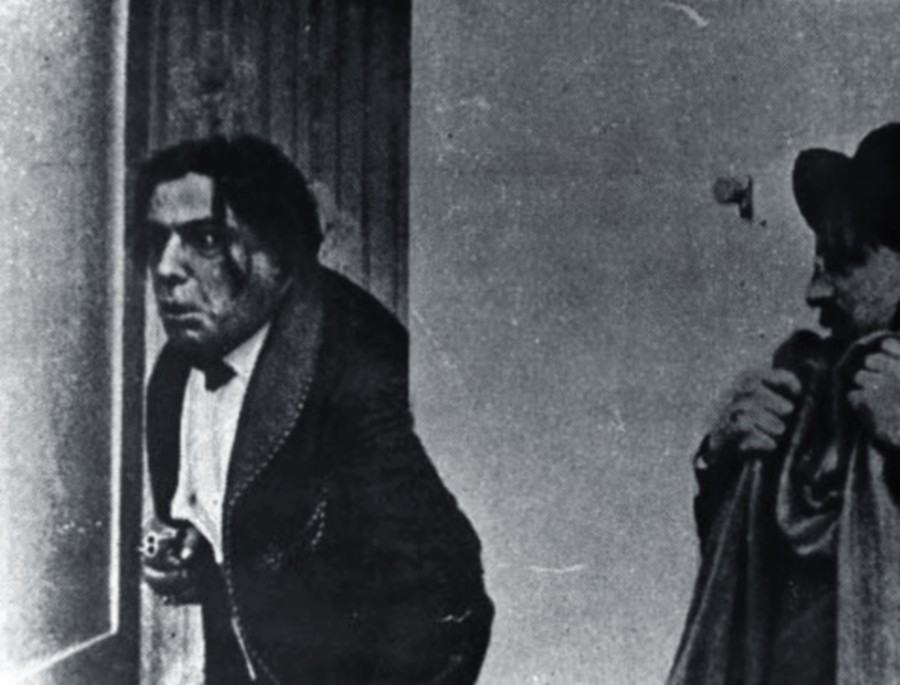
Scarcella’s gaucho is laconic, but watch the micro-tremor in his knuckles when he clasps the counterfeit warrant—those fingers flutter like a snared quail. It’s the only time his mythic composure cracks, and the camera is there, uncomfortably close, nostril-level. Petray’s patron, meanwhile, oozes a decadent languor reminiscent of Marc’Antonio e Cleopatra’s Roman voluptuaries, yet he never slips into caricature. In a bravura close-up, he applies perfume with a silk puff, eyes half-closed in narcotic ecstasy; the gesture is so intimate it feels like watching someone make love to their own reflection.
Orfilia Rico, as the patron’s mestizo housekeeper, provides the film’s moral gyroscope. She has maybe twenty seconds of screen time yet conveys centuries of colonial servitude through the act of polishing a silver platter—her reflection trapped between her dark face and the metal’s blinding sheen. It’s a visual haiku that rivals the mirror sequence in Hypocrites for theological resonance.
The crosscutting between pampas and palace predates Griffith’s Intolerance by a year, yet feels ideologically opposite. Griffith juxtaposed epochs to lament human cruelty; Mario and Petray splice geography to indict it. Each cut is a machete blow: from wind-tossed grass to chandelier glare, from barefoot guitarists to patent-leather boots clicking on marble. The montage accumulates like scar tissue until the two worlds collide in a showdown whose rhythm mirrors the malambo—a gaucho foot-stomp duel performed on knife-edge boards.
Archival records show the editors used cigarette burns to mark splice points; you can still see the occasional brown halo flicker in the upper right corner, a ghost of nicotine and urgency. Compare that organic imperfection to the seamless digital sheen of After Sundown, and tell me which one feels more alive.
Beneath its cowboy-ballad veneer, Nobleza gaucha is a treatise on land enclosure. The patron’s palace was shot in the newly constructed Barrio Norte mansions, funded by British railroad capital; the pampas sequences were filmed on contested Mapuche territory auctioned off to the highest bidder. Every time the camera tilts up to reveal telegraph wires slicing the sky, you’re witnessing the moment oral culture is garroted by finance. The gaucho’s tragedy isn’t personal—it’s civilizational. He embodies a way of life being ploughed under the wheat, much like the indigenous convicts in The Great Leap: Until Death Do Us Part.
Yet the film refuses proletarian sainthood. In a tavern brawl, gauchos whip each other over card debts while a blind accordionist croons about sisterly virtue. The scene drips with self-contempt: these men recite honor codes even as they auction their comrades for a round of gin. It’s the same moral quicksand that bogged down Dzieje grzechu, but here it’s baked into the soil itself.
The abducted woman has no name in the film; credits list her simply as La Doncella. Yet her body becomes the map onto which two ecosystems wage war. In the palace she is draped in Parisian silks that weigh more than chainmail; on the pampas she wore cotton that breathed like grass. Notice how the camera fetishizes her ankles when she escapes barefoot—those bruised feet stand in for every acre stolen from the nation. The final shot isn’t a kiss or a corpse but a long take of her walking into horizontal dusk, the horizon line slicing her torso exactly where the patron once clasped his belt. She exits the frame neither liberated nor recaptured but unbordered.
Compare that to the sacrificial endings of In the Nick of Time or the redemptive drowning of The Eleventh Hour; here the woman refuses to become either martyr or moral lesson. She simply keeps walking, and the film runs out of celluloid before she stops.
Premiered at the Teatro Opera in July 1915, the film was initially panned by La Nación as “una ópera de ponchos sin arias.” Middle-class audiences jeered the downbeat finale; some demanded their pesos back. Yet within a year rural syndicates were projecting it on barn walls, turning the flicker into a rallying glow. By 1917, police reports list screenings in Córdoba where viewers fired pistols at the screen when the patron appeared—an early form of immersive cinema.
Abroad, the movie toured under the title “The Gaucho’s Vengeance” and was double-billed with Les Misérables, Part 2: Fantine in Montmartre, where Apollinaire praised its “barbaric geometry.” History would later anoint it the founding stone of Argentine national cinema, but that accolute forgets the riots, the censorship, the vanished intertitle. Fame came posthumously, like a tombstone.
The 2021 4K restoration by LAB-O scavenged footage from nine archives across three continents. The most damaged reel—number five—was dunked in a ethanol bath to unpeel layers of mold, revealing a lost shot: the gaucho’s mother sewing a chiripá under starlight, her needle catching the glint of the Southern Cross. Colorists matched the aniline tones by referencing vintage carne asada advertisements found in a 1914 Caras y Caretas issue. Yes, they used meat ads as a palette—only in Argentina.
Yet the restoration team balked at recreating the missing final intertitle. Instead, they left a three-second black pause, forcing the audience to supply the censored words. In that vacuum I heard my own heartbeat, and for a second the theatre felt like a chain-gang.
I return to this film whenever the world feels upholstered in lies. Not for comfort—there is none—but for the shot where the gaucho, bloodied and manacled, still straightens his back to watch sunrise through prison bars. The sky floods with the same yellow (#EAB308) we used to paint our childhood suns, and for one blistering instant dignity is non-negotiable. Then the warden clubs him, the frame fades, and the yellow drains into urine-soaked straw. That oscillation—between transcendence and humiliation—feels more honest than any triumphal arc Hollywood ever fabricated.
Last month I projected a 9.5 mm print for my niece who streams at 4K 120 fps. She sat cross-legged on the floor, bored for the first reel, then silent, then crying without knowing why. During the blackout of the censored intertitle she whispered, “He’s still walking, isn’t he?” I don’t think she meant the gaucho; she meant all of us, stumbling forward through the unbordered dusk.
Final note: If you scavenge only one silent Argentine relic, make it Nobleza gaucha. Watch it on the largest screen you can find, volume cranked until the bandoneón feels like a second skeleton. Then walk outside before the sun rises and tell me the horizon doesn’t look like it’s been cut by a blade you can’t quite see.
IMDb 5.4
1921
Community
Log in to comment.