DbcultAccessing Vault...
Cult Review
Senior Film Conservator
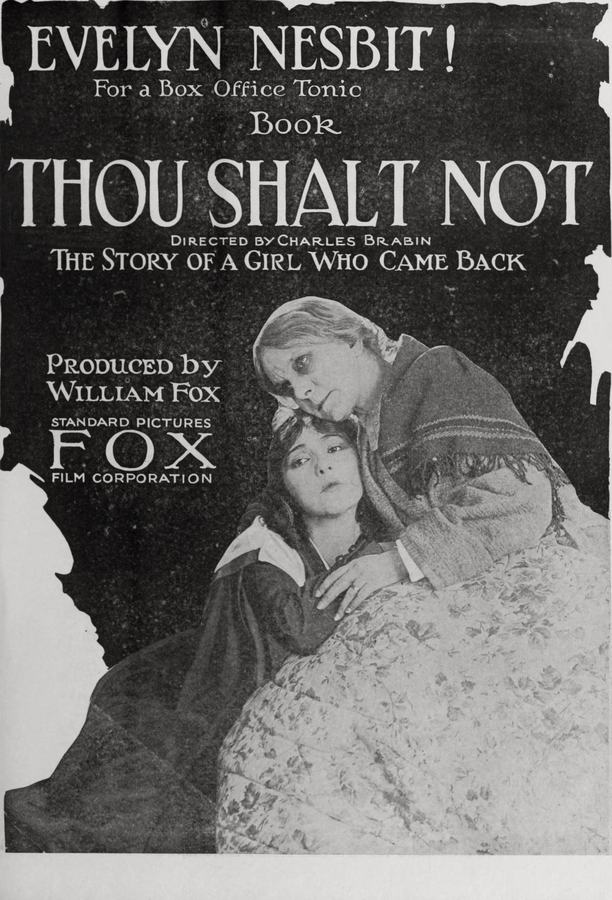
Ah, the silent era! A time when narratives unfolded through the eloquent ballet of gesture, the stark drama of facial expression, and the potent symbolism embedded within every frame. In this captivating landscape, Thou Shalt Not emerges as a particularly poignant artifact, a film that, despite its vintage, resonates with a startling contemporaneity. It’s more than just a relic; it’s a searing indictment of societal hypocrisy and a tender ode to the transformative power of genuine compassion, all wrapped in a narrative that feels both timeless and deeply human. As a film critic, I've seen countless tales of fallen women and their arduous paths to redemption, but few tackle the insidious nature of community judgment with such unblinking honesty.
Our story centers on Ruth, portrayed with remarkable nuance by Florida Kingsley. She’s not merely a stock character; she is the radiant belle of Bedford, a figure of innocence and promise, admired by all, including the devout and upright minister (Edward Lawrence). Her life, seemingly preordained for a path of respectability and quiet contentment, takes an abrupt and ultimately tragic turn with the arrival of Alec Peters (Ned Burton), a brakeman whose rugged charm and worldly demeanor represent everything her sheltered existence lacks. This initial infatuation is a crucial pivot point, a testament to the universal human desire for something beyond the familiar, for a taste of the exhilarating unknown. The film masterfully builds this tension, showing us not a malicious act, but a young woman's heart swayed by a potent, albeit misguided, passion.
The parental edict to cease her association with Peters is a predictable, yet essential, plot device, highlighting the rigid social codes of the era. What follows – Peters’ empty promise of marriage and their subsequent elopement to New York – is the classic setup for a moralistic drama. Yet, Thou Shalt Not transcends simple moralizing. It delves into the brutal consequences of broken trust and the stark realities faced by women who dared to stray from prescribed societal norms. Peters' eventual abandonment of Ruth, leaving her penniless on the unforgiving streets of New York, is depicted with a visceral sense of despair. Kingsley’s performance here is particularly affecting, conveying the sheer terror and degradation of a woman stripped of her innocence, her dignity, and her means of survival. This narrative arc, while seemingly straightforward, is a powerful exploration of vulnerability and betrayal, echoing the plight of countless women in a society that offered few safety nets for those who 'fell'.
The true heart of Thou Shalt Not, however, lies not in Ruth’s tragic missteps, but in the unwavering moral fortitude of the minister. Edward Lawrence imbues this character with a quiet strength and profound empathy that stands in stark contrast to the judgmental fervor of the community. His journey to find Ruth, prompted by her mother's agonizing illness, is a pilgrimage of genuine love and spiritual conviction. The scene where he discovers her in a charity home is devoid of melodrama, instead conveying a deep sense of shared humanity. He doesn't reproach her; he offers solace and a path back to what she lost.
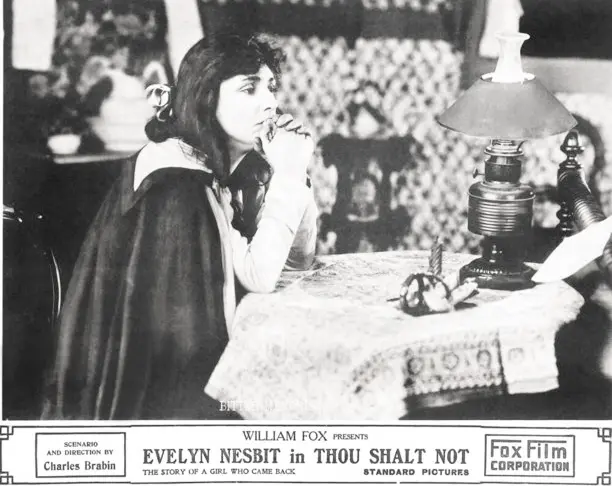
The film then pivots to the thorny issue of reintegration. Ruth’s parents, softened by grief and understanding, readily forgive her. But the wider community? That's an entirely different beast. The refusal of the choir to sing with Ruth, despite the minister's impassioned pleas and his moving sermon recounting Christ's forgiveness of Mary Magdalene, is a chilling portrayal of collective bigotry. This isn't just a minor slight; it's a profound act of social ostracism, a public shaming that underscores the deep-seated prejudices of the time. The parallel to the Magdalene story, explicitly woven into the narrative, is not merely a biblical allusion but a direct challenge to the audience's own moral compass. How often do we, as a society, preach forgiveness while practicing condemnation? The film forces us to confront this uncomfortable question.
The climax of Thou Shalt Not is perhaps its most radical and enduring statement. The minister, disillusioned by the unyielding intolerance of his flock, makes a truly courageous decision: he leaves Bedford with Ruth to start their lives anew. This act isn’t just a personal choice; it’s a profound rejection of a society that prioritizes rigid dogma over genuine compassion. It’s a testament to the idea that true faith lies not in adherence to superficial rules, but in the boundless capacity for empathy and forgiveness. This ending elevates the film beyond a simple cautionary tale, transforming it into a powerful narrative of defiance and hope, where two individuals, united by a shared sense of justice, choose to forge their own moral sanctuary.
The success of any silent film hinges entirely on its cast’s ability to communicate complex emotions and motivations without dialogue. In this regard, Thou Shalt Not largely succeeds. Florida Kingsley’s portrayal of Ruth is particularly compelling. She navigates the character’s arc from naive innocence to profound despair, and finally to a quiet resilience, with an impressive range of expression. Her wide, expressive eyes convey volumes of unspoken grief and longing. Edward Lawrence, as the minister, is equally strong. He embodies a gentle authority and an unwavering moral compass, his gestures conveying a deep inner conviction that makes his ultimate decision to leave Bedford all the more impactful. Ned Burton, as the cad Alec Peters, perfectly captures the superficial charm and underlying cruelty of his character, making his betrayal all the more impactful. Even the supporting players, including Evelyn Nesbit in a minor role, contribute to the film's rich tapestry of small-town life and judgment.
Director Charles Brabin, known for his prolific work in the early silent era, demonstrates a keen understanding of visual storytelling in Thou Shalt Not. He uses contrasts effectively: the idyllic, seemingly pure backdrop of Bedford against the gritty, indifferent streets of New York; the warmth of familial forgiveness against the coldness of communal rejection. The pacing, while characteristic of the era, allows for moments of quiet reflection and emotional weight, preventing the narrative from feeling rushed. Brabin’s camera often lingers on faces, allowing the audience to fully absorb the emotional impact of each scene. The staging of the church scenes, particularly the choir's refusal, is particularly effective in conveying the palpable tension and the minister's growing despair. It’s a subtle yet powerful directorial hand guiding us through this moral labyrinth.

The themes explored in Thou Shalt Not were not unique to its time, but its specific handling gives it a distinctive voice. The 'fallen woman' narrative was a staple of early cinema, often serving as a cautionary tale. Films like A Modern Magdalen or The Derelict explored similar territory, depicting women who faced social ruin due to moral transgressions. However, Thou Shalt Not distinguishes itself by placing the onus of judgment squarely on the community, rather than solely on the protagonist. It's less about Ruth's sin and more about society's failure to extend grace.
The explicit invocation of Mary Magdalene in the minister's sermon is a direct link to the enduring story of Christ’s compassion, as depicted in films like Life of Christ. This comparison isn't just a convenient plot point; it’s a theological and ethical challenge. The film asks: if the very tenets of your faith preach forgiveness, how can you, as a community, deny it to one of your own? This makes Thou Shalt Not a more complex and morally probing work than many of its contemporaries. It steps beyond simple melodrama to engage with profound questions of faith, community, and individual conscience. While other films might have concluded with Ruth's solitary redemption or tragic demise, this film dares to suggest that sometimes, true redemption lies in finding a community that truly embodies its stated values, even if it means leaving the one you’ve always known.
In an age saturated with digital spectacles and complex narratives, the quiet power of a film like Thou Shalt Not might seem understated. Yet, its message is anything but. It’s a timeless commentary on the fragility of reputation, the harshness of public opinion, and the transformative potential of unwavering empathy. It reminds us that the greatest commandments often involve acts of love and understanding, not just adherence to rigid rules. The film’s bold conclusion, with the minister and Ruth departing together, is a triumphant assertion of human dignity and a quiet rebellion against the tyranny of small-mindedness.
For those interested in early cinema, social dramas, or simply a story that challenges conventional morality, Thou Shalt Not is an essential viewing experience. It’s a film that asks us to look beyond the surface, to question our own judgments, and to consider the profound impact of our actions on others. It’s a testament to the fact that even in an era without spoken words, cinema could deliver messages of startling depth and enduring relevance. So, go forth and discover this gem, and let its silent wisdom resonate within you.

IMDb 7.5
1927
Community
Log in to comment.