DbcultAccessing Vault...
Cult Review
Senior Film Conservator
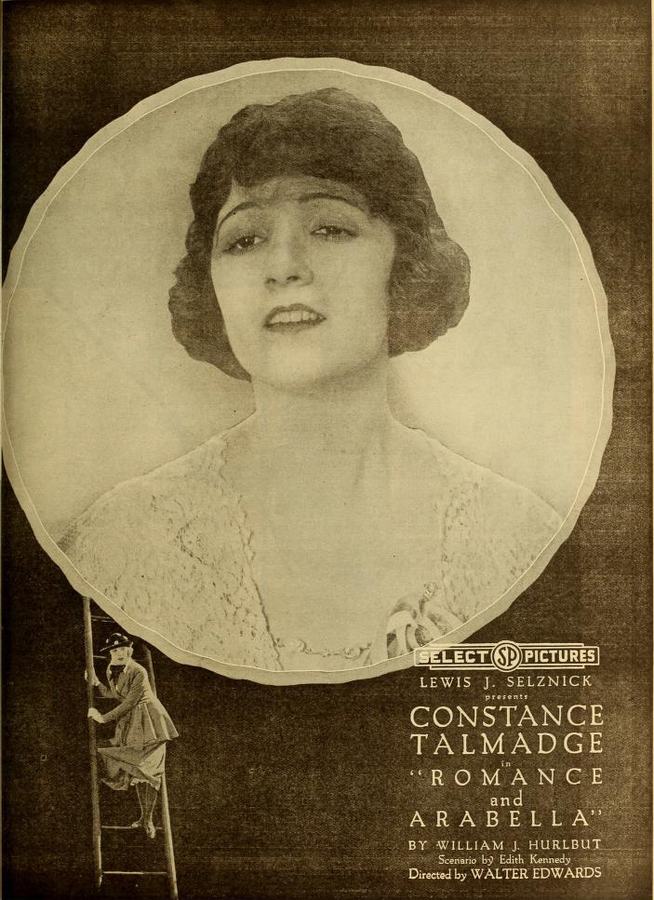
In the shimmering tapestry of early 20th-century cinema, where grand gestures often spoke louder than words, a film like Romance and Arabella (romance-and-arabella) emerges not just as a charming relic but as a surprisingly incisive commentary on the very nature of love and expectation. Released during an era of burgeoning artistic expression on screen, this delightful romantic comedy, penned by Edith M. Kennedy and William Hurlbut, offers a nuanced exploration of a young woman's quest for an idealized romance, juxtaposed against the cunning machinations of a long-suffering admirer.
The film’s brilliance lies in its unique premise: Arabella Cadenhouse, portrayed with effervescent charm by the inimitable Constance Talmadge, is a widow with a clear, almost audacious, criterion for her next marriage. Her first union, while perhaps comfortable, lacked the intoxicating spark of true romance, and Arabella is determined that her second husband will supply this missing ingredient. This isn't merely a desire for companionship; it’s a yearning for the grand, sweeping narratives of affection she likely consumed in dime novels and whispered conversations. It’s a quest for an almost theatrical version of love, a sentiment that resonates even in our modern, often hyper-romanticized world.
Arabella’s journey begins with the arrival of Harry Atteridge, brought to life by a youthful Harrison Ford (not the Han Solo, but a compelling screen presence in his own right). Atteridge, an 'unconventional westerner,' embodies much of what Arabella initially seeks: a dashing, somewhat untamed spirit, a breath of fresh air from the staid conventions she might have known. His wooing is direct, his appeal undeniable, and for a time, it seems Arabella’s romantic ideal might be within reach. However, the heart of the narrative, and indeed its most ingenious device, lies with Bill, Arabella's lifelong neighbor, played with understated brilliance by Monte Blue. Bill has loved Arabella since childhood, a quiet, steadfast affection that stands in stark contrast to the flamboyant romance she craves. Recognizing her susceptibility to superficial charm, and perhaps a touch of misguided idealism, Bill devises a truly audacious plan: to systematically dismantle Arabella’s romantic illusions by introducing a series of deliberately chosen 'counter-irritants.'
These counter-irritants are not merely rivals; they are caricatures of undesirable traits, each designed to highlight a flaw in Arabella’s romantic vision. First among them is Claude Estabrook, portrayed by Arthur Edmund Carewe, a faddist disciple of 'free love.' Estabrook, with his esoteric philosophies and detached approach to commitment, is the antithesis of the stable, profound connection Arabella (subconsciously, perhaps) needs. His presence serves to illustrate the absurdity of purely intellectualized or uncommitted relationships, pushing Arabella away from such abstract notions of love.
Next in Bill’s carefully curated parade is Peter Harper, a callow youth played by Antrim Short. Harper represents immaturity, a lack of gravitas, and an inability to truly understand the complexities of a mature relationship. For a woman seeking profound romance, a partner who is essentially a child in adult form is a swift deterrent, shattering any illusion that youthful exuberance alone can sustain a deep connection.
Finally, Bill introduces Doctor Henry, an absent-minded scientist brought to screen by James Neill. Doctor Henry embodies a complete detachment from the emotional and practical demands of a romantic partnership. His mind is consumed by his experiments, his presence often oblivious to the social cues and personal needs of those around him. He represents a kind of intellectual solipsism, demonstrating that even brilliance, when devoid of emotional presence, is insufficient for a romantic partner. Each time Arabella shows signs of becoming too interested in one of these carefully selected unsuitable men, Bill deftly produces another, more jarring 'counter-irritant,' effectively eroding her romanticized expectations.
Constance Talmadge, a luminary of the silent screen, absolutely shines as Arabella. Her performance is a masterclass in comedic timing, subtle emotional shifts, and captivating screen presence. Talmadge manages to imbue Arabella with a delightful blend of naiveté and determination, making her quest for romance both understandable and occasionally laughable. She isn't merely a passive object of affection; she’s an active participant in her own romantic education, even if that education is being subtly guided by Bill. Talmadge's expressions, her gestures, her very posture convey a rich inner life, allowing the audience to empathize with her yearning while simultaneously appreciating the comedic irony of her situation. Her ability to pivot from starry-eyed hope to bewildered disillusionment, all without uttering a single spoken word, is a testament to her profound talent and why she remains a celebrated figure in film history.
While Talmadge commands the spotlight, Monte Blue’s portrayal of Bill is the quiet anchor of the film. Bill is a complex character. On one hand, his methods are undeniably manipulative, bordering on unethical. He actively sabotrates Arabella's potential relationships, albeit with a seemingly benevolent intent. On the other hand, his actions stem from a deep, abiding love and a genuine belief that he knows what is truly best for Arabella. Blue conveys this internal conflict and steadfast devotion through subtle glances, knowing smiles, and a pervasive sense of patient observation. He is not a flamboyant hero; he is the steadfast, resourceful friend who understands Arabella perhaps better than she understands herself. His performance is a testament to the power of understated acting in silent cinema, where a single tilt of the head or a lingering gaze can speak volumes.
Harrison Ford, as Harry Atteridge, provides the initial spark that sets the narrative in motion. His 'unconventional westerner' persona is charming and provides a credible romantic rival for Bill, making Arabella's initial attraction entirely believable. The supporting cast, including Arthur Edmund Carewe, Antrim Short, and James Neill, each play their 'counter-irritant' roles with comedic precision, effectively embodying the various flaws Bill wishes to expose.
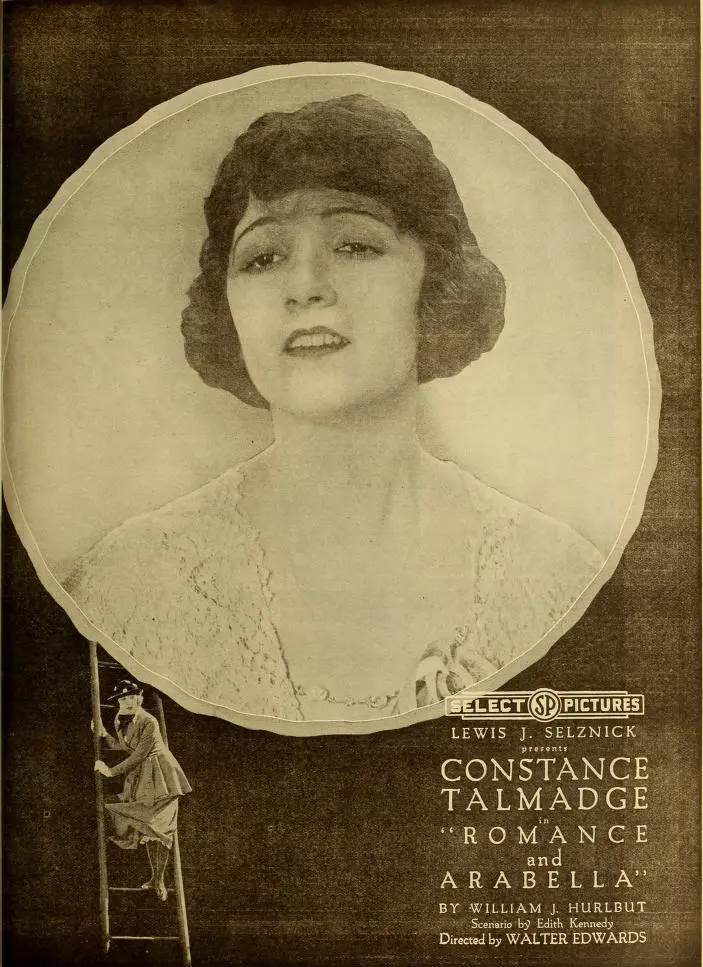
At its core, Romance and Arabella is a profound meditation on the difference between idealized, superficial romance and the deeper, more enduring affection that often grows from familiarity and shared history. Arabella’s quest for 'romance' is initially a pursuit of grand gestures, passionate declarations, and perhaps a touch of exotic allure. She seeks a love that conforms to a preconceived notion, a fantasy perhaps fueled by popular culture of the time. The film cleverly deconstructs this fantasy, showing how easily it can be shattered by the mundane realities of personality quirks and incompatible life philosophies.
Bill’s strategy, while morally ambiguous, ultimately serves to strip away Arabella’s illusions, forcing her to confront what she truly values in a partner. It’s a comedic, yet poignant, journey of disillusionment that leads to genuine realization. The film suggests that true love might not always arrive with a flourish and a dramatic entrance, but rather might have been quietly waiting in the wings, embodied by a familiar face. This theme of a protagonist navigating romantic ideals and societal pressures, and ultimately finding love where least expected, resonates with other films of the era, exploring the complexities of human relationships in a rapidly changing world.
The film also subtly touches upon the societal expectations placed upon widows in that era. Arabella's decision to remarry isn't just a personal choice; it carries a certain social weight. Her desire for 'romance' could be seen as an assertion of her individual desires beyond mere practicality or social duty, making her journey all the more compelling.
The brilliance of Romance and Arabella owes much to its screenwriters, Edith M. Kennedy and William Hurlbut. The plot, with its unique 'counter-irritant' mechanism, is remarkably clever and well-structured. The pacing ensures that each new suitor arrives at just the right moment to further Arabella’s education, building towards a satisfying, if somewhat predictable, conclusion. The intertitles, crucial to silent film storytelling, are witty and contribute significantly to the film’s comedic tone, often providing internal monologues for Arabella or droll observations on Bill’s cunning plans.
The direction, while not explicitly attributed in the provided information, skillfully balances the comedic elements with genuine character development. The visual storytelling is clear and effective, utilizing close-ups to capture Talmadge’s expressive face and wider shots to establish the social dynamics. The film never devolves into farce, maintaining a delicate balance that allows for both laughter and a thoughtful reflection on its themes. The comedic timing is impeccable, ensuring that the audience is fully engaged in Arabella’s predicament and Bill’s subtle manipulations.
As a product of the silent era, Romance and Arabella offers a fascinating glimpse into the filmmaking techniques and societal values of its time. The artistry of the performers, relying solely on physical expression and facial nuances, is particularly striking. The film’s sets and costumes, while not overtly extravagant, are appropriate for the period, subtly enhancing the storytelling without distracting from the central narrative. The film's enduring appeal lies not just in its engaging plot but also in its ability to transcend the limitations of its medium, communicating universal truths about love and human nature.
Comparing it to other films from a similar period, one might find thematic echoes in narratives where protagonists navigate complex social landscapes or personal desires. For instance, the journey of self-discovery through romantic entanglements could be loosely paralleled in films such as A Woman's Fool or The Summer Girl, which often explored women's roles and romantic pursuits in early 20th-century society. However, the specific comedic device of Bill's 'counter-irritants' gives Romance and Arabella a truly distinctive flavor, setting it apart from more conventional romantic dramas or comedies of the time. It’s a testament to the creativity of the writers that they crafted such an original and memorable plot.
Ultimately, Romance and Arabella is more than just a silent film; it's a delightful and insightful romantic comedy that continues to charm audiences today. Its high lexical diversity in storytelling, both through its intertitles and its visual narrative, ensures a rich viewing experience. The film’s exploration of idealized love versus real affection, its clever plot, and the stellar performances by Constance Talmadge and Monte Blue combine to create a cinematic gem. Arabella's journey of having her illusions shattered, one by one, isn't played for tragedy but for a humorous, ultimately heartwarming realization. She learns that true romance isn't always a whirlwind of passion and exoticism, but can be found in the quiet, steadfast devotion of a friend who has loved her all along. The acceptance of Bill’s offer of marriage at the film’s close is not a capitulation, but a profound act of recognition—a realization that the most genuine romance has been patiently waiting, disguised as friendship, all along.
This film remains a testament to the enduring power of silent cinema to tell compelling stories with humor, heart, and surprising depth. It’s a must-watch for anyone interested in the history of romantic comedy, the brilliance of Constance Talmadge, or simply a charming tale about finding love in unexpected places, even when one’s own expectations stand in the way. Its clever narrative structure and the nuanced performances make it a fascinating study of human nature and the often-circuitous path to true love. The film’s ability to evoke laughter and elicit thoughtful consideration on the nature of romance, without the aid of spoken dialogue, is a remarkable achievement and solidifies its place as a cherished classic.
IMDb 6.7
1932
Community
Log in to comment.