DbcultAccessing Vault...
Cult Review
Senior Film Conservator
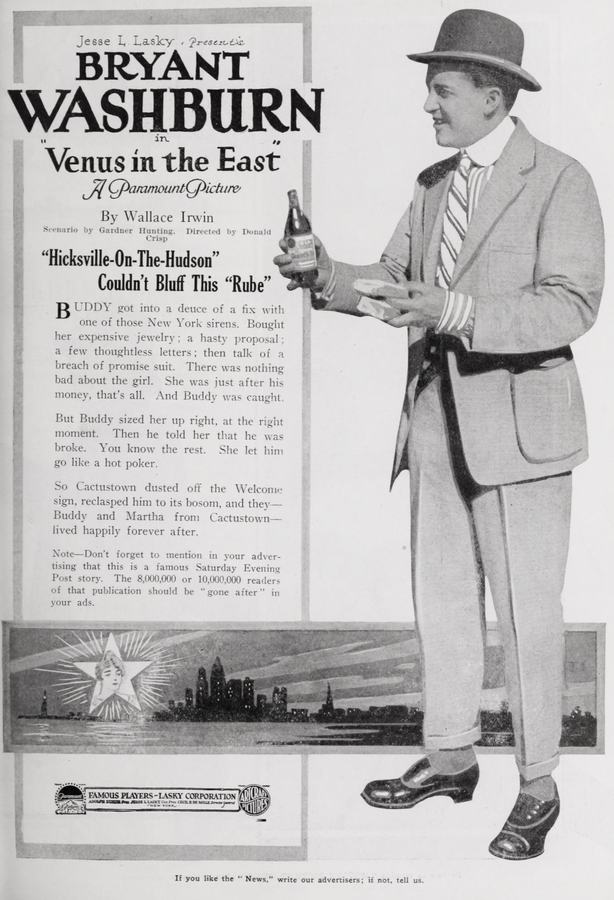
Step back in time to 1919, an era when the silver screen was still finding its voice, yet already masterfully crafting narratives that resonated deeply with the human experience. In this vibrant landscape, Venus in the East emerges as a fascinating artifact, a silent film that, despite its age, offers a surprisingly incisive commentary on ambition, social mobility, and the often-perilous pursuit of an idealized love. Penned by the imaginative duo of Gardner Hunting and Wallace Irwin, this cinematic journey transports us from the rugged, unvarnished landscapes of Colorado to the glittering, yet treacherous, social circles of New York City.
At its core, the film is a classic 'fish-out-of-water' tale, albeit one imbued with a particular Gilded Age flavor. Our protagonist, Buddy McNair, portrayed with an endearing earnestness by Charles K. Gerrard, is a man whose heart, and recently acquired fortune, are far larger than his grasp of metropolitan etiquette. His odyssey begins, as many grand romantic quests do, with a simple newspaper photograph – a captivating image of New York society luminary, Mrs. Pat Dyvenot. This static portrait ignites within Buddy a fervent, almost pathological, desire to win her affections, propelling him towards an unknown world of elegance and artifice.
The journey from Colorado to New York is not merely a geographical transition; it's a symbolic passage from innocence to experience, from the straightforward honesty of the West to the intricate deceptions of the East. Buddy McNair, with his pockets full of inherited wealth and his head full of romantic notions, represents the quintessential American dreamer, eager to claim his slice of the urban paradise. However, the film quickly establishes that this paradise is not as welcoming as it appears from afar. The very train meant to carry him to his destiny becomes the setting for his first major disillusionment.
It is here, amidst the rhythmic clatter of the rails, that Buddy's provincial guilelessness is starkly exposed. A cadre of professional gamblers, operating with a ruthless efficiency, swiftly identify him as their next mark. They are, it seems, aided by a young woman named Martha, played by Margery Wilson, whose seemingly innocent charm belies a more complicit, perhaps even manipulative, nature. In a sequence that underscores the timeless vulnerability of the naive traveler, Buddy is systematically fleeced of a substantial portion of his newly acquired fortune. This scene serves as a crucial narrative pivot, foreshadowing the challenges he will face in a city where appearances are often deceiving and intentions rarely pure. One might draw a thematic parallel to the intricate webs of deceit seen in films like The Spider, where protagonists are ensnared by cunning adversaries, or the more sinister machinations explored in The Evil Eye, where unseen forces conspire against the unwary. Buddy's plight, while perhaps less overtly menacing, carries the same sting of betrayal.
Upon his arrival in New York, the film truly delves into the comedic and tragic aspects of Buddy's predicament. His lack of 'eastern polish' – a euphemism for everything from sartorial choices to conversational nuances – renders him an immediate outsider. He becomes a figure of unintentional amusement, his earnest attempts to navigate high society often culminating in social faux pas that highlight the vast cultural chasm between his origins and his aspirations. This struggle to assimilate, to shed the trappings of his past for the perceived sophistication of his desired future, forms the dramatic backbone of the narrative. It's a poignant exploration of how identity is shaped, or indeed shattered, by environment and expectation.
Charles K. Gerrard imbues Buddy McNair with a compelling blend of genuine warmth and profound social awkwardness. His performance, reliant on the broad, yet nuanced, gestures characteristic of silent cinema, effectively conveys Buddy's internal conflict. He is not a villain, nor is he entirely a fool; he is simply a man out of his depth, driven by an almost childlike belief in the power of love and money to overcome all obstacles. Gerrard's ability to elicit both sympathy and occasional exasperation from the audience is a testament to his skill in a medium without spoken dialogue. His journey is a cautionary tale, illustrating how easily one's good intentions can be misinterpreted or exploited in a world governed by different rules.
As the ethereal Mrs. Pat Dyvenot, Anna Q. Nilsson embodies the very essence of New York high society. Her character is initially presented as an almost mythical figure, an ideal of beauty and sophistication that Buddy projects all his hopes upon. Nilsson, a prominent star of the era, brings a certain gravitas and allure to the role, even if the character’s depth is primarily defined by Buddy's perception rather than her own actions. She is the 'Venus' of the title, an embodiment of the unattainable, a symbol of the East's seductive power that draws Buddy into its orbit. Her presence highlights the film's exploration of idealized love versus the complexities of real human connection, a theme also subtly touched upon in romantic dramas like Arms and the Girl, where the pursuit of a beloved forms the central conflict.
Margery Wilson's portrayal of Martha is particularly intriguing. She is not a straightforward antagonist but rather a character shrouded in moral ambiguity. Her role in the train robbery complicates Buddy's black-and-white view of the world, introducing shades of grey that challenge his simplistic understanding of good and evil. Martha's motivations, whether born of desperation, manipulation, or a combination thereof, add a layer of psychological complexity to the narrative. Her presence forces Buddy, and by extension the audience, to question the nature of trust and the true cost of ambition. The film's willingness to introduce such morally complex characters elevates it beyond a mere romantic comedy, hinting at the darker undercurrents of society, much like the challenging social commentaries found in films such as Moral Suicide or Human Cargoes, which often depicted individuals caught in difficult circumstances.
The supporting cast, including Clarence Burton, Julia Faye, Arthur Edmund Carewe, and Helen Dunbar, contribute significantly to the film's vibrant tapestry of New York society. Their collective performances paint a vivid picture of the city's inhabitants, from the unscrupulous to the merely indifferent, all serving to underscore Buddy's isolation and his struggle to find his footing.
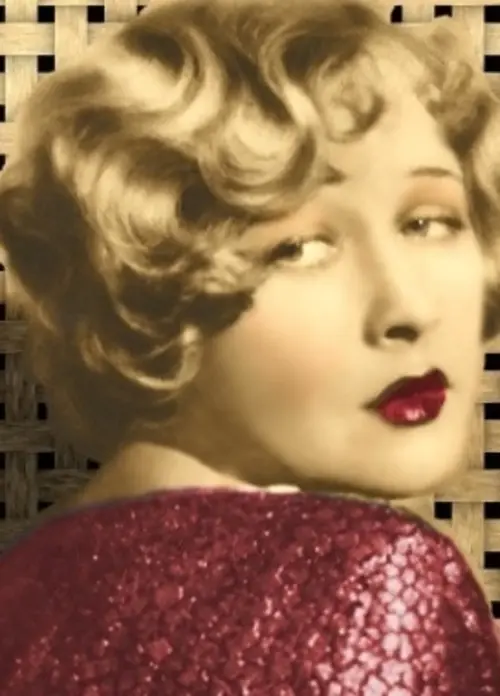
The screenplay by Gardner Hunting and Wallace Irwin is a remarkable example of silent-era narrative construction. Without the benefit of spoken dialogue, the writers had to rely heavily on visual storytelling, character actions, and well-placed intertitles to convey plot, emotion, and character development. Their script for Venus in the East masterfully balances comedic elements with moments of genuine pathos, creating a nuanced journey for Buddy McNair. The progression of Buddy's experiences, from the initial enchantment to the subsequent disillusionment and the arduous process of adaptation, is meticulously charted, demonstrating a keen understanding of human psychology and societal dynamics.
The pacing is judicious, allowing the audience to fully absorb Buddy's reactions to his increasingly bewildering circumstances. The visual metaphors are subtle yet effective, particularly in depicting the stark contrast between Buddy's 'western' demeanor and the 'eastern' sophistication he attempts to embody. The film's ability to communicate complex themes—such as the superficiality of wealth, the illusion of social status, and the deceptive nature of appearances—through purely visual means is a testament to the writers' ingenuity and the collaborative artistry inherent in silent filmmaking.
Furthermore, the narrative avoids simplistic resolutions, opting instead for a more layered exploration of Buddy's growth. His initial foolishness is not entirely eradicated, nor is his romantic ideal completely shattered. Instead, the film suggests a tempering of his spirit, a hard-won wisdom gained through adversity. This commitment to character development, rather than mere plot progression, distinguishes the writing and gives the film a lasting resonance.
One of the most compelling aspects of Venus in the East is its exploration of the perennial theme of illusion versus reality. Buddy's entire quest is founded upon an illusion – the idealized image of Mrs. Pat Dyvenot, gleaned from a newspaper, and his romanticized vision of New York society. The film systematically dismantles these illusions, revealing the gritty, often cynical, realities beneath the glittering surface. This thematic thread is timeless, reminding us that what we perceive from afar is rarely the truth up close.
The film also provides a keen, if often humorous, look at class and social status in early 20th-century America. Buddy's inherited fortune opens doors, but it does not automatically grant him acceptance. The established New York elite operate under an unspoken code of conduct, a labyrinth of manners and expectations that new money, no matter how vast, cannot easily penetrate. His awkwardness serves as a potent critique of a society that values superficial polish over genuine character, and birthright over earned success. This struggle for acceptance, the desire to belong, is a universal human experience, given a specific historical context here.
Furthermore, the narrative subtly touches upon the corrupting influence of wealth and the dangers of naiveté. Buddy's initial loss on the train is a direct consequence of his financial vulnerability and his trusting nature. In New York, his wealth makes him a target for social climbers and opportunists, further complicating his romantic pursuit. The film suggests that true worth lies not in the size of one's bank account or the elegance of one's attire, but in the integrity of one's character and the authenticity of one's intentions. This pursuit of authenticity, often against a backdrop of societal artifice, resonates strongly even today.
While Venus in the East might not be as widely known as some of its silent-era contemporaries, its enduring appeal lies in its timeless themes and its charming, yet pointed, social commentary. It's a film that speaks to the perennial human desire for connection, the challenges of navigating new environments, and the hard-won lessons learned when one's ideals clash with reality. The performances, particularly Gerrard's earnest Buddy, provide a compelling emotional core that transcends the limitations of silent cinema.
For modern audiences, it serves as a valuable historical document, offering a glimpse into the social mores, fashion, and urban anxieties of a bygone era. More than that, it's a reminder that the struggles of identity, belonging, and the search for authentic love are universal, echoing across generations and cinematic landscapes. The narrative's blend of humor and poignant self-discovery ensures its place as a noteworthy entry in the annals of early American cinema. Its examination of societal pitfalls and the journey of a character seeking to understand a complex world makes it a compelling watch, inviting reflection on our own perceptions of success and happiness.
In conclusion, Venus in the East is more than just a relic from the silent film era; it is a vibrant, engaging story that continues to offer insights into the human condition. Its blend of romantic aspiration, comedic misadventure, and trenchant social observation makes it a compelling watch for anyone interested in the foundational narratives of cinema and the timeless allure of a good story well told. It reminds us that sometimes, the most profound journeys are not just across geographical divides, but across the chasm between expectation and reality, a lesson Buddy McNair learns with both humor and humility.
IMDb 5.2
1920
Community
Log in to comment.