DbcultAccessing Vault...
Cult Review
Senior Film Conservator
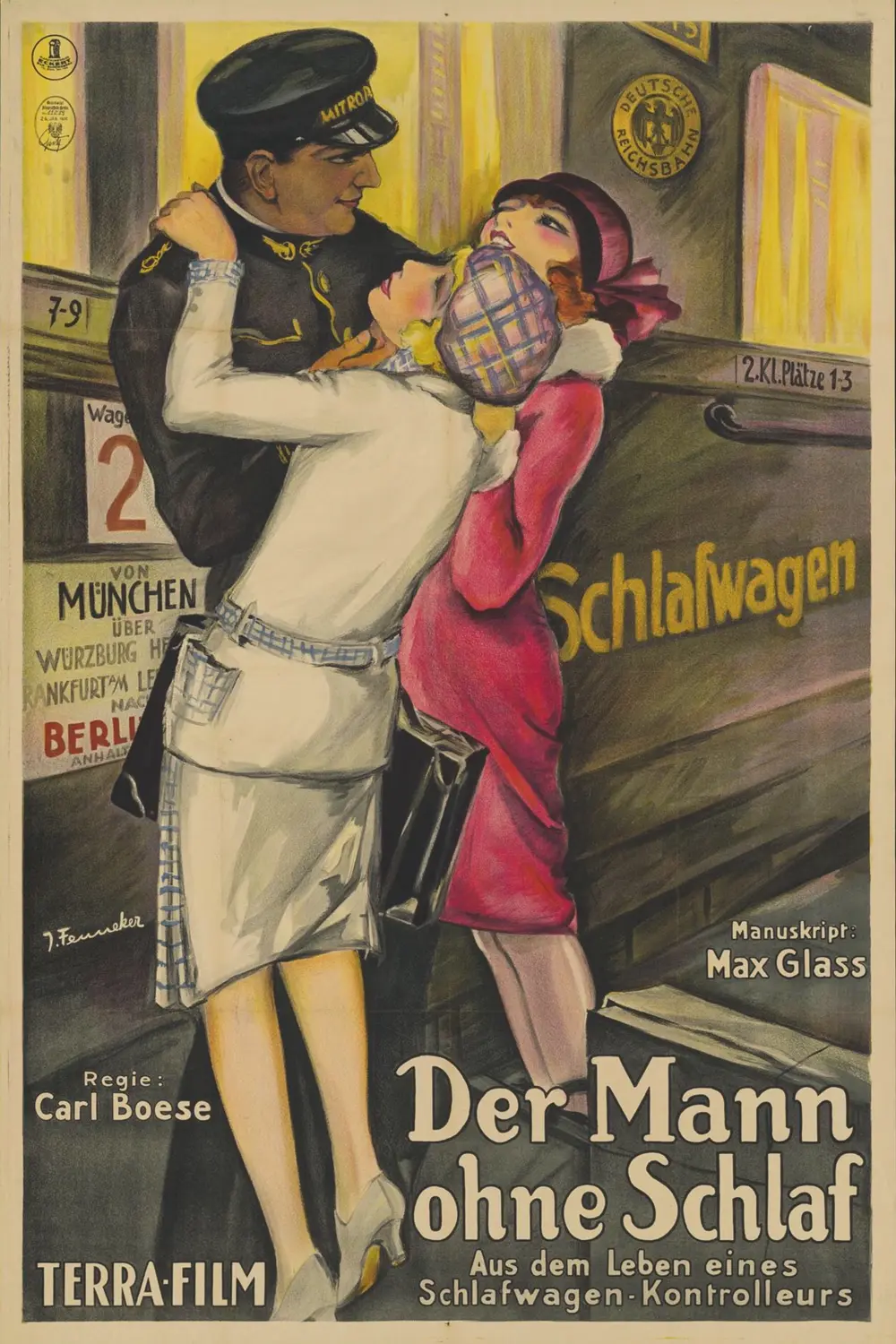
Is Der Mann ohne Schlaf worth watching today? Short answer: yes, but with significant caveats. This rarely seen German silent film, a deep dive into the psychological toll of chronic insomnia, offers a hauntingly relevant experience for those who appreciate the era's dramatic ambition, but it will undoubtedly test the patience of viewers accustomed to modern pacing.
It's a film for cinephiles, students of early psychological drama, and anyone fascinated by how silent cinema tackled complex internal states. It is decidedly NOT for casual viewers seeking light entertainment, nor for those who struggle with slow burns or the inherent limitations of silent storytelling.
The 1920s were a fertile ground for German Expressionism, a movement that often manifested internal turmoil through external, distorted realities. While Der Mann ohne Schlaf doesn't fully embrace the jagged angles and exaggerated sets of its more famous contemporaries like The Cabinet of Dr. Caligari, it certainly shares a thematic kinship, exploring the fragile boundary between sanity and madness, amplified by the titular character's torment.
Harry Liedtke, renowned for his debonair roles, delivers a surprisingly raw performance as Herr von Winter. His transformation from a seemingly composed gentleman to a gaunt, wide-eyed specter is chillingly effective, conveyed through subtle shifts in posture and increasingly frantic gestures. It’s a masterclass in silent acting, relying heavily on the expressive power of the human face.
The film works because it commits wholeheartedly to its central conceit, never shying away from the unsettling implications of a mind untethered by sleep. It builds a suffocating atmosphere of paranoia and disorientation that feels genuinely earned. This is a brave choice for the time, eschewing easy answers for a prolonged exploration of psychological decay.
This film fails because its dedication to atmosphere sometimes comes at the expense of narrative propulsion. The pacing, while deliberate and effective for its thematic goals, can feel glacial, particularly in its middle act where von Winter’s nocturnal wanderings become somewhat repetitive. Modern audiences might find themselves yearning for a more direct plot.
You should watch it if you have an interest in early psychological thrillers, appreciate the nuanced art of silent film acting, or want to see a unique take on mental health struggles from a century ago. It’s a powerful, if challenging, piece of cinematic history.
The plot, as hinted by its title, plunges us into the tortured world of Herr von Winter, a man whose chronic insomnia has eroded his grasp on reality. Liedtke’s portrayal is the film's beating heart. We see his character's initial weariness evolve into a frantic desperation, his eyes becoming increasingly hollow, reflecting the void within. There’s a particular scene where he attempts to read a newspaper in the dead of night, only for the words to blur and swim before his eyes, a simple yet potent visual metaphor for his dissolving perception. This isn't just a man who can't sleep; it's a man being actively devoured by his waking hours.
Fritz Kampers as the determined, perhaps skeptical, inspector provides a grounding presence against Liedtke's increasingly erratic one. Kampers, often typecast in more boisterous roles, here offers a restrained performance, his steady gaze and methodical movements contrasting sharply with von Winter’s frenetic energy. It’s a good foil, though I would argue his character could have benefited from a touch more ambiguity, perhaps a hint that even he, the man of logic, is slightly unnerved by the case.
Maly Delschaft's role as the mysterious woman is perhaps the most intriguing, and frustrating, aspect of the film's character dynamics. Her presence oscillates between a beacon of hope and another figment of von Winter's tormented imagination. Is she a femme fatale, a guardian angel, or merely an innocent caught in his web? The film deliberately keeps her ambiguous, which serves the psychological theme but leaves some narrative threads feeling unresolved. Her quiet intensity, however, is undeniable; she commands attention even in her stillness.
The narrative, for all its atmospheric strengths, does occasionally meander. There are moments, particularly in the mid-section, where von Winter's endless pacing through his opulent, yet suffocating, apartment feels less like character development and more like padding. While it underscores his profound boredom and restlessness, a tighter edit might have amplified the tension rather than diluted it.
The direction by an unnamed hand (or perhaps a collaborative effort, as was common in the era's less defined auteurship) demonstrates a keen understanding of visual storytelling. The use of shadow and light, a hallmark of German cinema, is deployed with precision here. Night scenes are bathed in a deep, oppressive chiaroscuro, emphasizing von Winter's isolation and the sinister undertones of his nocturnal world. The way a single lamp casts long, dancing shadows that seem to mock his attempts at rest is particularly effective.
Cinematography, while not groundbreaking in its technical innovation, excels in capturing the psychological state. Close-ups on Liedtke's face become increasingly frequent, forcing the audience to confront his deteriorating mental state directly. The camera often adopts a slightly skewed angle, subtly suggesting von Winter's disoriented perspective, a technique that, while not as overt as some Expressionist works, adds a layer of subjective unease.
The pacing, as mentioned, is a double-edged sword. It’s undeniably slow, but this deliberate rhythm allows the audience to sink into von Winter's experience. The film resists quick cuts and frantic action, opting instead for long takes that dwell on the character's internal struggle. This choice might alienate some, but for those willing to surrender to its rhythm, it creates a hypnotic, almost meditative, sense of dread. It's an acquired taste, certainly, but one that rewards patience with a profound emotional resonance.
The tone is consistently melancholic, bordering on despair. There are no moments of levity, no comic relief to break the tension, which is a bold artistic decision. This unrelenting seriousness reinforces the film's central theme: insomnia isn't just an inconvenience; it's a relentless, soul-crushing affliction. The film takes its subject matter with a gravitas that is both admirable and, at times, draining. This isn't a film you 'enjoy' in the traditional sense; it's one you experience, one that leaves a lingering sense of unease.
Absolutely, for the right audience. Der Mann ohne Schlaf stands as a fascinating artifact of early cinematic psychology. It showcases remarkable acting from Harry Liedtke and offers a unique, if challenging, viewing experience. Its exploration of mental health struggles, though a century old, still feels potent. It’s a film that demands engagement, not passive observation.
However, its slow pace and reliance on visual metaphor might be a barrier for those new to silent cinema. Expect to invest your attention fully. This isn't background viewing. It’s a commitment. But the payoff is a deep, unsettling look into the human psyche, a testament to silent film’s capacity for profound emotional depth.
"The true horror of Der Mann ohne Schlaf isn't a monster in the shadows, but the monster born within, when the mind refuses to yield to the peace of sleep. It’s a chilling reminder that our greatest prisons are often self-made."
Der Mann ohne Schlaf is a compelling, albeit challenging, silent film that bravely delves into the harrowing world of chronic insomnia. Harry Liedtke's performance is a tour de force, anchoring a narrative that is more psychological exploration than conventional thriller. It works. But it’s flawed.
While its deliberate pacing and pervasive melancholy might not appeal to everyone, its artistic ambition and thematic depth make it a worthwhile watch for those with a discerning taste for cinematic history and the silent era's unique brand of storytelling. It’s a film that stays with you, a testament to the enduring power of a mind starved of rest. Seek it out if you dare to lose a little sleep yourself.
IMDb —
1935
Community
Log in to comment.