DbcultAccessing Vault...
Cult Review
Senior Film Conservator
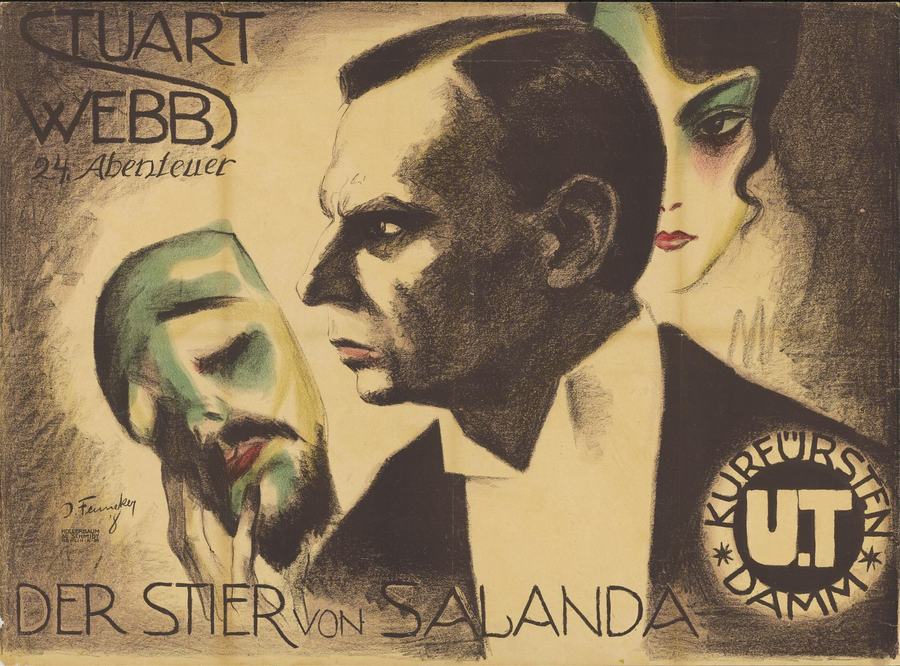
Stepping into the spectral glow of 'Der Stier von Saldanha' is akin to unearthing a forgotten relic, a cinematic artifact from an era when narrative tension was sculpted by shadow, gesture, and the evocative power of the intertitle. This German silent film, featuring the inimitable Ernst Reicher, invites us into a world of high-stakes espionage and perplexing mystery, set against an exotic backdrop that feels both alluring and menacing. Reicher, a titan of early cinema, particularly renowned for his portrayal of the astute detective Stuart Webbs, brings to his character a gravitas and intellectual acuity that elevates the material beyond mere genre fare. His presence alone is a magnetic force, drawing the viewer into the intricate web of deceit and danger that defines this compelling narrative. The film, though perhaps lesser known today, stands as a testament to the sophisticated storytelling capabilities of its period, demonstrating a keen understanding of suspense and character development, even in the absence of spoken dialogue. It's a journey into the heart of a silent storm, where every flicker of expression, every calculated movement, speaks volumes louder than any uttered word.
Ernst Reicher, a name that resonates with the golden age of German silent cinema, was more than just an actor; he was an institution. His portrayal of Dr. Georg Kroll in 'Der Stier von Saldanha' is a masterclass in understated intensity. Kroll is not a man of bombast or theatricality, but one whose power emanates from a profound stillness, a watchful intelligence that perceives the unseen currents of human malevolence. Reicher’s eyes, often framed by a brow furrowed in concentration, convey a depth of thought that transcends the limitations of the medium. He moves with a deliberate grace, each gesture economical, purposeful. One might draw parallels to the cerebral intensity found in other early detective narratives, yet Reicher imbues Kroll with a unique blend of scholarly detachment and an underlying, almost primal, drive for justice. His performance is a subtle ballet of deduction, where the slight tilt of a head or the measured pacing across a room communicates more about his internal process than pages of dialogue ever could. This is the essence of silent film acting at its apex: the ability to project complex inner worlds through sheer physical and facial eloquence. It is a testament to his enduring appeal and the reason why films like The Secret Game, with its own brand of quiet tension, might find a spiritual predecessor in Reicher's work.
The success of 'Der Stier von Saldanha' hinges significantly on Reicher's ability to anchor the fantastical elements of its plot—a mythical 'Bull' transforming into a human antagonist—with a grounded, believable performance. He portrays Kroll not as an infallible superhero, but as a brilliant mind wrestling with complex problems, occasionally vulnerable, yet always resilient. This nuanced approach to characterization was a hallmark of Reicher's career, distinguishing him from some of his more overtly melodramatic contemporaries. His Kroll is a man of science and logic, confronting a world that constantly threatens to devolve into chaos, a theme that resonates with the anxieties of the early 20th century. The sheer force of his intellectual presence transforms what could have been a straightforward adventure into a psychological thriller, where the true battle is often fought within the confines of Kroll's own formidable intellect. This cerebral combat is what makes his performance so captivating and enduring, marking 'Der Stier von Saldanha' as a pivotal moment in the evolution of the detective genre on screen.
The narrative architecture of 'Der Stier von Saldanha' is a meticulously crafted edifice of suspense. The film begins with the seemingly inexplicable disappearance of Professor Alistair Finch, a cartographer whose revolutionary work holds the key to naval dominance. The setting, Saldanha Bay, South Africa, is not merely a backdrop; it is an active participant in the unfolding drama. Its remote, rugged beauty, its sun-scorched landscapes, and its local legends of 'The Bull of Saldanha' imbue the film with an exotic mystique that immediately transports the viewer. This geographical choice—far removed from the smoky European cities often associated with detective stories—lends an expansive, almost epic quality to Kroll's investigation. The writers, though uncredited in many historical records, clearly possessed a flair for crafting intricate plots that blend local folklore with international espionage, creating a tapestry rich with cultural nuance and global implications. This innovative fusion of elements sets it apart, demonstrating a willingness to push the boundaries of conventional storytelling for its era.
As Kroll delves deeper, the film expertly peels back layers of deception, revealing a sophisticated criminal enterprise masked by local superstition. The transformation of 'The Bull of Saldanha' from a mythical beast into a cunning human antagonist is a narrative masterstroke, effectively leveraging audience expectations before subverting them. This transition from supernatural dread to very real, tangible human villainy grounds the story, making the stakes feel more immediate and perilous. The plot’s twists and turns are executed with precision, each revelation propelling Kroll, and the audience, further into the heart of the conspiracy. The clues are cryptic, the adversaries formidable, and the race against time palpable. One cannot help but compare the intricate plotting to the complex machinations seen in films like 0-18 or A Message from the Sky, where coded messages and hidden meanings drive the core conflict. The film’s ability to maintain a consistent level of tension throughout its runtime, despite the inherent challenges of silent storytelling, speaks volumes about its thoughtful construction and the visionary direction that guided its production.
The cinematography and art direction of 'Der Stier von Saldanha' are nothing short of remarkable, particularly for a film of its vintage. The use of light and shadow is not merely functional but deeply expressive, shaping the film’s pervasive atmosphere of mystery and danger. Sun-drenched exteriors of Saldanha Bay contrast sharply with dimly lit interiors—secret lairs, shadowy offices, and clandestine meeting points—each visually reinforcing the duality of the narrative. The director (again, often uncredited or lost to time, but whose vision is undeniably potent) demonstrates a keen eye for composition, framing shots that are both aesthetically pleasing and narratively informative. Close-ups on Reicher’s face emphasize his intellectual struggles, while sweeping wide shots capture the desolate grandeur of the South African landscape, making it feel both beautiful and isolating. This visual language is crucial in a silent film, where every frame must convey meaning without dialogue, and 'Der Stier von Saldanha' excels in this regard.
The sets, whether studio-built or on-location, are crafted with a meticulous attention to detail that enhances the film’s immersive quality. From the cluttered, academic sanctity of Professor Finch's study to the austere, functional design of the villain's hidden command center, each environment feels authentic and lived-in. The costumes, too, play a vital role, distinguishing characters and hinting at their social standing or nefarious intentions. The overall visual aesthetic contributes significantly to the film’s ability to transport the audience, creating a tangible sense of place and period. This commitment to visual storytelling is a hallmark of the finest silent films, where the camera becomes the primary narrator. The film’s ability to evoke a sense of global peril through its visual scope reminds one of the grand scale attempted in epics like The Eternal City, though 'Der Stier von Saldanha' focuses its grandeur on the meticulous details of suspense rather than overt spectacle.
Beyond its thrilling plot, 'Der Stier von Saldanha' delves into profound thematic territory. At its core, the film explores the insidious nature of power—how it can corrupt, how it can be wielded in the shadows, and how it can distort perception. The 'Bull of Saldanha' is a brilliant metaphor for this unseen, yet pervasive, influence, initially presenting itself as a force of nature before revealing its human origins. This transition underscores the film's commentary on the dangers of unchecked ambition and the lengths to which individuals will go to attain strategic advantage. The idea of a 'bull' also evokes a sense of brute force, primal strength, and an unstoppable will, contrasting sharply with Kroll's intellectual, measured approach. This dichotomy between raw power and refined intellect forms a central tension throughout the narrative, culminating in a confrontation that is as much a clash of ideologies as it is a physical struggle.
Deception is another pervasive theme, manifested not only in the villain's elaborate masquerade but also in the intricate web of misinformation Kroll must untangle. Characters are rarely what they seem, and trust is a commodity in short supply. This constant questioning of appearances keeps the audience on edge, mirroring Kroll's own investigative process. The film also subtly touches upon themes of identity, particularly how one's persona can be constructed and manipulated for nefarious purposes. The villain's ability to hide behind a myth, to become a legend, speaks to a sophisticated understanding of human psychology and the power of fear. This thematic richness elevates 'Der Stier von Saldanha' beyond a simple genre piece, inviting deeper reflection on the mechanisms of control and the fragility of truth in a world rife with hidden agendas. The intricate dance of deception and revelation finds echoes in the emotional complexities of films like Tangled Hearts, though here applied to matters of geopolitical consequence rather than personal romance.
'Der Stier von Saldanha' stands as a proud example of German silent cinema's golden age, a period characterized by artistic innovation, technical prowess, and a willingness to explore complex psychological and social themes. While the era is often remembered for Expressionist masterpieces, this film demonstrates the equally robust tradition of sophisticated genre filmmaking. German studios, with their advanced techniques and visionary directors, were producing films that rivaled, and often surpassed, those from other international centers. The attention to detail in set design, the nuanced performances, and the intricate narratives were hallmarks of this vibrant cinematic landscape. The film’s ability to create a sense of international intrigue, drawing on global locations and concerns, showcases the outward-looking perspective of German filmmaking at the time.
This period was a crucible of creativity, where filmmakers were constantly experimenting with the nascent language of cinema. 'Der Stier von Saldanha' benefits from this spirit of innovation, employing dynamic editing, evocative intertitles, and a masterful understanding of visual rhythm to tell its story. The film's influence, though perhaps not as overtly documented as some of its more avant-garde contemporaries, can be felt in the subsequent development of the spy thriller genre and the enduring appeal of the intellectual detective. It belongs to a lineage of films that understood the power of a compelling mystery, a charismatic lead, and a visually arresting world. Comparisons to films like Babbling Tongues, which also navigated the complexities of communication and hidden truths, highlight the era's shared fascination with uncovering what lies beneath the surface. It is a testament to the enduring power of cinema that even without spoken dialogue, these stories continue to captivate and resonate, offering a window into the artistic and cultural sensibilities of a bygone era.
Even today, 'Der Stier von Saldanha' retains a potent, almost hypnotic, appeal. Its meticulous plotting, the compelling performance of Ernst Reicher, and its atmospheric visual design coalesce into a cinematic experience that transcends its historical context. For contemporary audiences, it offers a fascinating glimpse into the origins of the espionage thriller, demonstrating how foundational narrative tropes were established and refined in the silent era. The film’s ability to build suspense through purely visual means, relying on Kroll's expressions, the subtle shifts in lighting, and the strategic pacing of its revelations, is a masterclass in cinematic craftsmanship. It reminds us that effective storytelling does not always require dialogue or elaborate special effects; sometimes, all it takes is a brilliant mind, a dangerous mystery, and the evocative power of the moving image.
The enduring relevance of 'Der Stier von Saldanha' lies in its universal themes: the struggle between good and evil, the pursuit of truth against overwhelming odds, and the triumph of intellect over brute force. These are narratives that resonate across generations and cultures. While its specific historical context might be distant, the emotional and intellectual engagement it provokes remains immediate. It invites us to appreciate the artistry of silent film, to discern the nuances in every gesture, and to marvel at the ingenuity of filmmakers who, with limited tools, managed to create worlds of profound depth and excitement. This film, much like a carefully preserved artifact, offers invaluable insights into the evolution of cinematic language, reminding us of the enduring power of a well-told story, regardless of the technological advancements that have since transformed the medium. Its intricate narrative, reminiscent of the complex emotional journeys found in films such as The Ships That Meet or The Hungry Heart, proves that deep engagement is not contingent upon spoken words, but rather on the universal language of human experience and the artistry with which it is conveyed.
'Der Stier von Saldanha' is more than just a historical curiosity; it is a vibrant, engaging piece of cinema that deserves renewed attention. It showcases Ernst Reicher at the peak of his powers, delivering a performance that is both intellectually stimulating and viscerally engaging. The film's blend of exotic adventure, intricate mystery, and thoughtful thematic exploration makes it a compelling watch for anyone interested in the foundational works of the thriller genre or the rich tapestry of German silent film. It is a testament to the fact that compelling narratives and memorable characters can emerge from the shadows of history, waiting to be rediscovered and appreciated anew. Its intricate plot and character dynamics are a reminder of the nuanced storytelling capabilities of its era, often overlooked in favor of more widely publicized movements. This film, with its potent atmosphere and captivating lead, solidifies its position as a significant contribution to early cinematic art, leaving a lasting impression that echoes long after the final frame fades to black. It’s a compelling argument for the enduring power of silent storytelling, a medium that, when executed with such precision and artistry, speaks volumes without uttering a single word, much like the profound silences that punctuate the emotional landscapes of films such as En Død i Skønhed or the quiet intensity of Het proces Begeer, demonstrating that silence itself can be a powerful narrative tool.
IMDb —
1920
Community
Log in to comment.