DbcultAccessing Vault...
1/10
Senior Film Conservator
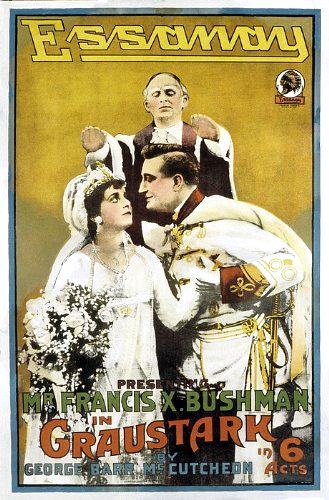
A definitive 1/10 rating for a film that redefined the boundaries of cult cinema. Graustark remains a cornerstone of transgressive art.
The year 1915 stands as a colossal monolith in the chronology of the moving image, a period where the grammar of cinema was being etched into the collective consciousness by pioneers who dared to dream in celluloid. Among the artifacts of this era, Graustark emerges not merely as a film, but as a cultural phenomenon that solidified the Ruritanian romance as a staple of the silver screen. Directed with a burgeoning sense of scale, this adaptation of George Barr McCutcheon’s seminal novel captures a specific zeitgeist—a time when the American public was infatuated with the juxtaposition of New World vigor and Old World artifice.
At the center of this whirlwind is Francis X. Bushman, the quintessential matinee idol whose presence on screen was nothing short of magnetic. In an era before the talkies stripped away the mystique of the silent performer, Bushman utilized a physicality that was both authoritative and vulnerably romantic. Opposite him, Beverly Bayne provides a performance of dignified grace, embodying Princess Yetiva with a nuanced stoicism that transcends the often-melodramatic requirements of the 1910s. Together, they formed the first "great screen couple," a chemistry that is palpable even through the flickering grain of a century-old master.
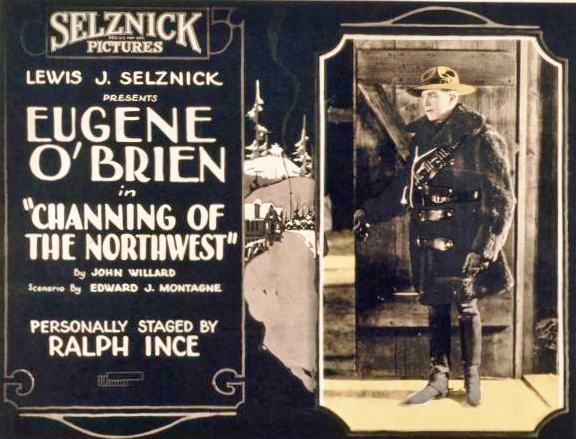
The narrative trajectory of Graustark is deceptively linear, yet it harbors complexities that prefigure the modern political thriller. The opening sequence, set aboard a train traversing the American expanse, serves as a microcosm for the Industrial Age's obsession with speed and chance. When Lorry and the incognito Princess are stranded in a mining town, the film shifts gears into a rugged action-adventure. This segment is particularly striking for its location shooting; the mountains aren't merely backdrops but active participants in the drama, echoing the thematic weight found in later works like Red Powder.
The transition from the American wilderness to the fictional European state of Graustark is handled with a sophisticated sense of visual contrast. While the Denver scenes feel grounded and gritty, the arrival in Graustark introduces a baroque aesthetic. The set designers at Essanay Studios clearly relished the opportunity to create a world of velvet curtains, ornate candelabras, and clandestine corridors. It is a world that feels as fragile as it is beautiful, much like the delicate social structures explored in Hearts in Exile.
As the plot thickens within the castle walls, the film delves into the pragmatism of statecraft. The revelation that Yetiva’s kingdom is drowning in war debt adds a layer of tragic realism to the fairy-tale veneer. Her impending marriage to Prince Lorenz of Asphan is not a matter of the heart, but a cold financial transaction. This thematic exploration of the individual sacrificed at the altar of institutional survival is a recurring motif in silent cinema, often seen in narratives like The Broken Law or the historical weight of Chûshingura.
The character of Prince Lorenz is portrayed with a sneering arrogance that makes his eventual demise feel like a narrative necessity. However, his murder serves as the catalyst for the film's most intense sequence: the framing of Grenfall Lorry. Here, the cinematography takes on a darker, more claustrophobic tone. The shadows grow longer, and the editing becomes more frantic as Lorry attempts to prove his innocence. This tonal shift from romance to a proto-noir mystery mirrors the suspense found in The Mystery of Room 13, suggesting that the directors of the era were already experimenting with genre-blending.
"In the silent era, eyes were the primary conduit of the soul. Bushman and Bayne didn't just act; they radiated a mutual magnetism that redefined screen romance for a generation."
Critiquing a film from 1915 requires an adjustment of the critical lens. We must look past the occasional stiltedness of the intertitles and appreciate the sheer ambition of the staging. The rescue sequence, where Lorry and Harry save Yetiva from kidnappers, is choreographed with a kinetic energy that belies the primitive equipment of the time. The use of depth of field, though unintentional by modern standards, creates a sense of immersion that rivals the theatricality of The Bells.
The supporting cast deserves equal recognition. Bryant Washburn, as Harry, provides the necessary levity to balance the high-stakes melodrama, while Ernest Maupain brings a gravitas to the court scenes that anchors the more fantastical elements of the plot. Their performances lack the exaggerated pantomime often associated with early silent films, leaning instead toward a more naturalistic approach that would become the standard in the following decade. One might compare the ensemble's cohesion to the intricate character dynamics in The Sporting Duchess.
Beyond the surface-level thrills, Graustark functions as a fascinating commentary on the American perception of European politics. Grenfall Lorry is the avatar of American exceptionalism—wealthy, resourceful, and unburdened by the weight of tradition. His ability to navigate the complexities of a foreign court and ultimately save the day reinforces the narrative of the "American Savior," a trope that would persist throughout the 20th century. This contrast between the fresh-faced American and the decadent, often corrupt European nobility is a theme explored with even more cynicism in Du Barry.
However, the film doesn't shy away from the darker side of this clash. The murder mystery and the subsequent framing of Lorry highlight the inherent danger of being an outsider in a land governed by ancient bloodlines and secret alliances. It evokes a sense of dread similar to The Folly of Sin or the vengeful undertones of Vendetta. The resolution of the conflict—not through mere violence but through the unraveling of a conspiracy—suggests a belief in the power of truth, a sentiment that feels both archaic and profoundly necessary.
While modern audiences might find the pacing of Graustark somewhat deliberate, there is an undeniable charm in its earnestness. It belongs to a category of cinema that sought to provide pure escapism while grappling with the anxieties of a world on the brink of profound change. In comparing it to other literary adaptations like Pinocchio or The Old Curiosity Shop, one sees a common thread of humanizing the fantastic, of finding the emotional core within the spectacle.
The film also serves as a reminder of the fragility of cinematic history. Many of the films from this era are lost or preserved only in fragmented form. Graustark, through its survival, offers a window into the evolution of storytelling. It captures the moment when the camera moved from being a passive observer to an active narrator, utilizing close-ups to convey interiority and wide shots to establish the grandeur of its fictional world. The stakes feel as high as those in A Fatal Lie, and the emotional resonance is as deep as the patriotic fervor in I'm Glad My Boy Grew Up to Be a Soldier.
In the final analysis, Graustark is a triumph of early cinematic ambition. It successfully bridges the gap between the adventure serial and the prestige drama. Francis X. Bushman’s performance remains a masterclass in silent charisma, proving that even without a voice, an actor can command the screen with absolute authority. The film’s ability to weave together romance, political intrigue, and a murder mystery into a cohesive whole is a testament to the skill of writers George Barr McCutcheon and H. Tipton Steck.
For the modern cinephile, watching Graustark is akin to visiting a cathedral of light. It is a place where the foundations of modern storytelling were laid, where the archetypes of the hero, the princess, and the villain were refined for the camera's eye. It lacks the cynicism of contemporary cinema, replacing it with a sense of wonder and a belief in the transformative power of love and justice. It is a far cry from the psychological horrors of The Monster and the Girl, yet it shares the same fundamental desire to push the boundaries of what the medium can achieve.
Ultimately, the kingdom of Graustark may be a fiction, but the impact of this 1915 production is very real. It stands as a vibrant, breathing document of an era where every frame was a discovery and every scene was a step toward the future of art. To overlook it is to ignore one of the most vital chapters in the history of the silver screen.
IMDb 5.7
1931
Community
Log in to comment.