DbcultAccessing Vault...
6.2/10
Senior Film Conservator
A definitive 6.2/10 rating for a film that redefined the boundaries of cult cinema. The Glorious Adventure remains a cornerstone of transgressive art.
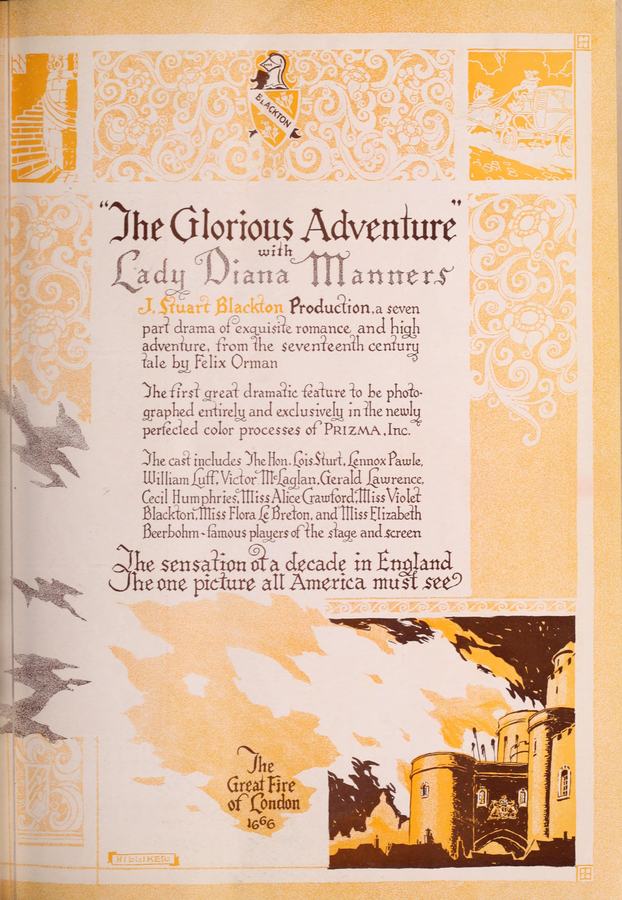
The year 1922 stands as a watershed moment in the evolution of visual grammar, and few artifacts from that era possess the sheer audacity of The Glorious Adventure. Directed by J. Stuart Blackton, a man whose fingerprints are all over the nascent machinery of American and British cinema, this film represents a desperate, beautiful grab at the future. While many of his contemporaries were content with the chiaroscuro depths of orthochromatic black-and-white film, Blackton looked at the screen and saw a canvas that demanded the full spectrum of human perception. In collaboration with the Prizma Color process, he didn't just film a story; he attempted to resurrect a lost century in its true, vibrant hues.
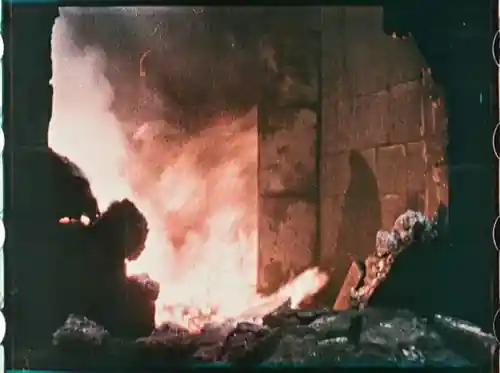
To watch The Glorious Adventure today is to witness the birth pangs of color cinematography. The Prizma process, a predecessor to the more famous Technicolor, offers a palette that feels both antique and startlingly modern. It’s not the saturated, hyper-real color of today’s digital sensors, but rather a soft, painterly wash that evokes the portraits of Lely or Kneller. When compared to the monochrome austerity of The Master Key, the visual impact of Blackton’s London is almost overwhelming. The reds of the courtier’s doublets and the amber glow of candlelight provide a sensory grounding that silent film often lacked. There is a specific scene early on, involving the Earl’s cousin, where the water of the Thames reflects a murky, sea-blue light that feels more like a dream than a historical recreation. This isn't just window dressing; the color serves as a narrative anchor, heightening the stakes of the impending disaster.
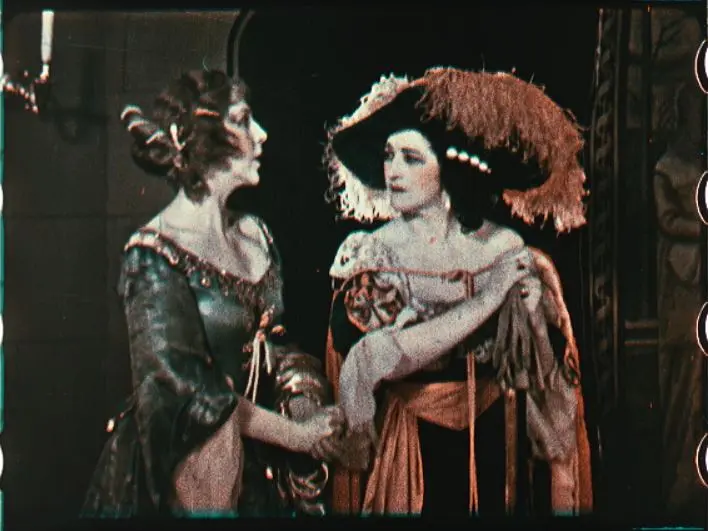
The casting of Lady Diana Manners was a masterstroke of 1920s marketing and artistic intuition. As a genuine socialite and a woman of legendary beauty, she brings a level of authentic poise to the role of Lady Beatrice Fair that a professional actress of the time might have over-stylized. In an age where the "vamp" or the "ingenue" were the standard tropes—seen in films like The Black Panther's Cub—Manners offers something more grounded, yet paradoxically more ethereal. Her performance isn't built on the frantic gesticulation that defined much of the silent era; instead, she relies on a subtle, almost regal stillness. When she is trapped by the encroaching flames of the Great Fire, her terror is conveyed through a widening of the eyes and a stiffening of the posture that feels remarkably contemporary. It’s a performance that stands in stark contrast to the more histrionic turns found in Cleopatra, proving that Blackton was pushing his actors toward a more naturalistic register.
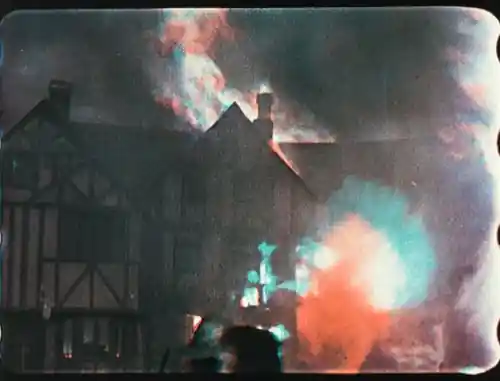
The climax of the film—the Great Fire of London—is a sequence that deserves to be enshrined in the annals of special effects history. Recreating 1666 in 1922 was no small feat, and Blackton utilized a combination of massive sets and ingenious miniature work. The Prizma Color process is pushed to its absolute limit here; the screen erupts in shades of dark orange and searing yellow. Unlike the localized tension of From the Valley of the Missing, the scale here is city-wide. You can almost feel the heat radiating from the celluloid. The way the fire consumes the timber-framed houses of Old London is captured with a documentary-like ferocity. It’s in these moments that the film transcends its melodramatic plot and becomes a visceral experience of historical trauma. The rescue of Lady Beatrice by the Earl’s cousin is framed against this apocalyptic backdrop, turning a standard romantic resolution into a mythic struggle against the elements.

Before he became the quintessential John Ford regular, Victor McLaglen was a formidable screen presence in his own right, and his role in The Glorious Adventure showcases his raw, physical energy. He provides a necessary counterpoint to the refined elegance of Cecil Humphreys and the delicate features of Flora le Breton. The ensemble cast is a fascinating mix of British stage veterans and emerging screen personalities. The political machinations of the court are played with a gravity that reminds one of the intricate plotting in The Greek Interpreter, though the stakes here are far more grand than a singular mystery. Each character feels like a cog in a vast, historical machine, reflecting the rigid social hierarchies of the Restoration. The interplay between the low-born survivors and the high-born fugitives during the fire sequence adds a layer of social commentary that is often overlooked in favor of the film’s visual achievements.
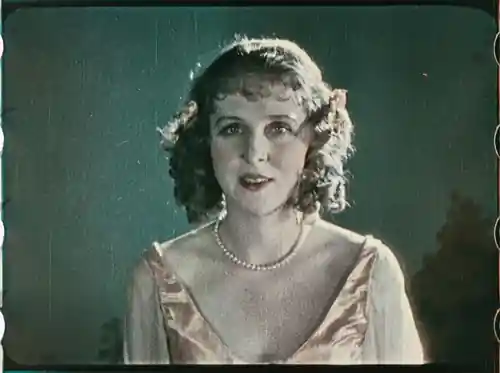
The production design of The Glorious Adventure is a triumph of historical research. The reconstruction of the old St. Paul’s Cathedral and the narrow, winding streets of pre-fire London is executed with a meticulous attention to detail. In many ways, the sets are the true stars of the film. While films like A napraforgós hölgy utilized more abstract or impressionistic designs, Blackton opted for a heavy, tactile realism. The wood grain of the taverns, the intricate lace of the courtly gowns, and the grime of the London docks are all rendered with startling clarity by the Prizma lens. This commitment to physical reality makes the eventual destruction of these spaces all the more heartbreaking. You aren't just watching a set burn; you are watching a world end.
At its heart, the script by Felix Orman and Blackton himself is a meditation on resilience. The Earl’s cousin, Hugh Argyle, is a character defined by his ability to survive. His initial drowning—a sequence that features some surprisingly effective underwater photography—sets the tone for a story about the stubborn persistence of the human spirit. Whether he is navigating the treacherous waters of the Thames or the even more dangerous waters of royal politics, Argyle remains a steadfast protagonist. His journey mirrors the city’s own arc: from the decadence of the Restoration to the purifying fire, and ultimately toward a new beginning. This thematic depth elevates the film above mere costume drama. It shares a certain spiritual kinship with the themes of endurance found in Tabaré, though the cultural context is vastly different.
J. Stuart Blackton is often remembered for his early experiments in animation, but The Glorious Adventure proves he was a master of the epic form. His ability to manage a production of this scale, while simultaneously experimenting with a temperamental new color process, is nothing short of miraculous. He understood that cinema was not just a medium for telling stories, but a medium for capturing the impossible. By bringing the Great Fire of London to life in color, he gave audiences a window into a past that had previously only existed in the monochromatic imagination. The film’s influence can be felt in every historical epic that followed, from the widescreen spectacles of the 1950s to the digital reconstructions of today. It is a testament to his vision that the film remains as captivating today as it was a century ago.
In the final analysis, The Glorious Adventure is a film that demands to be seen by anyone interested in the intersection of art and technology. It is not without its flaws—the pacing can be deliberate, and the plot relies on certain coincidences that were standard for the era—but these are minor quibbles when measured against its achievements. The Prizma Color alone makes it a mandatory viewing experience. It provides a bridge between the hand-tinted fantasies of Méliès and the realistic color palettes of the modern era. As we look back at the cinematic landscape of 1922, with films like Alkohol or The Dictator exploring different facets of the human condition, The Glorious Adventure stands tall as a monument to what cinema can be when it refuses to be limited by its own technical boundaries. It is a glorious adventure indeed, a journey through fire and time that remains etched in the memory long after the final frame has faded.
The restoration of this film is a vital act of cultural preservation. Without it, we lose a crucial chapter in the story of how we learned to see the world through the camera's eye. The sea-blue depths of the Thames, the dark orange glow of the burning city, and the yellow flicker of courtly intrigue all serve as a reminder that even in the silent era, the world was never just black and white. It was a place of vibrant, terrifying, and glorious color.
IMDb —
1915
Community
Log in to comment.