DbcultAccessing Vault...
Cult Review
Senior Film Conservator
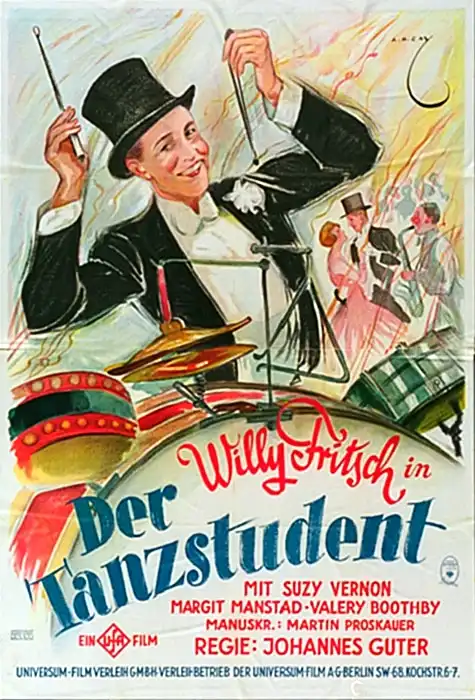
If you have a high tolerance for Willy Fritsch’s specific brand of relentless boyishness, Der Tanzstudent is a perfectly fine way to spend eighty minutes. If you find his constant, toothy grinning a bit much, this movie will probably feel like being trapped in a room with a very energetic golden retriever. It’s not a lost masterpiece of Weimar cinema, but it’s a decent example of the kind of light, commercial fluff that kept German theaters running when they weren’t showing moody expressionist nightmares.
The whole thing hinges on Fritsch being broke. He’s a student, he’s out of money, and through a series of slightly forced misunderstandings, he ends up as a dance partner for hire. There is a specific shot early on where he’s looking at his empty wallet, and the way he sighs is so theatrical it almost feels like he’s checking to see if the audience is watching. It’s that kind of movie. It doesn't want you to feel the weight of poverty; it wants you to think poverty is a cute plot device that leads to a tuxedo.
There is a scene in a crowded dance hall that I kept rewinding. Not because the dancing was particularly good—though it’s energetic—but because of the extras in the background. There is a couple on the far left of the frame who seem to be having a genuine, whispered argument while everyone else is doing the Charleston. It’s these little pockets of real life that make these old silents worth watching. The main plot is a bit of a conveyor belt, but the blurry faces in the background feel like 1928 Berlin actually leaked into the studio.
Suzy Vernon shows up and she’s... fine. She has this one moment where she’s trying to look offended by Fritsch’s advances, but her hat is tilted at such an aggressive angle that it’s hard to take her seriously. The costume design in this movie is occasionally distracting. Some of the dresses look like they were pinned together minutes before the cameras rolled. It lacks the polished, high-fashion sheen you see in something like The Perfect Flapper, which came out a few years earlier. Everything here feels a bit more lived-in, or maybe just cheaper.
The pacing hits a massive pothole about forty minutes in. There’s a sequence involving a letter and a misunderstood dinner invitation that goes on for what feels like an eternity. We get it. He thinks she’s someone else; she thinks he’s rich. The movie spends ten minutes explaining a joke that we understood in thirty seconds. It’s the kind of narrative dragging that makes you realize why sound film eventually had to happen—sometimes you just need a line of dialogue to kill a boring subplot.
I did like the way the camera moves during the actual dance lessons. It’s not revolutionary, but there’s a handheld-ish wobbliness that feels modern. It captures the clumsiness of the beginners. There’s a heavy-set man in one scene trying to learn the steps, and his frustration feels more real than any of the romantic leads' problems. He keeps stepping on his own feet and looking at the instructor with this mixture of shame and hope. It’s a tiny, throwaway bit of character work that stuck with me more than the actual climax.
The ending is exactly what you think it is. There’s a kiss, a resolution to the money problems, and everyone looks relieved. It doesn't have the grit of something like At the Mercy of Men, but it’s not trying to be that. It’s a movie for people who wanted to escape the inflation and political mess of the late 20s for an hour. It’s light, it’s a bit messy, and Willy Fritsch never stops smiling. Sometimes that’s enough, even if the plot is as thin as the paper his character’s diploma is printed on.
IMDb —
1935
Community
Log in to comment.