DbcultAccessing Vault...
6/10
Senior Film Conservator
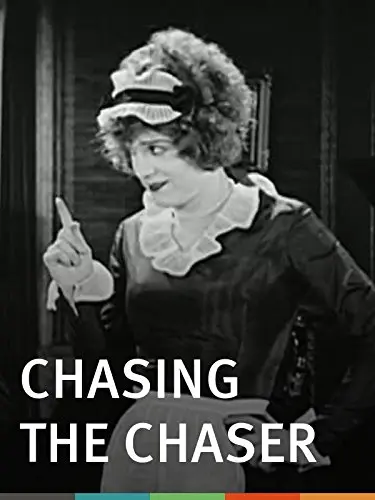
A definitive 6/10 rating for a film that redefined the boundaries of cult cinema. Chasing the Chaser remains a cornerstone of transgressive art.
Is Chasing the Chaser a forgotten gem of the silent era? Short answer: yes, but only if you approach it as a frantic laboratory for the gags that would later make Stan Laurel a legend. This isn't a refined narrative like The Charm School; it is a raw, physical assault on the senses that prioritizes the 'laugh at any cost' mentality of the mid-1920s.
This film is for the cinema historian who wants to see the DNA of the Hal Roach studio in its most primal form. It is NOT for those who require logical character motivations or high-fidelity production values. It is loud, it is clunky, and it is unapologetically weird.
1) This film works because of Frederick Ko Vert’s fearless commitment to the physical demands of playing a detective in drag, which adds a layer of surrealism to the standard slapstick formula.
2) This film fails because the plot is essentially a single joke stretched to its breaking point, lacking the narrative variety found in contemporary shorts like Bulling the Bolshevik.
3) You should watch it if you are a fan of Stan Laurel’s early writing or if you want to see a very young Fay Wray before she became the definitive scream queen of Hollywood.
Yes, Chasing the Chaser is worth watching for its historical significance and its sheer, unbridled energy. While it lacks the emotional depth of something like M'Liss, it compensates with a relentless pace. It provides a fascinating look at how early filmmakers used gender subversion as a tool for comedy long before it became a mainstream trope. If you can appreciate the craftsmanship of a well-timed fall or a perfectly executed double-take, this film will satisfy your cravings.
The writing credits for Chasing the Chaser include Stan Laurel, and his fingerprints are all over the structure of the gags. Unlike the more grounded mysteries of the time, such as The Bruce Partington Plans, this film operates on a logic of escalation. Every time the detective thinks he has the upper hand, the situation complicates. Laurel’s writing ensures that the environment itself becomes an antagonist.
Take, for example, the scene where the detective first attempts to walk in high heels while maintaining a 'feminine' gait. It isn't just a simple gag; it’s a sequence of escalating failures that test the limits of Ko Vert's physical coordination. This type of 'mechanical' comedy—where the body refuses to obey the mind—is a hallmark of Laurel’s later work with Oliver Hardy. It is fascinating to see it applied here in a solo detective context.
Frederick Ko Vert is the unsung hero here. While many silent actors relied on broad facial expressions, Ko Vert uses his entire body to sell the absurdity of his disguise. There is a specific moment where he has to flirt with the husband while simultaneously trying to hide his detective badge. The way he contorts his torso is genuinely impressive. It reminds me of the physical commitment seen in Meyer from Berlin, though Ko Vert’s performance feels more frantic.
The drag isn't just a costume; it's the movie's spine. In 1925, the sight of a man in a dress was a surefire way to get a rise out of the audience, but Ko Vert plays it with a certain 'toughness' that makes the character more than just a caricature. He is a professional doing a job, and that job just happens to involve a corset. This gives the film a strange, almost modern edge compared to the more conservative Mrs. Leffingwell's Boots.
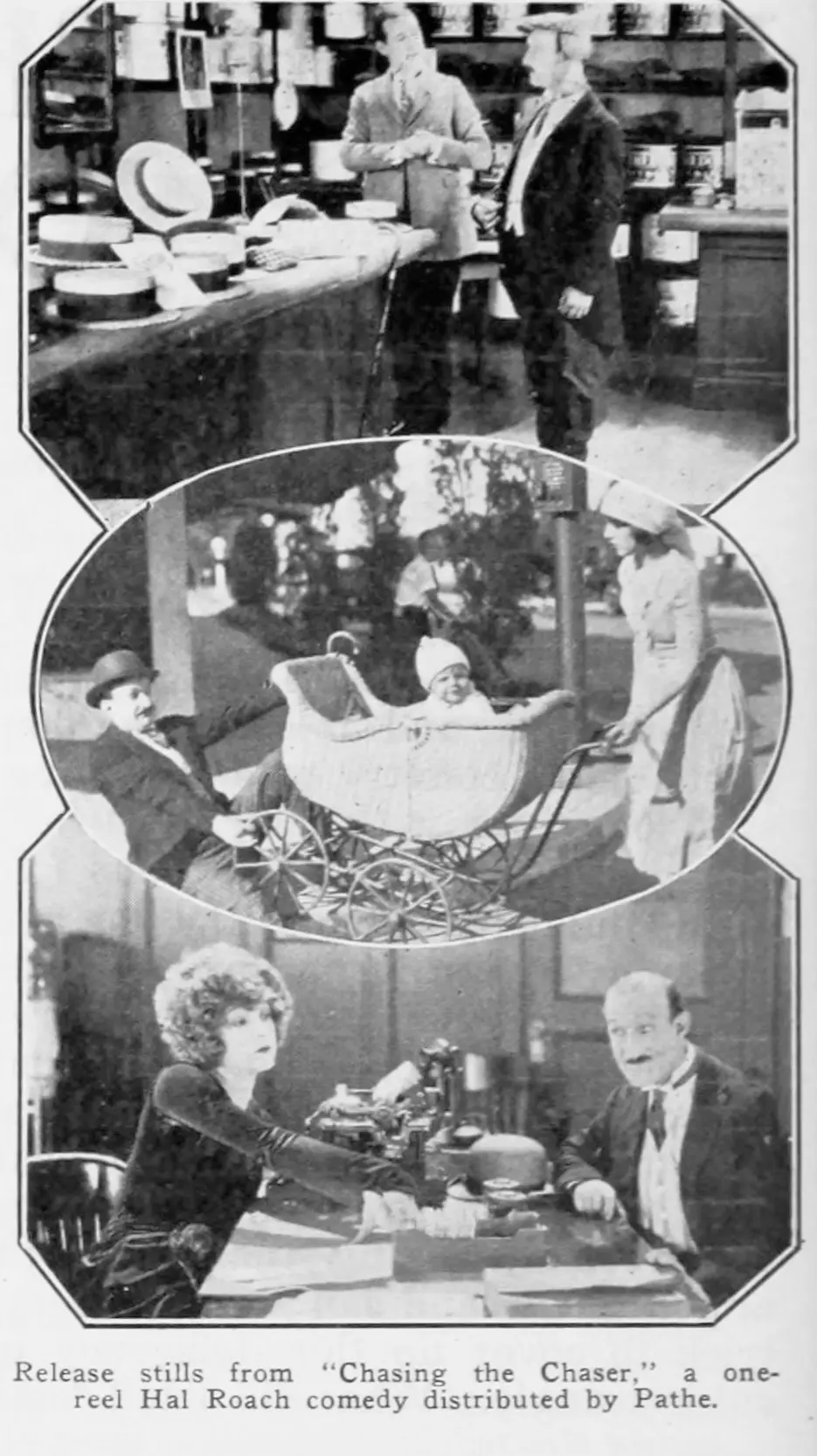
Visually, the film is a product of its time, but that’s not a slight. The cinematography by the Hal Roach team is functional and clear, focusing on wide shots that allow the physical comedy to breathe. Unlike the moody, atmospheric lighting of The Secret of the Moor, everything in Chasing the Chaser is bright and visible. The camera doesn't need to move much because the actors are doing all the moving for it.
The pacing is where the film truly shines. James Parrott’s direction ensures there is zero fat on the bone. The transition from the detective’s office to the 'honey trap' location is handled with a swiftness that would put modern comedies to shame. It moves with the speed of a cartoon, similar to the early animation style of Col. Heeza Liar, Detective. It is fast. It is frantic. It is exhausting.
No discussion of this film is complete without mentioning James Finlayson. His iconic 'squint' and look of bewildered frustration are the perfect foil for Ko Vert’s antics. Finlayson had a way of reacting to absurdity that made the absurdity feel grounded in a weird kind of reality. He brings a level of professional annoyance that elevates the film beyond a simple schoolyard prank.
Then there is Fay Wray. While her role is relatively small, her screen presence is undeniable even at this early stage of her career. She provides a necessary anchor of normalcy in a film that is otherwise untethered from reality. Watching her here, one can see why she would eventually become a star in more serious fare like Human Collateral. She has a naturalism that contrasts sharply with the exaggerated styles of the male leads.
"Chasing the Chaser is a relic, but it’s a relic with a pulse. It doesn't ask for your respect; it demands your attention through sheer, chaotic movement."
When placed alongside other 1920s shorts, Chasing the Chaser feels more aggressive. While Mother Gooseland leaned into the whimsical, and Trilby aimed for dramatic weight, this film is purely about the collision of bodies. It’s a violent kind of funny. The 'chaser' husband isn't just a philanderer; he is a force of nature that the detective must navigate like an obstacle course. This kineticism is what separates the Hal Roach house style from the more theatrical productions of the era like Die Liebschaften des Hektor Dalmore.
There is also a surprising lack of sentimentality. In many silent comedies, there’s a moment where the protagonist finds love or redemption. Not here. Chasing the Chaser is cynical. It views marriage as a battlefield and the detective as a mercenary. It’s a refreshingly cold take on romance that feels more in line with a modern dark comedy than a century-old short.
Chasing the Chaser is a fascinating, if flawed, piece of cinematic history. It isn't a masterpiece, but it is a vital document of a time when the rules of screen comedy were still being written. The film works because it doesn't try to be anything other than a delivery system for laughs. It is a loud, proud, and messy display of physical prowess. While it may not have the lasting emotional impact of The Bull's Eye, it remains a testament to the power of a well-placed wig and a perfectly timed trip. It’s a wild ride, and for twenty minutes, that’s more than enough.
IMDb —
1914
Community
Log in to comment.